Havasu Falls Packing List: What to Pack for Havasupai (Based on 3 Real Trips) + PDF Checklist
Packing for Havasu Falls is not like packing for a normal hike. It is a remote backpacking trip with a 10-mile desert hike, a mandatory 3-night stay, and no services once you enter the canyon. What you pack matters more here than almost anywhere else. We have completed the hike to Havasu Falls three times, which allowed us to refine this packing list through real experience. Over those trips, we learned which items were essential, which added unnecessary weight, and which mistakes made the hike harder than it needed to be. This Havasu Falls packing list shows exactly what to pack for this backpacking trip, so you can hike smarter, stay safe, and fully enjoy Havasupai. We also created a free printable Havasu Falls packing checklist PDF, so you can pack confidently and avoid last-minute stress — even offline.
This article may contain affiliate / compensated links. For full information, please see our disclaimer here.
Our Experiences Packing for Havasu Falls
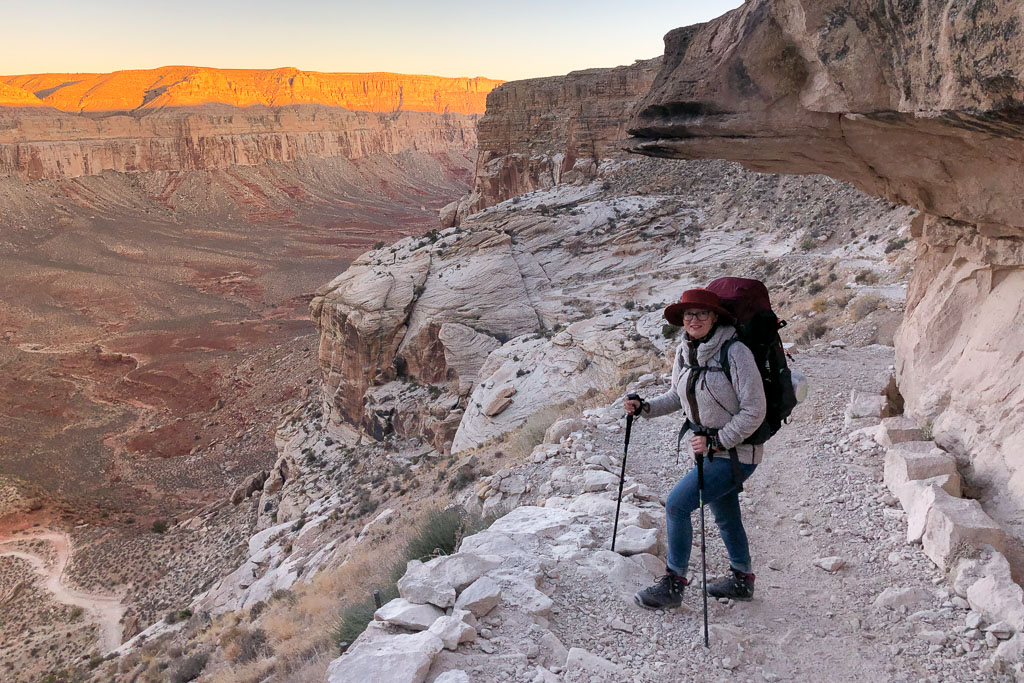
We have completed the hike to Havasu Falls three times, in different seasons and conditions. Each trip taught us something new about packing for this unique backpacking trip. The desert heat, the long hike, and the required three-night stay quickly reveal what truly matters in your backpack.
On our first trip, we packed too much. Extra clothing, backup gear, and “just in case” items added weight that made the 10-mile hike harder than it needed to be. By our later visits, we packed lighter, moved faster, and felt far better on the trail. The difference was noticeable within the first few miles.
We also learned that hydration and food matter more than comfort items. There is no water on the trail, and heat can be intense even outside of summer. Electrolytes, calorie-dense snacks, and easy-to-access water made a bigger impact than any luxury item.
Camping along Havasu Creek showed us how important simple, reliable gear is. Nights can be cool, mornings can be chilly, and the campground offers no stores or services. Everything you need must be carried in and carried out.
This packing list reflects what we actually used during our three backpacking trips to Havasu Falls. It is not a generic checklist. Every item earned its place through experience on the trail and at the campground.
Part of Our Complete Havasupai Series
After completing the Havasu Falls hike three times, we created a full series of detailed guides to help you plan every part of this backpacking trip. Each article focuses on one essential aspect of visiting Havasupai and is based on firsthand experience and official rules.
If you are planning your trip, these guides work best together:
- Havasu Falls Permit & Reservations – how the permit system works and how to get one
- Havasu Falls Hike: Step-by-Step Guide – trail details, distances, timing, and preparation
- Havasu Falls Camping Guide & Rules – how to choose a campsite and follow tribal regulations
- Havasupai Waterfalls: Complete Guide to Havasu Creek – all five waterfalls and what to expect
This packing list is designed to support the entire series and help you prepare for the hike, camping, and time spent exploring Havasu Creek.
If you’re exploring more of the state, our Arizona guide includes the best places, routes, and travel tips.

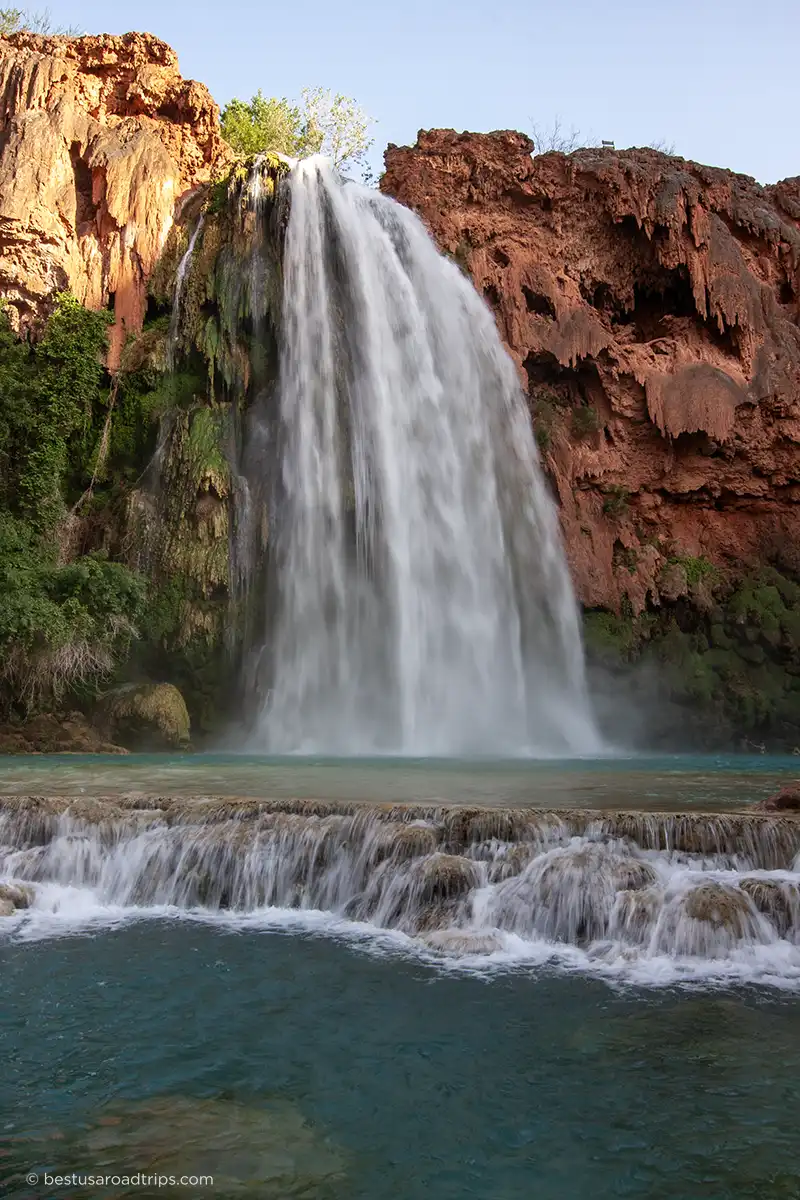
Havasu Falls Packing List Overview (Quick Summary)
Packing for Havasu Falls is about function, weight, and safety. This is not a place for extras or “nice-to-have” gear. Everything you bring must be carried 10 miles one way and used over a mandatory three-night stay.
Here is a high-level overview of what your backpack needs to include:
- Backpacking pack with a proper hip belt
- Water system with enough capacity for the hike
- Electrolytes and high-calorie snacks
- Lightweight camping and sleeping gear
- Simple food and cooking setup for three nights
- Clothing for heat, water activities, and cool evenings
- Hiking footwear and water shoes with traction
- Basic safety items and personal essentials
To make packing easier, we created a free printable Havasu Falls packing checklist PDF.
This overview is just the starting point. Below, we break down each category in detail so you know exactly what to pack — and why each item matters for this backpacking trip.
Before You Pack: Havasupai Rules That Affect What You Can Bring
Before you start filling your backpack, you need to understand the rules that govern visiting Havasu Falls. This is Havasupai Tribal land, not a national park, and the regulations here are strict. Packing prohibited items can result in fines, confiscation, or removal from the reservation.
First, a permit is mandatory. All Havasu Falls permits require a 3-night, 4-day stay. Even if you plan to stay fewer nights, you still pay for all three. Day hikes are not allowed, and every visitor must be listed on a valid reservation.
Several common backpacking items are not allowed at Havasu Falls. These rules directly affect what you pack.
Items you are NOT allowed to bring. Do not pack:
- Alcohol or drugs, including marijuana
- Drones
- Coolers
- Campfires or firewood
- Fireworks or weapons
- Pets
- Vehicles or bicycles
- Speakers or amplified music
- Soap, shampoo, or cosmetics in the water — even biodegradable
Activities that are prohibited. It is not allowed to:
- Photograph Supai Village or tribal members
- Photograph pack mules
- Use drones
- Cliff jump or dive
- Rock climb
- Kayak, SUP, or use inflatables
- Swim nude or wear inappropriate clothing
- Litter or leave trash behind
- Start campfires anywhere
Because of these restrictions, packing correctly is critical. Bringing the wrong item means carrying it for 10 miles—only to be told you cannot use it.
Once you understand the rules, you can pack smart and focus on what actually helps you on this backpacking trip.
Free Printable Havasu Falls Packing Checklist (PDF)
To make planning easier, we created a free printable Havasu Falls packing checklist (PDF) based on our three completed backpacking trips to Havasupai.
This checklist is not generic. It reflects real conditions on the trail, at the campground, and at the waterfalls.
The PDF covers:
- Hiking essentials for the 10-mile desert hike
- Camping gear for three nights at Havasu Falls Campground
- Water, food, and cooking basics
- Clothing for heat, cold mornings, and water activities
- Toiletries and personal comfort items
- Safety items, documents, and essentials
- Mooney Falls and Beaver Falls add-on gear, including gloves, water shoes, and dry bags
You can print it at home or keep it on your phone while packing.
We designed it to help you pack smart, avoid overpacking, and not forget critical items in a place where supplies are limited and mistakes are costly.
Download the Havasupai packing checklist, then use the sections below for detailed explanations and specific gear recommendations based on what actually worked for us in Havasupai.
Havasu Falls Packing List: Backpack Essentials
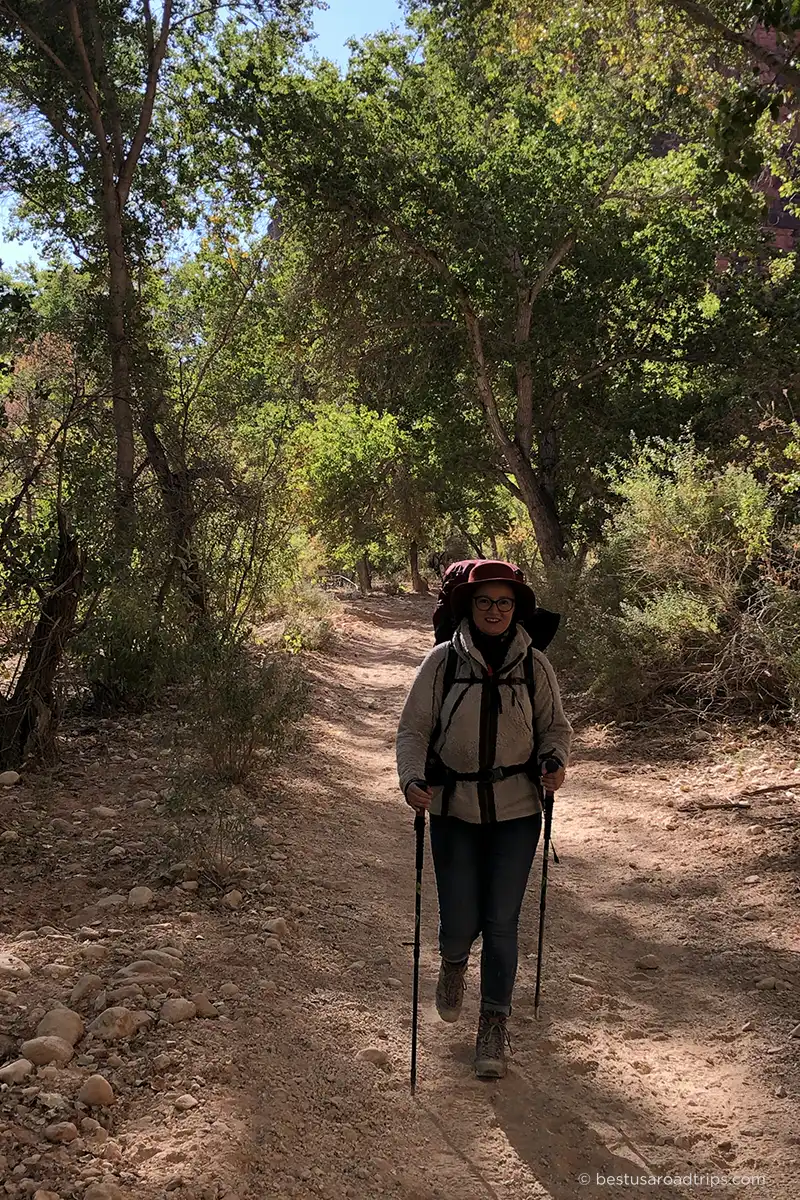
Your backpack can make or break this trip. You will carry it for 10 miles one way, through desert terrain, often in heat. Comfort, fit, and weight matter more here than almost anywhere else.
We learned this the hard way on our first trip. After three hikes to Havasu Falls, we know exactly what works.
Backpack (non-negotiable)
You need a real backpacking pack, not a travel backpack.
- Capacity: 55–65 liters works best for most people
- Must have: strong hip belt, adjustable torso, good ventilation
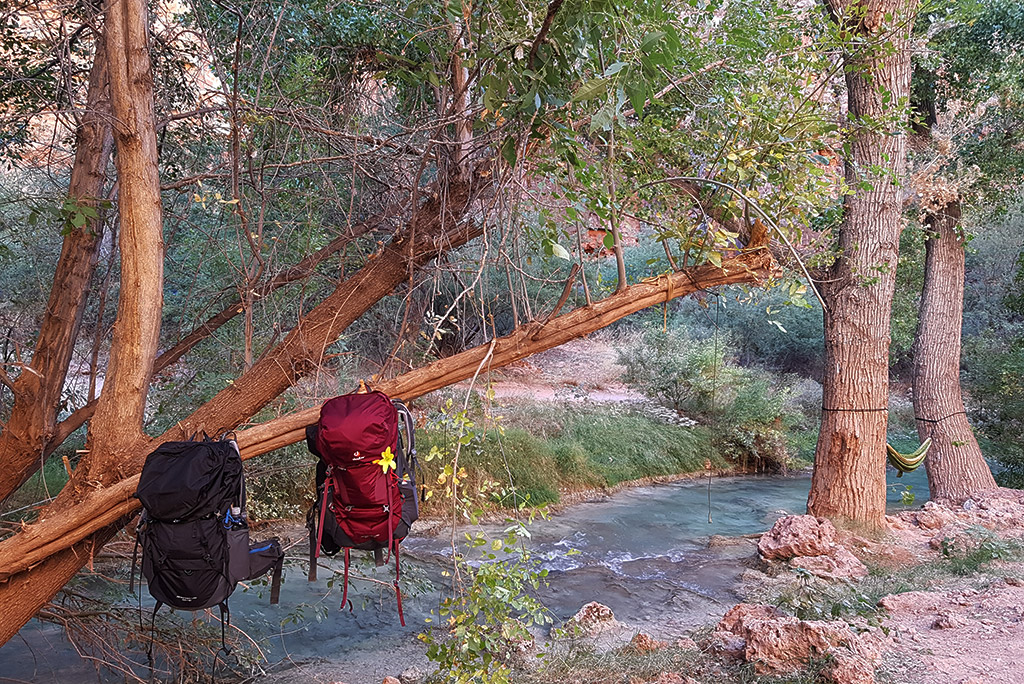
We use Deuter backpacks because they sit well on the hips and stay comfortable for long miles:
- Agnes uses Deuter Aircontact Lite 60 (women’s)
- Chris uses Deuter Aircontact Pro
These packs handled tents, food, water, and camera gear without killing our backs.
Rain cover for backpack
Even in the desert, rain happens. Summer storms and waterfalls mean gear gets wet fast.
- Use a proper rain cover, not a trash bag
- It also helps during river crossings and mist near waterfalls
Small daypack (very important)
You do not want to hike to Mooney Falls or Beaver Falls with a full backpack.
- Lightweight, packable daypack
- Big enough for water, snacks, camera, towel
We use a packable lightweight backpack that lives inside the main pack until camp is set.
Carabiners & paracord
These are not optional at Havasu Falls.
- For hanging food at night
- For hanging backpacks away from squirrels and raccoons
- For drying wet clothes and towels
Wildlife will steal your food if it is left unattended.
Headlamp
Essential for:
- Pre-sunrise hiking (we start at 4–5 am)
- Nights at camp
- Early morning bathroom trips
Bring a strong headlamp with fresh batteries or a fully charged unit.
Your backpack setup should be ready before you add water, food, and camping gear. Once this part is right, everything else becomes easier.
Havasu Falls Packing List: Camping & Sleeping Gear
You are required to stay three nights at Havasu Falls campground. There are no rentals, no replacements, and no backup options. Everything you need for sleeping must be carried in.
After three trips, we refined this setup to stay comfortable without carrying unnecessary weight.
Tent
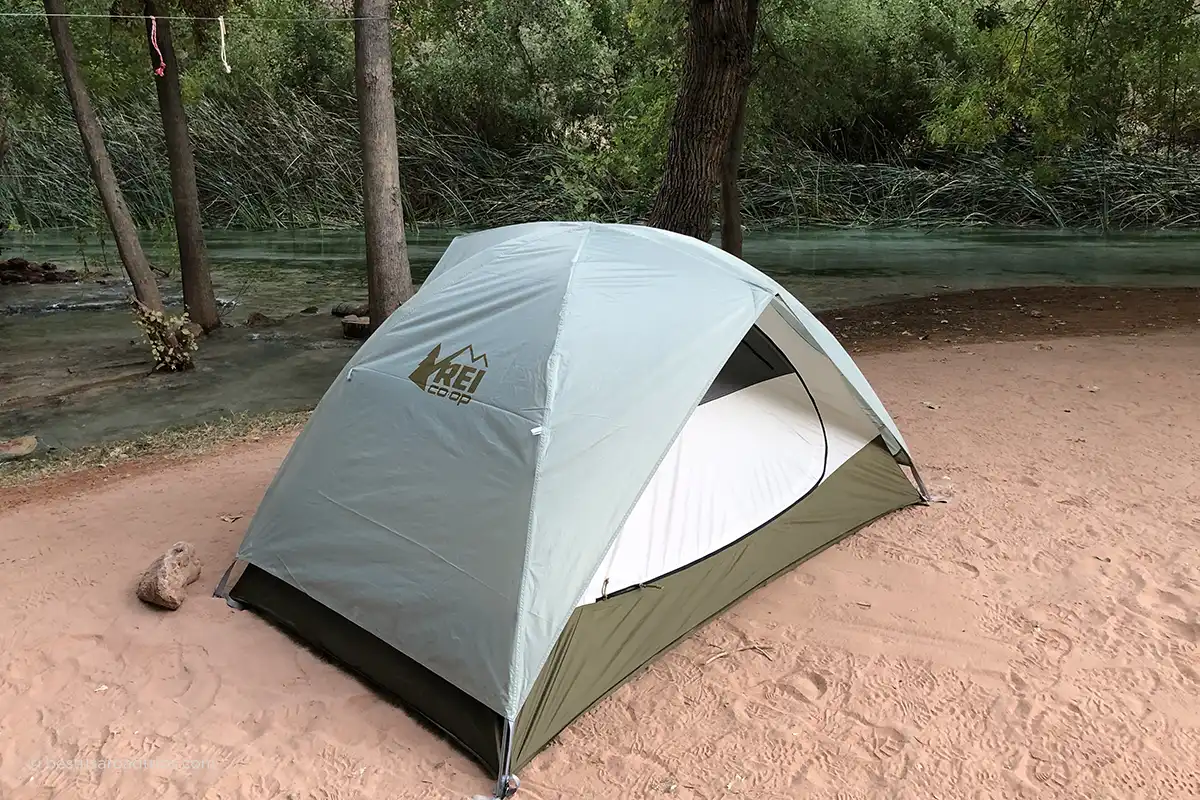
Lightweight backpacking tent
- Must be compact and easy to set up
- Wind and rain resistant
- Two-person tent works well, even for solo hikers who want space
We use a lightweight 2-person backpacking tent. It balances comfort and weight well.
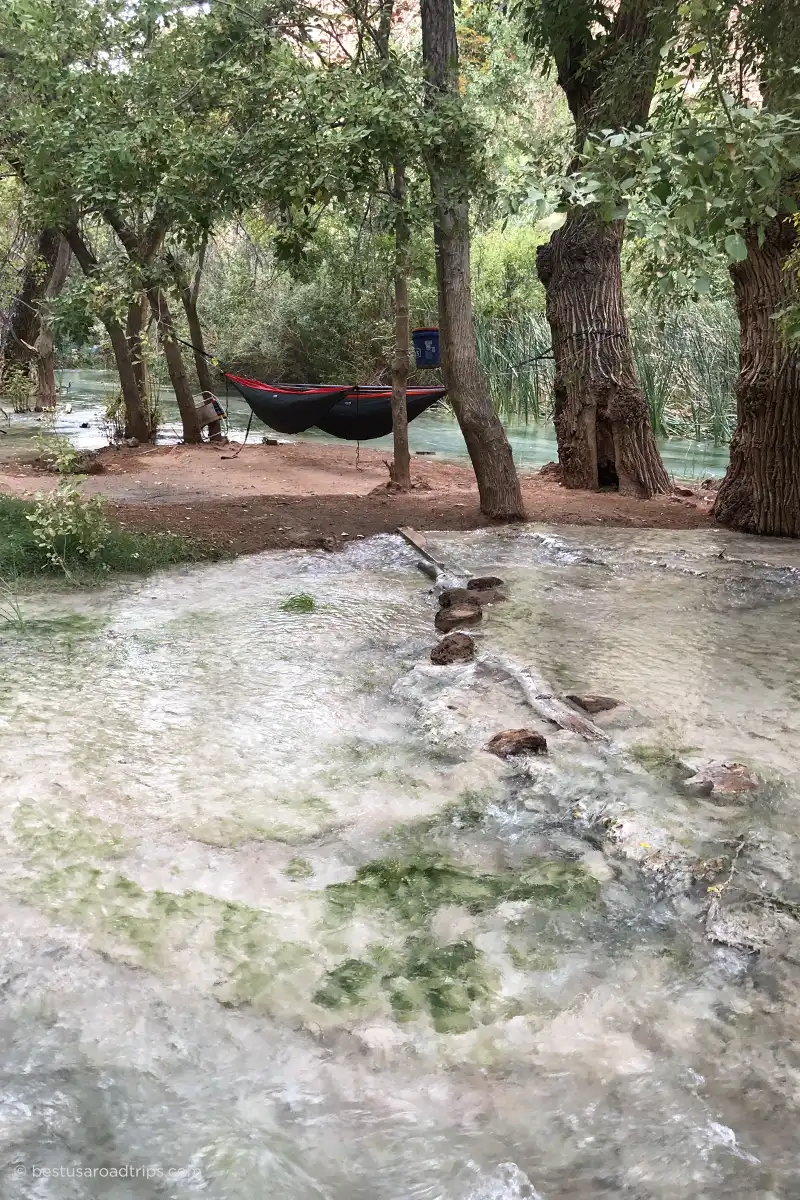
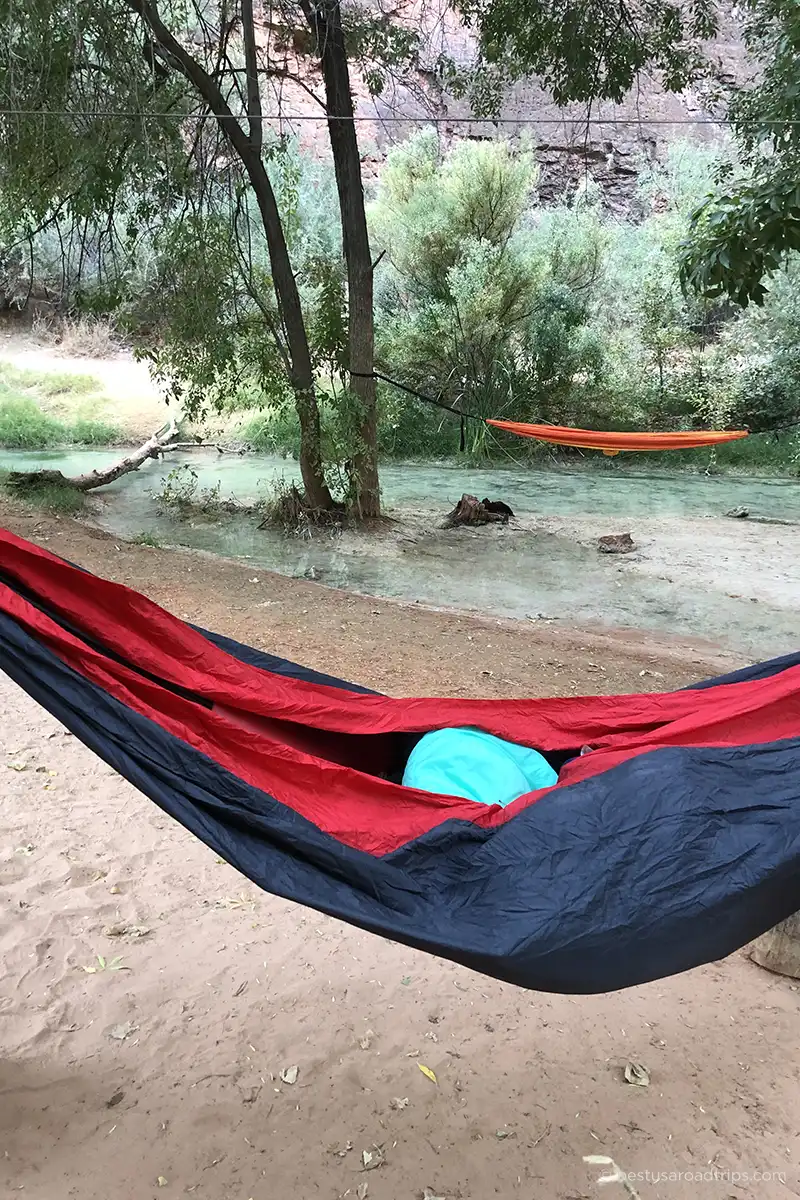
Sleeping hammock (instead of a tent)
- Works very well in summer
- Many trees at the campground
- Lighter than a tent
- Good airflow on hot nights
A hammock tent with bug protection is a solid alternative if you are comfortable sleeping suspended.
Sleeping bag
Even in summer, nights can be cool.
- Lightweight or ultralight sleeping bag
- Warm enough for desert temperature drops
We use mummy-style sleeping bags. They pack small and keep you warm at night.
Sleeping pad
Do not skip this.
- Insulation from the ground
- Comfort for three nights
Our choice is a Therm-a-Rest self-inflating sleeping pad. It adds comfort without much weight.
Good sleep matters here. You will hike, swim, and explore every day. A bad night makes everything harder the next morning.
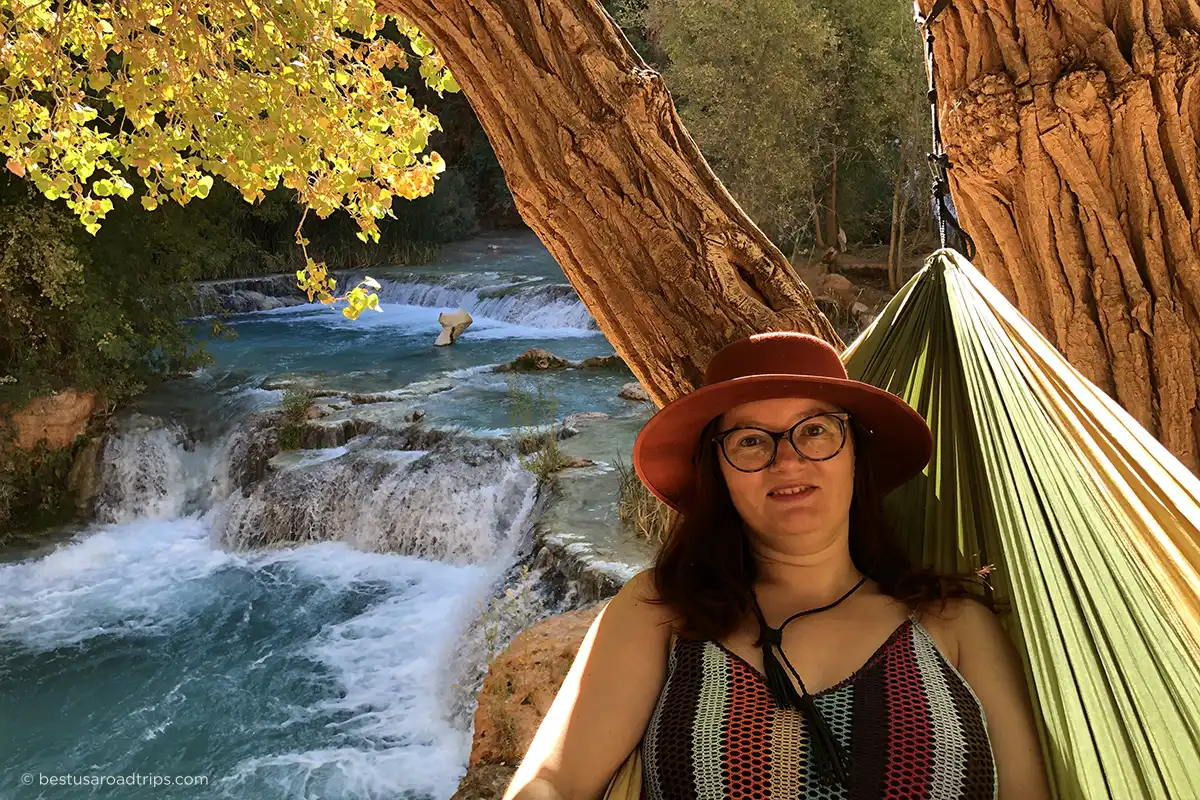
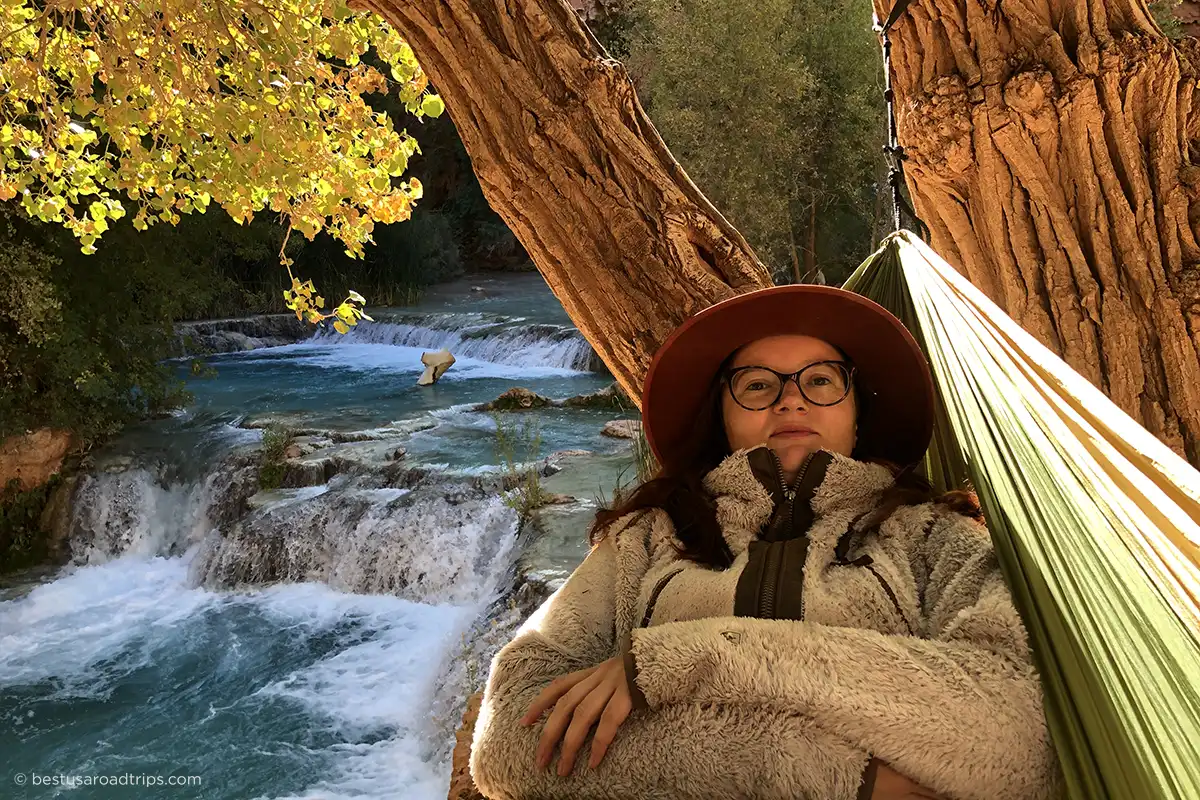
Relaxing hammock
This is not the same thing as a hammock tent.
- Used for daytime rest
- Perfect after long hikes
- Easy to hang near the creek
We always bring a light double camping hammock. It is one of our favorite items at Havasu Falls and gets used daily.
Havasu Falls Packing List: Clothing & Sun Protection
Clothing mistakes are common at Havasu Falls. The canyon feels tropical near the water, but the approach hike is full desert. Temperatures, sun exposure, and water all need to be considered.
You must plan for heat, strong sun, cool nights, and constant water exposure. Day–night temperature swings are significant in this desert environment. The deep canyon shade and constant water from streams and waterfalls make early mornings and evenings surprisingly cold, even in summer, so proper layers are essential.
Sun protection (absolutely essential)
There is little shade on the hike.
Pack:
- Wide-brim hat or cap
- Sunglasses with good UV protection
- Reef-safe sunscreen (mandatory on tribal land)
- Optional but helpful: lightweight long-sleeve sun shirt
Sunburn on day one can ruin the rest of the trip.
Clothing for water & waterfalls
You will spend a lot of time in the water.
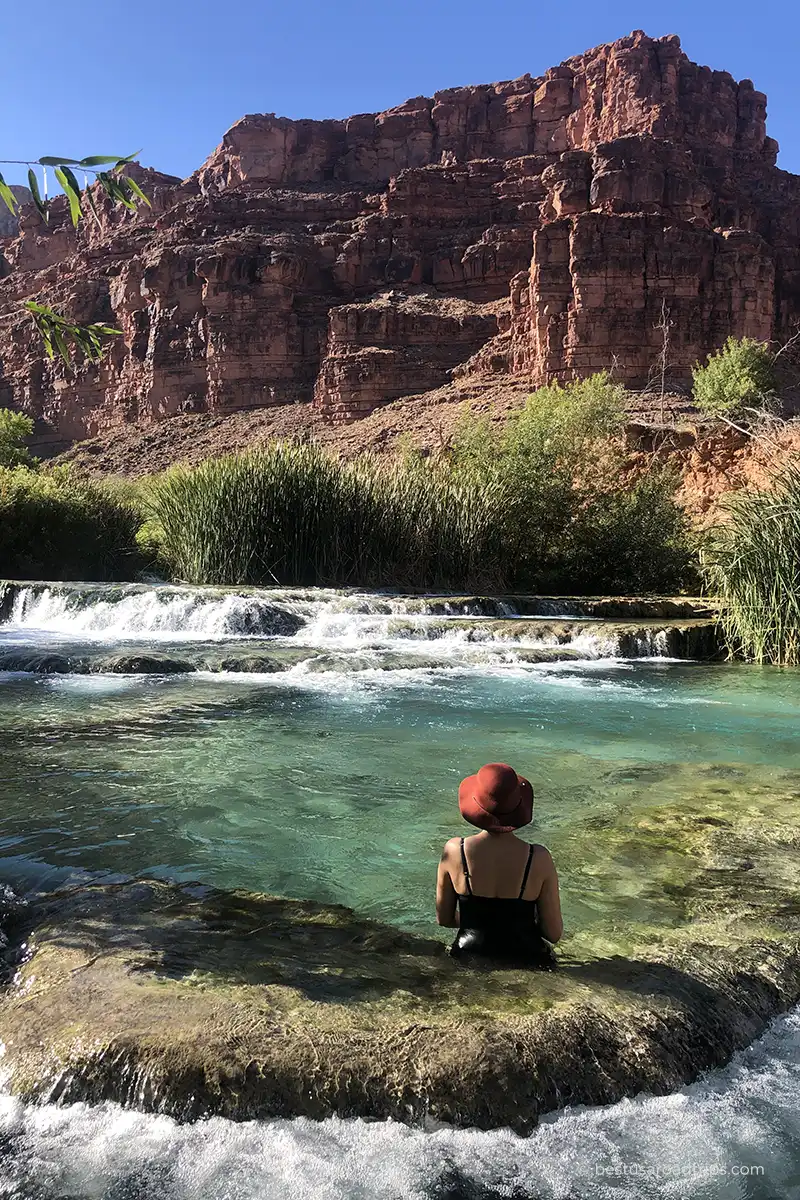
- Swimsuit (nudity is prohibited)
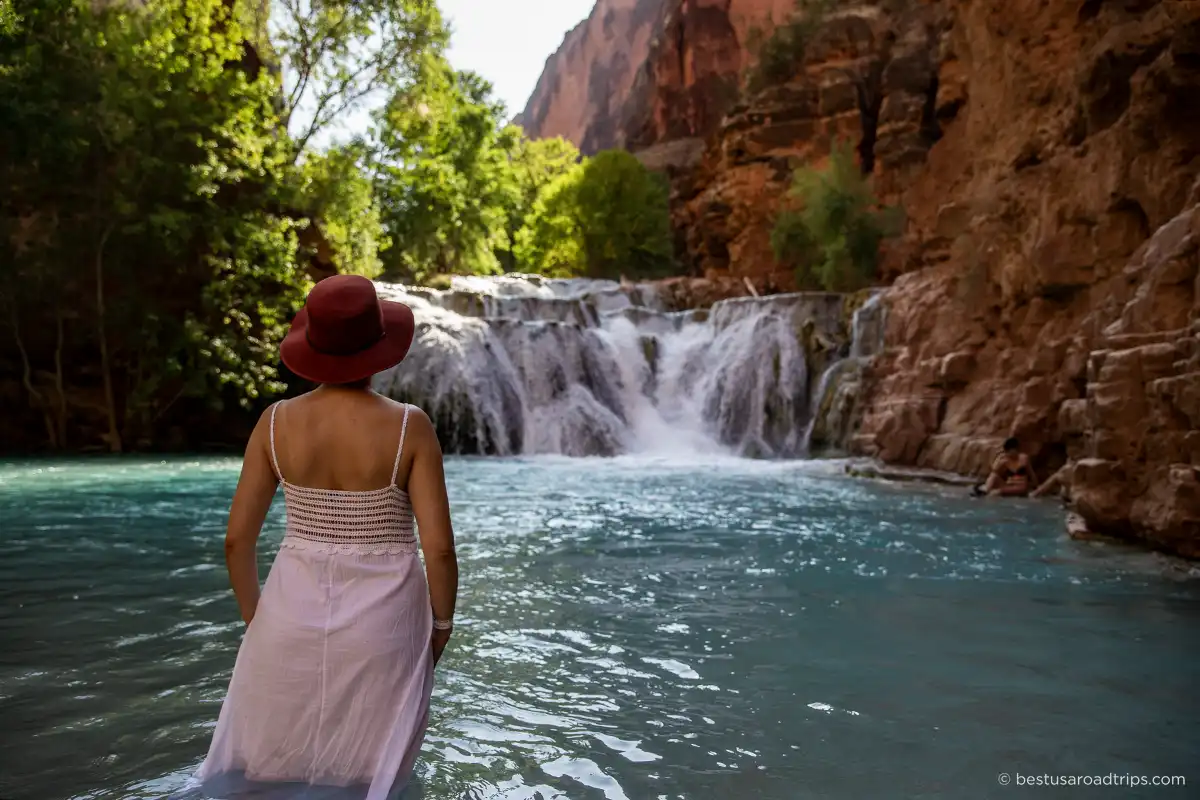
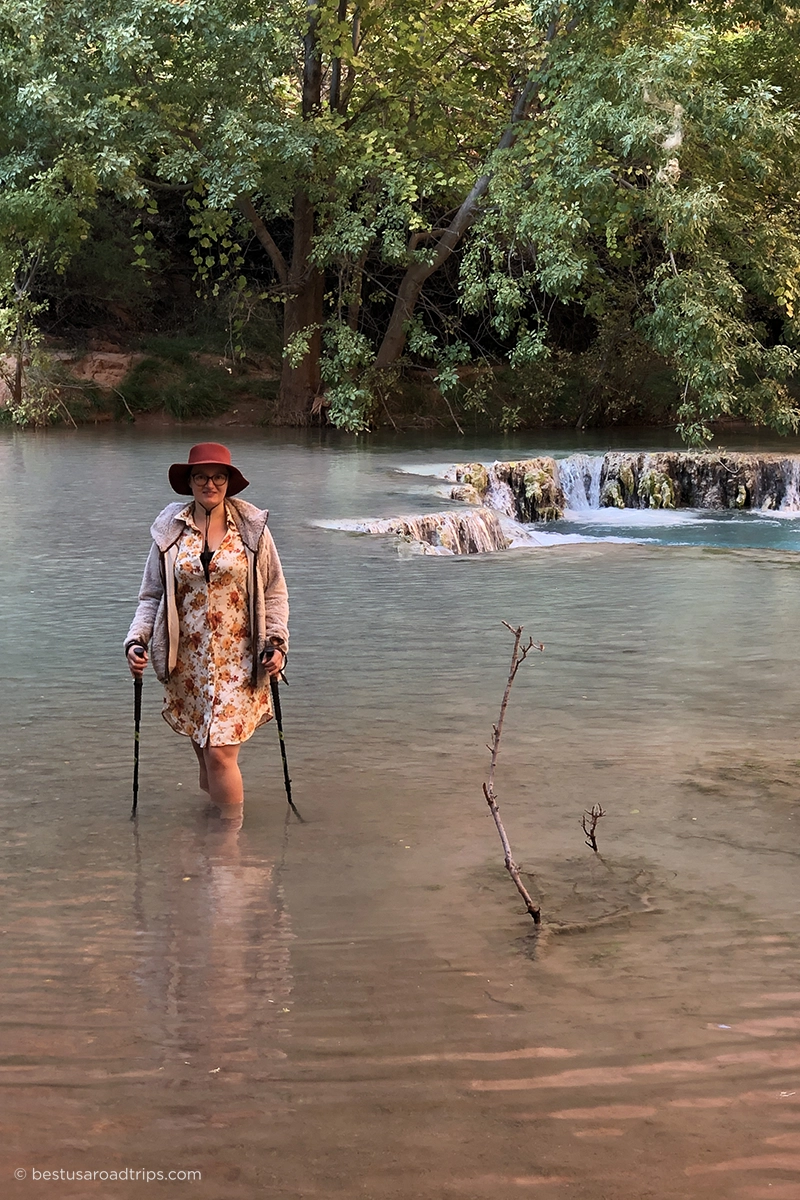
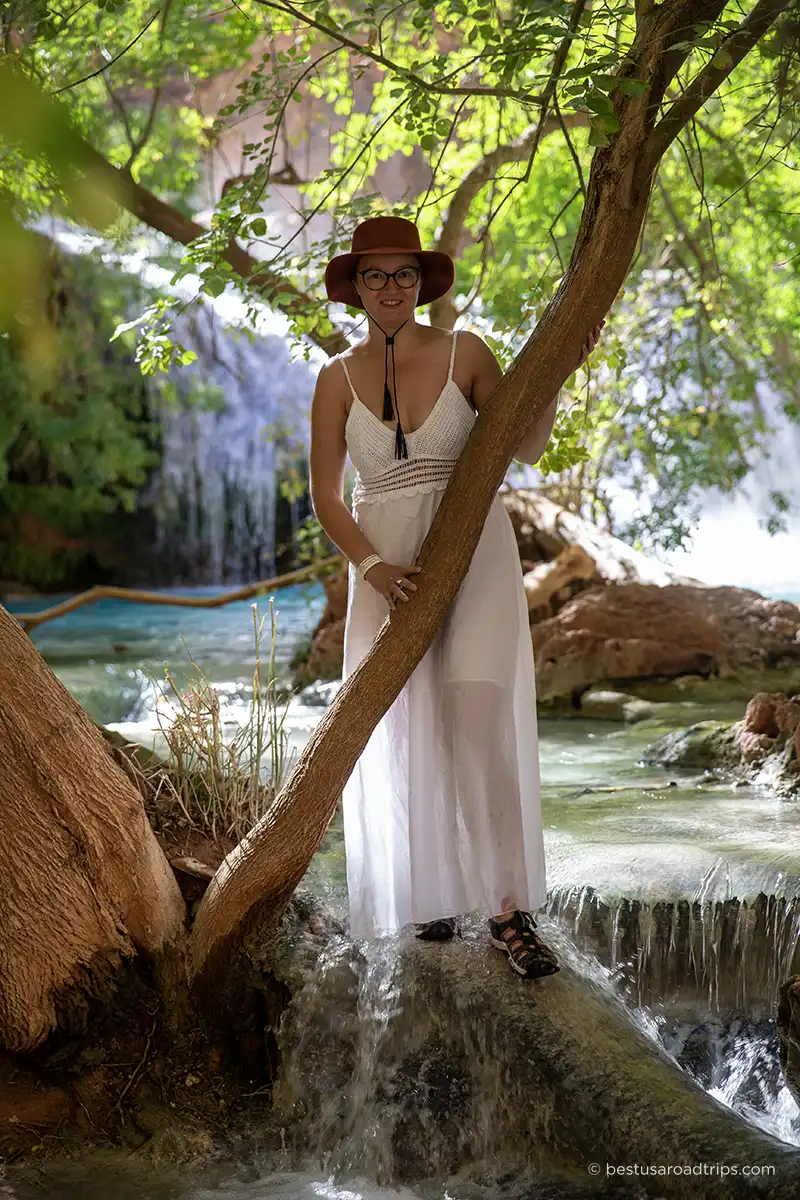
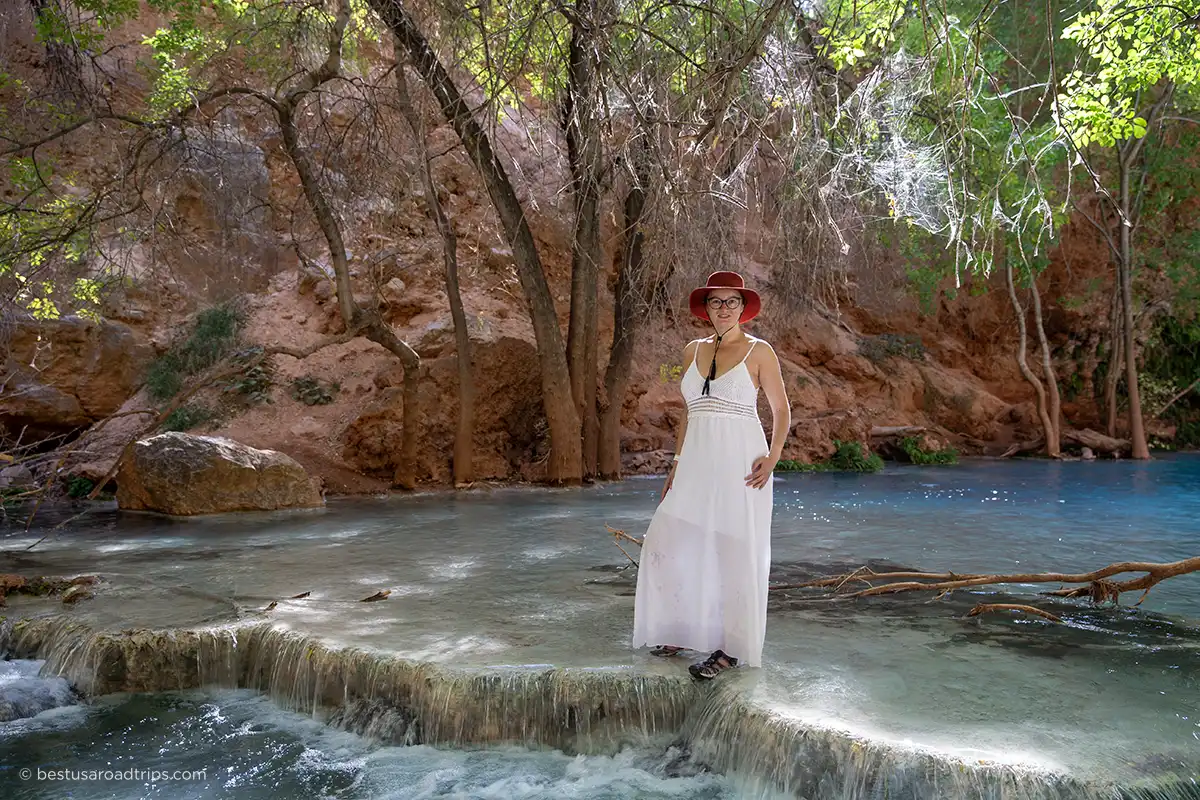
- Optional: a lightweight dress or a favorite outfit for photos at the waterfalls—easy to pack and perfect for memorable shots.
- Quick-dry microfiber towel
Lightweight and dries fast - Water shoes with strong traction
Rocks are slippery everywhere
Agnes uses closed-toe Keen sandals
Chris uses lightweight swim shoes
Water shoes are essential for:
- Swimming near waterfalls
- Crossing streams in camp
- Hiking to Beaver Falls (multiple river crossings)
Hiking footwear
You need two pairs of footwear.
- Hiking boots or hiking shoes
Good traction and foot protection are critical
We use Mammut, Merrell, and Keen - Water shoes (separate from hiking shoes)
Switching shoes at river crossings saves your feet and prevents blisters.
Hiking clothes
Choose lightweight, breathable layers.
Pack:
- Moisture-wicking short-sleeve shirts (at least two)
- Hiking pants or lightweight outdoor trousers
- Optional hiking shorts for summer
- Merino wool hiking socks
- Quick-dry underwear
Avoid cotton. It stays wet and causes chafing.
Layers for mornings & nights
Even in summer, nights can feel cold.
Pack:
- Long-sleeve thermal base layer
- Thermal leggings or pants
- Fleece jacket
- Optional light rain poncho (monsoon season)
Desert temperature swings are real. Layers keep you comfortable without adding much weight.
Proper clothing keeps you safe on the trail and comfortable at camp—and helps you actually enjoy time at the waterfalls instead of hiding from the sun.

Water, Hydration & Food for the Hike to Havasu Falls
This is the most critical part of your packing list. The hike to Havasu Falls is long, exposed, and unforgiving if you underestimate hydration.
There is no water at the trailhead and no water along the 10-mile trail.
Water for the hike (do not underestimate this)
- Minimum: 1 gallon (3.7 liters) per person
- In hot weather: more than 1 gallon is smart
- Summer temperatures can exceed 100°F
We use a hydration reservoir because it allows constant sipping without stopping.
- Our choice: Osprey water reservoir
- Comfortable, durable, and easy to drink while hiking
Electrolytes (very important)
Plain water is not enough.
- Pack electrolyte powders or tablets
- Helps prevent cramps, dizziness, and exhaustion
- Especially important in heat and during long climbs
We always add electrolytes to at least part of our water supply.
Hydration strategy that works
- Start hydrating 2–3 days before the hike
- Drink at least 2–2.5 liters per day beforehand
- Avoid alcohol before the hike
- Start hiking before sunrise to avoid heat
We usually start between 4:00 and 6:00 am. The canyon is cooler, shaded, and quieter. It makes a huge difference.
Snacks & food for the hike
You will burn a lot of energy.
Pack:
- Sandwiches or wraps
- Bananas or dried fruit
- Protein bars
- Beef jerky or salty snacks
The hike takes several hours. You will be hungry.
Supai Village has one small store, but:
- Prices are high
- Selection is limited
- Do not rely on it for hiking food
Once you reach camp, hydration becomes easier. But getting there safely starts with what you carry on this hike.
Cooking & Eating at Havasu Falls Campground
You need to pack food for three nights and four days. There are no restaurants at the campground. Supai Village has a small store, but prices are high and options are limited. Sometimes a local family sells food near the falls, but this is never guaranteed. Plan to be fully self-sufficient.
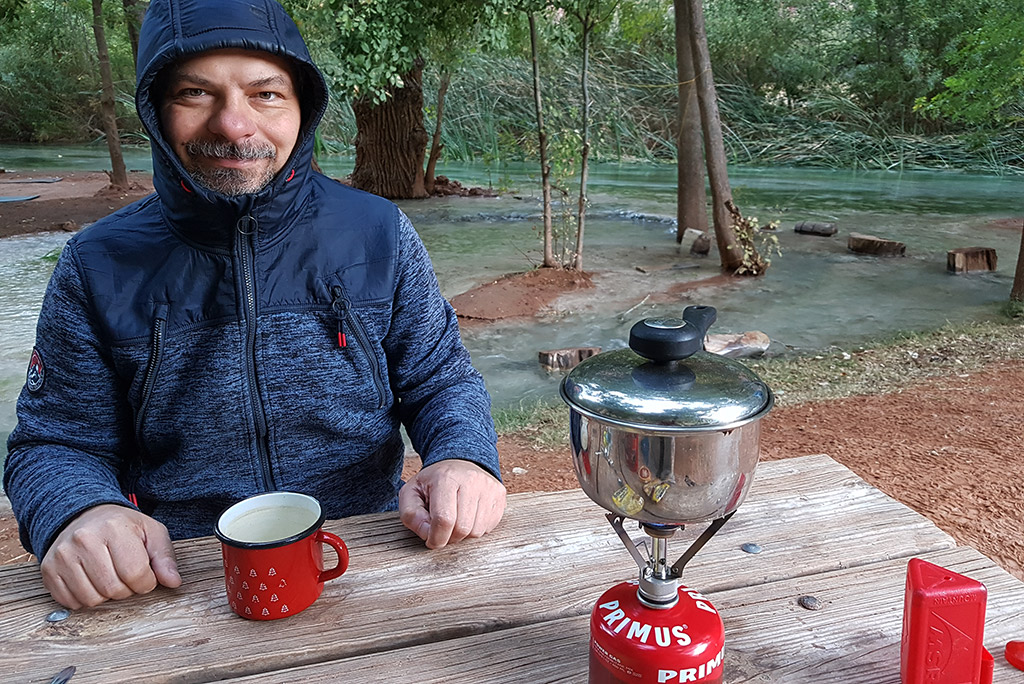
Backpacking stove & cooking setup
A compact stove makes a huge difference after a long hike.
Pack:
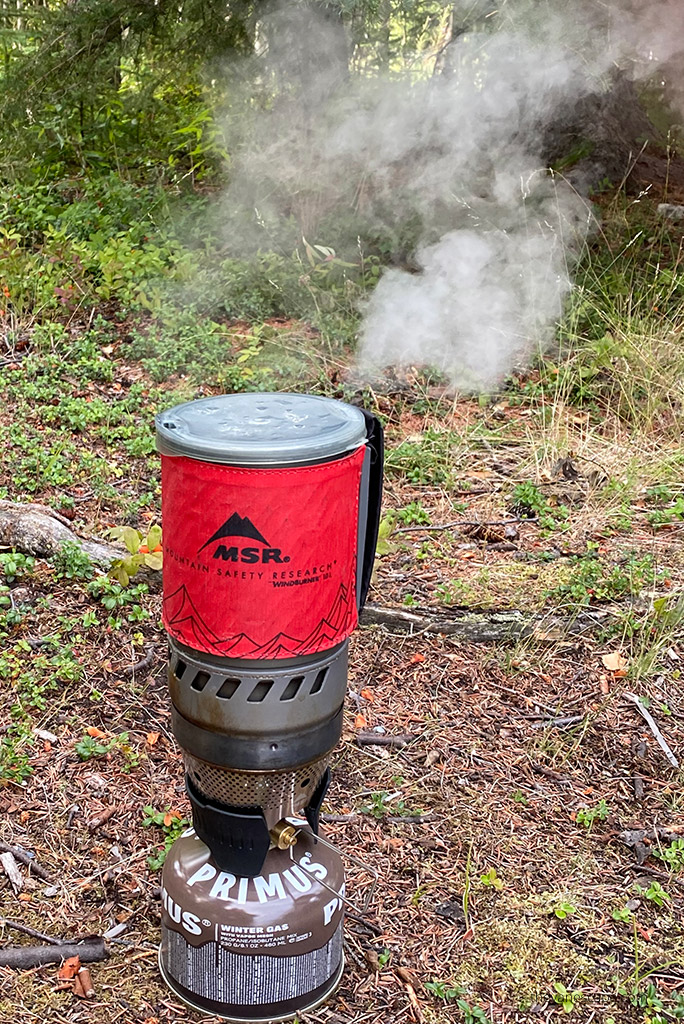
- Ultralight backpacking stove
- Fuel canister
- One 230 g canister is enough for two people for three days if used for coffee and dinners
- Lighter or waterproof matches
- Lightweight pot or stove set
- Camping mug (non-negotiable if you love coffee like we do)
- Spork or lightweight utensils
- Small cutting knife or camping knife (we use a Gerber)
Hot meals and coffee boost morale more than you expect in the canyon.

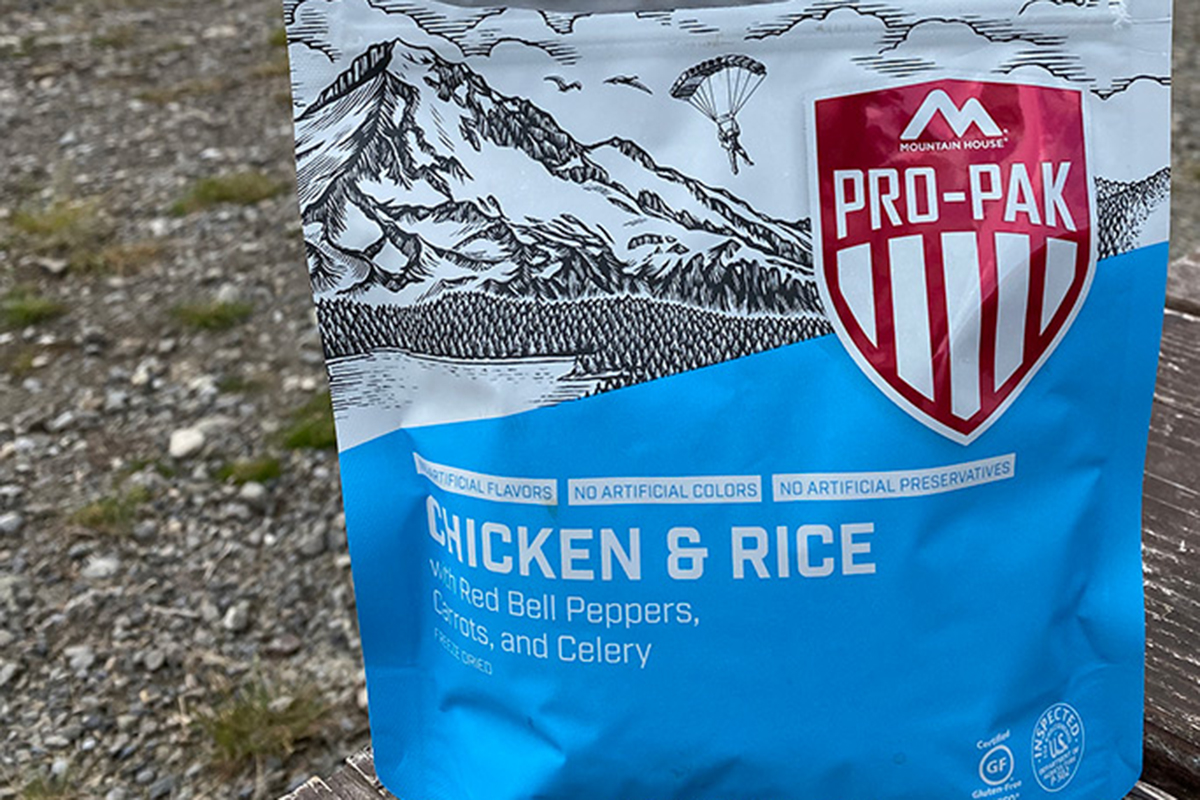
Food to bring
We focus on simple, lightweight, calorie-dense food.
What works well:
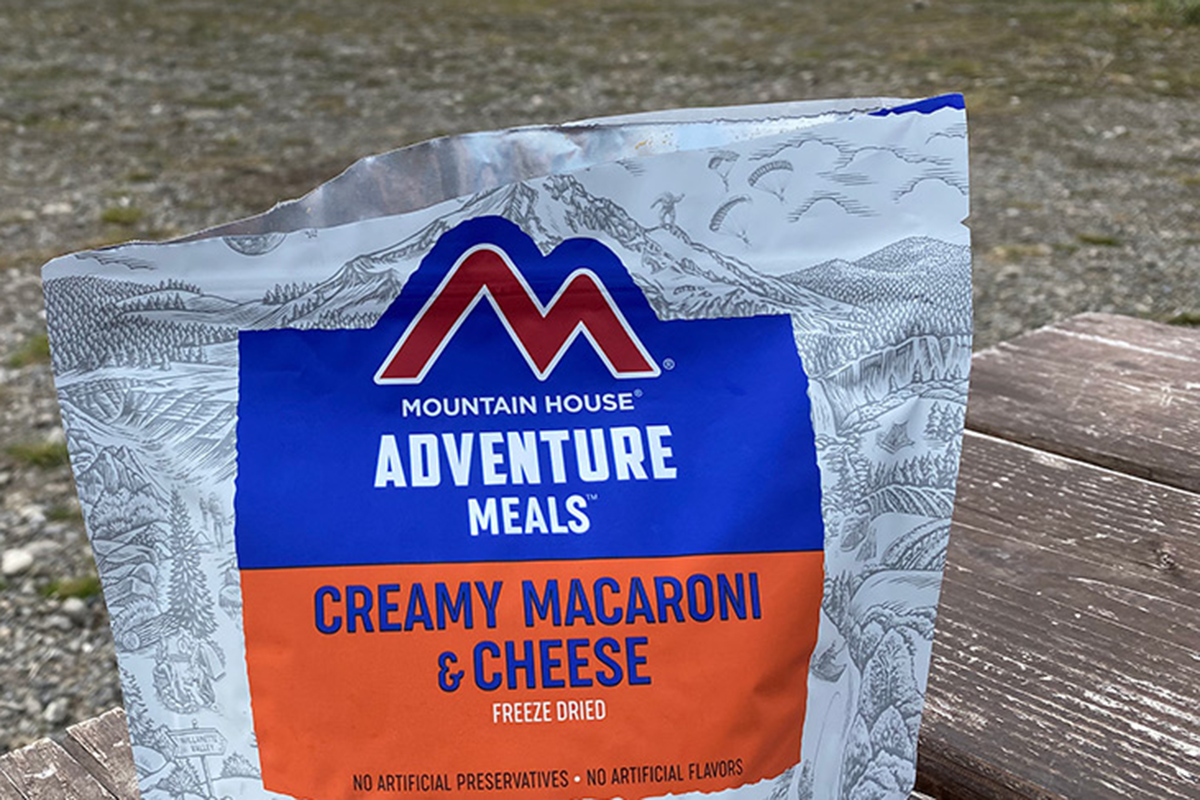
- Freeze-dried backpacking meals (Mountain House, ReadyWise)
- Instant oatmeal
- Coffee or tea
- Tortillas or bread
- Nut butter packets
- Trail mix, bars, jerky
- Snacks you already know your stomach tolerates
If you follow a special diet, bring everything with you. Do not rely on Supai.
Water at camp
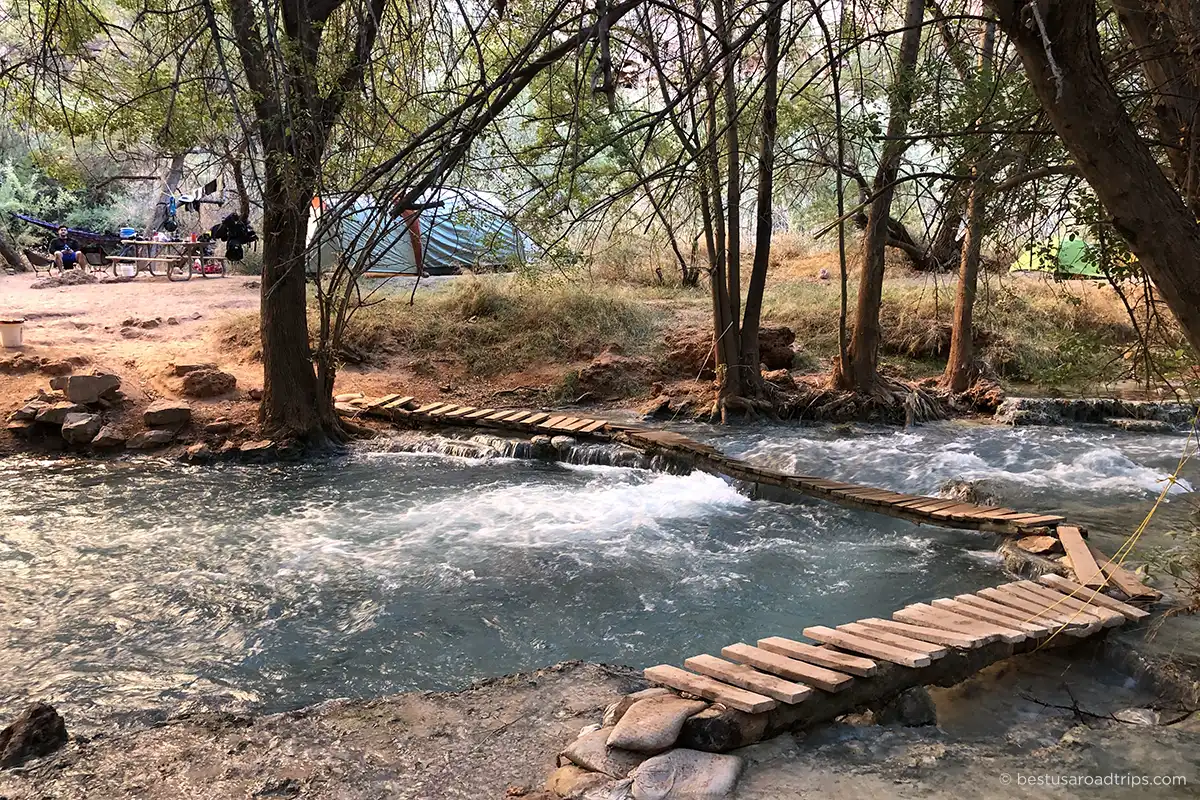
There is a spring with potable water at the campground.
- We drink it without filtering
- Still, we always pack water purification tablets as backup
Important:
- The spring is located near one end of the campground
- A large water reservoir or bottles make life easier
Food storage (very important)
Wildlife here is bold.
You must pack:
- Paracord
- Carabiners
- Food bags or stuff sacks
- Trash bags
At night and when away from camp:
- Hang food, trash, and scented items
- Squirrels and raccoons will get into anything left unattended
Everything you pack in must be packed out. No exceptions.
Good food planning saves energy, keeps weight reasonable, and makes evenings at camp something you actually look forward to.
Havasu Falls Packing List: Safety, Documents & Essentials
Havasupai is remote wilderness. There are no medical services, no cell coverage, and no easy way to get help. Packing for safety is not optional.
This is one area where we never cut corners.
Required documents
You must have these with you.
Pack:
- Government-issued ID or passport
Required at mandatory check-in - Printed reservation confirmation
- Wristband paperwork (after check-in)
Do not rely only on your phone. There is no signal or charging access.
Travel insurance
Strongly recommended. Evacuation from Havasupai is complicated and expensive. The tribe also recommends insurance for all visitors.
First aid & personal health
There is no doctor, clinic, or pharmacy.
Pack:
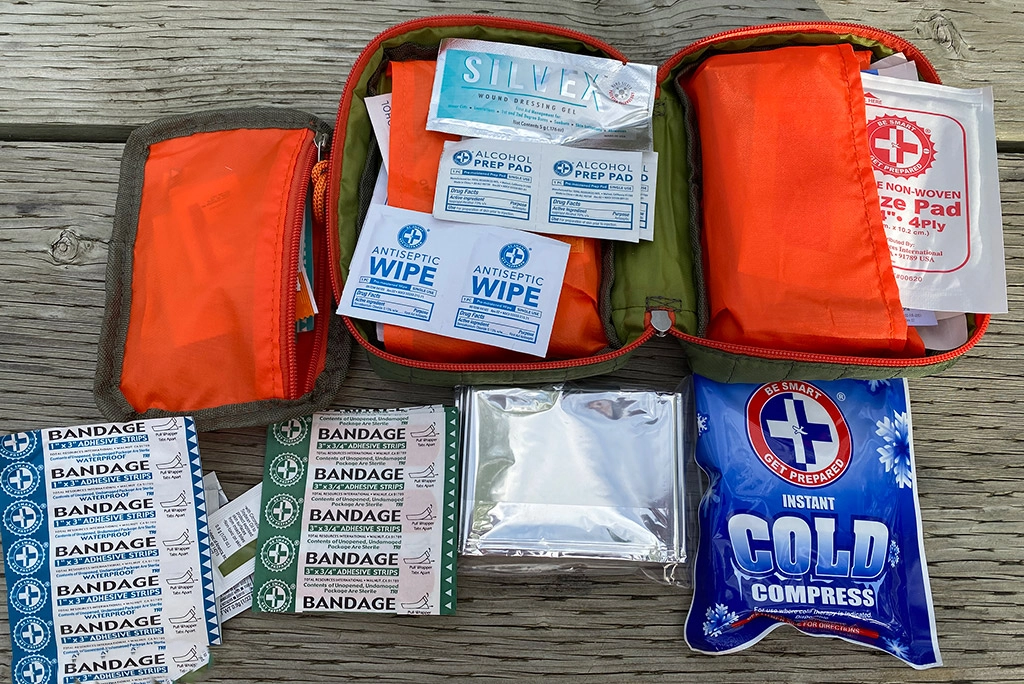
- Compact first aid kit
Include blister care, bandages, antiseptic - Prescription medications
Bring extra in case of delays - Pain relievers, allergy meds, stomach meds
If you forget it, you cannot buy it in Supai.
Photography Basics (Keep It Light)
- Smartphone or camera
- Power bank
- Dry bag or waterproof phone case
If photography is a priority for you, we created a separate, detailed guide focused entirely on photographing Havasu Falls and all five waterfalls, including best light, seasons, and gear choices.
Power & navigation
No electricity at camp.
Pack:
- Fully charged power bank
- Charging cables
- Headlamp (already mentioned, but critical enough to repeat)
- Optional paper map or guidebook
Headlamps are essential for:
- Early-morning hiking starts
- Walking to toilets at night
- Emergencies
Emergency & security items
Small items that matter. Pack:
- Emergency whistle
- Knife or multitool
- Cash
Required for food stands and often cheaper in Supai
Card payments include extra fees - Trash bags
You must pack out all trash
There are no trash cans at the campground.
Important safety reminders
- No cell service or Wi-Fi
- No emergency response on demand
- Help can take hours or longer
Prepared hikers have great trips. Unprepared hikers struggle.
This section may not be exciting—but it is one of the most important parts of your Havasu Falls packing list.
Havasu Falls Packing List: Toiletries & Personal Comfort
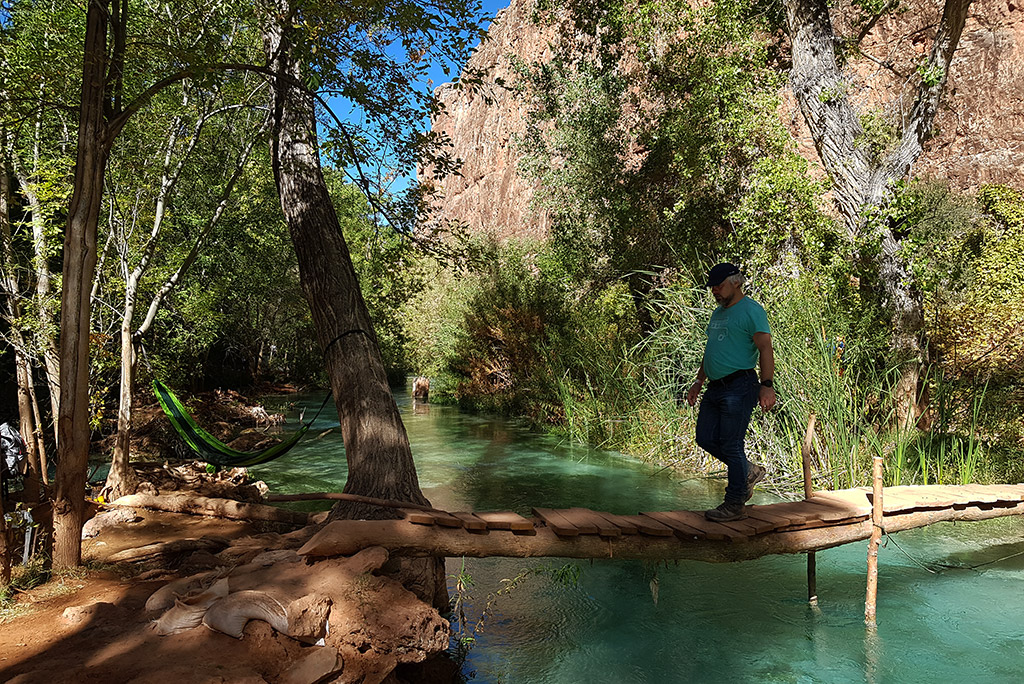
Havasu Falls Campground has no running water and no showers. Toiletries need to be simple, lightweight, and compliant with tribal rules.
Anything that pollutes water is strictly prohibited.
Toiletries you should pack
Keep it minimal. Pack:
- Toothbrush and travel-size toothpaste
- Baby wipes or body wipes
Essential substitute for showers - Intimate wipes
- Hand sanitizer
- Toilet paper
Compost toilets are available, but supplies can run out - Small quick-dry towel
Do not bring shampoo or soap. Even biodegradable products are not allowed in the creek or campground.
Sun & heat protection
This is a desert backpacking trip. Pack:
- High-SPF sunscreen (reef-friendly)
- Lip balm with SPF
- Sunglasses
- Wide-brim hat or cap
Sun exposure is intense, especially on the hike and around midday at camp.
Foot care & blister prevention
Feet matter here more than almost anywhere. Pack:
- Blister patches
- Foot balm or anti-chafe stick
- Extra hiking socks
Wet feet are common due to creek crossings and waterfalls.
Comfort extras we always bring
Not required—but they make a difference.
Optional but useful:
- Small pillowcase or inflatable pillow
- Lightweight sit pad
- Earplugs (camp can be lively)
Comfort matters when you hike 10 miles in and out.
This setup keeps you clean enough, protected from the sun, and comfortable without breaking any Havasupai rules or overpacking.

Mooney Falls & Beaver Falls Add-On Gear
Not every visitor hikes beyond Havasu Falls. But if you plan to continue to Mooney Falls or Beaver Falls, you need a few extra items. These two hikes are wetter, steeper, and more technical than anything on the main trail.
- Gloves for chains and ladders
Mooney Falls requires descending wet ladders and chains carved into the cliff. Everything is slippery from constant spray. Cheap work gloves with good grip often work better than lightweight hiking gloves. Touchscreen gloves are fine, but traction matters more than comfort. - Small daypack
Leave your full backpack at camp. A small, lightweight daypack is much safer on ladders and during river crossings. You only need water, snacks, and a few essentials. - Quick-dry towel and swimsuit
You will get wet at Mooney Falls. Even if you don’t swim, the mist soaks clothing and gear. A compact microfiber towel dries fast and takes very little space. - Water shoes with good traction
Beaver Falls requires multiple river crossings. Closed-toe water shoes or sturdy water sandals protect your feet and provide grip on slick rocks. We switch between hiking boots and water shoes during this hike. - Dry bag or waterproof phone case
Waterfall spray and creek crossings make phone protection essential. A small dry bag keeps your phone, camera, and electronics safe.
From the Havasu Falls campground, both hikes are easy to access, but they are best done when you’re rested. We recommend tackling them after your first night at camp. For detailed routes, ladder sections, and safety tips, read our dedicated guides to Mooney Falls and Beaver Falls.
Final Thoughts
Packing for Havasu Falls is not like packing for a typical camping trip. This is a remote backpacking trip with a long desert hike, strict tribal rules, and very limited resources once you are inside the canyon.
After completing this hike three times, we learned that smart packing matters more than fancy gear. Every extra pound makes the 10-mile hike harder. Every forgotten item can turn into a real problem. The right balance is packing light while still being fully prepared.
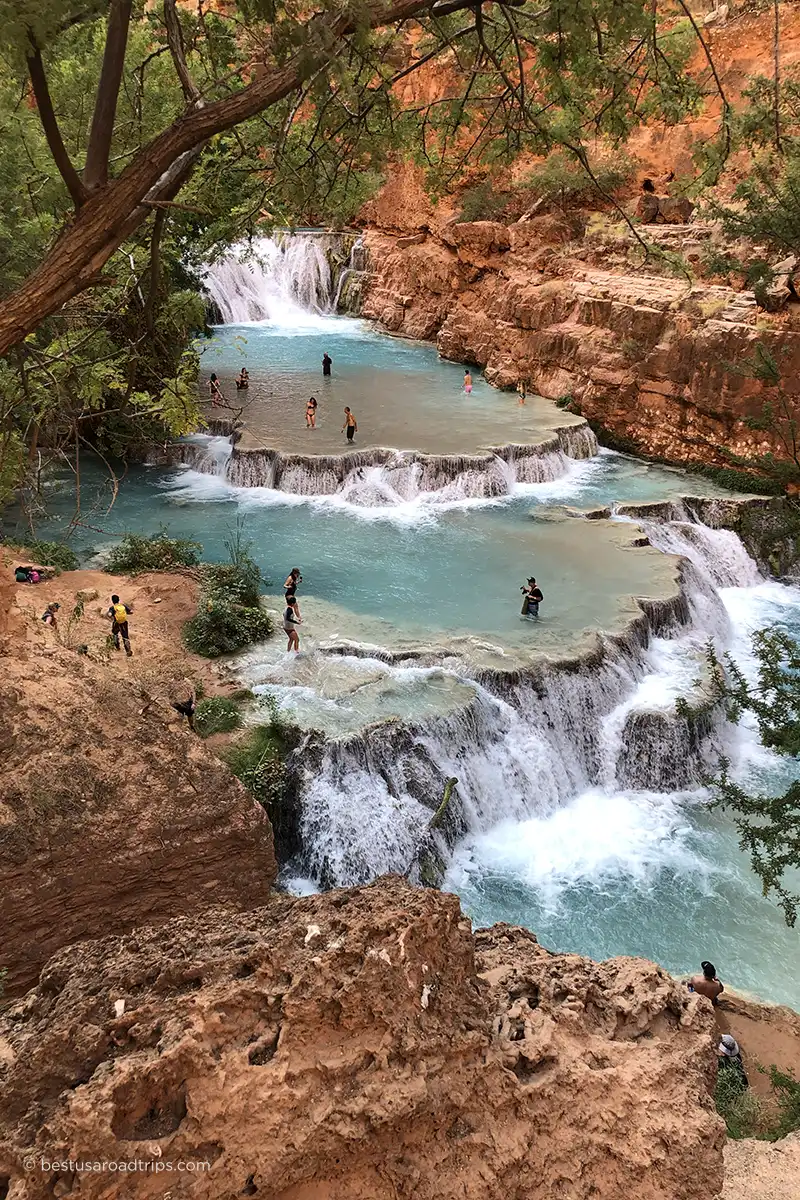
Havasu Falls rewards good planning. If you arrive hydrated, organized, and with the right essentials, you can focus on what makes this place special—clear blue water, powerful waterfalls, quiet mornings, and unforgettable days along Havasu Creek.
Use this Havasupai packing list as your foundation. Adjust it to the season and your personal needs. Download the printable checklist. Double-check everything before you leave.
When you pack well, the hike feels manageable, the campground feels comfortable, and the waterfalls feel even more rewarding.
Do You Like It? Pin It For Later!