Oregon Covered Bridges Road Trip: Discover the Most Scenic Bridges in the Beaver State
Wooden bridges tucked among green hills, quiet creeks, and forest backroads — Oregon’s covered bridges feel like something out of a storybook. Once built to connect rural towns, today they connect travelers to the state’s past. In this guide, you’ll find the most beautiful covered bridges in Oregon, from historic spans near Cottage Grove to photogenic gems hidden in Linn and Coos Counties. We’ll share where to find them, the best ones to photograph, and how to plan your own short covered bridge road trip through the heart of Oregon.
This article may contain affiliate / compensated links. For full information, please see our disclaimer here.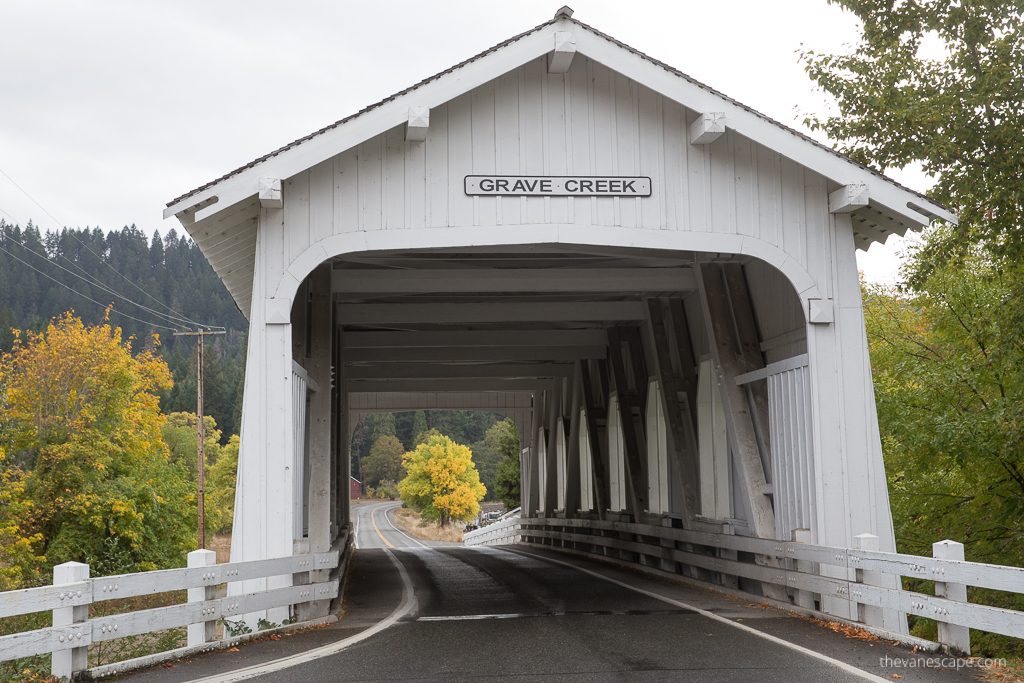
Why We Keep Stopping for Oregon’s Covered Bridges
Chris and I have a soft spot for covered bridges. There’s something about their charm — the weathered wood, the quiet creeks, the way light filters through the beams — that always makes us stop, even when we’re on a tight schedule.
Over the years, we’ve explored Oregon many times, from Portland to Crater Lake, and we’ve made it a tradition to visit these wooden landmarks whenever we find them.
Our fascination started years ago after watching The Bridges of Madison County. Since then, every time we come across a covered bridge, we pull over, grab our cameras, and take a moment to imagine what life looked like when wagons rolled through these crossings.
All the photos in this article are ours, taken on different Oregon road trips. We’ve personally visited many of the bridges you’ll read about here — and handpicked the ones that stood out for their beauty, easy access, and perfect photo opportunities.
Whether you’re planning a road trip through Lane County, cycling the Cottage Grove Scenic Bikeway, or heading toward Crater Lake, these are the bridges we think you shouldn’t miss.
If you’re building your itinerary, our Oregon travel guide can help you connect all the highlights into one route.
Why Oregon Has So Many Covered Bridges
Oregon’s covered bridges are more than pretty backdrops — they’re pieces of living history. Most were built between the 1850s and the 1950s, when timber was plentiful, and the state’s growing network of creeks and rivers demanded reliable crossings. Early settlers built hundreds of these bridges using simple hand tools and sturdy Douglas fir, one of Oregon’s strongest and most durable woods.
The “cover” wasn’t just for beauty. The wooden roof and side walls protected the bridge’s trusses from Oregon’s constant rain, extending their lifespan from about 10 years to nearly 80. Without those covers, the heavy timber would rot quickly in the region’s damp climate.
At their peak, Oregon had more than 450 covered bridges. Today, 48 historic bridges remain, making it the state with the highest concentration of covered bridges in the American West. Many are now listed on the National Register of Historic Places and lovingly preserved by local communities.
Each bridge tells a small story about Oregon’s past — a time of horse-drawn wagons, sawmills, and small farming towns connected by narrow wooden roads. When you visit them today, it’s easy to imagine that slower pace of life and hear the creak of wagon wheels echoing across the planks.

The Most Beautiful Covered Bridges in Oregon
Oregon’s covered bridges are scattered across the state, but the most picturesque ones are found in Lane, Linn, and Coos Counties — regions filled with quiet backroads, green valleys, and winding creeks. Each bridge has its own personality, color, and story. Here are our favorites, all easy to include on a road trip from Portland to Crater Lake or a loop through western Oregon.
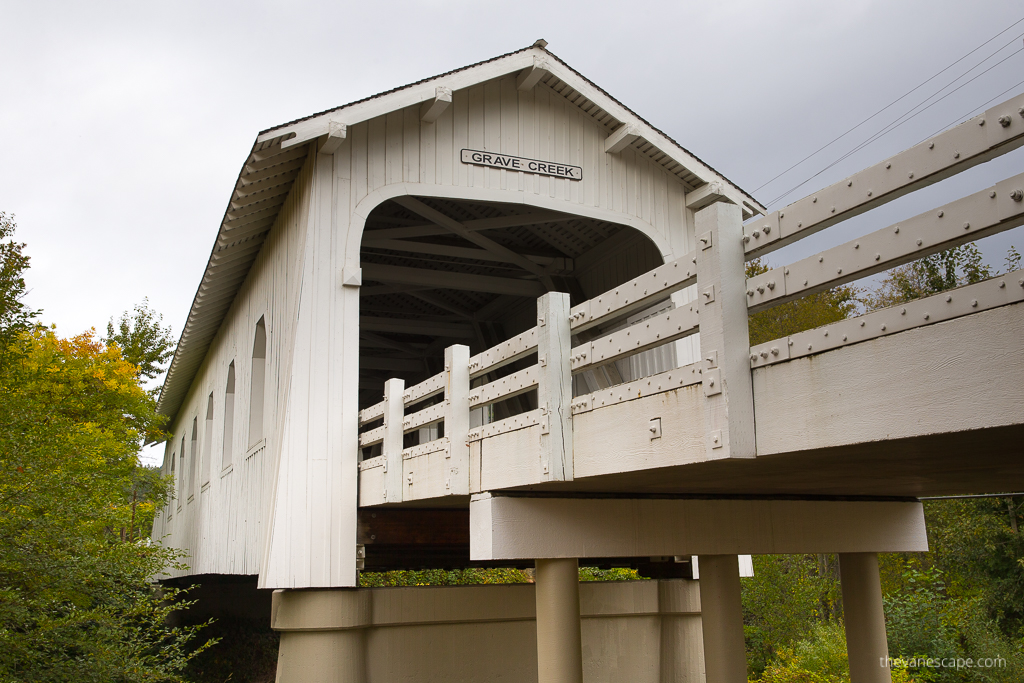
Grave Creek Bridge – Josephine County
Built in 1920, this graceful white bridge is the only remaining covered bridge in Josephine County. At 105 feet (32 m) long, it has stood for more than a century, carrying travelers across Grave Creek near Sunny Valley.
- Why visit: It’s the oldest covered bridge we’ve seen in Oregon and one of the most photogenic.
- Good to know: The bridge is still open to vehicles and easy to reach just off I-5 north of Grants Pass.
- GPS: 42.636097°N, 123.377638°W
Larwood Bridge – Linn County
One of Oregon’s prettiest and most photogenic bridges, Larwood Bridge was built in 1939 at the confluence of Roaring River and Crabtree Creek. Its white-painted wood and open side trusses create a perfect play of light and shadow.
- Why we love it: The nearby Larwood Wayside Park makes a peaceful stop for photos or a picnic.
- Good to know: The bridge is open to cars and located about 20 miles east of Albany.
- GPS: 44.630678°N, 122.740921°W

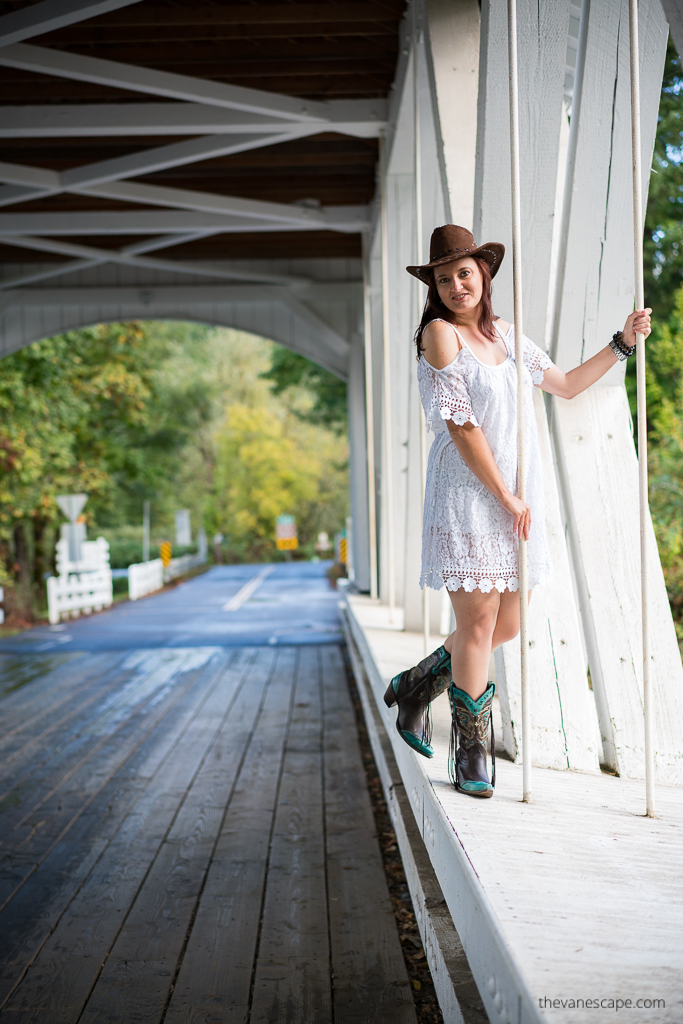
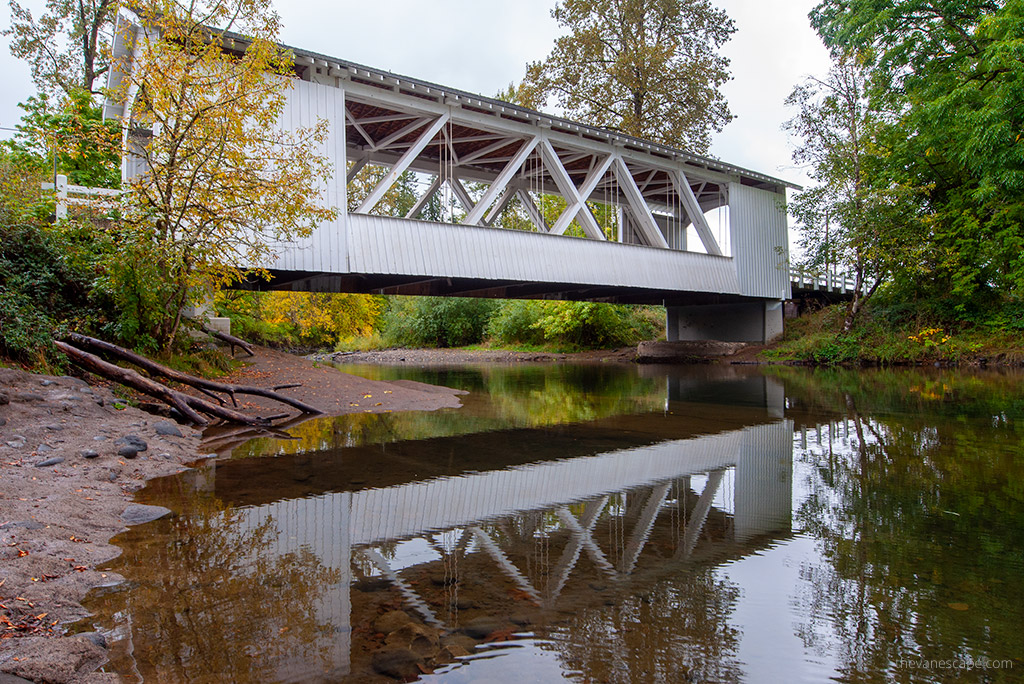
Hannah Bridge – Linn County
Also known as Thomas Creek Bridge, this 1936 structure stretches 105 feet (32 m) across the creek near Scio. It’s one of several historic bridges in the area.
- Why visit: It’s quiet, surrounded by farmland, and a great example of the state’s timber craftsmanship.
- GPS: 44.712067°N, 122.718420°W

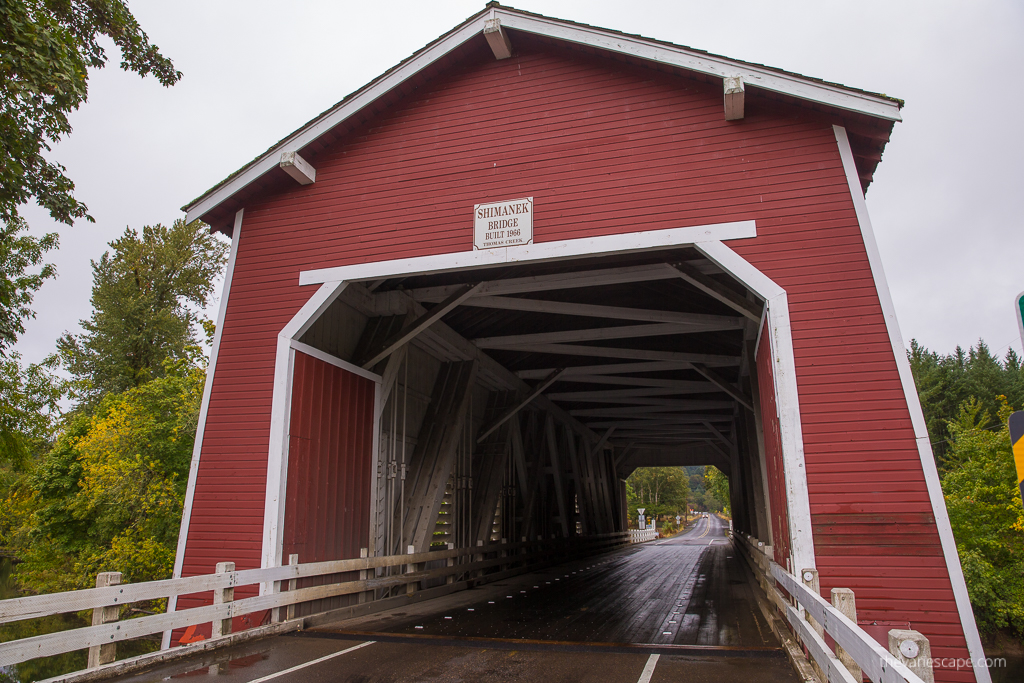
Shimanek Bridge – Linn County
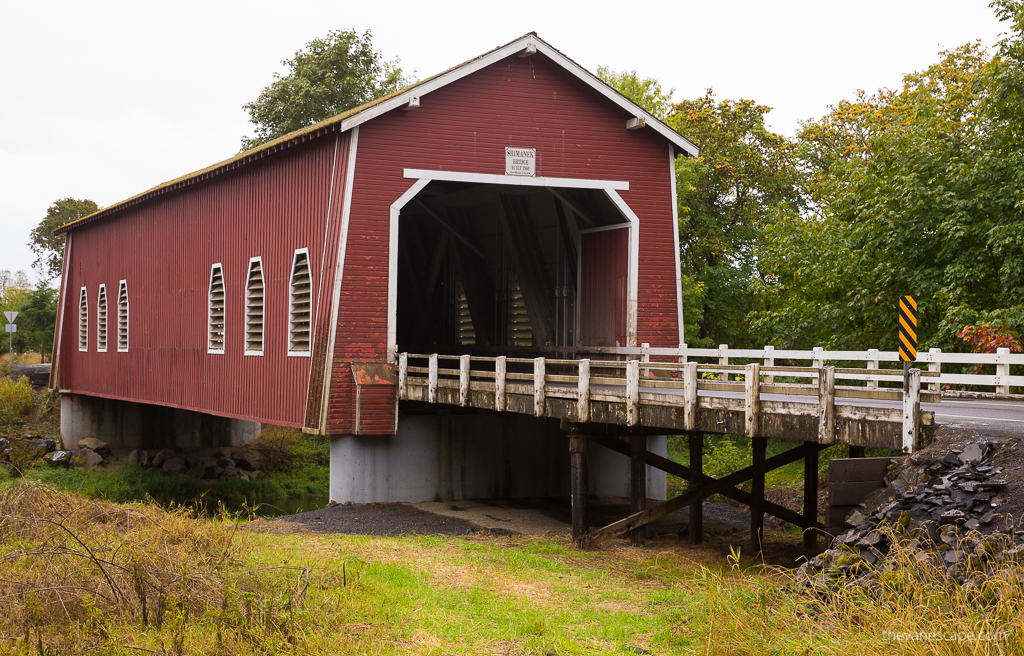
This striking dark red bridge is one of Oregon’s most photographed. The current structure was built in 1966, but the original bridge at this site dates back to 1861. Floods destroyed earlier versions, and this one was rebuilt to last.
- Why we love it: Its color pops beautifully against the green hills, especially in fall.
- Good to know: Located just outside Scio, the “Covered Bridge Capital of the West.”
- GPS: 44.715673°N, 122.804398°W
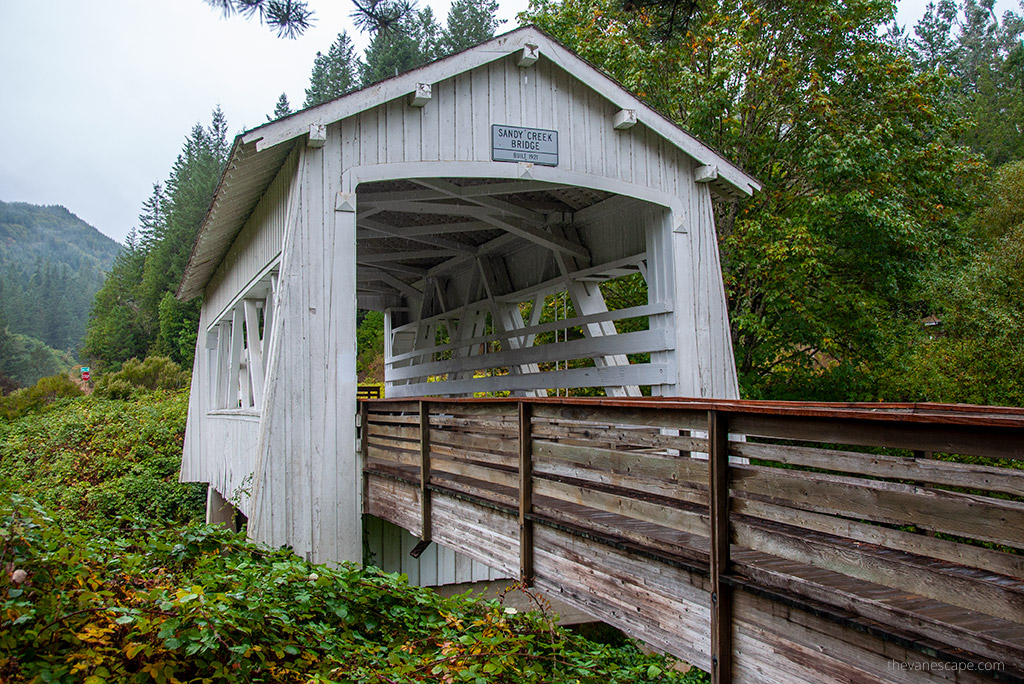
Sandy Creek Bridge – Coos County
At just 60 feet (18 m), Sandy Creek Bridge is small but full of character. Built in 1921, it once carried vehicles over the Middle Fork Coquille River but now serves as a pedestrian walkway.
- Why visit: One of the oldest surviving bridges in Oregon and beautifully maintained.
- Good to know: Stop at the Sandy Creek Covered Bridge Park near the town of Remote to stretch your legs.
- GPS: 43.00637°N, 123.89177°W
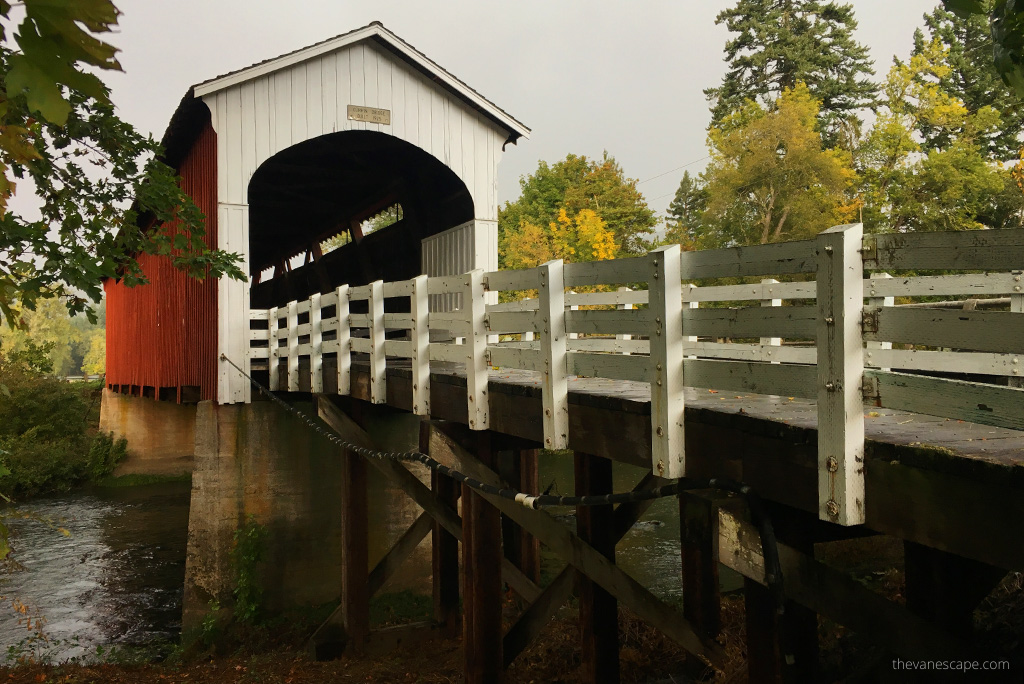
Currin Bridge – Lane County
Built in 1883 and rebuilt in 1925, the Currin Bridge stands out for its unique color combination — white portals with red sides. It’s now open only to pedestrians and cyclists.
- Why we love it: The colors make it one of the most distinctive bridges in Oregon and a photographer’s favorite.
- Good to know: Located near Cottage Grove, the heart of Oregon’s “Covered Bridge Capital.”
- GPS: 43.793039°N, 122.996458°W
Cottage Grove Covered Bridge Tour Route
If you want to see several bridges in one short drive, Cottage Grove is the perfect place to start. Known as the “Covered Bridge Capital of the West,” this charming small town in Lane County has the largest concentration of covered bridges in Oregon.
The Cottage Grove Covered Bridge Tour Route is an officially designated scenic drive that stretches about 20 miles (32 km) through rolling farmland, forested hills, and around Dorena Lake. It’s an easy loop — perfect for a relaxed half-day trip, even if you’re not exploring the rest of Oregon’s bridges.
Highlights of the Route
Along the way, you’ll see a half-dozen beautifully restored bridges:
- Currin Bridge – Red-and-white beauty near the start of the route.
- Mosby Creek Bridge – Oregon’s oldest continuously used covered bridge, built in 1920.
- Dorena Bridge – One of the most scenic, sitting gracefully over the Row River.
- Stewart Bridge – A quiet gem tucked in the woods, perfect for photos.
- Chambers Bridge – The only covered railroad bridge west of the Mississippi, right in downtown Cottage Grove.
What to Expect
The route is well-marked with brown “Covered Bridge Tour” signs, and you can easily complete it in 2–3 hours, including photo stops. Many travelers combine it with a visit to Dorena Lake or a walk along the Row River Trail.
If you love small-town charm, spend the night in Cottage Grove before continuing toward Crater Lake or Bend. The town has lovely historic buildings, local cafes, and even murals celebrating Oregon’s covered bridges.
Agnes’ Advice: Visit in late spring or early fall for the best light and mild weather. Bring snacks or lunch for a picnic by the lake — several viewpoints offer picnic tables and restrooms.

Oregon Covered Bridges Scenic Bikeway
If you prefer to explore at a slower pace, Oregon’s Covered Bridges Scenic Bikeway is one of the most enjoyable cycling routes in the state. It’s a 36-mile (58 km) loop that begins and ends in Cottage Grove, passing through the countryside, forested hills, and several of Oregon’s most picturesque bridges.
Designated as one of Oregon’s official Scenic Bikeways, the route follows lightly traveled rural roads and parts of the Row River Trail, a former railroad corridor turned smooth paved path. It’s a moderate ride, suitable for most cyclists, and can easily be shortened into a half-day trip.
Highlights Along the Bikeway
- Chambers Bridge – The restored covered railroad bridge right in Cottage Grove.
- Mosby Creek Bridge – The oldest continuously used covered bridge in Oregon.
- Currin Bridge – Beautiful red-and-white color, ideal for photos.
- Dorena Bridge – A peaceful spot to rest near Dorena Lake.
- Stewart Bridge – Quiet setting in the woods, often overlooked by drivers.
What to Know Before You Go
- Start/End Point: Cottage Grove City Park (easy parking and restrooms available).
- Distance: 36 miles (58 km) total loop.
- Difficulty: Moderate — mostly gentle grades with a few short climbs.
- Best Time to Ride: April through October, when temperatures range from 60–80°F (15–27°C) and rainfall is lower.
For a full map and turn-by-turn directions, check the Covered Bridges Scenic Bikeway Map available on Travel Oregon’s official website or the Ride with GPS app.
Agnes’ Advice: Bring water, snacks, and your camera — there are many photo stops along the way. If you’re visiting Oregon on a road trip and want to stretch your legs, rent bikes in Eugene or Cottage Grove for a day and explore this scenic route.
Photography Tips for Oregon’s Covered Bridges
Oregon’s covered bridges are among the most photogenic spots in the Pacific Northwest. Whether you’re shooting with a phone or a full-frame camera, these historic wooden structures look incredible in almost any light — but timing and composition can make a big difference.
1. Go Early or Late in the Day
The best time for photography is during the golden hours — early morning or late afternoon — when sunlight filters softly through the trees and wooden trusses. Midday light tends to be harsh, especially on bright white bridges like Larwood or Currin.
2. Visit on Overcast Days
Don’t worry if Oregon’s famous clouds roll in. Overcast skies actually bring out the rich tones of the wood and reduce glare from wet surfaces. We’ve captured some of our favorite photos right after a light rain, when reflections shimmer on the road and the air feels calm.
3. Play with Angles
Step back to capture the full bridge framed by the surrounding forest or creek. Then walk through the bridge — the symmetry of beams and shadows makes for striking interior shots. If the bridge is open to cars, stay alert and shoot quickly from safe pullouts.
4. Include the Setting
These bridges aren’t just about architecture — they’re about place. Capture the creek below, autumn leaves, or morning mist to tell the story of Oregon’s landscape. Bridges like Dorena, Larwood, and Sandy Creek are especially beautiful when surrounded by fall colors.
5. Add a Sense of Scale
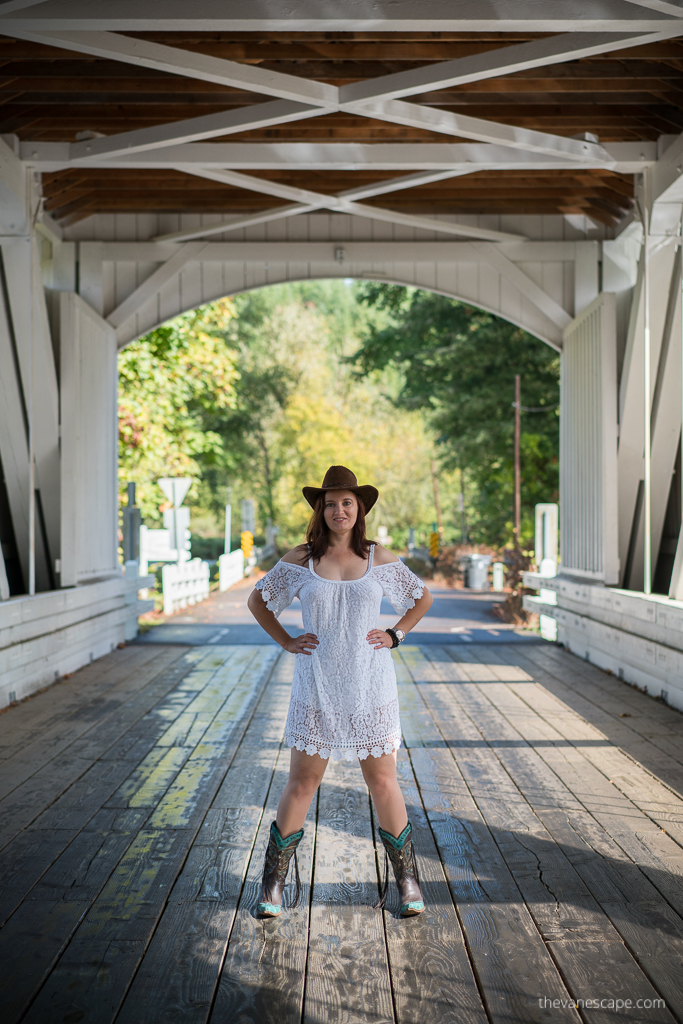
Include a person, bike, or car in your shot to show the bridge’s size and invite viewers into the scene. This works particularly well for wide bridges like Grave Creek or for the red-painted Shimanek Bridge near Scio.
6. Use a Polarizing Filter
If you’re using a camera, a polarizer helps cut reflections on wet wood and water surfaces — perfect after Oregon’s frequent rain showers.
Agnes’ Advice: Don’t rush. Sometimes, the best photo happens when you simply wait — for the light to shift, the clouds to break, or a local to cycle across the bridge. That quiet, timeless feeling is what makes Oregon’s covered bridges so special to photograph.
Practical Information for Visiting Oregon’s Covered Bridges
Oregon’s covered bridges are spread out across the western half of the state, often tucked along quiet rural roads. With a bit of planning, you can see several in one scenic day or include a few in a longer Oregon road trip.
1. Best Time to Visit
The bridges are open year-round, but April through October offers the most pleasant weather.
- Spring (April–May): Green hills, high water levels, and bright wildflowers.
- Summer (June–August): Long daylight hours, ideal for photographers, but expect some crowds near Cottage Grove.
- Fall (September–October): The best for colors — red leaves around white bridges like Currin or Larwood are stunning.
- Winter: Atmospheric for photography, but some backroads can be muddy or icy.
2. Route Planning & Navigation
Download offline maps before you go — cell service drops frequently between valleys.
- Starting Points: Eugene or Cottage Grove are the most convenient bases.
- Suggested Loop: Eugene → Cottage Grove → Dorena Lake → Scio → Albany → back to Eugene (or onward to Bend or Crater Lake).
- Driving Distance: Roughly 200 miles (320 km) round trip if you include Lane and Linn Counties.
Carry a paper map or Oregon Road & Recreation Atlas for the smaller county roads — many aren’t marked well on GPS.
3. Parking & Access
Most bridges have small gravel pullouts or roadside parking nearby. A few, such as Currin and Dorena, have small picnic areas with restrooms. Be respectful — many are near private property. Don’t block driveways, and avoid climbing or sitting on bridge rails.
4. Travel Style Options
- By Car: Easiest way to see multiple bridges in one day. Combine it with nearby waterfalls or lakes.
- By RV: Most bridges are accessible for RVs under 30 ft, but check local signage before entering narrow crossings.
- By Bike: Try the Covered Bridges Scenic Bikeway — 36 miles (58 km) of quiet backroads and paved trails.
5. Safety & Preservation
Covered bridges are fragile historic structures. Drive slowly if vehicles are allowed, follow posted limits, and avoid graffiti or climbing. Many are listed on the National Register of Historic Places, so treat them as outdoor museums.
6. Combine With Other Attractions
Pair your bridge stops with other nearby highlights:
- Crater Lake National Park – Oregon’s only national park, a few hours south of Cottage Grove.
- Silver Falls State Park – “Trail of Ten Falls,” perfect for photography lovers.
- Willamette Valley Wineries – Great lunch or tasting stop between bridges.
Agnes’ Advice: Plan no more than 5–8 bridges in one day. It’s better to slow down, enjoy the scenery, and capture great photos than rush through them all.

Final Thoughts
Oregon’s covered bridges are more than historic structures — they’re pieces of living nostalgia scattered across some of the state’s most peaceful landscapes. Standing inside one, surrounded by the scent of rain-soaked wood and the soft echo of footsteps, feels like stepping back in time.
Chris and I never rush past these bridges. Every time we find one, we stop — even if it’s just for a few photos or a quiet moment by the creek. They remind us why we love road trips: the freedom to turn off the highway, follow a small sign, and discover something beautiful that most travelers overlook.
If you’re planning a road trip through Oregon, add at least a few of these bridges to your route. Whether you visit the scenic crossings near Cottage Grove, the red-painted spans around Scio, or the coastal bridges in Coos County, each tells a story of craftsmanship, patience, and the Oregon spirit.
And who knows — once you’ve seen a few, you might start looking for them everywhere you travel. That’s how it began for us.
Do You Like It? Pin It For Later!