
Bisti/De-Na-Zin Wilderness Guide: How to Hike the Bisti Badlands in New Mexico
Hiking the Bisti/De-Na-Zin Wilderness is one of the most unusual and unforgettable experiences you can have in New Mexico. This remote badlands landscape feels nothing like the typical Southwest. Instead, it’s a surreal maze of hoodoos, eroded ridges, petrified logs, and rock formations that look straight out of a prehistoric world. Every turn reveals something unexpected, from the famous Stone Wings to the mysterious Alien Egg Hatchery and countless unnamed formations. This guide shows you how to explore it safely and enjoyably. We explain how to get to the trailheads, where to find the major formations, when to visit, and how to prepare for the harsh, trail-less terrain. All tips come from our multiple first-hand visits. If you’re planning a New Mexico road trip and want a true off-the-beaten-path adventure, the Bisti Badlands should be at the top of your list.
This article may contain affiliate / compensated links. For full information, please see our disclaimer here.
Our Experiences in the Bisti/De-Na-Zin Wilderness
Chris and I first explored the Bisti Badlands in 2019, and we’ve returned twice since then — most recently in May 2024. Each visit reminded us how unpredictable and fragile this wilderness is. Rock formations change, washes shift, and some features disappear entirely.
The small oval arch from our first trip (photo above) collapsed a year later, so the place you see today may look different tomorrow.
We’ve hiked Bisti in fall, winter, and spring. Our December hike was cold but quiet, with long shadows stretching across the badlands. Our spring visit was warmer and windier, with fast-changing light that made photography challenging but exciting. These trips helped us understand how radically conditions can shift depending on the month and time of day.
We’ve also explored many of the nearby wilderness areas — including Ah-Shi-Sle-Pah, where we visited the King of Wings and the Alien Throne and Valley of Dreams — but Bisti still feels the most mysterious and otherworldly. It’s also one of the most challenging places we’ve hiked due to the lack of marked routes.
All photos and insights in this guide come from our firsthand experience navigating this remote landscape. This isn’t a place you stroll through casually. But if you’re prepared, patient, and curious, Bisti rewards you with some of the most extraordinary formations in the Southwest.
In this article, Chris and I focus on exploring the western section of the Bisti/De-Na-Zin Wilderness, located about 36 miles south of Farmington. This area includes some of the most iconic formations in the badlands — the Alien Egg Hatchery (also known as the Cracked Eggs), the Conversing Hoodoos, and the spectacular Stone Wings. These were the first landmarks we ever reached in Bisti, and they remain the ones we return to each time we visit.


What Is the Bisti/De-Na-Zin Wilderness?
The Bisti/De-Na-Zin Wilderness is a 45,000-acre protected badlands area managed by the Bureau of Land Management (BLM). It sits in the high desert of northwest New Mexico and preserves one of the most unusual landscapes in the American Southwest.
This remote wilderness has no paved roads, no services, and no marked trails — only an endless maze of eroded formations shaped by millions of years of wind and water.
The name Bisti (Bis-tie) comes from the Navajo word for “a large area of shale hills.” De-Na-Zin (Deh-nah-zin) means “Standing Crane,” a reference to crane petroglyphs found south of the wilderness. Together, the two names describe a place that is both geologically dramatic and culturally important.
Geology & Deep Time
These badlands are the exposed remains of a swampy coastal plain that existed about 70 million years ago, when this region sat along the shore of an ancient inland sea. The area supported large trees, dinosaurs, early mammals, and abundant plant life. Over time, ash, mud, and sand buried these ancient ecosystems.
Erosion later sculpted the sediments into the strange formations we see today, including:
- Bisti Wings
- Conversing Hoodoos
- Vanilla Hoodoos
- Manta-Ray Wing
- Cracked Eggs (Alien Egg Hatchery)
- Petrified logs scattered across the washes
Because Bisti is unmarked and constantly changing, many visitors only find a fraction of these formations. With preparation and good navigation tools, you can explore some of the most photogenic and remote corners of the wilderness.
A Major Paleontological Site
In 1997, paleontologists discovered the famous Bisti Beast, a 30-foot tyrannosaur that lived about 74 million years ago. It is closely related to Tyrannosaurus rex and has only been found in this region. Scientists have also uncovered fossils of duck-billed dinosaurs, sauropods, turtles, and early mammals.
Because of its scientific value, removing rocks, fossils, petrified wood, or any natural material is strictly prohibited.
A Sacred Landscape
The Bisti/De-Na-Zin region is sacred to several Native American communities, including the Navajo Nation. Many areas contain cultural sites, archaeological remnants, and rock art. Visitors must treat the landscape with respect and follow all wilderness rules.

Where Is the Bisti/De-Na-Zin Wilderness?
The Bisti/De-Na-Zin Wilderness sits in the high desert of northwest New Mexico, in San Juan County, about 36 miles south of Farmington. This remote landscape lies in the Four Corners region, close to the borders of Arizona, Colorado, and Utah, making it an easy addition to many Southwest road trips.
The nearest food, fuel, and lodging are in Farmington, which is why most visitors use it as their base.
Approximate Distances to Bisti
• Farmington → 38 miles (about 45 minutes)
• Shiprock → 70 miles (about 1 hour 15 minutes)
• Durango, CO → 85 miles (about 1 hour 40 minutes)
• Santa Fe → ~200 miles (about 3 hours 30 minutes via US-550)
• Albuquerque → ~180 miles (about 3 hours via US-550)
Why This Location Matters
Because Bisti is so remote and undeveloped, navigation, preparation, and weather awareness are essential. There are no signs guiding you to formations and no cell service, so you must arrive ready for a true wilderness experience.
To see how this stop fits into a bigger plan, check our full New Mexico travel guide.

Special Rules & Wilderness Regulations
The Bisti/De-Na-Zin Wilderness is a federally designated wilderness area, which means strict regulations protect its fragile geology, wildlife, and cultural sites. Before you enter, it’s important to understand the rules — violations can damage the landscape or result in fines.
No Motorized or Mechanized Transportation
Motorized vehicles and all mechanized devices are prohibited inside the wilderness. This includes:
- Cars and ATVs
- Mountain bikes
- E-bikes
- Drones
- Strollers, carts, or wheeled coolers
If it has wheels, it’s not allowed beyond the parking area.
Drone Use Is Prohibited
Drones are not allowed anywhere in Bisti/De-Na-Zin. The ban applies to all U.S. wilderness areas and helps protect wildlife and preserve the quiet, natural soundscape.

No Campfires, No Wood Collecting
Campfires are not permitted. The desert environment is extremely fragile, and even small fires can damage irreplaceable formations.
You may camp on BLM land outside the washes, but only in a Leave No Trace manner and without fires.
Respect Native Lands
Portions of the land surrounding the wilderness border Navajo Nation lands. These areas are off-limits without permission. Stay within the BLM boundaries and avoid entering restricted tribal areas.
Do Not Collect or Move Anything
The badlands are an active paleontological and archaeological site.
It is illegal to remove:
- Fossils
- Petrified wood
- Bones
- Rocks
- Artifacts
- Natural materials of any kind
Many formations are extremely delicate; even touching them can cause damage.
Group Size Limit
Groups are limited to nine people or fewer. Larger groups require a permit from the BLM.
Stay Off Fragile Formations
Do not climb on hoodoos, wings, or other formations. Erosion shapes the landscape, but human impact can destroy it in an instant. Several well-known features have collapsed in recent years.
Permits Required for Certain Activities
You must obtain a permit for:
- Commercial photography or workshops
- Scientific research
- Guided tours
- Grazing activities (managed separately)
Always check the latest updates with the BLM Farmington Field Office.
No Trash Facilities
Everything you pack in must be packed out — including food scraps and tissues. There are no trash cans, no restrooms, and no water anywhere in the wilderness.

How to Get to Bisti/De-Na-Zin Wilderness
The Bisti/De-Na-Zin Wilderness sits in a remote corner of northwest New Mexico, and reaching it requires careful navigation. There are no services, no cell coverage, and no marked trails, so choosing the right entrance and knowing what to expect is essential.
Farmington is the best and safest base for visiting Bisti, offering hotels, restaurants, gas, and emergency services. There are two primary access points to the Bisti Wilderness:


1. Alamo (Gateway) Wash – Main & Easiest Entrance
Best for first-time visitors
Best for reaching:
- Cracked Eggs (Alien Egg Hatchery)
- Rock Garden
- Hoodoo clusters
- Long but possible route to Stone Wings
This is the main BLM parking area and the entrance most hikers use.
How to Get There:
- From Farmington, drive south 36–37 miles on NM-371.
- Look for a small sign for Bisti Badlands / Road 7297.
- Turn left (east) onto the gravel road.
- Continue ~2 miles, then turn left at the junction.
- Follow this road ~2 more miles to the BLM parking area.
Parking Area Features:
- Open, flat parking area on the right side
- No water, no toilets, no facilities
- Camping permitted but no campfires
- High clearance not required (in dry conditions)
- Muddy and potentially impassable after rain
This entrance offers the most straightforward navigation and is recommended for most travelers.

2. Hunter Wash – Shortest Route to the Stone Wings
Best for:
- Bisti Wings (Stone Wings)
- Manta Ray Wing
- Vanilla Hoodoos
- Brown Hoodoos
This entrance gets fewer visitors and has no formal parking, but it provides the shortest hike (just over 1 mile) to the famous Stone Wings.
Important:
A high-clearance vehicle is strongly recommended, especially after rain.
How to Get There:
- From Farmington, drive south on NM-371.
- Turn left (east) onto County Road 7290 (unsigned dirt road).
- Follow the road until it dead-ends near the wash.
- Find a safe pullout to park.
Because there is no signage, and roads sometimes shift with weather, a GPS or offline map is essential.

Driving Times
- Farmington → Bisti (Alamo Wash): 45 minutes
- Farmington → Hunter Wash: 50 minutes (depending on road conditions)
- Shiprock → Bisti: ~70 miles (1 hr 15 min)
- Santa Fe → Bisti: ~180 miles (3 hrs)
- Durango, CO → Bisti: 2 hours
- Albuquerque → Bisti: 3 hours
Road Conditions
- Both entrances are accessed by dirt and gravel roads
- Roads become muddy and dangerous after rain
- Do not attempt during or after storms
- Passenger cars can reach Alamo Wash in dry conditions
- Hunter Wash requires more clearance and experience
Navigation Warning
There are no signs inside the wilderness.
Do not rely on memory or phone signal.
Download GPS coordinates and offline maps before you arrive.

Essential Tips Before You Go (Read This Before Hiking Bisti Badlands)
Hiking the Bisti/De-Na-Zin Wilderness is rewarding but challenging. There are no marked trails, no shade, no water, no cell service, and no facilities of any kind. Preparation is everything here. Below are the essential things every visitor needs to know before stepping into the badlands.
Expect a Long, Exposed Walk Before the Formations
From both main access points, you must hike 45–60 minutes across open desert before reaching the first major formations. In summer, this approach alone can be extremely hot and draining.
No Shade and Extreme Temperature Swings
Bisti is full sun year-round. There are no trees or natural shelters.
- Summer afternoons can exceed 100°F (38°C).
- Even at 80°F, heat reflected from the pale ground is intense.
- Winter mornings can drop to 10°F (-12°C) or lower.
- High winds and sandstorms are common in spring.
Always bring more water and layers than you think you need.
No Cell Signal
Do not expect mobile service. Phones often lose signal within the first mile.
If you rely on GPS tracking, download maps before you start.
Flash Flood Risk
The washes are dry most of the year, but heavy rain — even far away — can send water rushing through.
Never enter Bisti if rain is forecast or storms are nearby.
Terrain Can Become Slippery After Rain
Even light rain turns the badlands’ clay soil into slick, sticky mud. Roads and washes may become impassable for hours or days. Let the ground fully dry before attempting the hike.
No Services: No Water, No Toilets, No Food
There are zero amenities anywhere in the wilderness. Bring:
- Plenty of water (more than you think you will need)
- Electrolytes
- Food
- Sun protection
- A trash bag (pack everything out)
The small stream you may cross can contain mineral runoff — do not drink or filter it.
Navigation Is the #1 Challenge
There are no marked trails and the landscape feels like a maze.
It’s easy to get disoriented, especially in low light.
To avoid getting lost:
- Carry a handheld GPS or reliable GPS watch
- Mark your start point
- Track your route
- Carry a backup power source
- Bring a compass as a secondary tool
- Download offline maps (AllTrails Pro or Gaia)
We’ve met hikers who wandered for hours and never found the hoodoos because they didn’t use navigation tools.
Wildlife & Hazards
The area is home to:
- Rattlesnakes
- Tarantulas
- Scorpions
Wear long pants and sturdy boots. Never place hands or feet into holes or under ledges.
You Must Be Self-Sufficient
Because Bisti is remote and uncrowded, you may not see another person all day.
If something goes wrong:
- There is no cell service
- No rangers on patrol
- No quick rescue access
- No shade to rest in
For safety, consider carrying:
- A Personal Locator Beacon (PLB) or satellite communicator
- A compact first-aid kit
- Emergency shelter or bivy
- Extra layers
These small items make a big difference in this environment.

Main Areas and Classic Hiking Routes in Bisti – Two Main Washes: The Key to Navigating Bisti
Hiking Bisti feels like walking through a giant maze. The landscape is made of washes, rolling mounds, side canyons, dead ends, and clusters of hoodoos that appear suddenly and disappear just as fast. Understanding the basic layout helps you plan a safer and more efficient route.
1. Alamo Wash (Gateway Wash) — Best for First-Timers
This is the main and most popular access point, located off NM-371.
It offers easier navigation and leads to many well-known formations.
From Alamo/Gateway Wash, you can reach:
- Cracked Eggs (Alien Egg Hatchery)
- Rock Garden
- Eagle’s Nest
- Vanilla Hoodoos
- The Great Hoodoo Field
- The Bisti Window (if still standing — many formations erode quickly)
You can also reach the Stone Wings from this entrance, but the hike is longer and requires more cross-country navigation.


2. Hunter Wash — Shortest Route to the Stone Wings
Hunter Wash is far less visited and has no formal parking area.
A high-clearance vehicle is recommended because the access road can be rough, rutted, or muddy after storms.
This wash offers the shortest and most direct route to:
- The Bisti Stone Wings (also called Bisti Wings)
- Brown Hoodoos
- Manta Ray Wing
- Additional hoodoo clusters that few visitors ever reach
Hunter Wash is ideal if you want solitude and iconic formations with a shorter approach.

Classic Hiking Routes Most Visitors Use
These are the two most reliable and straightforward routes for hikers who want to see the main formations without getting lost.
Route A: The Cracked Eggs & Rock Garden Loop (from Alamo Wash)
Distance: 4–6 miles round-trip
Difficulty: Moderate (no shade, no trail)
Best for: First-time visitors, photographers, families with older kids
This loop includes:
- The Cracked Eggs — the most famous formation
- The surrounding Rock Garden
- Several nearby hoodoo clusters and petrified wood fields
You can extend the route to visit Eagle’s Nest or continue deeper into the hoodoos.
Route B: The Stone Wings Route (from Hunter Wash)
Distance: 2.5–4 miles round-trip
Difficulty: Moderate to challenging
Best for: Skilled hikers, photographers, and anyone comfortable using GPS
This is the fastest way to reach the Stone Wings, one of the most photographed formations in New Mexico. Weather can reshape the wings over time, so the scene changes slightly every year.
You can also reach the Stone Wings from Alamo Wash, but the hike becomes 7–9 miles and requires more navigation.
The Must-See Formations in the Bisti/De-Na-Zin Wilderness
Bisti is full of strange shapes sculpted by wind, water, and time. There are no signs or trails, so knowing what to look for makes your hike easier and more rewarding. Below are the most iconic formations in the western section of the wilderness — the area most visitors explore.
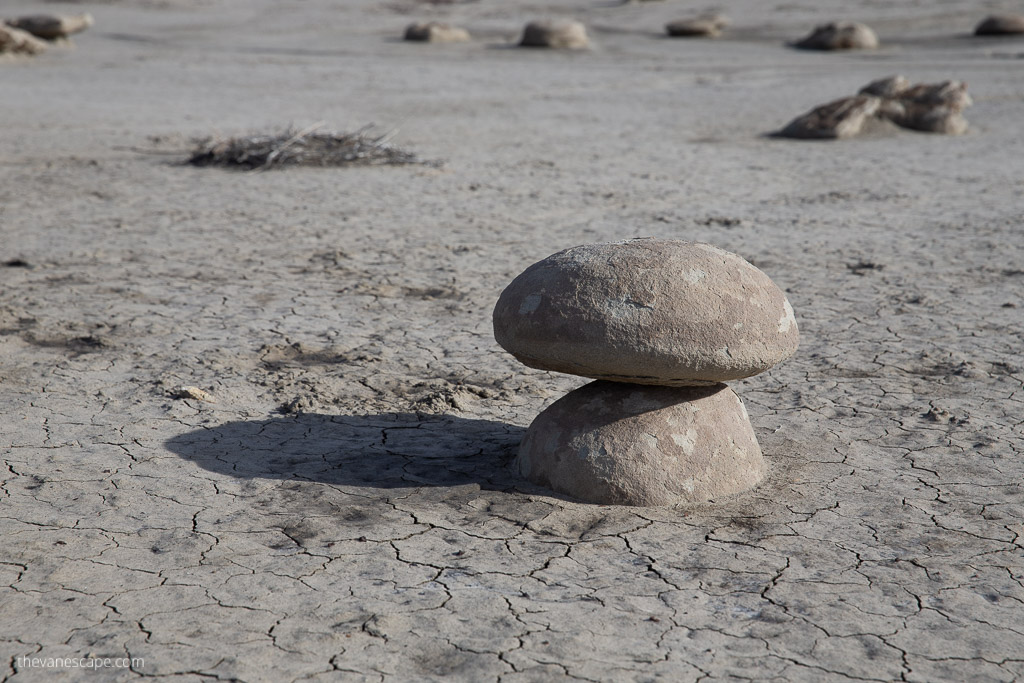
Cracked Eggs (Alien Egg Hatchery)
This is the most famous formation in Bisti.
Hundreds of smooth, oval boulders lie scattered across a small basin. They look like cracked dinosaur eggs or alien pods resting on the desert floor.
The colors change with the light. During sunrise and sunset, the eggs glow with deep reds and browns. This is one of the best places for photography, especially on cloudy evenings when the sky adds drama.
The Cracked Eggs are located in the Alamo/Gateway Wash section, and they are often the first stop on a classic Bisti hike.

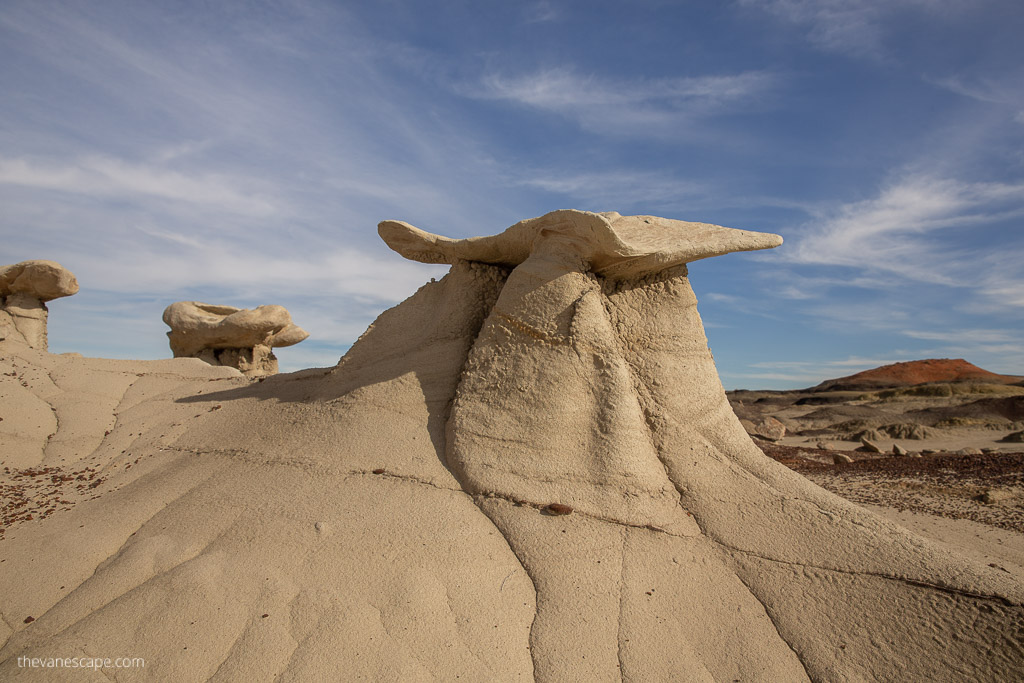
Stone Wings (Bisti Wings)
These are the most photographed formations in the entire wilderness.
Thin, delicate hoodoos rise from the badlands with long, flat “wings” stretching out from the tops.
The Stone Wings are fragile. Some are only a few inches thick. They change slowly over time as erosion reshapes them. This is also the formation where you can most clearly see how wind and moisture carve the soft sandstone.
Most hikers reach the Stone Wings from Hunter Wash, where the route is shorter and easier to navigate.

Conversing Hoodoos
These two tall hoodoos face each other like people frozen in mid-conversation. The tops are capped with harder stone, which protects the soft columns underneath.
They sit near a small side wash, not far from the Stone Wings. Their size, shape, and balance make them one of the most surprising features in Bisti.

Vanilla Hoodoos
The Vanilla Hoodoos appear pale and smooth compared to other formations. They sit on a flatter plateau and often erode into elegant mushroom shapes.
They look entirely different depending on the time of day. In early morning light, they glow white. In late afternoon, they take on warm golden tones.
These hoodoos are easy to miss unless you know what to look for, which makes finally finding them even more exciting.

Manta Ray Wing
The Manta Ray Wing is a long, thin hoodoo that resembles the shape of a manta ray gliding through the desert. It stretches gracefully across a slope, balanced on a slender pedestal.
Photographers love this spot. You can shoot it from below, above, or from the side for very different effects. The formation is delicate, so never touch or climb it.

Brown Hoodoos
These hoodoos sit in groups and appear darker in color than many formations in Bisti. They often create narrow passageways and hidden corners that feel like tiny canyons.
Because the shapes are close together, this area can feel like a maze. It’s one of the best sections for wandering and exploring.

Petrified Wood Fields
Scattered throughout the Bisti are long logs, fragments, and stumps of petrified wood. Some pieces are massive. Others contain beautiful crystals and minerals.
These logs remind you that this desert was once a swampy forest filled with giant trees.
As always, do not touch or remove anything. Every piece is protected.
Miscellaneous Formations and Hidden Scenes
The more you explore, the more you find:
- Small arches
- Eroded fins
- Rib-like formations
- Balanced rocks
- Narrow mounds shaped like pyramids
- Mushroom caps
- Deeply cracked hills
Bisti rewards curiosity. The whole landscape feels alive, shifting, and full of surprises.


When to Visit Bisti: Seasons and Weather
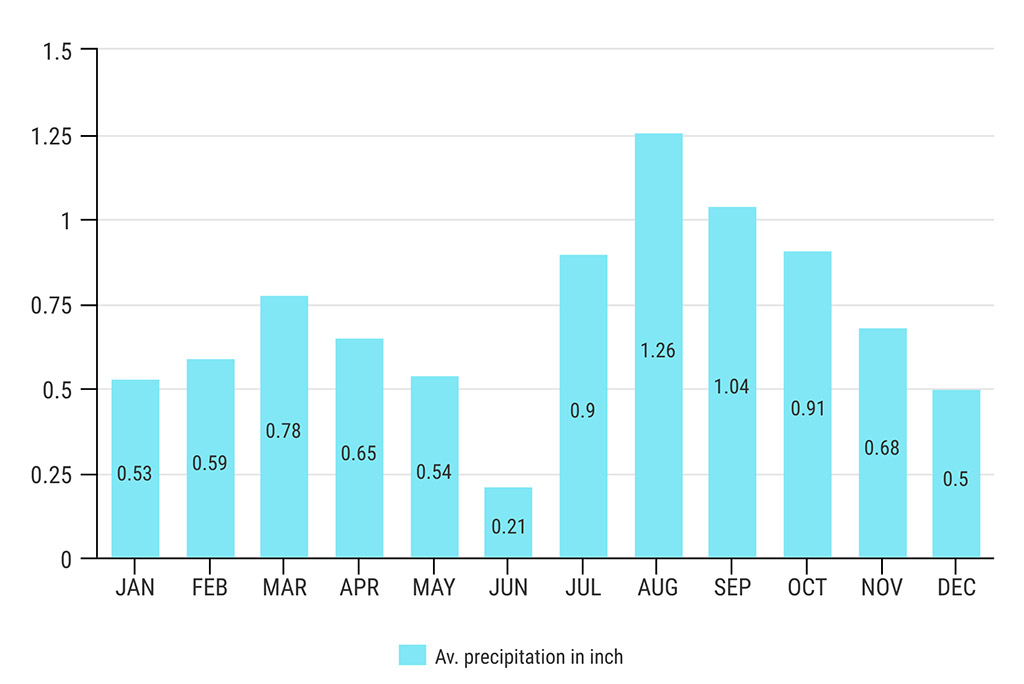
The Bisti/De-Na-Zin Wilderness is open year-round, but the experience changes dramatically with each season. Because the area has no shade, no water, and no services, choosing the right time matters more here than in most hiking destinations.

Spring (March–May): Windy but Manageable
Spring brings cool mornings and warm afternoons, but it’s also the windiest season in northern New Mexico.
Average temperatures:
- Highs: 55–75°F (13–24°C)
- Lows: 30–45°F (-1–7°C)
Sandstorms are common in March and April, especially during the afternoon.
However, spring offers great lighting for photography and mild temperatures for long hikes.
Summer (June–August): Extreme Heat — Not Recommended Midday
Summer is the most challenging time to visit.
Morning temperatures start around 65°F (18°C), but by early afternoon Bisti often exceeds:
- 100–105°F (38–41°C)
The sun reflects off the pale badlands, creating heat that feels much hotter than the actual air temperature.
If summer is your only option:
- Start at sunrise
- Finish by 11:00 am
- Bring more water than usual
Monsoon storms can develop in July and August, and even distant storms can trigger flash flooding in the washes.
Fall (September–November): The Best Time to Visit
Fall is the ideal season for hiking Bisti.
Average temperatures:
- Highs: 55–80°F (13–27°C)
- Lows: 25–45°F (-4–7°C)
Days are clear and stable, winds are lighter, visibility is excellent, and temperatures make long cross-country hikes comfortable.
This is the season when most photographers visit.

Winter (December–February): Cold but Beautiful
Winter is quiet and often stunning, especially after light snowfall.
Average temperatures:
- Highs: 40–55°F (4–13°C)
- Lows: 10–25°F (-12– -4°C)
The biggest challenge is ice in shaded areas and much shorter daylight hours. If you like solitude and crisp air, it’s one of the best times to explore — just dress in layers and carry a headlamp.
The One Weather Warning You Must Know
Even a brief rainstorm turns the ground into thick, slippery clay. Roads become muddy and sometimes impassable. The washes can also flood without warning.
Always check:
- NOAA forecast
- Wind alerts
- Recent rainfall
- BLM road conditions

Where to Stay Near Bisti Badlands: Hotels, RV Parks, and Camping
Because Bisti/De-Na-Zin sits deep in the high desert with no services, most visitors use Farmington or Bloomfield as a base. You’ll find reliable hotels, restaurants, gas stations, and everything you need before heading into the wilderness.
Farmington (Best Base for Most Travelers)
Farmington offers the closest full-service lodging and the easiest access to both the Gateway and Hunter Wash trailheads.
Many visitors choose the Best Western Plus Four Corners Inn, which offers:
- Clean, modern rooms
- Indoor pool and hot tub
- Free Wi-Fi
- Good breakfast and friendly service
We’ve stayed here several times during our Bisti trips and always had a great experience. You’ll also find grocery stores, outdoor shops, and plenty of restaurants in town, which makes planning your hike much smoother.
Bloomfield (Convenient for RV Travelers)
If you’re traveling with an RV or want a quieter location, Bloomfield is another solid option. The town sits only 45–50 minutes from the Bisti trailheads and is easy to reach from Santa Fe or Albuquerque.
The top pick here is Moore’s RV Park & Campground, known for:
- Clean, well-maintained sites
- Quiet atmosphere
- Full hookups
- Very friendly owners
- Easy access to Farmington and the main highway
It’s one of the best RV parks in the region and a comfortable base before or after your Bisti hike.

Dispersed BLM Camping Near Bisti
If you prefer a free and remote experience, dispersed camping is allowed on BLM land near the wilderness boundary. This option works well for tent campers, vanlifers, or fully self-contained RVs.
Important notes:
- No water, no toilets, no picnic tables
- No campfires allowed
- No shade or wind protection
- You must pack out all trash
- The ground becomes slick and muddy after rain
- Camping is not allowed inside the washes or in the wilderness area itself
If you need more information, contact the BLM Farmington Field Office at 505-564-7600 before your trip.
Quick Reminder
There is no car camping inside the wilderness, and you must be completely self-sufficient anywhere outside Farmington or Bloomfield. Bring all water, food, and emergency supplies with you — once you leave town, you won’t find services until you return.

Hiking and Safety Tips for Bisti/De-Na-Zin
The Bisti/De-Na-Zin Wilderness is one of the most rewarding but challenging landscapes to explore in New Mexico. There are no marked trails, no shade, no water, and no cell service — so preparation is essential.
Heat, Dehydration & Intense Sun Exposure
Bisti heats up fast, even in spring and fall. The sun reflects off the pale ground, making it feel much hotter than the actual temperature.
• Carry far more water than you think you need.
• Wear a wide-brimmed hat, sunglasses, and sunscreen.
• Start early or aim for a late-afternoon hike when the light is best.
Flash-Flood & Mud Risks in the Washes
Washes look dry, but they can flood suddenly during monsoon storms or even rain miles away.
• Never visit if rain is in the forecast.
• Even a small amount of moisture turns the clay into slick mud that is difficult to walk on.
• Avoid the deepest parts of the wash during storm season.
Rough Footing, Rattlesnakes & Insects
The terrain is uneven, crumbly, and unpredictable. You’ll walk on loose sand, clay, soft shale, and fragile rock.
• Rattlesnakes and insects live in the area — watch where you step and never reach into holes or under rocks.
• Expect uneven terrain that can twist ankles or cause falls.
Why Solid Boots, Long Pants & Trekking Poles Matter
Proper gear makes a huge difference in Bisti:
• Wear sturdy hiking boots with ankle support — sneakers or sandals are unsafe.
• Long pants protect your legs from sun, brush, insects, and sharp rock edges.
• Trekking poles help with balance on clay slopes and soft ground.
Consider a PLB or Satellite Communicator
Because it’s easy to end up completely alone with no signal, a personal locator beacon (PLB) or satellite communicator is one of the smartest things you can carry.
• If you get lost or injured, it may be your only way to call for help.
• Always tell someone your route before you leave.

What to Pack for a Bisti Badlands Hike
Bisti is remote, exposed, and completely undeveloped, so what you carry determines how safe and comfortable your hike will be. Here is what we always pack for a full day in the badlands.
Essential Water & Food
Water is the most important item for this hike.
• Bring at least 1 gallon (3–4 liters) per person for a long day.
• Add electrolyte tablets or sports drinks if you visit in warm months.
• Pack salty snacks, protein bars, and something substantial for energy — you’ll be out for several hours.
Sun Protection & Layering
The sun in Bisti is intense year-round.
• Sunscreen, lip balm with SPF, sunglasses, and a wide-brimmed hat are must-haves.
• Temperatures swing quickly, so bring a light jacket or warm layer even in summer.
• In winter or early spring, add gloves and a warm beanie.
Navigation Tools
There are no signs, no trail markers, and no reliable points of reference.
• A handheld GPS or GPS watch is the most reliable option.
• Offline maps (AllTrails Pro, Gaia GPS) saved on your smartphone are useful backups.
• A printed topo map and small compass add extra security.
• Bring a fully charged power bank to keep electronics running.

Lighting & Basic Emergency Gear
Sunset comes quickly, and the landscape looks completely different after dark.
• Carry a headlamp with fresh batteries.
• A small first-aid kit (bandages, blister care, antiseptic wipes) is essential.
• Pack an emergency bivy or emergency blanket — it’s lightweight and important if you get stuck overnight.
• A whistle is helpful for signaling in case of an emergency.
Photography Gear Without the Extra Weight
Bisti is a dream for photographers, but it’s also a long, hot walk across soft terrain.
• Use a lightweight zoom lens (24–70mm works great).
• Bring a compact tripod only if you plan to stay for sunset.
• Carry lens cloths — dust is everywhere.
• Keep your setup simple to avoid working with a heavy pack in the desert.

Photography Tips for Bisti Badlands
Bisti is one of the most photogenic landscapes in the Southwest, but capturing its formations takes planning. The badlands have no marked trails, shifting light, and delicate terrain, so knowing when and how to shoot makes a big difference.
Timing: Light Changes Everything
• Sunrise brings soft pastel colors and long shadows that highlight hoodoos and wings.
• Late afternoon to sunset offers the best glow on the white, gray, and brown layers of the mounds.
• After sunset, the badlands turn blue-gray and incredibly atmospheric — perfect for dramatic shots if you carry a headlamp and GPS.
Golden hour is especially beautiful at the Stone Wings, Conversing Hoodoos, and Cracked Eggs.


Keep Your Kit Lightweight
Bisti is a long walk, often across shifting soil and uneven washes, so minimal gear works best.
• A 24–70mm or similar lightweight zoom lens covers most compositions.
• A compact tripod is useful for sunset or low light but avoid heavy setups.
• Bring a lens cloth — dust accumulates fast in the wind.
Even a modern smartphone can capture excellent photos here, especially in good light.
Angles and Composition Ideas
• Shoot low angles around the Cracked Eggs to exaggerate their alien shapes.
• Use leading lines in the washes to guide the viewer’s eye toward hoodoos.
• Experiment with shadows in early morning or late afternoon — formations look completely different depending on the angle.
• At the Stone Wings, shoot both from above and below to show scale.
Avoid climbing on formations for a better angle — they’re extremely fragile and break easily.

Respect the Landscape
Several formations that once appeared in popular photos, such as the Bisti Arch, have already collapsed. Stay on stable ground, never step onto wings or hoodoos, and avoid touching anything. A single handprint can weaken the surface.

Nearby Attractions & Road Trip Add-Ons
The Bisti/De-Na-Zin Wilderness sits in the heart of the Four Corners region, so it’s easy to combine this hike with other incredible landscapes and cultural sites.
Ah-Shi-Sle-Pah Wilderness
Ah-Shi-Sle-Pah Wilderness is about 45 miles south of Bisti. Home to the Alien Throne, King of Wings, and some of the most bizarre hoodoos in New Mexico. No marked trails and very remote, but unforgettable if you enjoy navigation-heavy hiking.
Valley of Dreams
The Valley of Dreams is a smaller, quieter badlands area near Ah-Shi-Sle-Pah. Great for photography and sunrise/sunset hikes. Expect fragile formations, soft clay, and zero shade.
Chaco Culture National Historical Park
Around 60 miles south of Farmington. A UNESCO World Heritage Site with massive great houses, astronomy-aligned structures, and some of the most important Ancestral Puebloan ruins in the Southwest.
Shiprock
About 70 miles west of Bisti. Shiprock is a sacred volcanic monolith rising 1,583 feet (482 m) above the desert. Viewing is allowed from public roads only. Beautiful at sunset.
Aztec Ruins National Monument
North of Farmington. Well-preserved great kivas and Puebloan masonry. A short but worthwhile cultural stop on your way to or from Bisti.
Four Corners Monument
Roughly one hour away. A quick stop to stand in four states at once: New Mexico, Arizona, Utah, and Colorado.
Longer Road Trip Ideas
• Utah’s Mighty 5 + Monument Valley — a stunning 880-mile loop that pairs perfectly with Bisti.
• Northern New Mexico Cultural Route — Taos, Taos Pueblo, Rio Grande del Norte National Monument, and Santa Fe.
• Mesa Verde National Park — impressive cliff dwellings and a great add-on if you’re heading into Colorado.

Final Thoughts
The Bisti/De-Na-Zin Wilderness rewards visitors who come prepared and approach it with patience. This landscape doesn’t reveal its formations all at once — you discover them gradually as you explore the washes, study the shapes, and follow the curves of the terrain. With no signs, no crowds, and no services, it’s a place where your planning makes all the difference.
Give yourself enough time, carry the right gear, and treat the formations with care. If you do, you’ll experience one of the most unusual desert environments in the Southwest — a quiet, remote wilderness where every turn offers something unexpected.
Do You Like It? Pin It For Later!

