
Havasu Falls Camping Guide and Rules
Camping at Havasu Falls is unlike camping anywhere else in the Southwest. You’re not pulling into a drive-up campground or choosing a numbered site. Instead, you hike deep into a remote canyon and set up camp along a vivid blue creek, surrounded by towering red rock walls and waterfalls. Havasupai Campground is primitive, wild, and strictly regulated. There are no assigned campsites, no cell service, and very limited facilities. At the same time, it’s one of the most beautiful places we’ve ever camped. Choosing the right campsite, understanding the rules, and knowing what to expect makes a huge difference in your experience. In this guide, we focus entirely on camping at Havasu Falls. This article is based on three camping trips to Havasu Falls across different seasons.
This article may contain affiliate / compensated links. For full information, please see our disclaimer here.
Our Experiences Camping at Havasu Falls
Chris and I have camped at Havasu Falls three different times, during different seasons and under very different conditions. Each visit taught us something new about the campground, the rules, and what really matters when choosing a campsite.
On our first trip, we arrived early and had plenty of options. We walked the entire length of the campground before setting up our tent. That decision made a huge difference. Some spots look great at first but turn out to be noisy, cramped, or inconvenient once it gets dark.
On later visits, we experienced busier periods, hotter nights, and monsoon-season weather. We learned which riverfront campsites stay cooler, which areas are safer during heavy rain, and why camping too close to canyon walls can be risky. We also saw how campsite availability changes daily as people pack up and leave.
After multiple visits to Havasu Falls, we realized how many details go into planning this trip properly. That’s why we created a full series of Havasupai Falls guides, each focused on one specific part of the experience. This article focuses only on camping at Havasu Falls.
If you’re still planning your trip, these guides will help you prepare step by step:
- Havasu Falls Permit & Havasupai Reservations (you must have a permit to camp there)
- Hike to Havasu Falls – Step-by-Step Guide
- Havasu Falls Packing List: What to Pack
- Havasupai Waterfalls Guide
Everything we share across this series is based on firsthand experience from multiple trips. Our goal is to help you camp smarter, avoid common mistakes, and fully enjoy your time at Havasu Falls.
If you’re exploring more of the state, our Arizona guide includes the best places, routes, and travel tips.

Havasu Falls Campground Overview
Havasu Falls Campground is located along Havasu Creek, between Havasu Falls and Mooney Falls, deep inside the Havasupai tribal lands. This is the only designated camping area for visitors staying overnight near the waterfalls.
The campground is long and narrow, stretching for about one mile along both sides of the creek. It’s not a typical campground with numbered sites or reservations for specific spots. Instead, it operates on a first-come, first-served basis, and campers choose any open area within the designated campground boundaries.
There are no assigned campsites. You can set up your tent anywhere that is safe, respectful of the environment, and considerate of other campers. This freedom is part of what makes camping here special, but it also means you need to make smart decisions about where you camp.
The campground can host up to about 350 campers per night, depending on conditions. During peak season, it can feel busy, especially near popular riverfront areas. Quieter spots are usually available farther along the campground if you’re willing to walk.
Camping is not allowed:
- at the base of Havasu Falls
- near the top or edge of Mooney Falls
- outside the fenced campground area
Once you pass through the fence marking the campground entrance, you’ll see multiple access points to the creek, clusters of trees, picnic tables, and composting toilets spaced throughout the area.

Havasu Falls Camping Rules You Must Follow
Camping at Havasu Falls comes with strict rules. These are not suggestions. They are enforced by the Havasupai Tribe, and violations can result in fines, removal from the campground, or future permit restrictions. Understanding and respecting these rules is essential.
Respecting the Havasupai Tribe
Havasu Falls Campground is located on tribal land. Visiting is a privilege, and guests are expected to respect the Havasupai people, their culture, and their community.
- Do not photograph Supai village, residents, or daily life
- Do not photograph pack mules or interfere with them
- Follow all instructions given by tribal staff
The waterfalls, Havasu Creek, and surrounding canyon are sacred to the Havasupai Tribe. These rules exist to protect both the land and the community.
Environmental Rules and Leave No Trace
Havasu Creek is fragile. Its blue-green color comes from natural minerals, and even small amounts of pollution can cause damage.
- Do not use soap, shampoo, sunscreen, or cosmetics in the creek
- Do not feed wildlife
- Pack out all trash and leftover food
- Use composting toilets only
There are no trash cans at the campground. Everything you bring in must be carried out to the village.

Prohibited Items and Activities
Certain items and behaviors are strictly forbidden at Havasu Falls Campground.
You may not bring:
- alcohol or drugs, including marijuana
- pets
- drones
- coolers
- firewood or fireworks
- weapons or firearms
- bicycles, vehicles, or speakers
You may not:
- make campfires
- fly drones
- cliff jump or dive into waterfalls
- rock climb
- litter
- camp outside designated campground boundaries
- swim nude or wear inappropriate clothing
Breaking these rules can lead to immediate consequences.
Noise, Courtesy, and Safety
Be respectful of other campers, especially at night. Sound carries easily through the canyon.
- Keep noise low after dark
- Use headlamps instead of bright lanterns
- Never jump or dive from waterfalls
Swimming behind some waterfalls is possible, but conditions change. Always assess safety and avoid risky behavior.
Following these rules helps protect Havasu Falls and ensures that future visitors can continue to experience this unique place.

Facilities at Havasu Falls Campground: What to Expect
Havasu Falls Campground is a remote, primitive campground. You need to be fully self-sufficient. Knowing what facilities are available — and what is not — helps you plan and avoid surprises.
What IS Available at the Campground
Composting toilets
You’ll find composting toilets spaced throughout the campground, usually near the beginning, middle, and end. They are typically well maintained and stocked with toilet paper and hand sanitizer. Still, we always recommend carrying your own sanitizer, just in case.
Drinking water source (Fern Spring)
There is one designated drinking water source in the campground: Fern Spring, located near the upstream end of the campground. Many campsites are far from it, so carrying a large water reservoir makes daily life much easier.
Picnic tables
Picnic tables are scattered throughout the campground and are shared. They’re useful for cooking, organizing gear, and eating meals.
Trees and shade
The campground has plenty of mature trees that provide shade and make it possible to hang hammocks. Shade is especially valuable during hot months.
Creek access and bridges
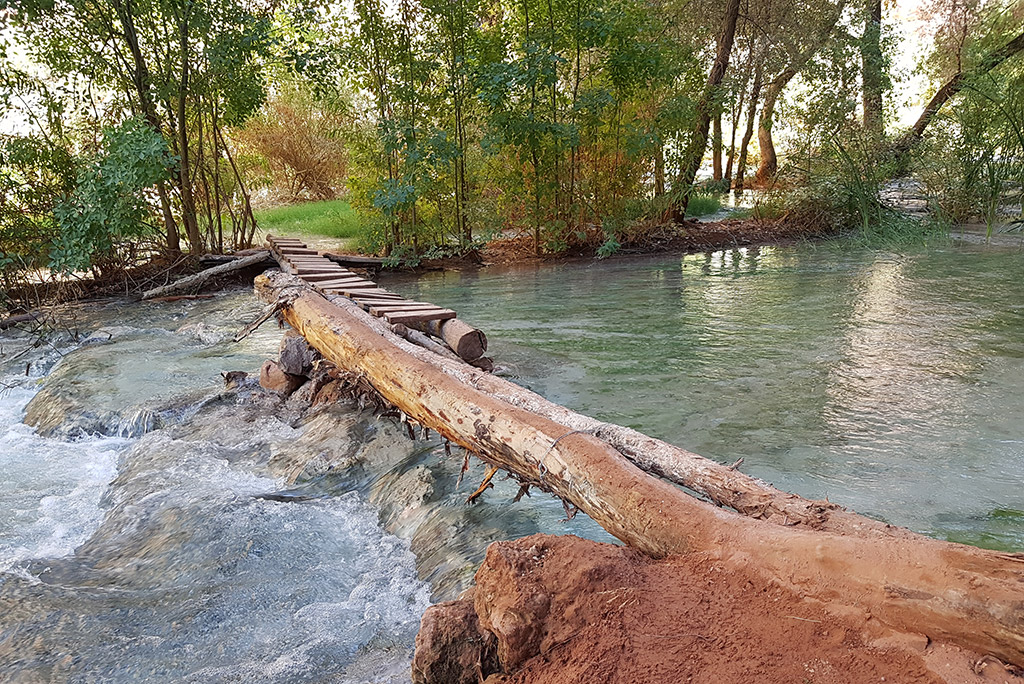
Havasu Creek runs through the entire campground. Several simple wooden bridges allow you to cross from one side to the other. These bridges and nearby rocks can be slippery, especially when wet, so water shoes or sandals with good traction are important.
What Is NOT Available at the Campground
Havasu Falls Campground does not offer the conveniences many campers are used to.
There is no:
- running water
- showers
- trash cans
- food stores
- restaurants
- cell service
- Wi-Fi
- electricity
- medical services
Everything you need for sleeping, cooking, and hygiene must be carried in and out with you. Any trash you generate must be packed out to the village.
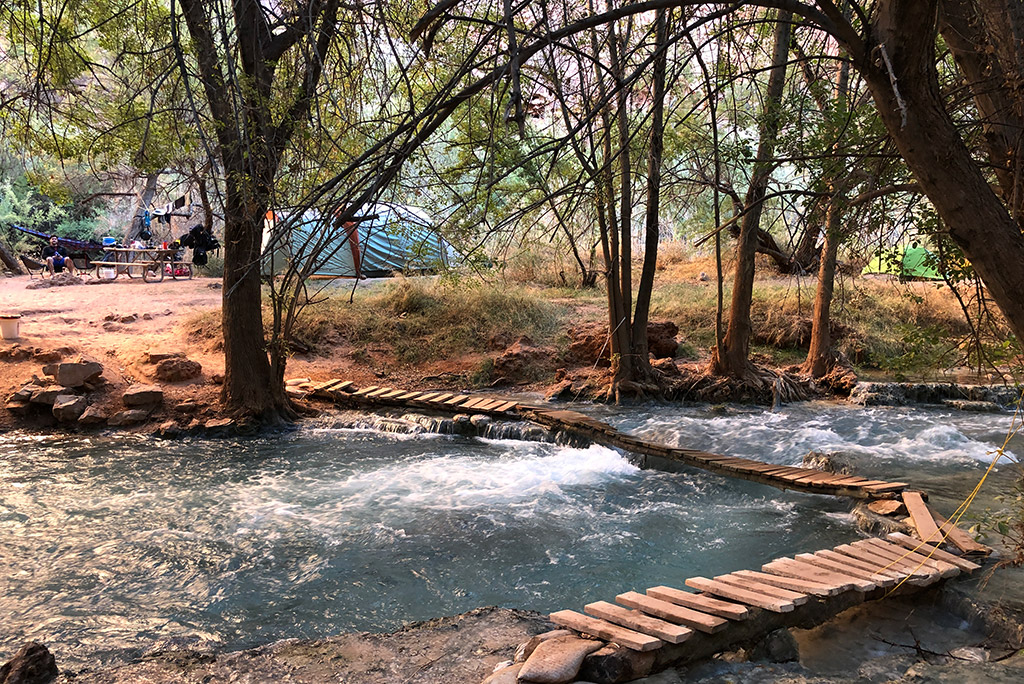
How to Choose the Best Campsite at Havasu Falls
Choosing the right campsite at Havasu Falls can shape your entire experience. Because sites are first come, first served, a little strategy goes a long way.
Start your hike as early as possible
Arriving early gives you more options. It’s also safer, especially in warmer months. The hike is long, exposed, and dry. An early start helps you avoid heat and reach the campground while more sites are still open.
If you arrive late, don’t rush into the first open spot. It’s often worth resting briefly, then walking the campground to see what’s available.
Walk the campground before setting up
The campground stretches for about a mile along Havasu Creek. Take time to walk both sides of the creek before committing to a site. Some areas are quieter. Others have better shade, easier water access, or are closer to restrooms.
If your bags arrive later by mule, you can mark a potential site with a jacket or gear, then finalize once your luggage shows up.
Think about water and restroom access
Fern Spring, the only drinking water source, is near the upstream end of the campground. If you choose a site farther down, plan to carry water in larger containers so you don’t need to walk back and forth all day.
Restrooms are spaced at several points along the campground. Try to choose a site within a reasonable walking distance. Navigating the campground in the dark can be tricky.
Riverfront or higher ground?
Riverfront sites are popular for a reason. The sound of Havasu Creek at night is unforgettable, and cooler air near the water can be a relief in summer.
During monsoon season, usually July through September, prioritize higher ground. Avoid low spots close to the creek that could flood during heavy rain. Look for slightly elevated areas that still offer shade and airflow.
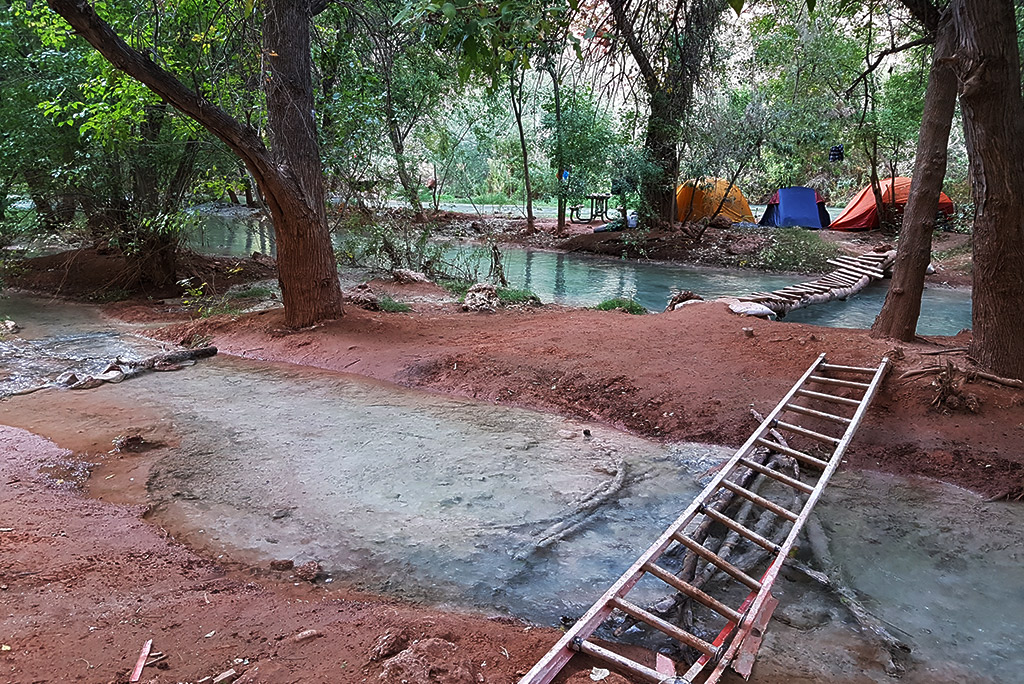
Look for shade and hammock-friendly trees
Shade matters, especially in hot months. Sites with mature trees stay cooler and offer better daytime comfort. If you use a hammock, check tree spacing and stability before setting up.
Trees also act as natural windbreaks and can make nights more comfortable.
Avoid canyon walls and unstable areas
Do not camp directly against canyon walls. Small rockfalls can happen, especially after rain. Choose open areas with clear overhead space to protect yourself and your gear.
Remember: you can move campsites
You are not locked into one site. Many campers leave each morning. Early mornings are a great time to relocate to a better spot if something opens up. We moved campsites during our stays and improved our setup each time.
Don’t camp where it’s not allowed
Camping is not permitted at the base of Havasu Falls, near the edge of Mooney Falls, or outside the fenced campground area. These areas are unsafe and restricted.
Setting up in prohibited areas is dangerous and disrespectful. The campground is long enough that you can always find a legal and safe place to camp.
Choosing your campsite thoughtfully makes your time at Havasu Falls safer, quieter, and more enjoyable.

Food and Supplies While Camping at Havasu Falls
Havasu Falls Campground has no food services and no store, so you must be prepared to be fully self-sufficient during your stay. Planning your food and supplies carefully makes camping here much more comfortable.
There is a small grocery store in Supai village, about a 2-mile hike from the campground. It sells basic items like snacks, drinks, and simple groceries. Selection is limited, and prices are high. Everything brought into the village arrives by mule or helicopter, which explains the cost.
Supai village also has a small café and a simple bar. These can be nice for a change of pace, but they should not be relied on for regular meals. Hours can vary, and availability is not guaranteed.
Near Havasu Falls, an Indigenous family sometimes sells Indian tacos during the day. This is a popular and convenient option, but it is not always available and usually requires cash. Think of it as a treat, not a meal plan.
For most campers, the best approach is to bring all meals and snacks with you from the start. Lightweight, easy-to-prepare food works best. You’ll be hiking long distances, swimming, and exploring waterfalls, so plan for meals that provide enough energy.
Food storage is important. Animals such as raccoons, squirrels, and birds are very active in the campground. Never leave food unattended. Secure it properly and pack out all leftovers and trash.
We cover detailed meal ideas, food storage tips, and packing strategy in our Havasupai Packing List, which we recommend reviewing before your trip.


Wildlife and Food Safety at Havasu Falls Campground
Wildlife is very active at Havasu Falls Campground, and most issues campers experience are related to improper food storage. Animals here are used to people and know exactly what backpacks, tents, and picnic tables mean.
The most common visitors are:
- raccoons
- squirrels
- birds, including ravens
They are bold, persistent, and surprisingly clever.
Protect your food at all times
Never leave food unattended, even for a short swim or walk. Animals will unzip backpacks, tear into bags, and scatter food quickly.
We recommend:
- storing food in sealed bags or hard containers
- hanging food from a tree branch or rope when possible
- keeping all scented items together, including toiletries
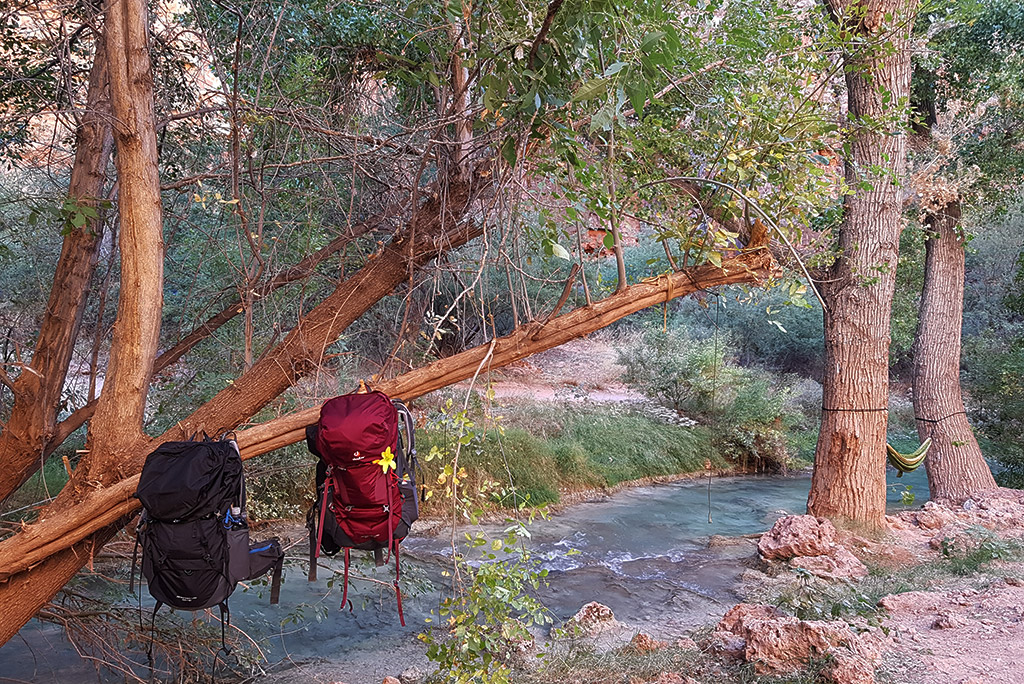
Secure your trash carefully
There are no trash cans at the campground. All trash must be packed out to the village. If you use plastic buckets or bags, weigh them down with a large rock so animals can’t tip them over.
Close your tent every time you leave
Even a quick trip to the creek is enough time for animals to get inside. Always zip your tent fully and keep food out of sleeping areas.
Do not feed wildlife
Feeding animals is prohibited and harmful. It encourages aggressive behavior and puts both animals and campers at risk.
Wildlife encounters at Havasu Falls are usually harmless when food is managed properly. Taking a few extra minutes to secure your supplies will save you frustration and protect the campground for everyone.
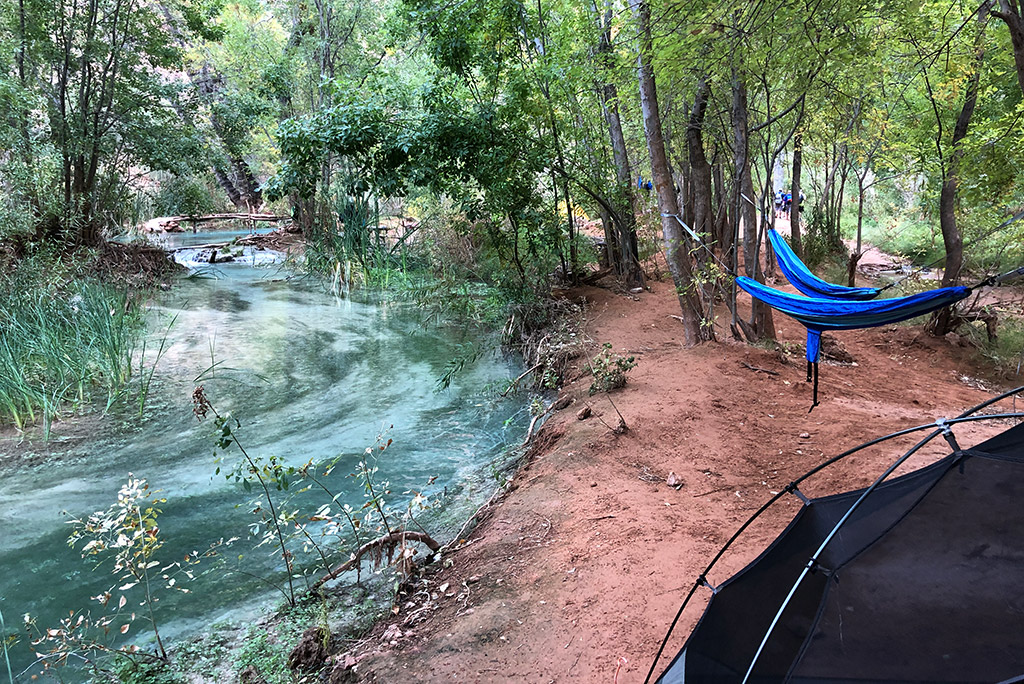
Safety at Havasu Falls Campground
Safety at Havasu Falls starts with preparation and realistic expectations. This is a remote area with no medical facilities, limited emergency access, and challenging terrain. Small mistakes can quickly become serious problems.
No medical services on site
There are no hospitals, clinics, or on-site medical staff at the campground. Emergency evacuation is difficult and time-consuming. Because of this, the Havasupai Tribe strongly recommends having travel or evacuation insurance before your trip.
Carry a basic first aid kit and know how to use it. Treat blisters, cuts, and minor injuries early before they worsen.
Water and waterfall hazards
Havasu Creek is beautiful, but it can also be dangerous.
- Rocks around waterfalls are slippery
- Currents can be stronger than they appear
- Jumping or diving is prohibited and extremely dangerous
Conditions can change after storms. Always assess the area before swimming and never take unnecessary risks.
Monsoon season awareness
During monsoon season, usually from July through September, flash floods are a real risk.
- Avoid camping in low-lying areas near the creek
- Move to higher ground if heavy rain is forecast
- Pay attention to weather conditions, even if skies are clear
Flooding can occur far upstream and reach the campground quickly.
Night safety
The campground is dark at night.
- Use a headlamp, not a phone flashlight
- Watch your footing near water and bridges
- Know the location of restrooms before dark
Sound carries easily through the canyon, so stay aware of your surroundings.
General awareness
Havasu Falls Campground is generally safe, and most campers are respectful and helpful. Still, use common sense:
- Secure your gear
- Keep valuables out of sight
- Stay hydrated and pace yourself
Being cautious allows you to enjoy the campground without stress and return home with great memories.
What to Do While Camping at Havasu Falls
Camping at Havasu Falls gives you time to slow down and truly enjoy the canyon. Three nights may sound long, but it often feels short once you settle in.
Explore the waterfalls
Use the campground as your base to visit all five waterfalls along Havasu Creek. Start early in the morning or later in the afternoon to avoid crowds and enjoy softer light. Swimming, wading, and relaxing near the water are highlights of the trip.
Hike beyond the campground
From the campground, you can hike to Mooney Falls and continue farther to Beaver Falls. These hikes are rewarding but require caution, especially on ladders, chains, and slick rock. We cover route details and safety tips in our dedicated hiking guide.
Relax and enjoy camp life
Some of the best moments happen right at camp. Read a book in the shade, nap in a hammock, or listen to the creek flow through the canyon. The slower pace is part of what makes this place special.
Meet other travelers
Havasu Falls attracts people from all over the world. Evenings at the campground are social but relaxed. Conversations often start naturally at picnic tables, along the creek, or while watching the sunset.
Photography at different times of day
Light changes quickly in the canyon. Early mornings and late afternoons offer the best conditions for photos, while midday is perfect for swimming and resting. We share detailed photography tips and waterfall-specific advice in our separate guide.
Rest and recover
The hike in and out is demanding. Use your camping days to recover, hydrate, and pace yourself. A relaxed itinerary makes the return hike safer and more enjoyable.
Camping at Havasu Falls isn’t about rushing from place to place. It’s about balancing exploration with rest and appreciating one of the most unique landscapes in the Southwest.

Final Thoughts
Camping at Havasu Falls is a rare experience. It’s remote, challenging, and unlike any campground most people have visited before. There are no shortcuts, no conveniences, and no room for poor planning. That’s exactly what makes it so special.
Understanding how the campground works, following the rules, and choosing your campsite carefully can completely change your experience. When you’re prepared, camping at Havasu Falls feels peaceful, immersive, and deeply rewarding. When you’re not, even small issues can become stressful in such a remote setting.
After camping here multiple times, we’ve learned that flexibility matters just as much as preparation. Campsites change, weather shifts, and plans evolve. Taking the time to adapt and respect the land makes the trip smoother and more enjoyable.
If you approach Havasu Falls Campground with respect for the Havasupai Tribe, awareness of the environment, and realistic expectations, you’ll leave with unforgettable memories of one of the most beautiful places in the American Southwest.
Do You Like It? Pin It For Later!

