
US National Park Entrance Fees in 2026: What Road Trippers Need to Know
Planning a USA road trip in 2026 means paying closer attention to costs—especially when national parks are part of your route. Entrance fees may seem small at first, but they add up quickly on trips that include several parks across different states. In 2026, this is even more important, as entrance costs increased significantly for international travelers at some of the most popular US national parks. This guide focuses on US National Park Entrance Fees in 2026 from a road trip perspective. We explain how entrance fees work, what changed in 2026, when an annual pass makes sense, and how these costs affect long-distance itineraries. The goal is simple: help you budget realistically and plan a smoother road trip without surprises at park entrances.
This article may contain affiliate / compensated links. For full information, please see our disclaimer here.
Our Experiences Paying National Park Fees on Road Trips
Over the years, we’ve visited many US national parks while traveling on long road trips across different states. Sometimes we paid individual entrance fees, but most years we purchased and used the America the Beautiful Annual Pass. That approach worked best for trips that included several parks over a short period.
We learned quickly that entrance fees that seem small on paper can grow into a noticeable part of a road trip budget. On shorter routes with one or two parks, paying per park often made sense. On longer itineraries—especially in the West—the annual pass was usually the smarter option.
We’ve also seen how fee rules can confuse travelers. Many assume one payment covers everything or that a pass replaces permits and reservations. It doesn’t. Understanding how entrance fees work, who they apply to, and when a pass truly saves money makes road trip planning easier and avoids frustration at park entrances.
How National Park Entrance Fees Work
Before looking at prices and passes, it helps to understand how national park entrance fees are structured. Fees are charged per park, not per day of your trip, and they vary depending on how you enter.
Most national parks charge an entrance fee per vehicle, not per person. The typical cost is $30–35 per car, and that single payment is usually valid for seven consecutive days. Everyone traveling in the same vehicle is covered during that period.
Some parks charge per person instead of per vehicle, especially if you enter on foot, by bicycle, or on a tour. In those cases, the fee is paid for each individual visitor.
Entrance fees cover access to the park and its roads, viewpoints, and general facilities. They do not include:
- campground fees
- guided tours
- special activities
- permits or reservations for specific hikes or time slots
Understanding this basic structure is important for road trippers. It helps you decide whether to pay per park or invest in an annual pass, especially when visiting multiple parks in different states.
Almost all US national parks require an entrance fee, and some US National Parks also require advance reservations.
What Changed in 2026: New Entrance Fee Rules
The biggest change in 2026 affects international travelers, while pricing for US citizens and residents remains the same.
For US citizens and residents, national park entrance fees did not increase in 2026. Most parks still charge about $30–35 per vehicle for a seven-day pass. The standard America the Beautiful Annual Pass remains $80, covering entrance fees at all US national parks and federal recreation sites.
The major update applies to non-US residents. Starting in January 2026, the National Park Service introduced an additional $100 non-resident entrance fee per person at a select group of the most visited national parks. This fee is charged on top of the standard entrance cost and applies to visitors aged 16 and older. At the same time, the America the Beautiful Annual Pass for non-US residents increased to $250.
This change significantly impacts budgeting for international road trips, especially itineraries that include several iconic parks in one journey. While most national parks still follow traditional pricing, visits to high-demand parks in 2026 now require more careful cost planning for non-US travelers.
Understanding this difference early helps you decide whether paying per park or purchasing an annual pass makes more sense for your road trip.

National Parks With the Additional Non-Resident Fee in 2026
The $100 non-resident entrance fee applies only to a limited group of high-visitation national parks. This surcharge is added per person (age 16 and older) on top of the standard entrance fee and affects only non-US residents.
The additional fee applies to the following parks:
- Acadia National Park
- Bryce Canyon National Park
- Everglades National Park
- Glacier National Park
- Grand Canyon National Park
- Grand Teton National Park
- Rocky Mountain National Park
- Sequoia & Kings Canyon National Parks
- Yellowstone National Park
- Yosemite National Park
- Zion National Park
At these parks, international visitors pay:
- the standard entrance fee (typically $30–35 per vehicle or per person), plus
- the $100 non-resident fee per person
This surcharge does not apply to the remaining 50+ US national parks. Many popular road trip stops still follow traditional pricing, which can make route planning and park selection especially important for international travelers in 2026.
National Parks Where Standard Entrance Fees Still Apply
While the 2026 fee changes received a lot of attention, it’s important to know that most US national parks are not affected by the non-resident surcharge. In these parks, entrance fees remain unchanged for both US residents and international visitors.
At these locations, you can expect to pay the traditional entrance fee, usually around $30–35 per vehicle for seven days, or use an annual pass without any additional charges.
Popular national parks that still follow standard entrance pricing include:
- Joshua Tree National Park
- Death Valley National Park
- Canyonlands National Park
- Capitol Reef National Park
- Arches National Park
- Great Sand Dunes National Park
- Olympic National Park
These parks are often part of classic road trip routes and offer excellent value, especially for international travelers who want to manage costs in 2026. Mixing parks with standard fees and higher-cost parks on one itinerary can make a big difference to your overall budget without sacrificing incredible scenery or experiences.
Free Entrance Days in US National Parks: What Changed in 2026
For many years, the National Park Service offered several fee-free entrance days each year, allowing everyone to visit national parks without paying an entrance fee. These days were especially helpful for road trippers trying to manage costs.
Starting in 2026, this policy changed.
Free entrance days now apply only to US citizens and residents. On these dates, international visitors must still pay the standard entrance fee and, where applicable, the additional non-resident fee.
2026 Free Entrance Days (US Citizens and Residents Only)
US citizens and residents can enter national parks for free on the following dates in 2026:
- February 16: Presidents Day (Washington’s Birthday)
- May 25: Memorial Day
- June 14: Flag Day / President Trump’s birthday
- July 3–5: Independence Day weekend
- August 25: 110th Birthday of the National Park Service
- September 17: Constitution Day
- October 27: Theodore Roosevelt’s birthday
- November 11: Veterans Day
On these days:
- Entrance fees are waived
- Timed entry reservations, permits, or other fees may still apply
For non-US residents, entrance fees are not waived on these dates in 2026. Standard entrance fees and any applicable non-resident surcharges still apply.
Why This Matters for Road Trip Planning
In previous years, free entrance days helped travelers reduce costs by timing visits around these dates. In 2026, this strategy works only for US citizens and residents. International road trippers should no longer rely on free entrance days when budgeting or planning park visits.
Knowing this change in advance helps avoid confusion at entrance stations and ensures more accurate trip budgeting.

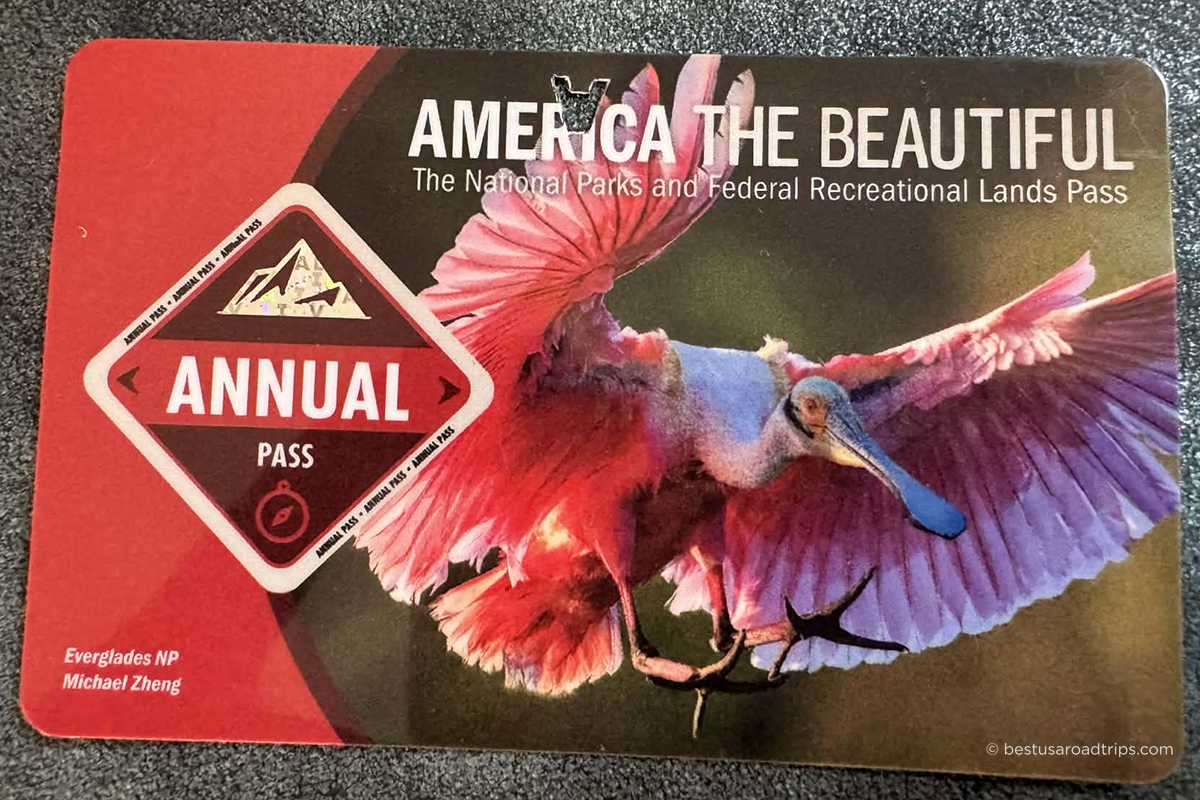
America the Beautiful Annual Pass Explained
The America the Beautiful Annual Pass is the most common way to simplify national park entrance fees on a road trip. It provides access to all US national parks and hundreds of federal recreation sites for one flat price.
What the pass includes:
- Unlimited entry to US national parks for 12 months
- Covers the pass holder and up to three additional adults traveling in the same vehicle
- Children under 16 are admitted free
Pass prices in 2026:
- $80 for US citizens and residents
- $250 for non-US residents (covers standard entrance fees and the additional non-resident surcharge where applicable)
How the pass works on a road trip:
- One pass covers multiple parks across different states
- You do not need to pay separate entrance fees at each park
- The pass is checked at park entrance stations, just like a regular fee receipt
What the pass does not cover:
- Timed entry reservations
- Trail permits or lottery-based hikes
- Campground fees
- Guided tours or special activities
For road trippers visiting several parks in a short period, the America the Beautiful Annual Pass reduces both cost and hassle. It’s especially helpful on cross-country routes where parks are spread across multiple states and entrance fees would otherwise add up quickly.
Is the America the Beautiful Pass Worth It in 2026?
Whether the America the Beautiful Annual Pass is worth buying depends on how many parks you plan to visit, how long your trip is, and where you’re coming from. There’s no one-size-fits-all answer, but the math is usually straightforward.
For US citizens and residents, the $80 annual pass often pays for itself quickly. Visiting just three parks with standard $30–35 entrance fees already puts you close to the pass price. On longer road trips that include four or more parks, the pass is usually the more cost-effective option.
For international travelers, the decision matters even more in 2026. At parks with the additional $100 non-resident fee, costs rise fast. If your itinerary includes three or more of the affected high-visitation parks, the $250 non-resident annual pass is often significantly cheaper than paying individual entrance and surcharge fees at each stop.
Both the annual pass and single-park entrance fees can be purchased online, so the pass doesn’t necessarily save time at entrance stations. Its main benefit is cost predictability and avoiding repeated per-park charges when visiting many parks on one itinerary.
If your road trip includes:
- only one or two parks
- mostly parks with standard entrance fees
- a longer stay focused on a single park
paying individual entrance fees may be the better choice.
Common Mistakes Travelers Make With Park Fees
One of the most common mistakes is assuming that an annual pass covers everything. The America the Beautiful Pass covers entrance fees only. It does not replace reservations, trail permits, campground fees, or special activity costs.
Another issue is buying a pass too early or too late. Since the pass is valid for 12 months from the purchase date, timing matters—especially if your trip is planned far in advance.
Some travelers also overlook how entrance fees are charged. Most parks charge per vehicle, not per person, which can make individual entrance fees more reasonable for families or groups in one car.
Finally, many visitors don’t factor entrance fees into early budgeting. Even standard fees can add up on longer routes, especially when combined with campground and activity costs.
Avoiding these mistakes makes it easier to choose the right payment option and keeps your road trip budget realistic.
How Entrance Fees Affect Road Trip Budgeting
Entrance fees are easy to underestimate when planning a road trip, but they can quietly shape your overall budget. When several national parks are part of one route, even standard fees add up and should be considered alongside fuel, lodging, and food costs.
In 2026, this matters even more for international travelers. Higher entrance fees at select parks can influence which destinations you include, how many parks you visit, and how long you stay at each one. Budgeting early helps avoid cutting stops later or rushing through parks to save money.
Entrance fees can also affect route planning. You may decide to group parks more strategically, balance higher-cost parks with those that still follow standard pricing, or plan longer stays in fewer locations. This approach often leads to a more relaxed trip and better use of both time and money.
By factoring entrance fees into your road trip budget from the start, you can make smarter choices, avoid surprises at park gates, and keep your travel plans flexible and realistic throughout your journey.
Final Thoughts
US National Park entrance fees are an important part of road trip planning in 2026. While costs for US citizens and residents remain stable, changes affecting international travelers make budgeting more important than ever.
Understanding how entrance fees work, which parks charge more, and when an annual pass makes sense helps you plan with confidence.
The key is to look at your full route, not just individual stops. Some trips are better suited to paying per park, while others benefit from an annual pass. Taking the time to plan entrance costs early keeps your road trip flexible, predictable, and focused on enjoying the experience rather than worrying about fees along the way.
Do You Like It? Pin It For Later!

