17 Best Things to Do in Arches National Park: Top Hikes, Arches, and Scenic Drives
Arches National Park is one of the most striking places in the American Southwest, with red rock fins, soaring spires, and more than 2,000 natural arches spread across the desert. It’s an easy park to explore, with short trails, dramatic overlooks, and some of the best sunrise and sunset light in Utah. Whether you’re visiting for a few hours or spending a full day on the trails, Arches offers memorable views around every corner. In this guide, we share the best things to do in Arches National Park—our favorite hikes, viewpoints, and photo opportunities from several trips across different seasons. These ideas will help you build a great visit based on your time, interests, and travel style.
This article may contain affiliate / compensated links. For full information, please see our disclaimer here.
Our Experiences
Chris and I have visited Arches National Park many times over the years, often as part of our longer road trips through Utah national parks.
We often combine our time in Arches with a visit to nearby Canyonlands, since the two parks sit so close to each other and make an easy pairing. And we use Moab as our base—one of the best outdoor towns in Utah.
Each visit to Arches gave us a new perspective. We’ve hiked its trails in the early morning, watched the rocks glow deep orange at sunset, and returned at night to photograph the stars above the red desert.
Because the park is so compact and the trails are short, we were able to explore many areas on foot. We hiked to Delicate Arch more than once, wandered through Devils Garden, and spent hours photographing the Windows Section in changing light. The soft morning glow at Landscape Arch and the warm evening colors at Balanced Rock are still some of our favorite memories from this park.
Arches became one of those places we kept returning to—not just for photography, but for the easy access, the variety of viewpoints, and the way the landscape feels different during every season. We share the highlights here to help you choose the experiences that fit your own Utah road trip.
Quick Arches Facts & Visitor Basics
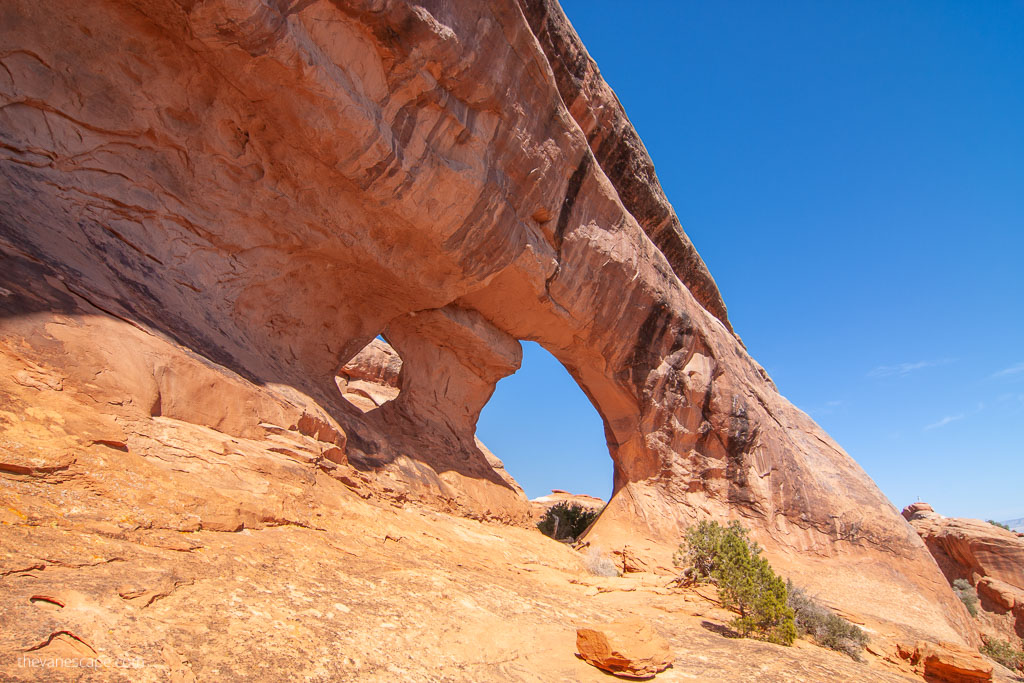
Before you start exploring, it helps to know a few key details about Arches National Park. This compact but dramatic park sits just 5 miles north of Moab in southeastern Utah and protects more than 76,000 acres of red rock canyons, sandstone fins, and more than 2,000 natural arches—the largest concentration of natural rock arches on the planet.
Here are the essential basics to help you get oriented:
- Location. Arches National Park is located in southeastern Utah, along US-191, only a 5–10 minute drive from Moab.
- Elevation. Ranges from 3,960 feet near the Colorado River to 5,653 feet at Elephant Butte.
- Entrance Fees. $30 per vehicle. America the Beautiful Annual Pass is accepted.
- Timed-Entry Reservations. In 2026, advanced timed-entry reservations will not be required at Arches. Visitors may enter the park at any time during operating hours. Vehicles may be diverted from park entrances when areas become too congested. Reservations continue to be required for Devils Garden Campground and self-guided and ranger-led Fiery Furnace hikes.
- Hours. The park is open 24 hours a day, year-round. The visitor center typically operates during daytime hours with seasonal variations.
- Best Time to Visit. Spring (April–May) and fall (September–October) offer comfortable temperatures and the best hiking conditions. Summer brings extreme heat, often over 100°F. Winter is cold but peaceful, and light snow makes the arches even more dramatic.
- Road & Parking Conditions. The main road is fully paved, but parking fills quickly during busy seasons. Arrive early in the morning or later in the afternoon for the best experience.
- Nearest Services. All food, gas, lodging, and water are located in Moab. No services are available inside the park.
17 Best Things to Do in Arches National Park
Below is our full list of the best things to do in Arches National Park. Choose the experiences that fit your travel style and interests—whether you prefer short walks, photography spots, scenic viewpoints, or longer trails, you’ll find options that work for every type of visitor.
1. Drive the Arches Scenic Drive
Driving the Arches Scenic Drive is the easiest way to see the park’s dramatic red-rock landscapes. This paved 36-mile round-trip road takes you past towering cliffs, sweeping viewpoints, and trailheads for many of the park’s best hikes. It’s the backbone of every visit, and it works for all travelers—families, first-timers, and anyone short on time.
The road climbs steeply right after the entrance, giving you an impressive first look at the Courthouse Towers and Park Avenue area. As you continue, you’ll reach popular stops like Balanced Rock, the Windows Section, and the Delicate Arch viewpoints. Farther north, the drive ends at Devils Garden, home to Landscape Arch and the longer Devils Garden Loop.
Plan at least half a day if you want to make scenic stops and walk a few short trails. With a full day, you can combine the drive with some of the park’s best hikes and linger for sunset. Bring plenty of water and snacks—there are no services inside the park—and download offline maps before you go.
2. Visit the La Sal Mountains Viewpoint
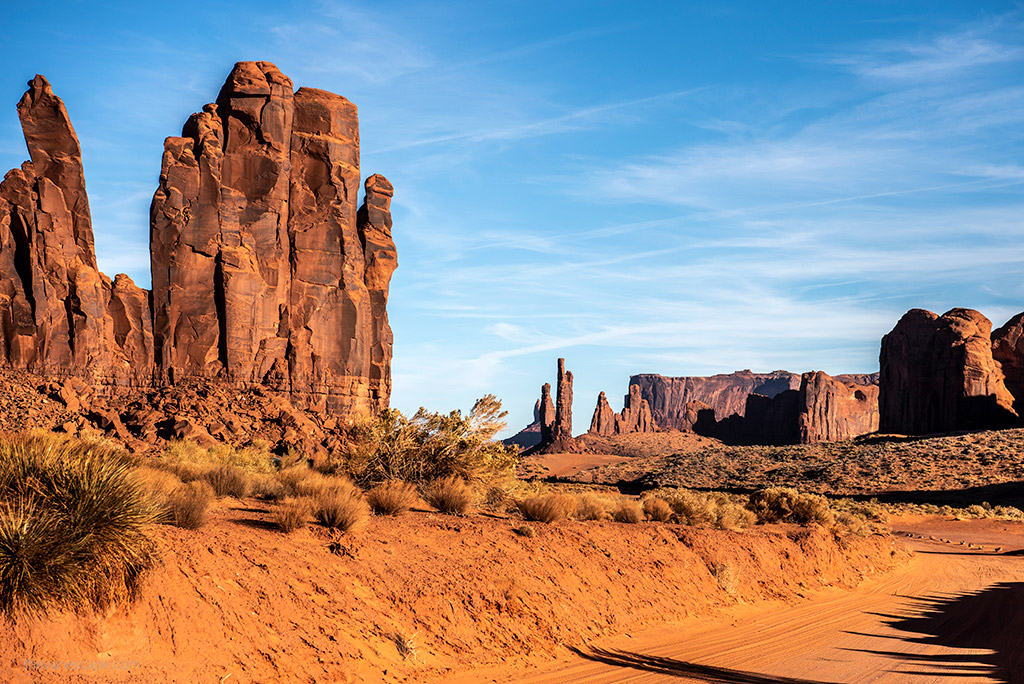
The La Sal Mountains Viewpoint is one of the first major stops along the scenic drive, and it’s the perfect place to understand the scale of Arches National Park. From here, you get a sweeping panorama of red rock fins, sandstone towers, and the distant La Sal Mountains rising more than 12,000 feet above the desert floor. It’s a dramatic contrast of colors and textures, especially in early morning or late afternoon light.
This viewpoint is only a short walk from the parking area, so it’s an easy stop for all visitors. Photographers love it because you can capture several of Arches’ signature formations in one wide-angle shot, including the Three Gossips and Courthouse Towers. It’s also a good place to pause, enjoy the breeze, and get oriented before heading deeper into the park.
3. Walk the Park Avenue Trail
The Park Avenue Trail is one of the most dramatic introductions to Arches National Park. This one-mile trail (two miles round trip if you return the same way) drops into a canyon lined with towering sandstone walls, spires, and monoliths that look like a skyline—hence the name “Park Avenue.” It feels like walking through a natural stone corridor, with giant formations rising on both sides.
The trail is easy to moderate, with a short descent at the beginning and some uneven terrain along the way. You don’t have to hike the full distance to enjoy it—many visitors simply walk partway into the canyon for a taste of the scenery and turn around.
Morning is the best time for photography, when soft light reaches the canyon floor. The area is also a great spot for wide-angle shots of the Courthouse Towers. If you want a quiet start to your day in Arches, Park Avenue is a perfect choice.
4. Visit Balanced Rock
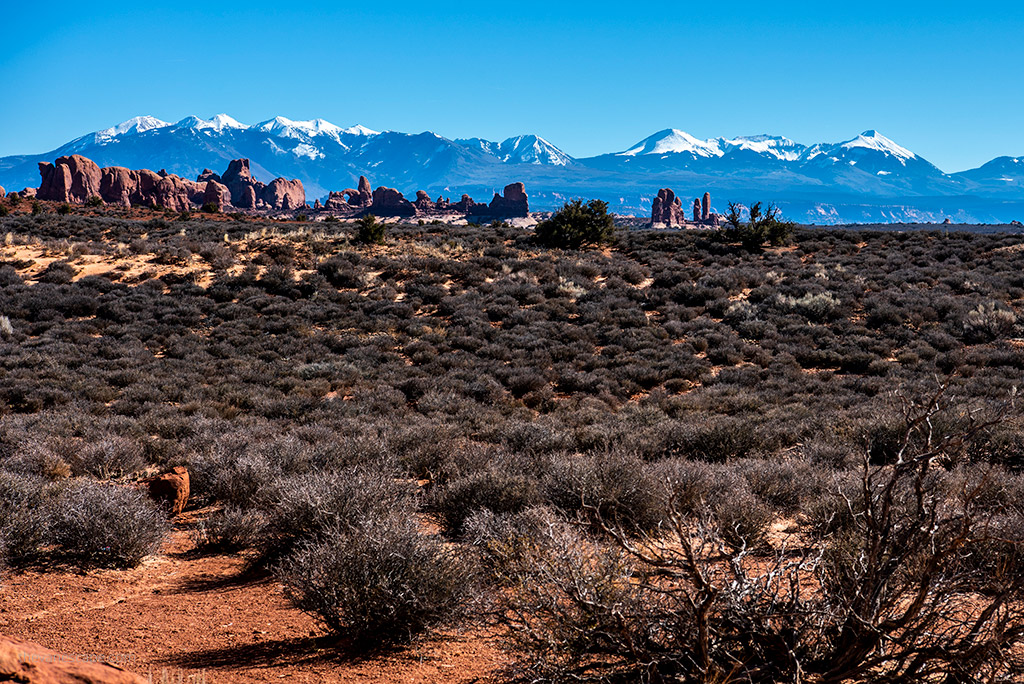
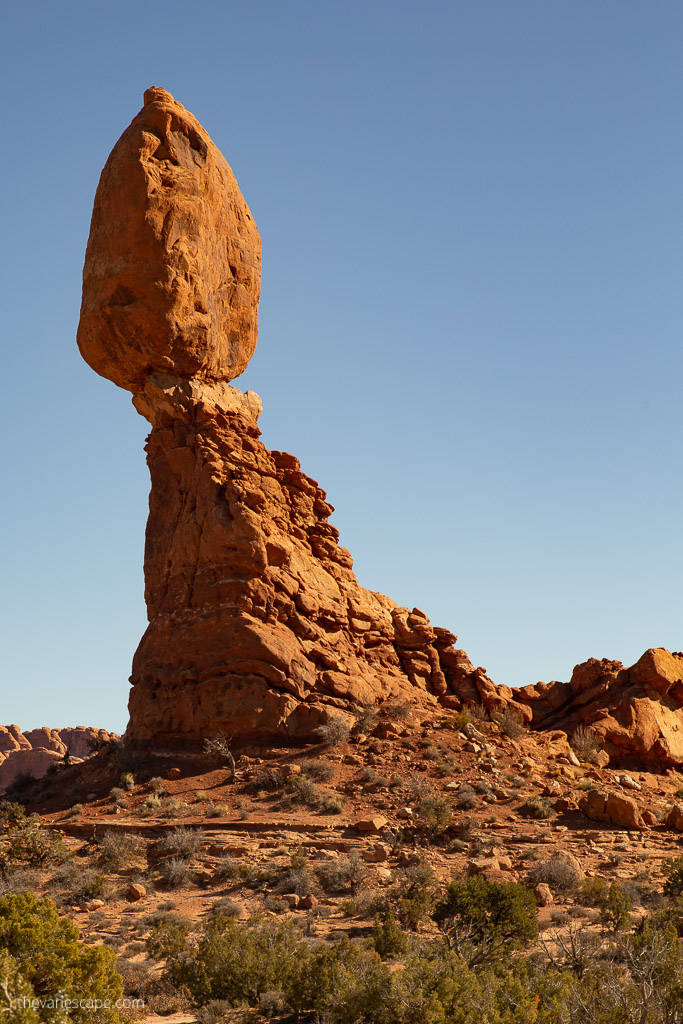
Balanced Rock is one of the most recognizable formations in Arches National Park, and it’s an easy stop right off the scenic drive. The massive boulder perched on a narrow pedestal looks impossibly top-heavy, and seeing it up close gives you a real sense of how huge it is. The upper rock alone is the size of several school buses stacked together.
A short 0.3-mile loop circles the base, offering different angles and photo opportunities. It’s a great stop for families and anyone who wants a quick, rewarding walk without much effort. Sunset is especially beautiful here—the warm light makes the red sandstone glow, and the La Sal Mountains often catch pink or purple tones in the distance.
Balanced Rock is also a convenient spot to stretch your legs between Park Avenue and the Windows Section, so it fits naturally into any Arches itinerary.
5. Hike to Delicate Arch
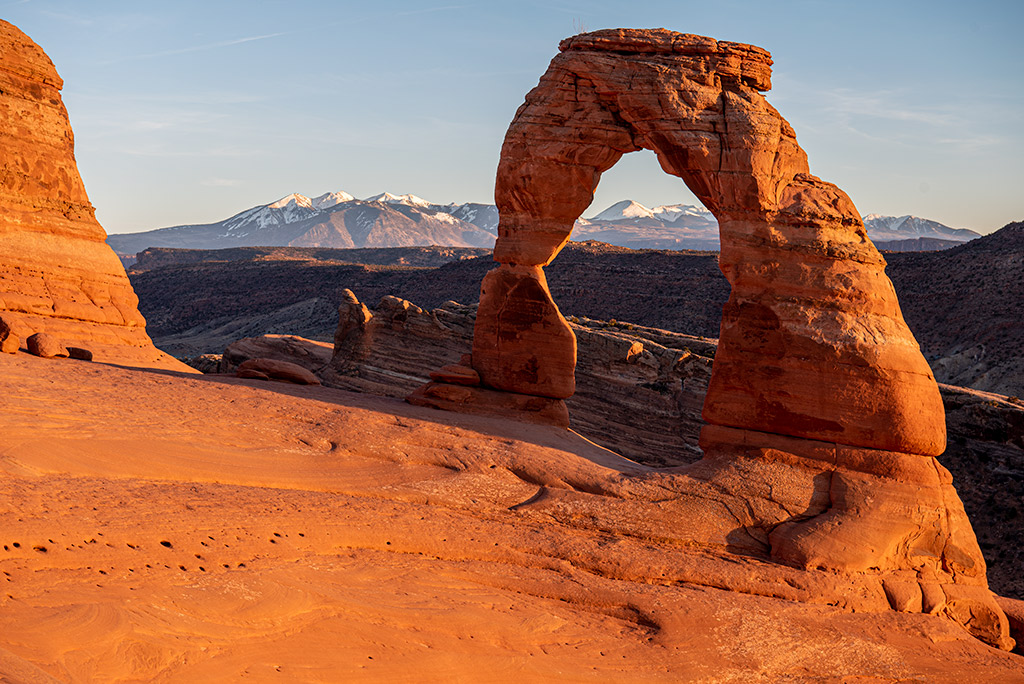
Delicate Arch is the crown jewel of Arches National Park and one of the most iconic landmarks in the American Southwest. The 3-mile round-trip hike is moderately challenging, with steady elevation gain, stretches of open slickrock, and a short exposed ledge near the end. But the payoff is unforgettable—standing beneath this massive freestanding arch with the La Sal Mountains glowing behind it is a true bucket-list moment.
The trail starts at the Wolfe Ranch parking area. Most of the climb is on slickrock, so good traction on your shoes is important. There’s no shade, and temperatures rise fast, so carry plenty of water and consider hiking early in the day. For sunset visits, arrive at least two hours early to secure a good photography spot and avoid hiking back in complete darkness—bring a headlamp.
If you want the full experience of Arches National Park’s signature formation, this is the hike you can’t skip.
6. See the Delicate Arch Viewpoints (Lower & Upper)
If the full hike to Delicate Arch isn’t the right fit for your trip—or you simply want another perspective—the Lower and Upper Delicate Arch Viewpoints offer easy alternatives. Both are located along a short spur road past the main Delicate Arch trailhead.
The Lower Viewpoint requires only a short walk on a paved path. It’s accessible, kid-friendly, and gives you a clear line of sight to the arch from a distance. The Upper Viewpoint sits higher on a hillside and requires a 0.5-mile round-trip walk with a bit more elevation gain. From here, you’ll have a wider panorama of the sandstone bowl and a better angle for photos.
These viewpoints are especially useful on hot days, during busy sunset hours, or if mobility or time is limited. They allow everyone to admire the park’s most famous arch without committing to the longer hike.
7. Explore the Windows Section and Turret Arch
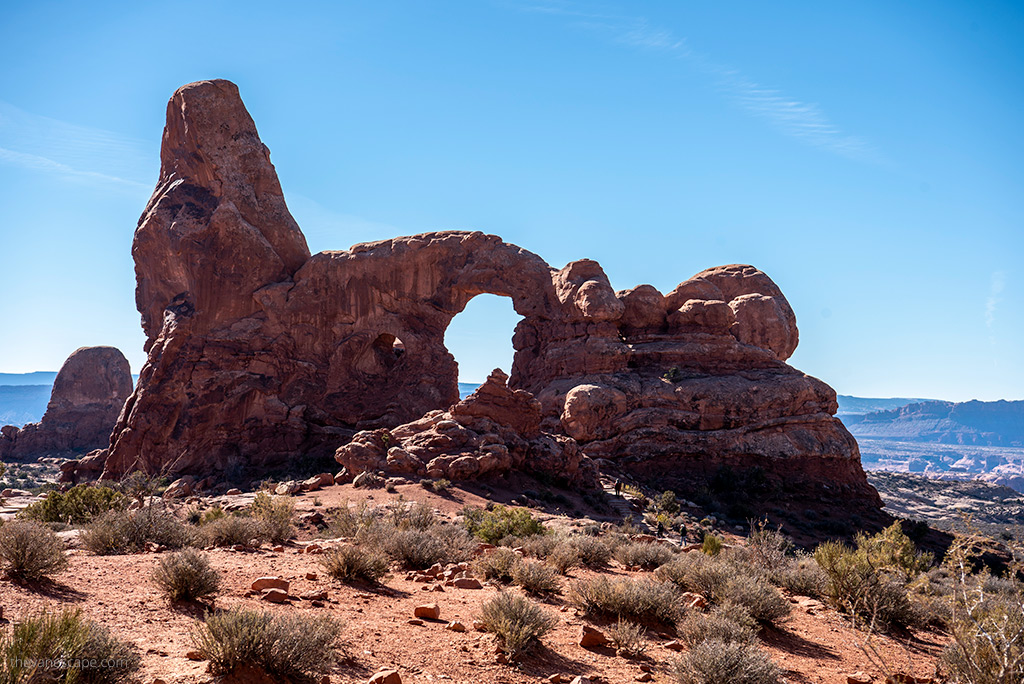
The Windows Section is one of the most impressive and easily accessible areas in Arches National Park. A short network of trails leads to three massive formations: the North Window, the South Window, and Turret Arch. The scale here is incredible—these arches are huge, and you can walk right up to them for close-up views and photos.
The main loop is about one mile and includes gentle climbs on packed gravel and stone steps. Most visitors walk up to the North Window first, then continue to the South Window and Turret Arch. If you want a quieter experience, take the slightly longer Primitive Loop behind the Windows for fewer crowds and different viewpoints.
This area is beautiful at any time of day, but sunrise brings especially warm light on the arches. If you want a classic Arches experience without strenuous hiking, the Windows Section is a must.
8. Walk to Double Arch
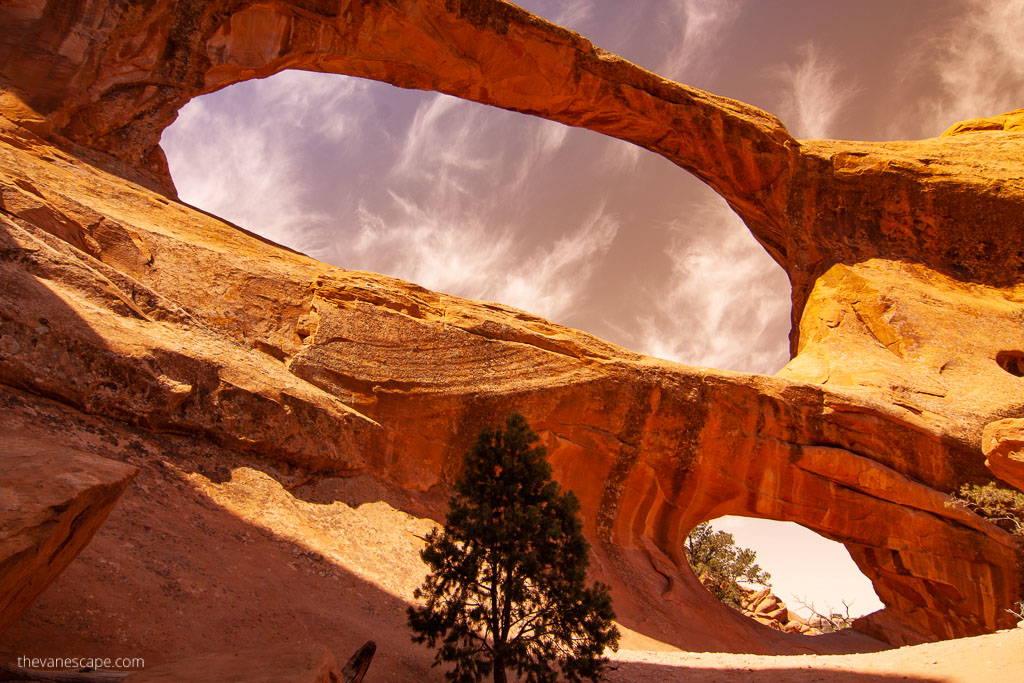
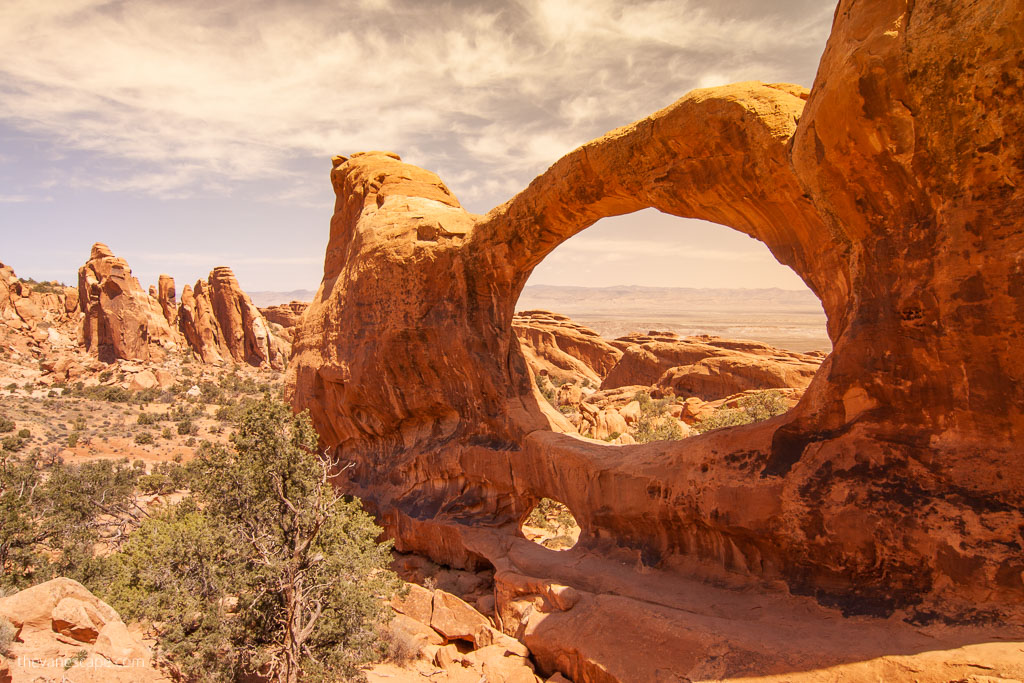
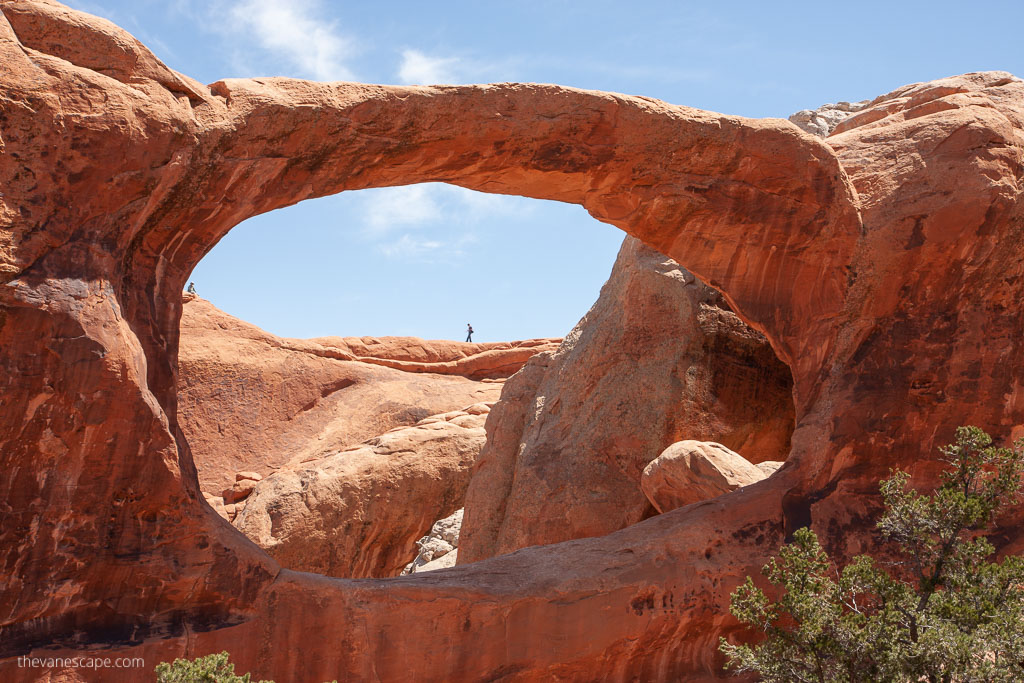
Double Arch is one of the most awe-inspiring formations in Arches National Park. Two massive stone spans rise from the same base, creating a towering amphitheater of sandstone. Standing beneath the arches gives you an incredible sense of scale—this formation feels more like a natural cathedral than a typical arch.
The trail is short and easy: about 0.5 miles round trip across packed sand and scattered rocks. It’s ideal for families, casual hikers, and anyone who wants a big payoff with very little effort. Photographers love this spot because you can capture both arches in one wide frame or climb partway up the slickrock for a more dramatic angle.
The area is also connected to the Windows Section, so many visitors combine both stops in a single visit. It’s especially beautiful in early morning or late afternoon light.
9. Visit Sand Dune Arch (and nearby Broken Arch)
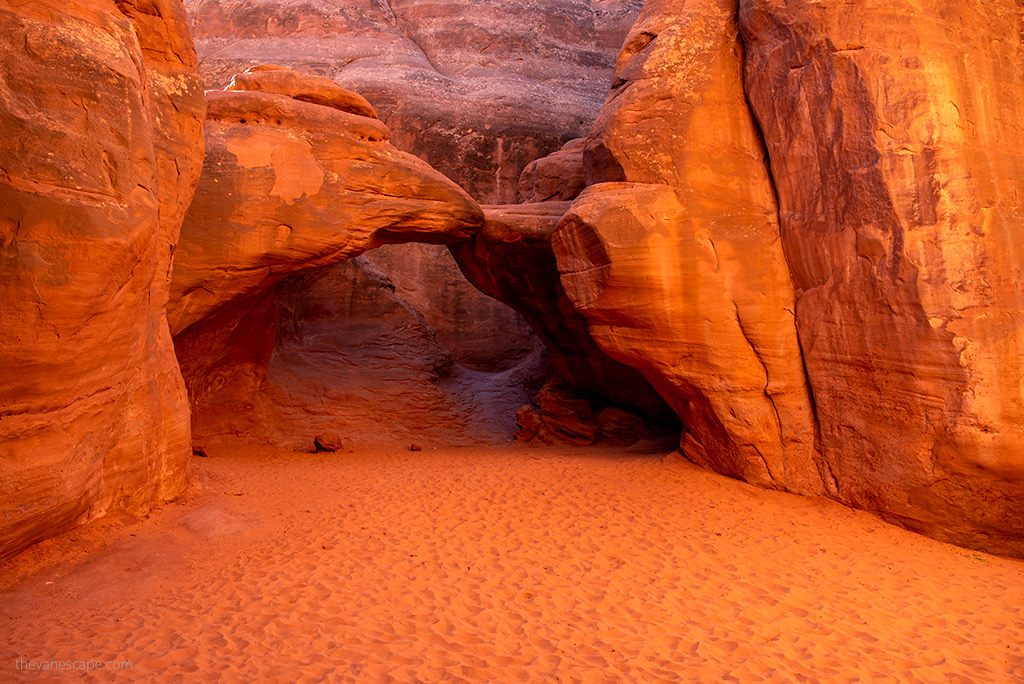
Sand Dune Arch is a hidden gem tucked between tall sandstone fins, and it offers a completely different experience from the park’s wide-open viewpoints. A short 0.3-mile walk leads you into a cool, shaded slot-like area where fine red sand covers the ground and the arch sits nestled between the narrow walls. It’s one of the best stops for families because kids love playing in the soft sand.
If you want to extend your visit, continue along the trail toward Broken Arch. This longer option is still easy to moderate and takes you across an open meadow to a graceful, photogenic arch with far fewer people around. From Broken Arch, you can create a loop back through the campground or return the same way.
Because Sand Dune Arch is shaded, it’s a great midday stop when temperatures climb. Broken Arch, with its open desert backdrop, shines in late afternoon light.
10. Hike to Landscape Arch
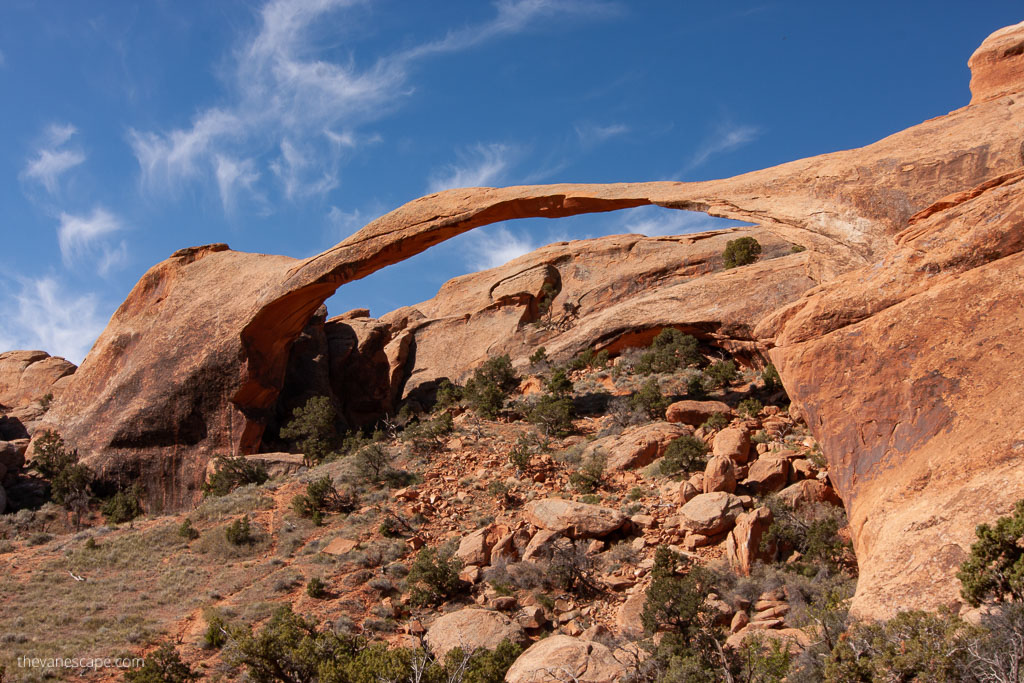
Landscape Arch is one of the most remarkable formations in Arches National Park. With a span measuring 306 feet, it’s the longest arch in North America and one of the longest in the world. Its impossibly thin shape makes it look as if it’s barely holding itself together, and several large rock falls in the 1990s caused the trail underneath it to permanently close—so you now view it from a safe distance.
The hike to Landscape Arch is an easy 1.6-mile round trip on a well-maintained trail. It’s part of the Devils Garden area at the end of the scenic drive, and many visitors start their day here. The trail includes gentle hills but no technical sections, so it’s suitable for most hikers.
Early morning offers the best light for photos, and it’s also the quietest time to visit. Even from the viewpoint, the arch’s delicate, ribbon-like span is impressive and makes this one of the must-see stops in the entire park.
11. Hike the Devils Garden Loop
The Devils Garden Loop is the most adventurous trail in Arches National Park. This route takes you far beyond the easy trails and roadside viewpoints and into a rugged maze of sandstone fins, ridgelines, and narrow ledges. If you want a longer, more challenging hike with huge rewards, this is the one to choose.
The full loop is about 7.9 miles and includes visits to Landscape Arch, Double O Arch, Navajo Arch, Partition Arch, and several other formations. After Landscape Arch, the trail becomes more technical. You’ll scramble over slickrock, navigate exposed sections, and follow cairns rather than a clearly defined path. Good footwear, plenty of water, and confidence on uneven surfaces are essential.
The scenery is outstanding the entire way, and the farther you go, the fewer people you’ll see. Many visitors hike only to Landscape Arch or Double O Arch, but completing the entire loop delivers a full day of adventure in one of the park’s most dramatic landscapes.
12. Explore the Fiery Furnace (permit or ranger-led tour)
The Fiery Furnace is one of the most unique and exciting places in Arches National Park. This maze of narrow sandstone fins, slot-like passages, hidden arches, and towering walls feels completely different from anywhere else in the park. It’s a true adventure—but also an area that requires care and preparation.
Because the terrain is complex and easy to get lost in, entering the Fiery Furnace requires either a self-guided permit or joining a ranger-led tour. The ranger tour is the easiest option for first-time visitors. Rangers guide you through tight passages, small scrambles, and twisting corridors while sharing geology and park history. Self-guided permits are limited and require watching a short safety video at the visitor center.
Inside the Fiery Furnace, trails are not marked. You’ll climb over boulders, squeeze between sandstone walls, and navigate uneven slickrock. Good shoes, plenty of water, and steady balance are important. If you enjoy exploring off the beaten path, this is one of the most unforgettable experiences in the entire park.
13. Visit the Garden of Eden Viewpoint
The Garden of Eden Viewpoint is a quick and rewarding stop along the scenic drive, located just a short distance from the Windows Section. This wide-open area features clusters of sandstone towers, rounded knobs, and striking rock formations that feel sculpted by the elements. It’s one of the best places in the park to appreciate Arches’ wild, open desert landscape without crowds.
There’s no formal trail here—just open slickrock you can wander freely. That freedom lets you explore different angles and enjoy unobstructed views of nearby formations like Balanced Rock, the Windows, and the La Sal Mountains. Photographers love this spot for sunrise and late-afternoon light because the formations glow deep orange when the sun sits low on the horizon.
It’s a simple stop, but the atmosphere here is peaceful, spacious, and perfect for taking in the beauty of Arches at your own pace.
14. See Skyline Arch Up Close
Skyline Arch is one of the easiest arches to visit in the park and a great stop for all ages. The arch sits high on a massive sandstone wall, and its position along the skyline makes it stand out beautifully against the blue Utah sky. You can see it right from the road, but the short walk to its base gives you a much better sense of its scale.
The trail is only about 0.4 miles round trip, flat, and easy. It takes just a few minutes to reach the viewpoint, where you can stand below the towering opening and admire the dramatic rock wall that frames the arch. A huge boulder fell out of Skyline Arch in 1940, doubling the size of the opening—so you’ll notice how large it feels compared to many other arches.
This is a great stop if you’re short on time, traveling with kids, or want a quick break between longer hikes. The area also photographs well at golden hour when the arch glows warm orange.
15. Visit the Courthouse Towers & Three Gossips Viewpoints
Courthouse Towers and Three Gossips are among the first major viewpoints along the Arches Scenic Drive, and they set the tone for the whole park. These towering sandstone formations rise dramatically from the desert floor and give you an early glimpse of the scale and power of erosion that shaped Arches.
Both viewpoints are easy to access and require almost no walking, making them great stops for all visitors. From the parking area, you’ll see massive rock walls, tall monoliths, and the graceful Three Gossips formation—one of the most recognizable shapes in the park.
This area is especially beautiful in soft morning light. The cliffs glow with warm color, and long shadows highlight the textures of the walls. Photographers often stop here twice: once on the way in, and again later in the day when the light changes.
Because the viewpoints are close to the road, they’re perfect for quick photos, stretching your legs, or taking a short break before continuing deeper into the park.
16. Enjoy Sunrise or Sunset at Your Favorite Viewpoint
Arches National Park is one of the best places in Utah to chase golden-hour light. Sunrise and sunset transform the red rock into glowing shades of orange and gold, and even familiar formations look completely different when the sun sits low on the horizon.
You don’t need a long hike to enjoy these moments. Many of the best viewpoints are steps from your car, which makes sunrise and sunset easy to fit into any itinerary. Delicate Arch is the most iconic sunset spot, but it’s also the most crowded. If you want something quiet, the Windows Section, Balanced Rock, or Park Avenue offer plenty of space to spread out and photograph the changing light.
At sunrise, the Devils Garden area glows beautifully and is a great place to start your day before the crowds arrive. Skyline Arch and the La Sal Mountains Viewpoint also work well if you prefer an easy, quick-access location.
Whether you’re a photographer or simply love watching the desert wake up or wind down, golden hour in Arches always feels special. It’s the perfect way to end—or begin—a day in the park.
17. Camp at Devils Garden Campground
Spending a night at Devils Garden Campground is one of the most memorable ways to experience Arches National Park. This quiet, scenic campground sits among sandstone fins and slickrock, giving you easy access to sunrise, sunset, and night sky photography right outside your tent or RV. It’s the only campground inside the park, so staying here lets you enjoy the landscape long after day-visitors head back to Moab.
Sites book up fast from March through October, and reservations open six months in advance. Facilities are basic—no hookups or showers—but the views make up for it. Early mornings are especially beautiful, with red rock glowing in the first light and the trails at Devils Garden just a short walk away.
If you enjoy peaceful desert nights, stargazing, and having a front-row seat to Arches’ natural beauty, camping at Devils Garden is a must-do.
Final Thoughts
Arches National Park is one of the most accessible and rewarding parks in the Southwest. Its short trails, dramatic overlooks, and iconic rock formations make it easy to build a trip that fits your pace.
You can spend the day hiking to famous arches, wander through sandstone fins, or simply follow the scenic drive and stop at viewpoints that inspire you.
No matter how you explore, the park’s shifting light and deep red landscapes create unforgettable moments from sunrise to sunset. Choose the experiences that match your interests, prepare for the desert conditions, and enjoy one of Utah’s most beautiful national parks.
Do You Like It? Pin It For Later!