Best Hikes in Zion: Easy, Moderate, and Challenging Trails
Zion is one of the best national parks in the U.S. for hiking. Towering cliffs, narrow canyons, river walks, and high viewpoints create a trail network that fits many skill levels. From short scenic walks to demanding routes with dramatic exposure, Zion offers an impressive range of hiking experiences. In this guide, we focus on the best hikes in Zion National Park, grouped by difficulty and clearly noting which trails require permits and which do not to help you plan your hiking adventure. Whether you’re visiting for a day or planning a longer stay, this article will help you choose the hikes that best fit your time and experience level.
This article may contain affiliate / compensated links. For full information, please see our disclaimer here.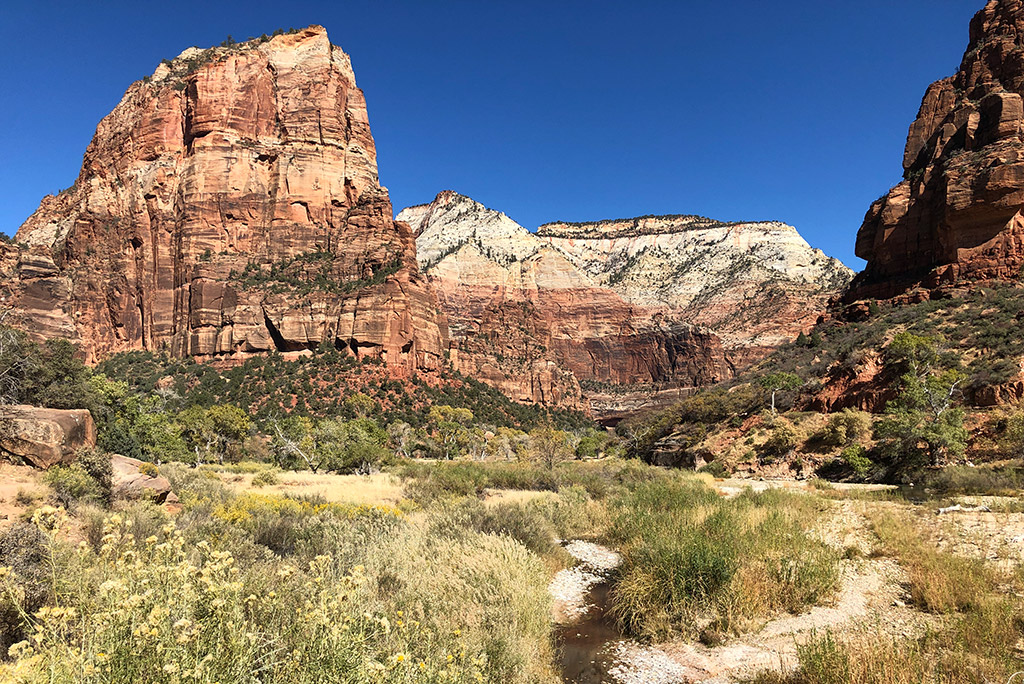
Our Hiking Experiences in Zion National Park
Hiking has always been the main reason we keep returning to Zion. In our experience, hiking is one of the best things to do in Zion, and the park offers far more variety than many visitors expect. Every trip brought different trail conditions, light, and crowd levels, which often changed how each hike felt.
Some hikes pushed us physically, others surprised us with how much scenery they offered for relatively little effort. Those experiences taught us that Zion hiking is not one-size-fits-all.
Over the years, we were lucky to complete some of Zion’s most challenging routes, including the Narrows, the Subway, and Angels Landing. We explored these trails in different seasons, from busy summer days to quieter spring and late-fall visits, when temperatures were cooler and the canyon felt calmer.
Those hikes showed us that trail choice matters just as much as fitness level. Some routes demand permits and careful planning, while others offer equally memorable scenery with far fewer obstacles. This guide reflects that balance and helps you choose hikes that fit your time, experience, and comfort level.
Agnes’ Advice: If you’re just starting your trip planning, take a look at our detailed guide on how to plan a trip to Zion National Park, which covers when to go, where to stay, how to get around, and much more.
How to Choose the Right Hike in Zion National Park
When planning a Utah Mighty 5 road trip, it’s worth adding a few Zion hikes to your itinerary to fully experience the park.
Choosing the right hike in Zion depends on a few key factors, not just trail length. Time of year, water levels, crowds, and shuttle access can all affect your experience.
Start by considering how much time you have. Some trails offer incredible views in under two hours, while others require a full day and careful pacing. If you’re visiting during peak season, shorter hikes early in the morning often work best.
Next, think about season and conditions. Summer heat, spring runoff, and fall weather changes can limit certain hikes, especially river routes. Always check current conditions before committing to a longer trail.
Finally, pay attention to permit requirements. Some of Zion’s most famous hikes require advance permits, while many rewarding trails do not. Knowing this ahead of time helps you avoid last-minute disappointment and plan a smoother hiking day.
In the sections below, we group the best hikes by difficulty and clearly note which ones require permits, so you can choose trails that fit your trip and hiking style.
Best Easy Hikes in Zion National Park
These easy hikes offer classic Zion scenery without steep climbs or long distances. None of the trails below require permits, which makes them perfect for first-time visitors and relaxed hiking days.
Pa’rus Trail
- Shuttle Stop: 1
- Hike Location: Zion Canyon Visitor Center
- Round Trip Duration: about 2 hours, 3.5 miles (5.6 km)
- Elevation Change: about 50 feet (15 m)
Trail Description:
The Pa’rus Trail is a paved, mostly flat trail that follows the Virgin River from the Visitor Center toward Canyon Junction. It offers wide canyon views, river scenery, and frequent wildlife sightings. This trail is ideal for all ages and fitness levels and is also open to bikes. It’s a great option for an easy walk, sunset stroll, or recovery day between longer hikes.

Lower Emerald Pool Trail
- Shuttle Stop: 5
- Hike Location: Zion Lodge
- Round Trip Duration: about 1 hour, 1.2 miles (1.9 km)
- Elevation Change: about 70 feet (21 m)
Trail Description:
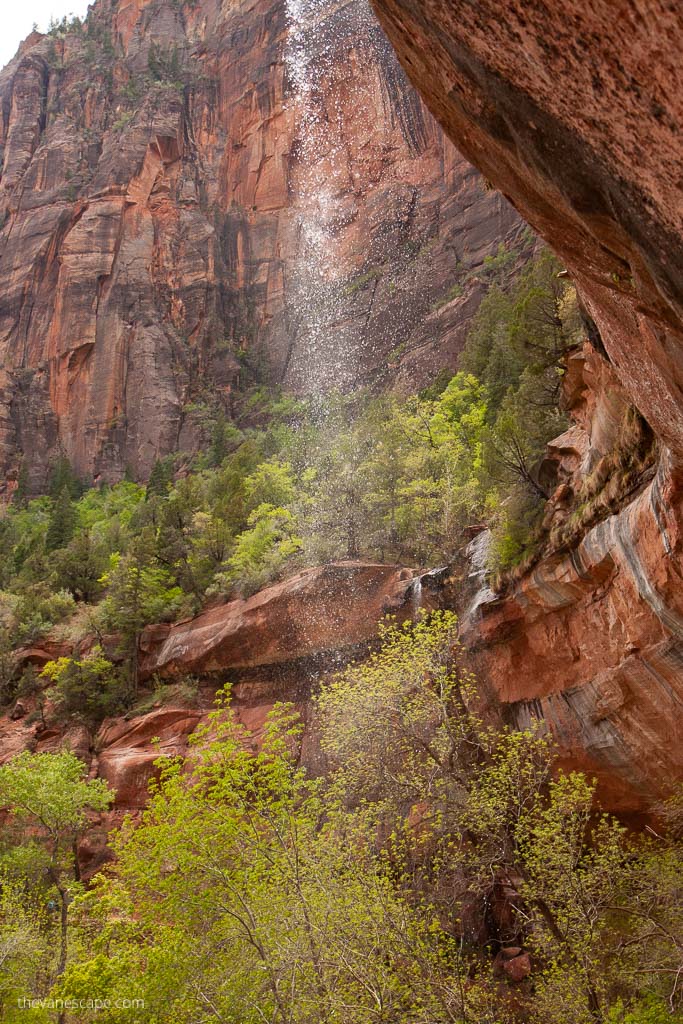
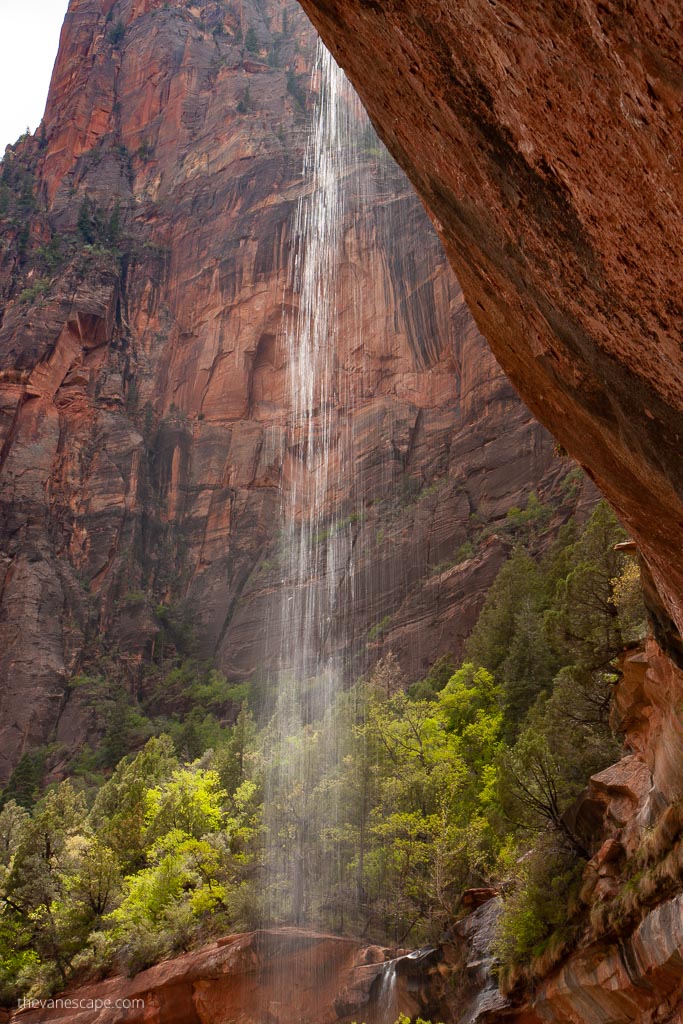
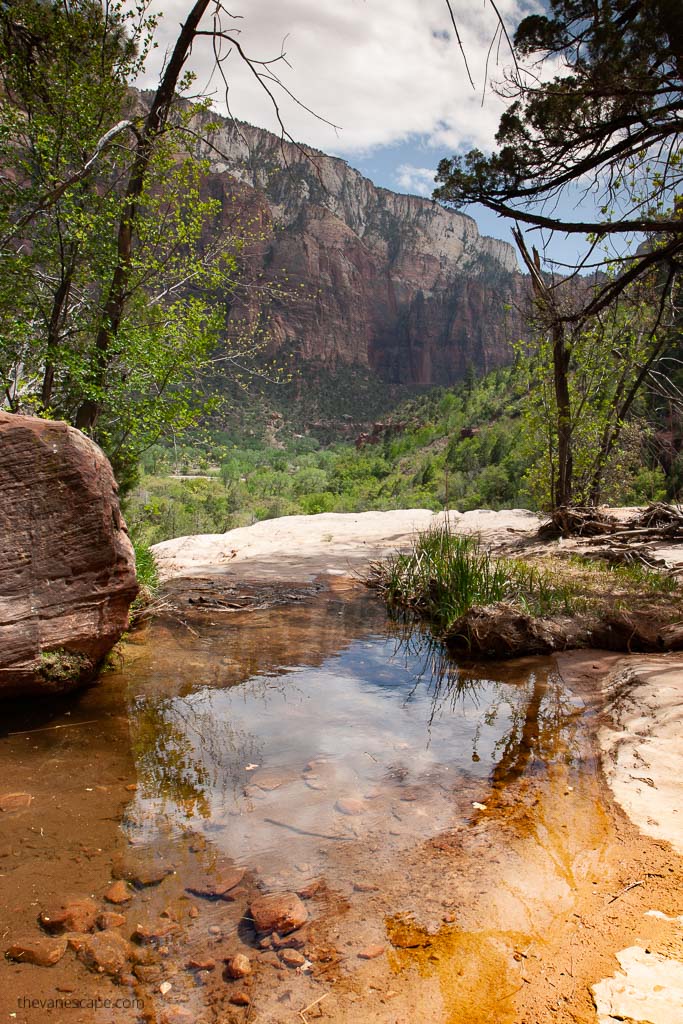
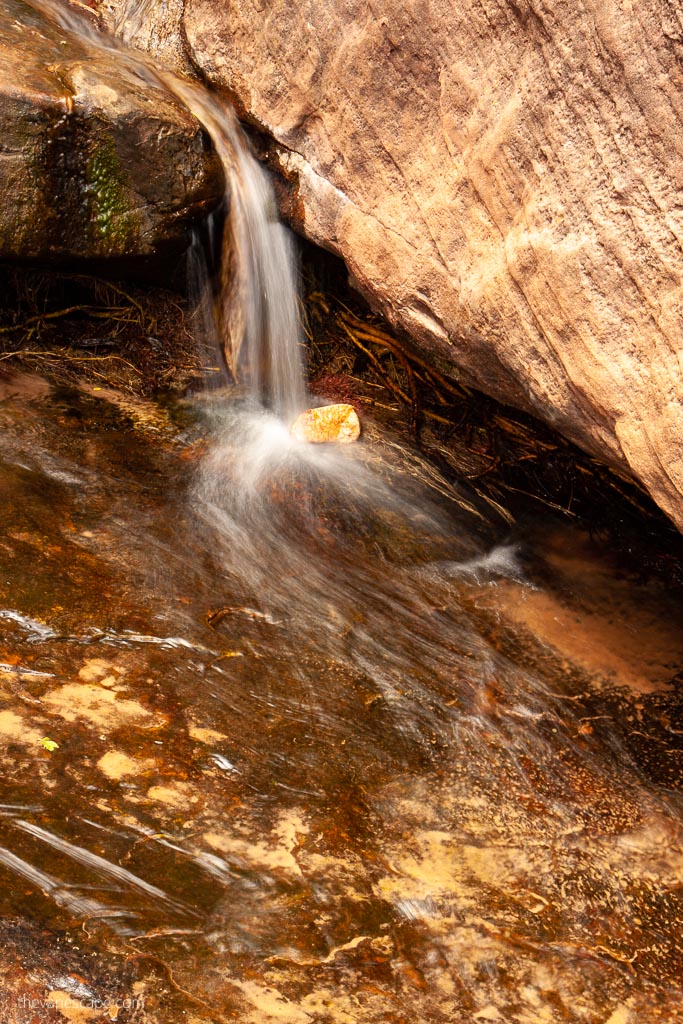
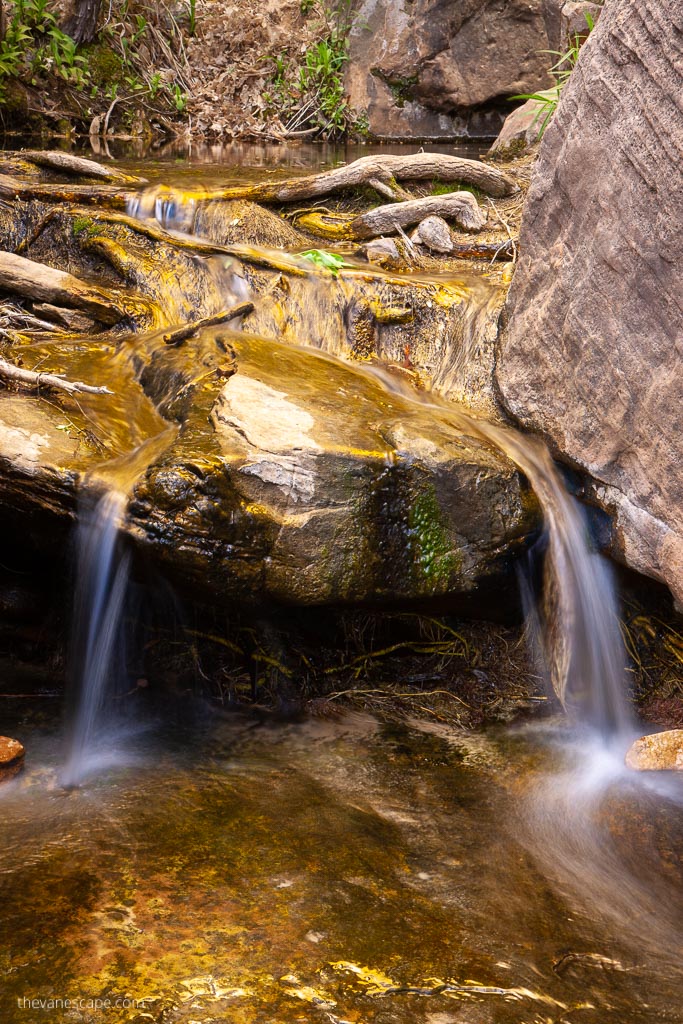
The Lower Emerald Pool Trail is a short, scenic hike that leads to a shallow pool and seasonal waterfalls beneath a shaded rock alcove. The paved path makes this trail accessible and easy to combine with other nearby hikes. It’s especially popular in spring when water flow is stronger, but it remains a pleasant walk year-round.

Upper Emerald Pool Trail
- Shuttle Stop: 5
- Hike Location: Zion Lodge
- Round Trip Duration: about 1 hour, 1.0 mile (1.6 km)
- Elevation Change: about 200 feet (61 m)
Trail Description:
The Upper Emerald Pool Trail climbs gently above the lower pools and feels quieter and more open. The trail surface is sandy and rocky, and the views open toward the canyon walls above Zion Lodge. It’s a good step up from the lower trail without becoming demanding and works well as a continuation hike.
These easy trails are a great introduction to Zion hiking and show how much beauty the park offers without requiring major effort or advanced planning.
Weeping Rock Trail
- Shuttle Stop: 7
- Hike Location: Weeping Rock
- Round Trip Duration: about 30 minutes, 0.4 miles (0.6 km)
- Elevation Change: about 98 feet (30 m)
Trail Description:
The Weeping Rock Trail is a short but steep paved hike leading to a rock alcove with dripping springs and hanging gardens. Despite its short length, the trail climbs quickly and rewards hikers with close-up views of water seeping through the sandstone walls.
Trail access can change due to rockfall or safety concerns, so it’s important to check current conditions before visiting. When open, this is one of the quickest ways to experience Zion’s unique geology and water features without committing to a longer hike.

Best Moderate Hikes in Zion National Park
These hikes require more effort than short canyon walks but don’t involve technical sections or permits. They’re ideal if you want elevation, views, and variety without committing to a full-day or high-exposure hike.
Canyon Overlook Trail
- Shuttle Stop: not on shuttle route (accessed via Zion–Mount Carmel Highway)
- Hike Location: east side of the Zion–Mount Carmel Tunnel
- Round Trip Duration: about 1 hour, 1.0 mile (1.6 km)
- Elevation Change: about 160 feet (49 m)
Trail Description:
The Canyon Overlook Trail is one of the most rewarding short hikes in Zion. The trail climbs steadily to a viewpoint overlooking lower Zion Canyon, with views of the Virgin River far below. Guardrails and rock steps help along exposed sections, but the hike still feels adventurous. Sunset is especially beautiful here, though it can get crowded.

Watchman Trail
- Shuttle Stop: 1
- Hike Location: Zion Canyon Visitor Center
- Round Trip Duration: about 2–3 hours, 3.3 miles (5.3 km)
- Elevation Change: about 636 feet (194 m)
Trail Description:
The Watchman Trail climbs above the Visitor Center toward views of the Watchman peak and Springdale. The trail is exposed with little shade, but it rewards hikers with wide-open scenery and fewer crowds than many canyon hikes. This is a great option in cooler months or early in the morning.
Kayenta Trail
- Shuttle Stop: 6
- Hike Location: The Grotto
- Round Trip Duration: about 1.5–2 hours, 2.0 miles (3.2 km)
- Elevation Change: about 150 feet (46 m)
Trail Description:
The Kayenta Trail connects The Grotto with the Emerald Pools area and offers elevated views above the canyon floor. The unpaved trail follows a rocky ledge with great perspectives of Zion Canyon and works well as a stand-alone hike or as part of a longer Emerald Pools loop.
These moderate hikes strike a great balance between effort and reward and are excellent choices if you want classic Zion views without tackling the park’s most demanding routes.
The Narrows (Bottom-Up Route)
- Shuttle Stop: 9
- Hike Location: Temple of Sinawava
- Round Trip Duration: flexible, up to 8 hours
- Elevation Change: minimal, but physically demanding due to walking in water
- Permit Required: No
Trail Description:
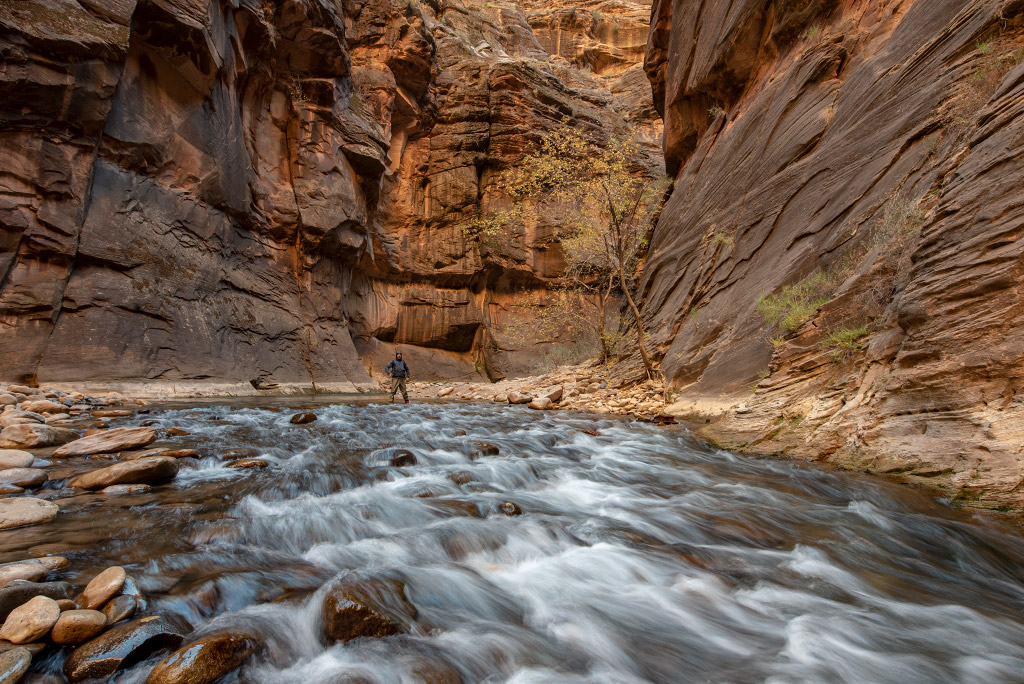
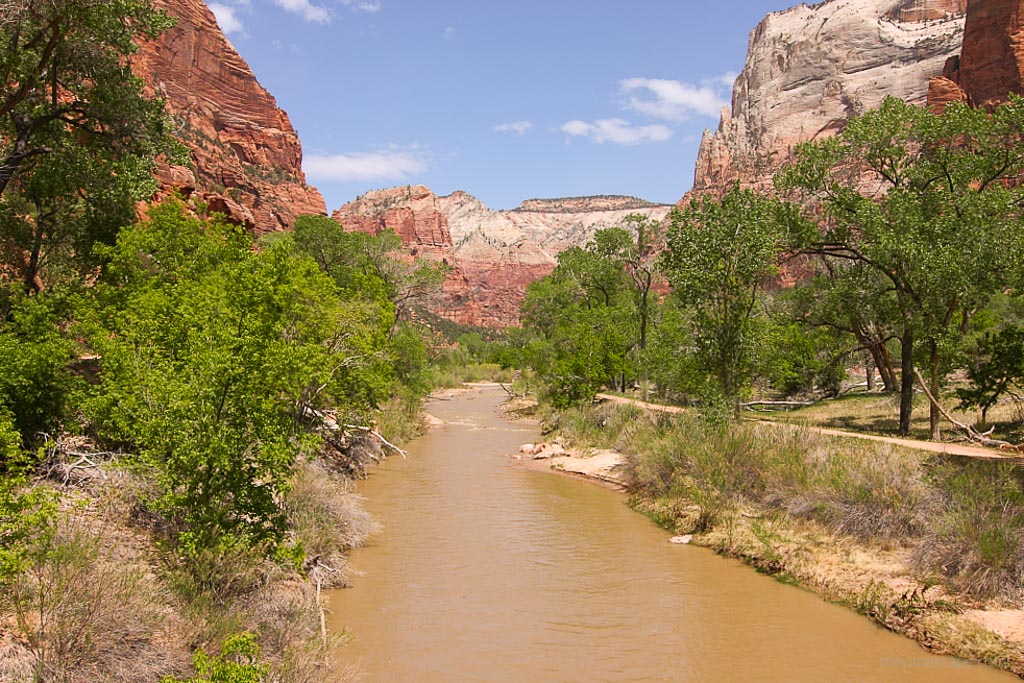
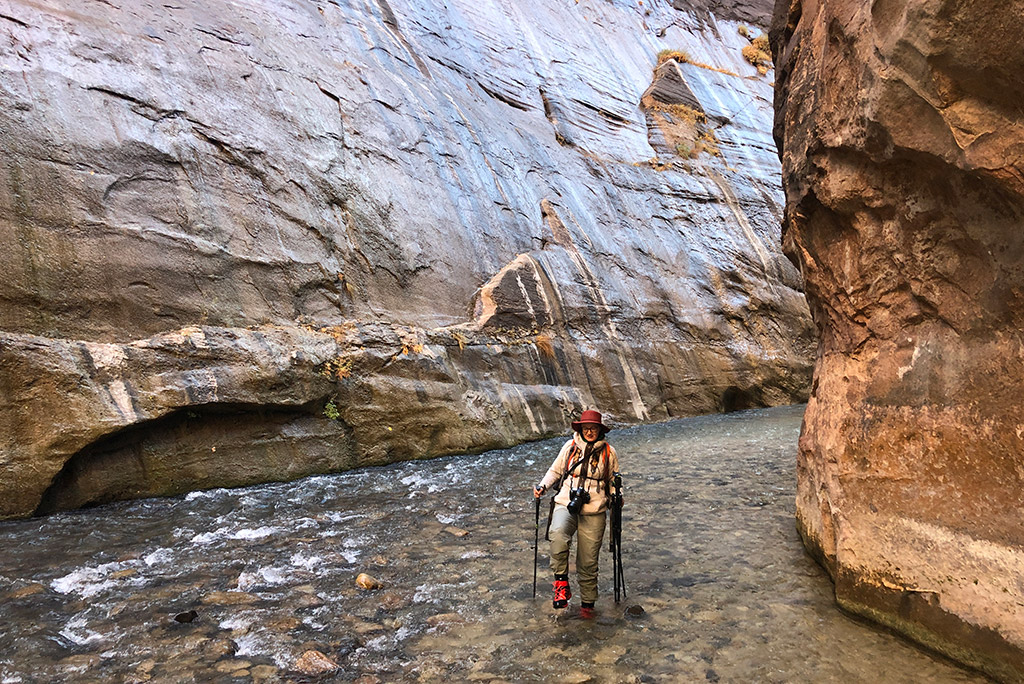
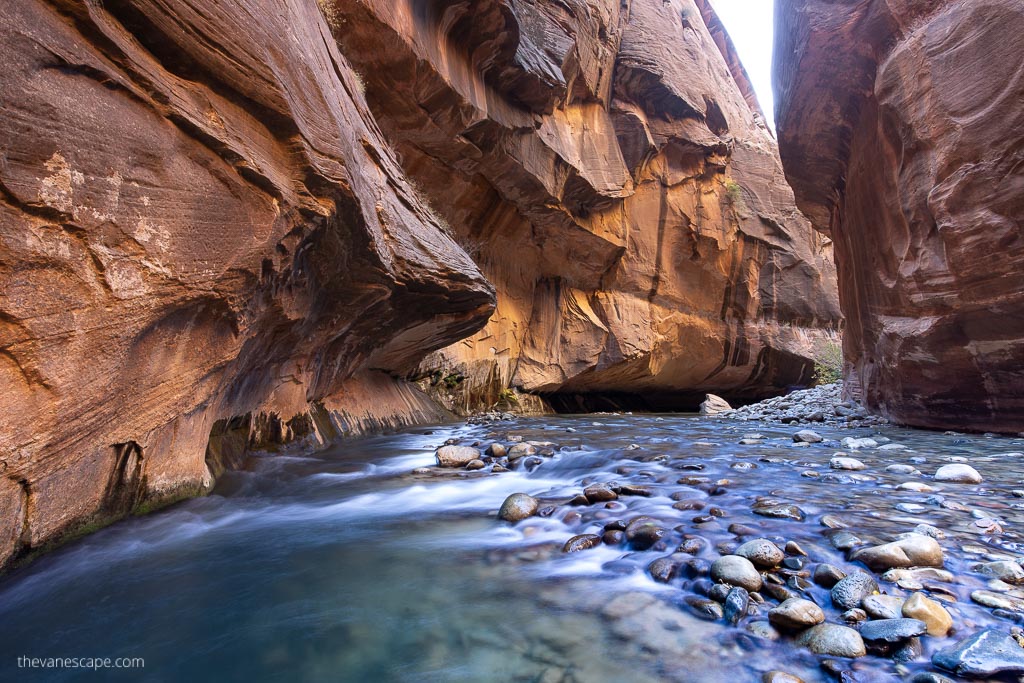
The bottom-up hike of the Narrows is the most popular hike in Zion National Park and offers a unique experience of walking directly in the Virgin River. The difficulty depends on how far you go, but even short distances require balance, strength, and careful footing on slippery rocks.
Towering canyon walls rise hundreds of feet above the river, creating one of Zion’s most dramatic landscapes. Water levels and weather conditions are critical, so always check current conditions before starting. Even a short walk upstream provides an unforgettable experience and makes this hike a standout for first-time visitors.
Best Challenging Hikes in Zion National Park
These hikes demand more time, stamina, and preparation. Some include steep climbs, exposure, or travel through water. Permit requirements vary, so planning ahead is essential.
Angels Landing via West Rim Trail
- Shuttle Stop: 6
- Hike Location: The Grotto
- Round Trip Duration: about 4–5 hours, 5.4 miles (8.7 km)
- Elevation Change: about 1,488 feet (453 m)
- Permit Required: Yes (for the final chain section)
Trail Description:
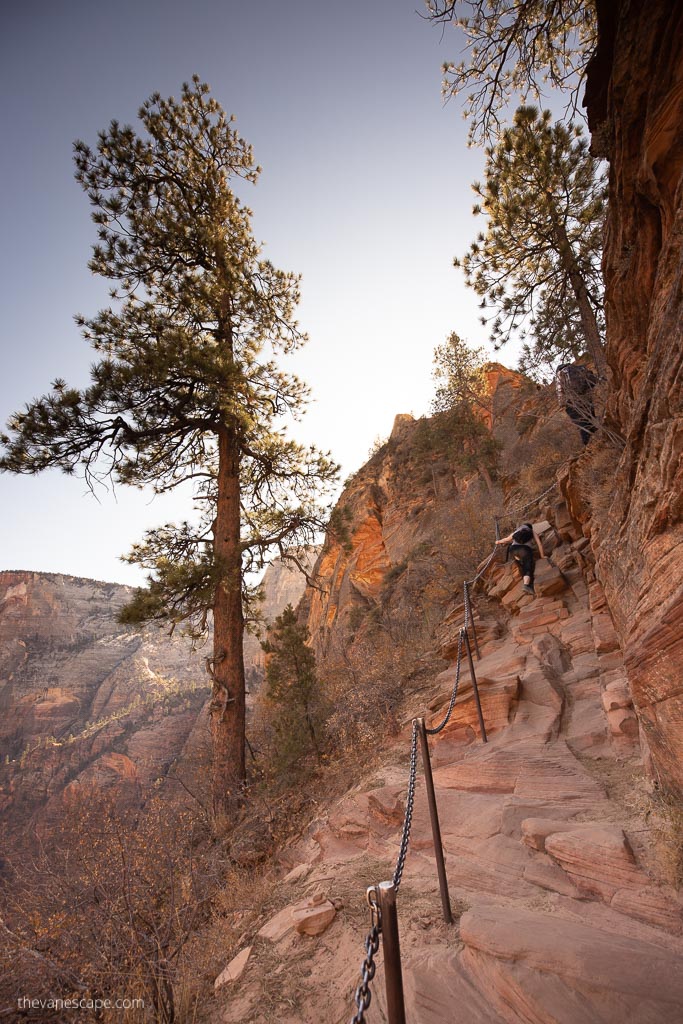
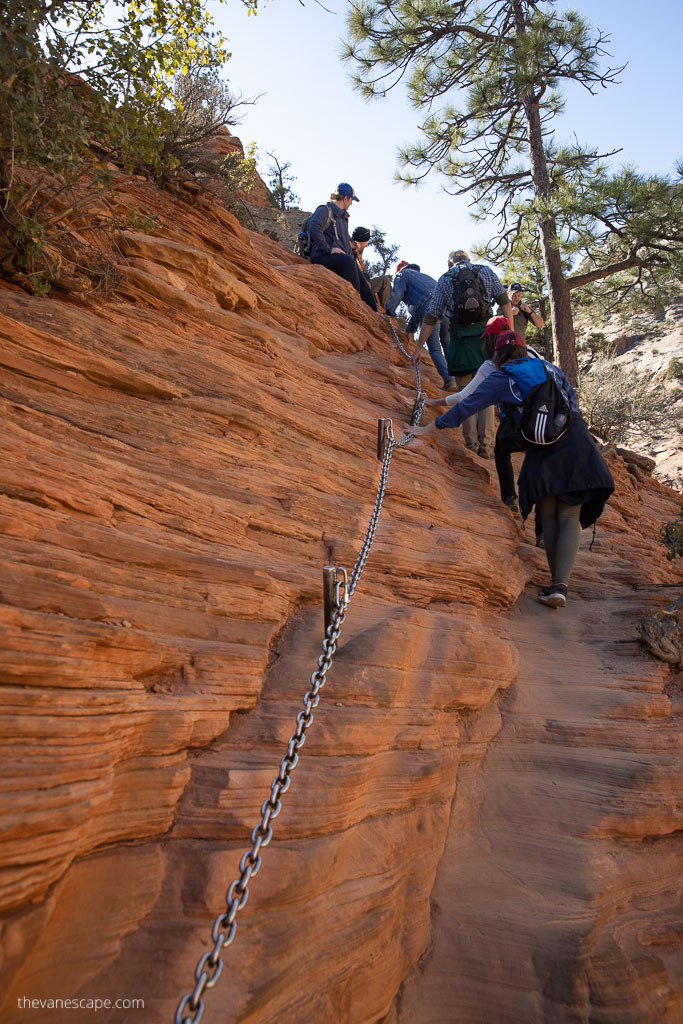
Angels Landing is Zion’s most famous hike and one of the most exposed routes in any U.S. national park. The hike follows the West Rim Trail to Scout Lookout, where the final section climbs a narrow ridge using chains. Due to heavy crowds and safety concerns, a permit is now required for this last section. Even without a permit, hiking up to Scout Lookout still offers impressive views and a solid workout.
Observation Point (via East Mesa or East Rim, route dependent)
- Shuttle Stop: varies by route
- Hike Location: East Rim or East Mesa access
- Round Trip Duration: varies, typically 6–8 miles
- Elevation Change: significant
- Permit Required: No (route dependent)
Trail Description:
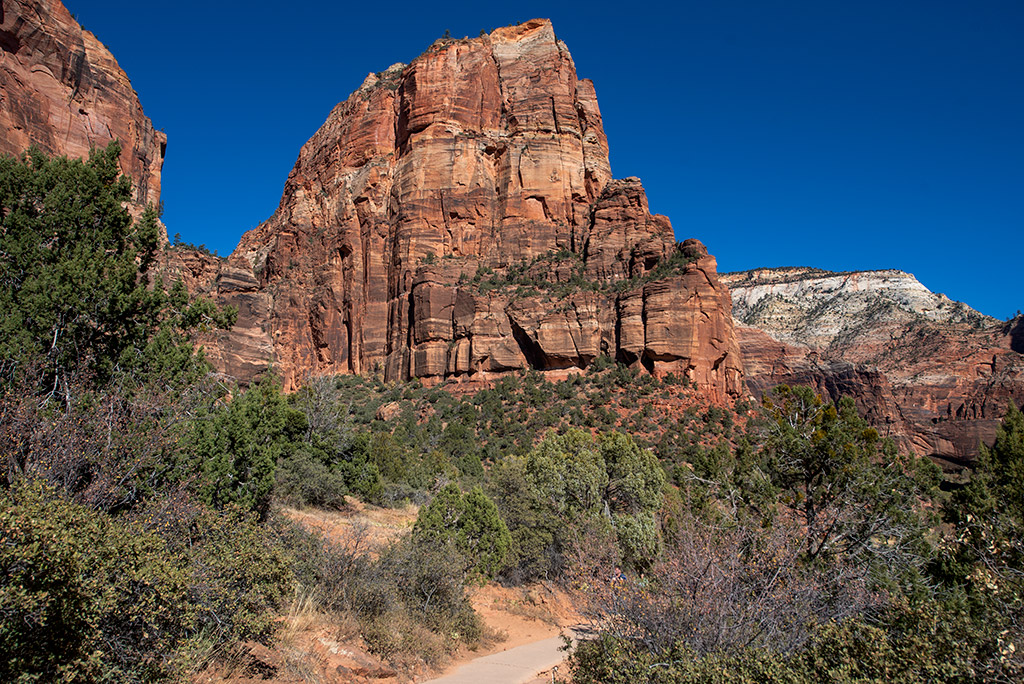
Observation Point sits higher than Angels Landing and offers one of the best panoramic views in Zion. Routes vary in length and difficulty depending on access, but all require a sustained climb. This hike is less crowded than Angels Landing and rewards hikers with a wide, open view of Zion Canyon from above.
The Narrows (Top-Down Route)
- Trailhead Location: Chamberlain’s Ranch
- Round Trip Duration: up to 16 miles
- Elevation Change: minimal, but physically demanding
- Permit Required: Yes
Trail Description:
The top-down Narrows hike is a full-day or overnight adventure through the Virgin River. Unlike the popular bottom-up route, this version requires a wilderness permit and careful planning around weather and water levels. Long stretches of river walking, deep canyon walls, and changing conditions make this one of Zion’s most demanding hikes.
The Subway (Top-Down and Bottom-Up)
- Trailhead Location: Left Fork of North Creek
- Round Trip Duration: about 8–10 hours
- Elevation Change: varies
- Permit Required: Yes
Trail Description:
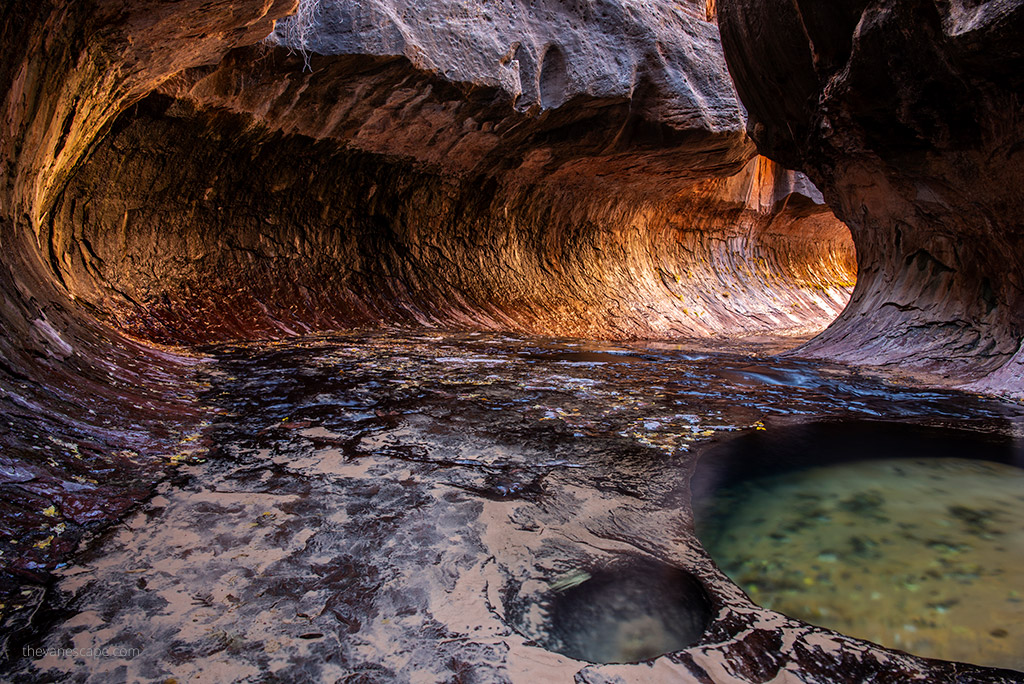
The Subway is one of Zion’s most technical and sought-after hikes. Both top-down and bottom-up routes require permits and involve route finding, water travel, and uneven terrain. The reward is a uniquely sculpted canyon with smooth rock walls and emerald pools, but this hike is best suited for experienced and well-prepared hikers.
These challenging hikes showcase Zion at its most dramatic, but they require respect for conditions, permits, and personal limits. If you’re up for the effort, they offer some of the park’s most unforgettable experiences.
Permit-Required Hikes in Zion National Park
Some of Zion’s most famous and remote hikes require permits to help manage crowds and protect fragile environments. These routes demand extra planning and should be decided on well before your visit.
Permit-required hikes include:
- Angels Landing – a permit is required for the final chain section to the summit
- The Narrows (top-down route) – a wilderness permit is required for this full-day or overnight hike
- The Subway (top-down and bottom-up routes) – permits are required due to navigation challenges and sensitive terrain
Permit availability can be limited and competitive, especially during peak season. If one of these hikes is a priority, build your itinerary around permit dates rather than the other way around.
In this guide, we focus on helping you understand where permits are required so you can plan realistically. We also cover these hikes in separate, detailed articles with preparation tips, maps, and safety considerations.
Best Zion Hikes by Season
Trail conditions in Zion National Park change a lot throughout the year. Water levels, heat, ice, and closures can all affect which hikes make sense.
Spring (March–May)
Spring brings cooler temperatures and flowing waterfalls, but snowmelt can raise river levels. This is a great time for Emerald Pools, Watchman Trail, and Canyon Overlook. River hikes like the Narrows depend on water conditions and may be limited.
Summer (June–September)
Summer is hot, especially in the canyon. Start early and choose shaded or water-based hikes. The Narrows (bottom-up) is a popular choice when conditions allow. Exposed trails like Watchman or Kayenta are best early in the morning. Always watch for monsoon storms and flash flood risk.
Fall (October–November)
Fall is one of the best seasons for hiking in Zion. Temperatures cool down, crowds thin out, and conditions are more stable. Most trails are accessible, including longer hikes like Angels Landing (with a permit) and Observation Point. This is also a great time for photography.
Winter (December–February)
Winter hiking is quieter but requires caution. Snow and ice are common at higher elevations, and some trails may be icy or partially closed. Canyon Overlook and lower-elevation trails can still be excellent with proper traction. River hikes are usually too cold without specialized gear.
Choosing hikes based on the season helps you stay safe and enjoy Zion at its best, without unnecessary risks or disappointment.
For a bigger picture of what to see and how to plan your trip, explore our full Utah travel guide based on our firsthand experience.
Hiking Tips for Zion National Park
A little preparation goes a long way when hiking in Zion. Conditions can change quickly, and some trails are more demanding than they look.
- Start early. Morning hikes are cooler, quieter, and safer, especially in summer.
- Carry enough water and electrolytes. Heat and exertion add up fast, even on shorter trails.
- Check conditions daily. Weather, flash flood risk, and trail closures can change overnight.
- Wear proper footwear. Traction matters on slickrock, sand, and river stones.
- Know your limits. Turn around if conditions worsen or fatigue sets in.
- Plan around the shuttle. Know the last shuttle times so you’re not rushed at the end of the day.
Zion rewards good decisions. Choosing the right trail, at the right time, with the right gear makes the experience safer and far more enjoyable.
Final Thoughts
Zion is one of the most rewarding national parks in the U.S. for hikers, but the experience depends on choosing the right trail. From short canyon walks to demanding routes through water and steep terrain, the park offers options for many skill levels and seasons.
You don’t need to hike the hardest trail to enjoy Zion National Park. Some of the most memorable experiences come from well-chosen hikes that match your timing, fitness level, and conditions on the ground. With a bit of planning, Zion’s trails offer unforgettable scenery and a strong reason to return again.
Do You Like It? Pin It For Later!