Bosque del Apache Festival of the Cranes 2026: Best Viewing Spots, and Photography Guide
Just before sunrise, the wetlands of Bosque del Apache fall silent. The air is cold, the sky turns pink, and thousands of Sandhill Cranes stand motionless in the shallow water. Then, in an instant, the quiet breaks—Snow Geese erupt into the sky in a single roar of wings, and the cranes begin to rise with them. This spectacular moment is why wildlife lovers and photographers return to Bosque del Apache every winter. The Festival of the Cranes, held each year at the heart of the migration season, celebrates the arrival of more than 14,000 Sandhill Cranes and over 32,000 Snow and Ross’s Geese. In this guide, we cover everything you need for the 2026 Festival of the Cranes—dates, best viewing locations, sunrise and sunset tips, photography advice, and where to stay.
This article may contain affiliate / compensated links. For full information, please see our disclaimer here.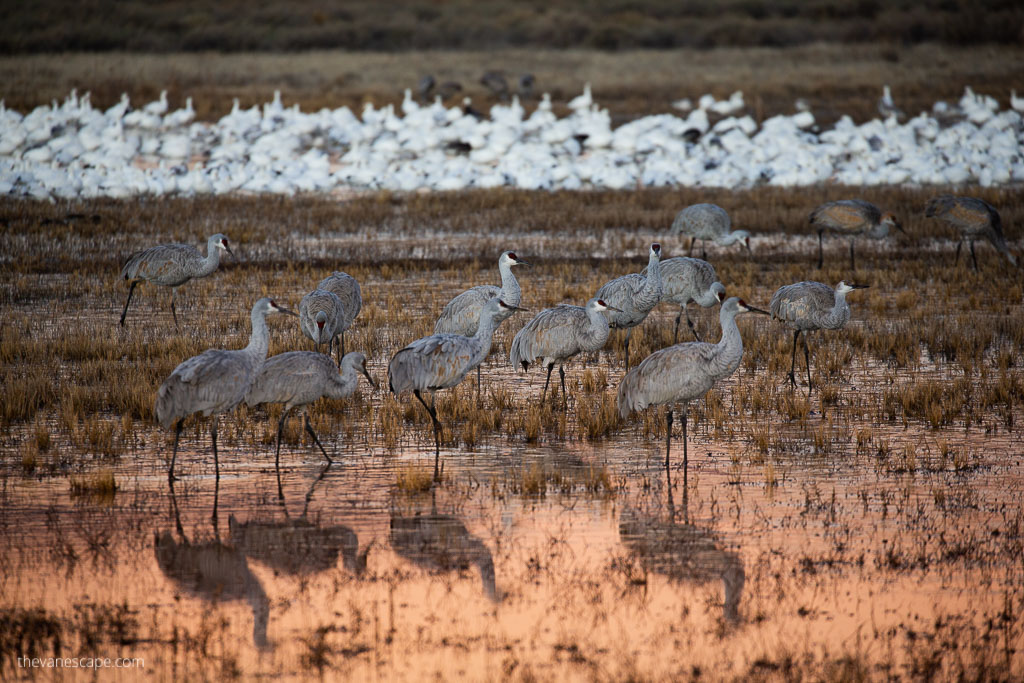
Our Experiences at Bosque del Apache
Chris and I spent four days exploring Bosque del Apache, and it quickly became one of our favorite wildlife destinations in the Southwest. We arrived before sunrise each morning to watch the wetlands come alive. Standing in the cold, listening to the cranes call to each other in the half-light, felt like stepping into another world.
We followed the daily rhythm of the refuge—sunrise fly-outs, midday feeding in the north fields, and the evening return to the ponds. Every day offered something different. Some mornings were filled with quiet pink light and slow takeoffs. Others erupted into dramatic “blast-offs” when thousands of Snow Geese launched into the sky at once.
Throughout our visit, we photographed from the ponds, the auto loop, and the Flight Deck observation area. The light, the mountains, and the birds created endless opportunities. All the photos in this guide come from those unforgettable winter days.
Festival of the Cranes 2026: Dates & What to Expect
The 2026 Festival of the Cranes will take place December 2–5, 2026. These dates fall at the peak of the winter migration, when thousands of Sandhill Cranes, Snow Geese, and Ross’s Geese gather on the refuge each morning and evening.
The festival is centered around Bosque del Apache National Wildlife Refuge and the nearby community of Socorro, New Mexico. Each year, the event includes a mix of virtual sessions and in-person experiences such as:
- bird-watching tours
- photography workshops
- natural history presentations
- field sessions with local experts
- guided crane and goose observation outings
- educational programs about migration, habitat, and conservation
The schedule varies each year, but most in-person activities are held at the refuge, the Visitor Center, and partner locations in Socorro.
If you plan to attend, it’s best to book lodging early. November and early December are the busiest months of the year at Bosque del Apache.
For a broader look at what to see and do, explore our complete New Mexico travel guide based on our firsthand road trip experiences.

Where Is Bosque del Apache National Wildlife Refuge?
Bosque del Apache National Wildlife Refuge sits along the Rio Grande in central New Mexico, about 20 miles south of Socorro and 95 miles south of Albuquerque. The refuge lies at the northern edge of the Chihuahuan Desert, surrounded by wetlands, cottonwood groves, and wide-open views toward the Magdalena Mountains.
Its location makes it one of the most important wintering habitats for cranes and geese in the Southwest. The wetlands and managed fields provide food, shelter, and shallow water for overnight roosting, creating ideal conditions for tens of thousands of migratory birds.
Most travelers use Socorro as their base, with an easy 20-minute drive to reach the refuge in time for sunrise.
Agnes’ Advice: A visit to Bosque del Apache National Wildlife Refuge can easily be combined with exploring White Sands National Park, about 120 miles away, or Roswell, roughly 160 miles from the refuge.
What Is Bosque del Apache National Wildlife Refuge?
Bosque del Apache is one of the most important wetlands in the American Southwest. The U.S. Fish & Wildlife Service established the refuge in 1939 to create protected wintering habitat for migratory birds along the Rio Grande. The wetlands, farmlands, and desert grasslands here support more than 350 bird species throughout the year, making it one of the most diverse birding locations in the United States.
The refuge covers more than 57,000 acres of marshes, riparian zones, and desert foothills. In winter, it becomes a vital sanctuary for thousands of Sandhill Cranes, Snow Geese, Ross’s Geese, ducks, raptors, and other wildlife. Much of the refuge is managed specifically to provide food, roosting sites, and safe migration stopovers, which is why the sunrise and sunset “fly-outs” are so spectacular.
Visitors have access to a core 13,000-acre wildlife-viewing area, including the famous Auto Tour Loop, ponds, farm fields, and several short hiking trails. Even outside festival dates, Bosque del Apache remains a year-round destination for wildlife watching, photography, and quiet nature experiences.
When to See Sandhill Cranes and Snow Geese
The peak season for Sandhill Cranes, Snow Geese, and Ross’s Geese at Bosque del Apache runs from November through mid-February. This is when the refuge becomes one of the most active bird-watching destinations in the United States.
- Around 14,000 Sandhill Cranes spend the winter here.
- More than 32,000 Snow and Ross’s Geese gather on the refuge.
- Ducks, raptors, herons, and other waterfowl add to the spectacle.
Best Time of Day
The most dramatic activity happens at the edges of the day:
- Sunrise: the famous crane fly-out and goose “blast-offs”
- Sunset: cranes returning to shallow ponds for the night
Midday is quieter, but you can still see cranes and geese feeding in the agricultural fields and wading in the ponds along the auto loop.
Best Time of Year
If your main goal is photography or witnessing huge flocks together, aim for:
- late November through early January — highest concentration
- Festival dates (Dec 2–5, 2026) — prime action, but larger crowds
- January — fewer visitors, excellent photo conditions
The refuge remains beautiful year-round, but winter is when Bosque del Apache becomes truly unforgettable.

How to Visit: Entry, Hours, Fees, and Visitor Center
Bosque del Apache is very easy to visit, but timing matters—especially if you want to be in place before sunrise or stay through sunset. Here are the essentials to plan your trip.
Entry & Hours
The refuge is open every day from:
• One hour before sunrise
• One hour after sunset
These extended hours allow photographers and wildlife watchers to catch the most active times of day. Trails and the auto tour loop follow the same schedule.
Fees
You can enter the refuge with:
- Federal Duck Stamp
- America the Beautiful Pass
- $5 per vehicle daily fee
There are no reservations required for regular refuge entry.

Visitor Center
The Bosque del Apache Visitor Center opens later than the refuge itself, usually at 8:00 a.m. It’s worth stopping in for:
- trail maps
- the latest wildlife locations
- road and pond conditions
- information about current crane and goose counts
Friendly volunteers and staff often provide helpful tips on where the flocks have been roosting or feeding each day.
Getting There
From Socorro, drive south on I-25 to the San Antonio exit. Follow SR 380 briefly, turn right on Highway 1, and continue south for about 9 miles. The Visitor Center will be on your right. The refuge entrance is directly across the road on the left.
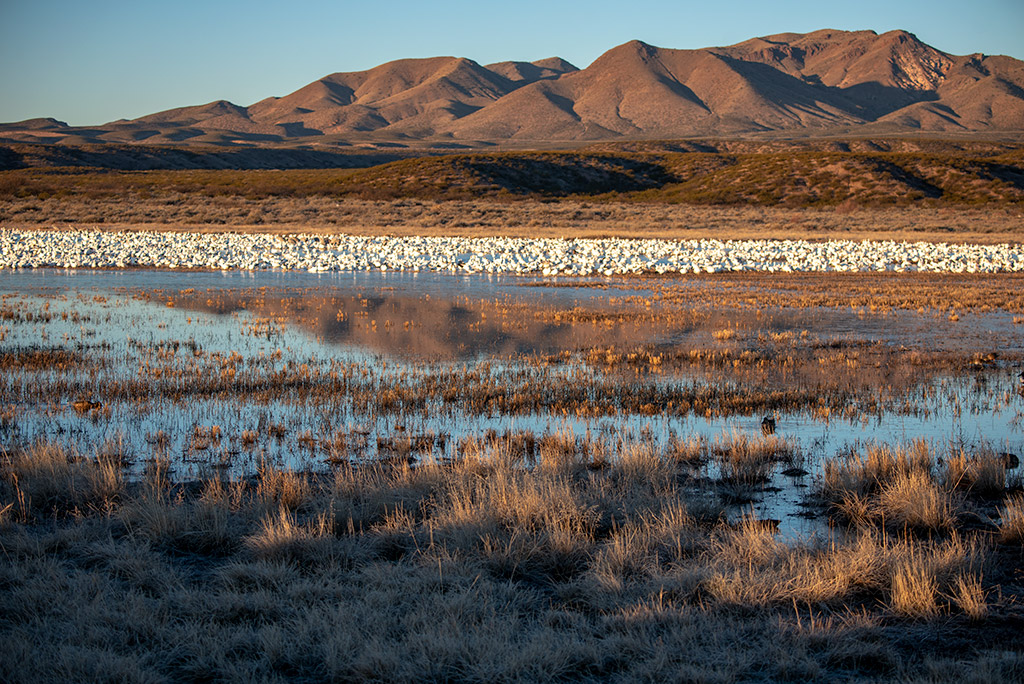
Best Places to Watch Cranes and Geese At Bosque del Apache
Bosque del Apache has several key viewing areas where you can reliably see cranes and geese throughout the winter. Each spot offers a different experience, so it helps to know where to be at the right time of day.
South Crane Pond (Best for Sandhill Cranes at Sunrise)
If your goal is to photograph Sandhill Cranes lifting off in the early morning light, this is the place to start your day.
South Crane Pond is located before you even enter the refuge, next to Highway 1. There’s a long pullout with plenty of room to park.
Why this spot is so good:
- cranes roost overnight in shallow water
- mountains create a dramatic pink sunrise backdrop
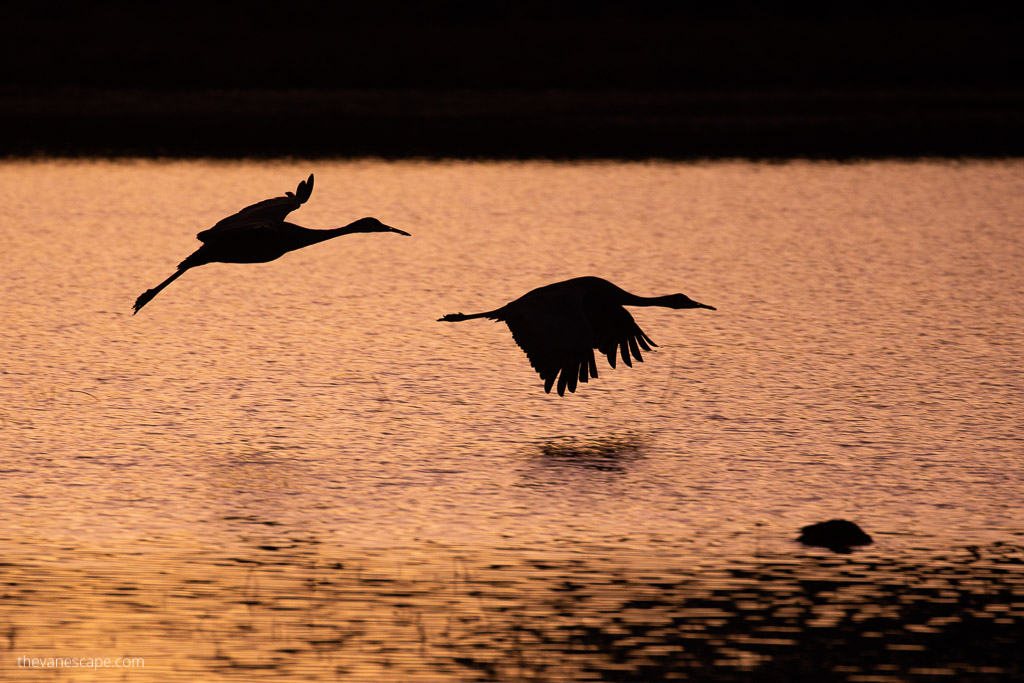
- you can capture silhouettes and slow-motion wingbeats
- cranes take off in small family groups, giving you many shooting opportunities
We’ve seen hundreds—sometimes thousands—of Sandhill Cranes here at dawn.
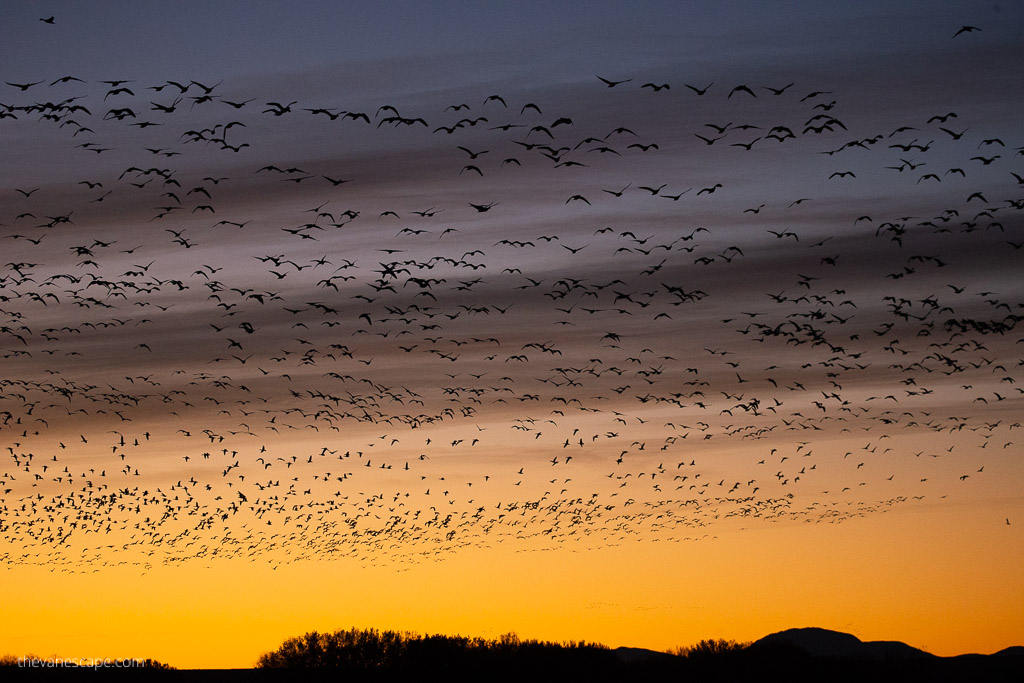
The Flight Deck (Best for Snow Goose “Blast-Offs”)
The Flight Deck is the single best spot for the massive Snow Goose takeoff at sunrise.
Turn left immediately after entering the refuge; the parking area is about a half-mile down the road.
What to expect:
- tens of thousands of Snow Geese gather in one pond
- the entire flock may erupt into the sky at once
- the sound is incredible—loud, chaotic, unforgettable
- the deck faces east, so you’re shooting directly into sunrise
If you only have one morning, decide: cranes at South Crane Pond or geese at the Flight Deck.
North Fields (Best Midday Viewing)
After the morning fly-out, cranes spend the day feeding in the agricultural fields on the north side of the auto loop.
Drive slowly and watch for:
- cranes walking through the corn
- pairs dancing or practicing short hops
- cranes calling back and forth
- hawks and eagles hunting overhead
This is a great time for quieter observation and close-up behavior shots.
Crane Ponds (Best for Sunset)
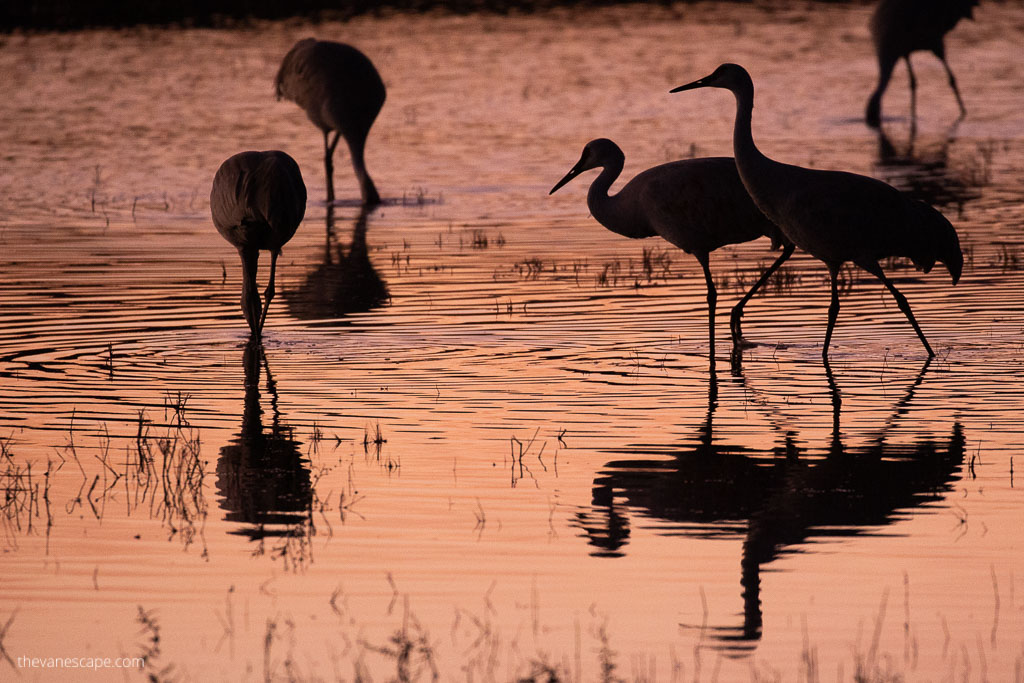
Near sunset, Sandhill Cranes return to the same shallow ponds to roost for the night.
Look for the marked Crane Pools inside the refuge.
Why this spot is ideal:
- warm golden light
- dramatic reflections in calm water
- cranes gliding in from all directions
- predictable, reliable evening patterns
If you want soft light and peaceful scenes, sunset at the Crane Ponds is perfect.
Pullouts Along the Auto Loop
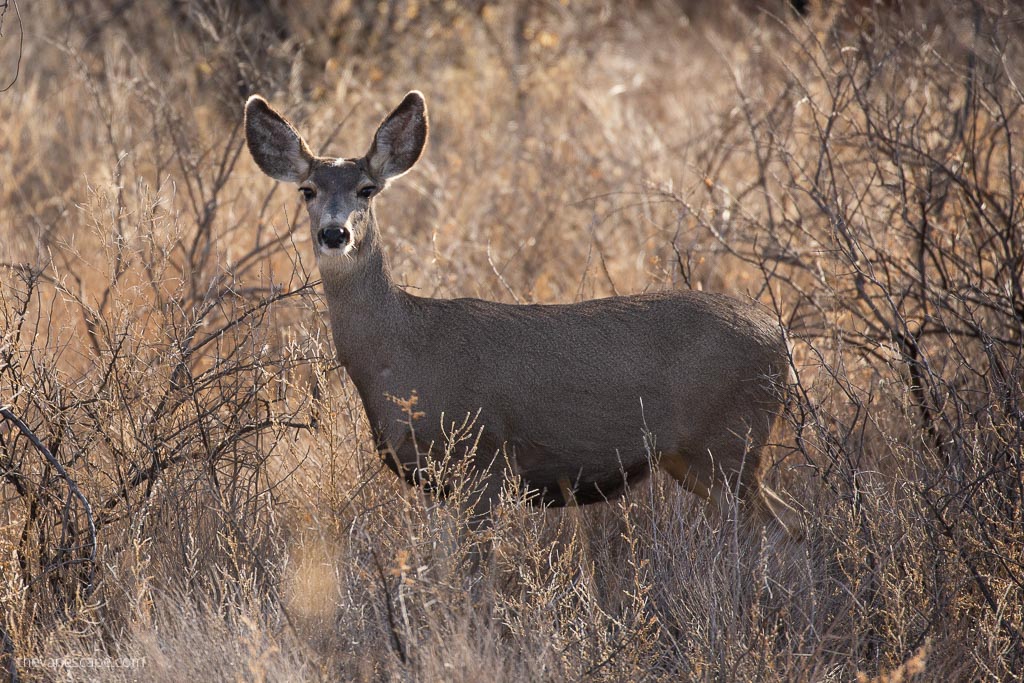
The entire 12-mile auto tour loop has roadside pullouts where you can safely stop. Some of the best bird moments—herons, ducks, coyotes, and even deer—happen right along the road.
Move slowly, scan the water, and always be ready with your camera.

Auto Tour Loop: How to Explore the Refuge
The Auto Tour Loop is the easiest and most flexible way to explore Bosque del Apache. It’s 12 miles long, open every day from one hour before sunrise to one hour after sunset, and designed specifically for wildlife viewing.
You can drive it in either direction, but most visitors start near the entrance and follow the loop counterclockwise. The road is wide enough to pull over safely, and you’ll find plenty of spaces to stop, get out, and watch the birds.
What You’ll See
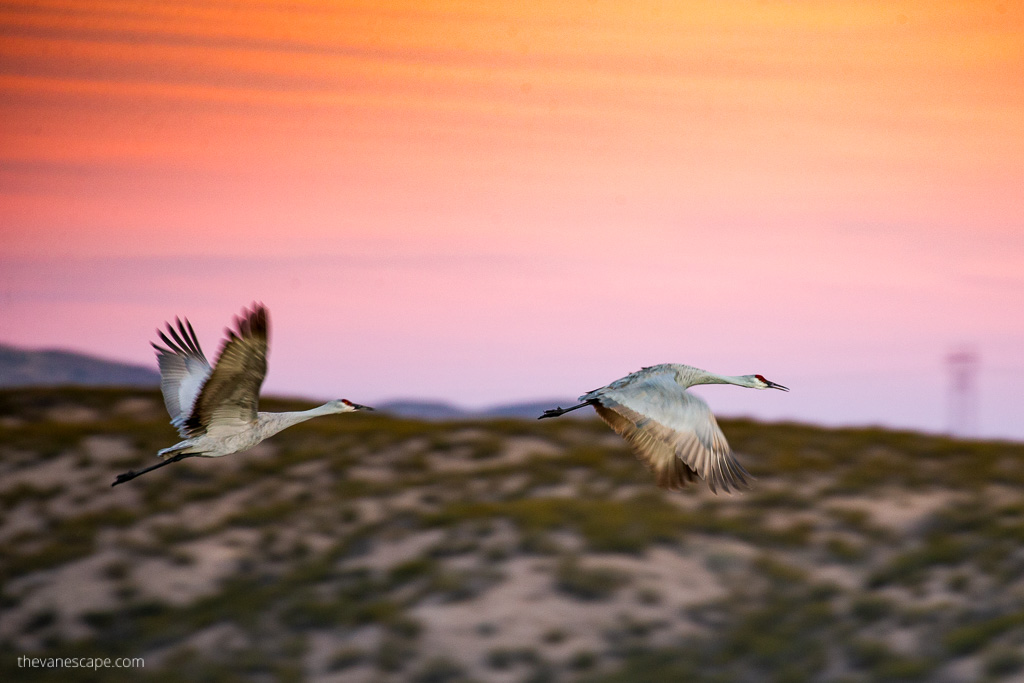
The loop takes you through wetlands, open fields, and quiet ponds. Along the way, you can spot:
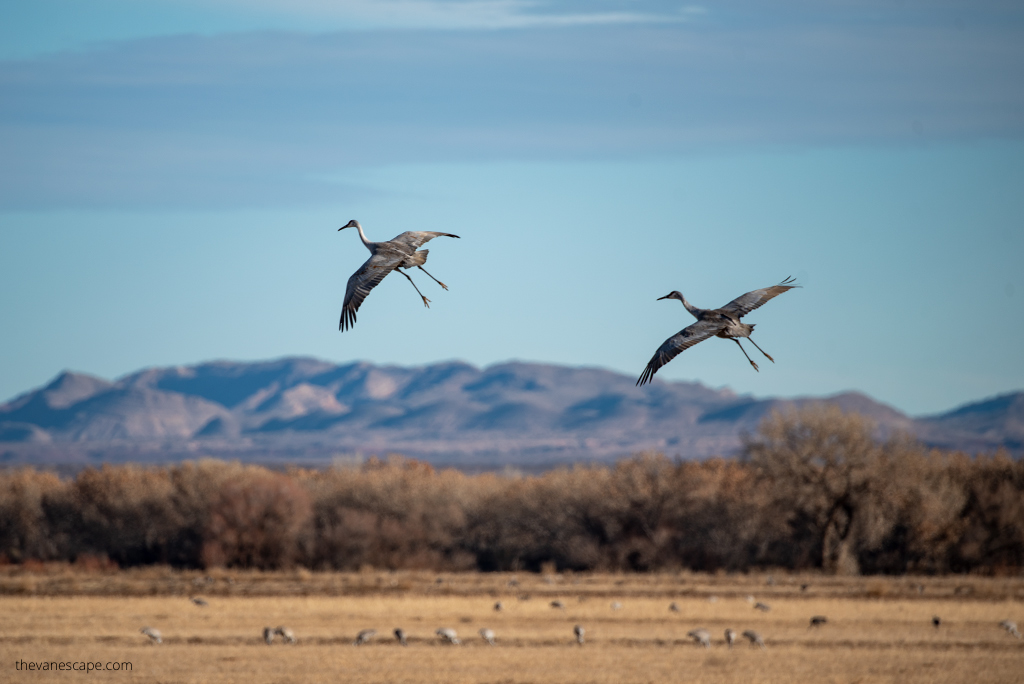
- Sandhill Cranes feeding or resting
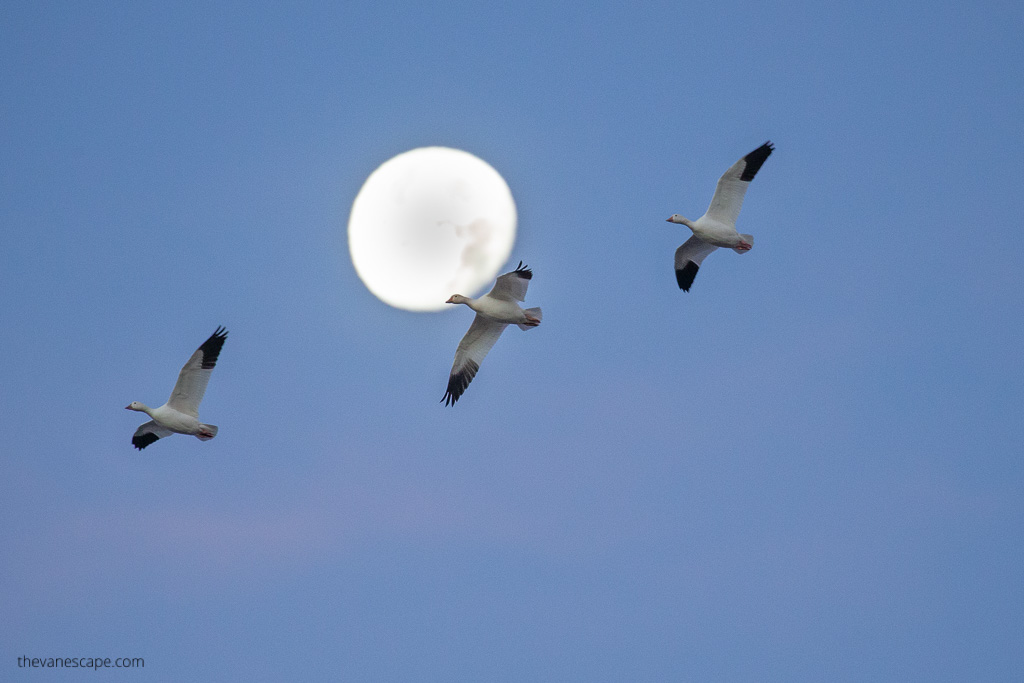
- huge flocks of Snow and Ross’s Geese
- ducks and waterfowl in shallow pools
- Bald Eagles and hawks perched in cottonwoods
- coyotes hunting in the fields
- mule deer moving through the bosque
Activity changes throughout the day, so each drive is different.
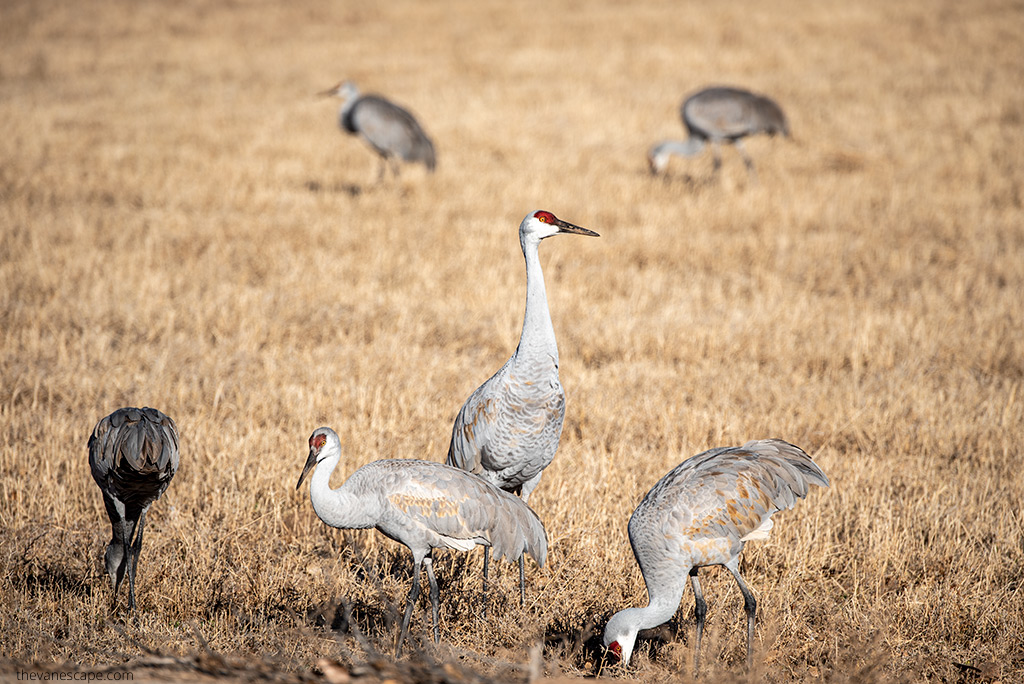
Best Times to Drive the Loop
- Midday: the best time for cranes feeding in the fields
- Late afternoon: warm light and cranes gathering before sunset
- After sunrise: great for goose landings and scattered flocks
The loop is well-marked and easy to navigate, making it perfect for both photographers and casual wildlife watchers.
If you have the full day, consider driving the loop two or three times. The landscape, light, and bird activity are constantly shifting.
Best Hiking Trails in Bosque del Apache
While most people visit Bosque del Apache for bird-watching and photography, the refuge also offers several short and easy trails. These walks are a nice break between sunrise and sunset viewing or a good option for stretching your legs during a midday lull.
Marsh Overlook Trail (1.5 miles)
This is one of the most scenic trails in the refuge. It loops through wetlands, low dunes, and desert scrub with views toward the Chupadera Mountains. You may spot cranes, herons, ducks, and the occasional coyote. Morning and late afternoon offer the best light.
Rio Viejo Trail (2 miles)
A quiet, peaceful trail on the west side of the refuge. It winds through cottonwoods and open desert with views of the Rio Grande Valley. You’ll likely see ducks, raptors, and songbirds along the way. This is a good option for avoiding midday crowds on the auto loop.

Boardwalk Trail (0.5 miles)
A short, wheelchair-accessible boardwalk through a reedy wetland. This is a great spot for close-up views of waterfowl, blackbirds, and small wading birds. The boardwalk can be productive any time of day, especially when cranes are resting nearby.
When to Hike
- Midday: birds are quieter, but trails are peaceful
- Late afternoon: warm light and good chances for wildlife
- Avoid pre-sunrise: you’ll miss the signature crane and goose activity
Hiking isn’t required to enjoy Bosque del Apache, but these trails offer a beautiful perspective on the refuge’s varied habitat.
You’ll also find a series of trails in a Bosque that are usually short and relatively easy to hike. So, taking some trails is a great idea if you have more time. The best and shortest trails are the 1.5-mile Marsh Overlook Trail, the 2-mile Rio Viejo Trail, and the 0.5-mile Boardwalk Trail.
Photography Tips for Bosque del Apache
Bosque del Apache is one of the best places in the United States for bird photography. The combination of shallow ponds, open fields, winter light, and huge bird concentrations creates endless opportunities from sunrise to sunset. Here are the tips that helped us make the most of our visit.
Arrive Early for Sunrise Action
The most dramatic moments happen before the sun comes up. Plan to arrive at least one hour before sunrise so you have time to set up your tripod, find your angle, and get comfortable in the cold.
At dawn you’ll see:
- cranes waking and stretching their wings
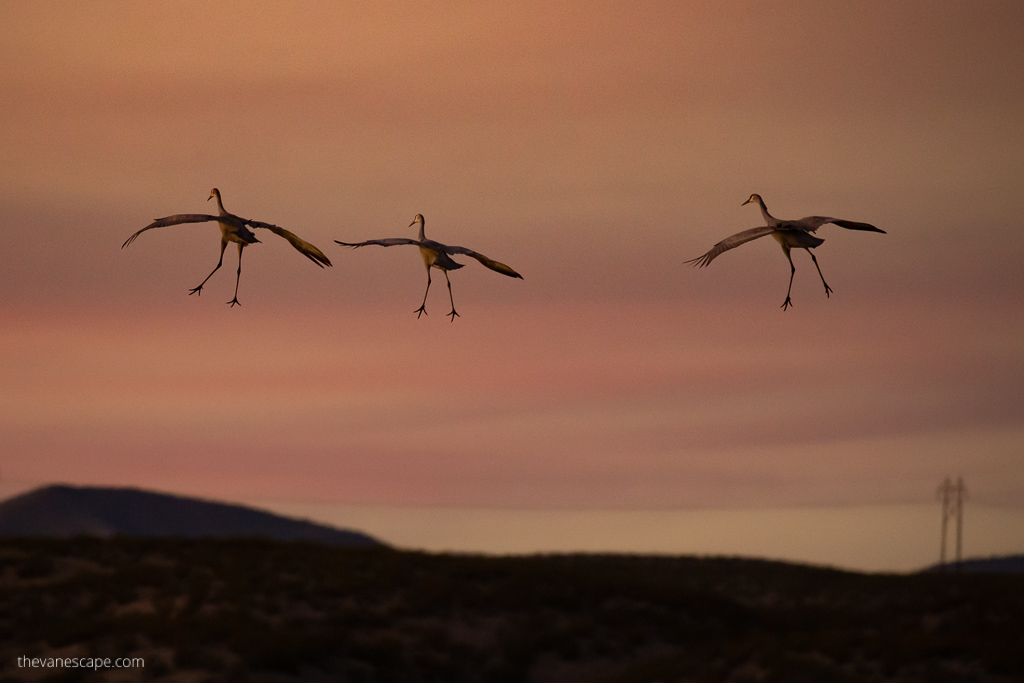
- silhouettes against the pink sky
- the first small groups taking flight
- massive Snow Goose “blast-offs” at the Flight Deck
Winter mornings are cold, so dress warmly and bring layers, gloves, and a warm hat.
Choose the Right Spot for the Shot You Want
Cranes and geese behave differently throughout the day, so location matters.
- South Crane Pond: best for Sandhill Crane silhouettes and family group takeoffs at dawn
- Flight Deck: best for Snow Goose blast-offs at sunrise
- North fields: best midday feeding activity
- Crane Ponds: best evening returns and golden light
Having a plan makes sunrise far less stressful.

Study Bird Behavior
The more you know, the better your images. We found that cranes follow a very predictable pattern. In the morning, watch for:
- cranes lowering their heads
- small groups forming behind a leader
- birds leaning forward to take off
This “air traffic control system” gives you a few seconds to prepare before the entire group rises.
Use a Telephoto Lens (But Wider Shots Are Amazing Too)
A long lens helps you capture details and action. Popular choices include:
- 100–400mm
- 150–600mm
- 200–500mm
- 200–600mm
But don’t forget to shoot wider. Bosque del Apache has big skies, mountains, reflections, and warm light. A 24–70mm or 70–200mm is perfect for landscape + wildlife compositions.

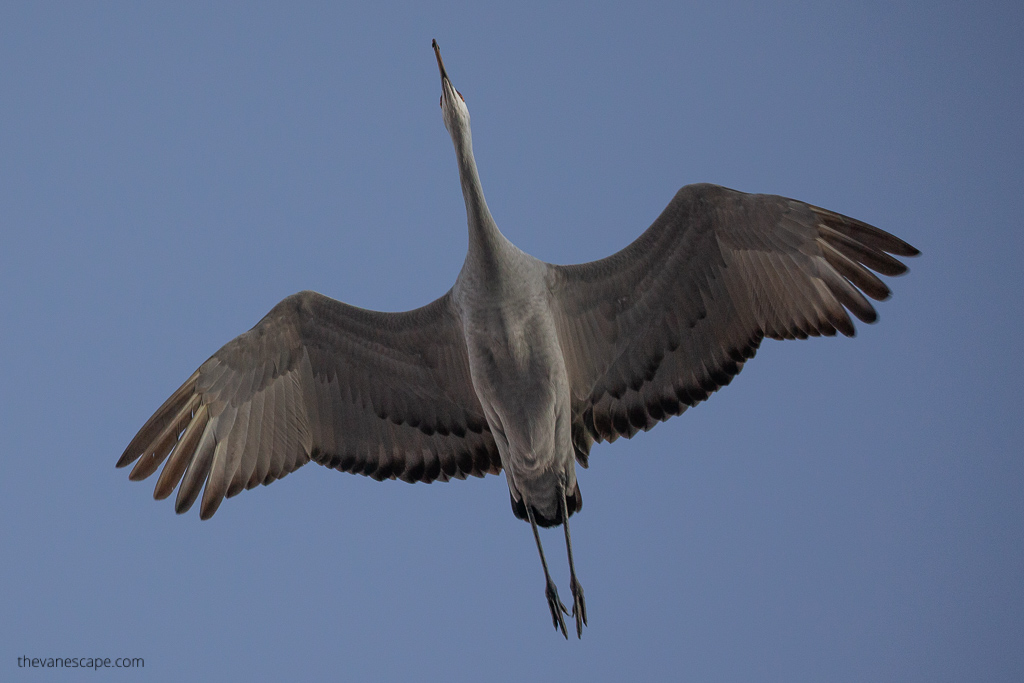
Try Manual Exposure for Flight Shots
When you’re shooting birds against a bright sky or dark mountains, manual exposure helps keep the birds properly lit no matter what the background is doing. Once the light is set, you can track cranes and geese more easily with consistent results.
Explore the Loop in Midday Light
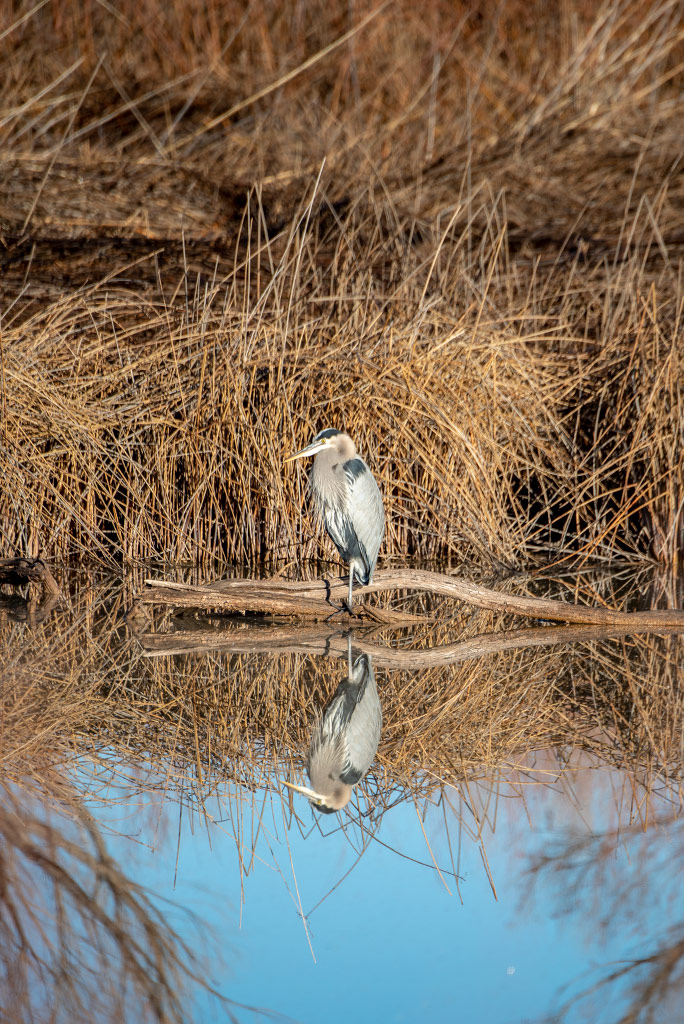
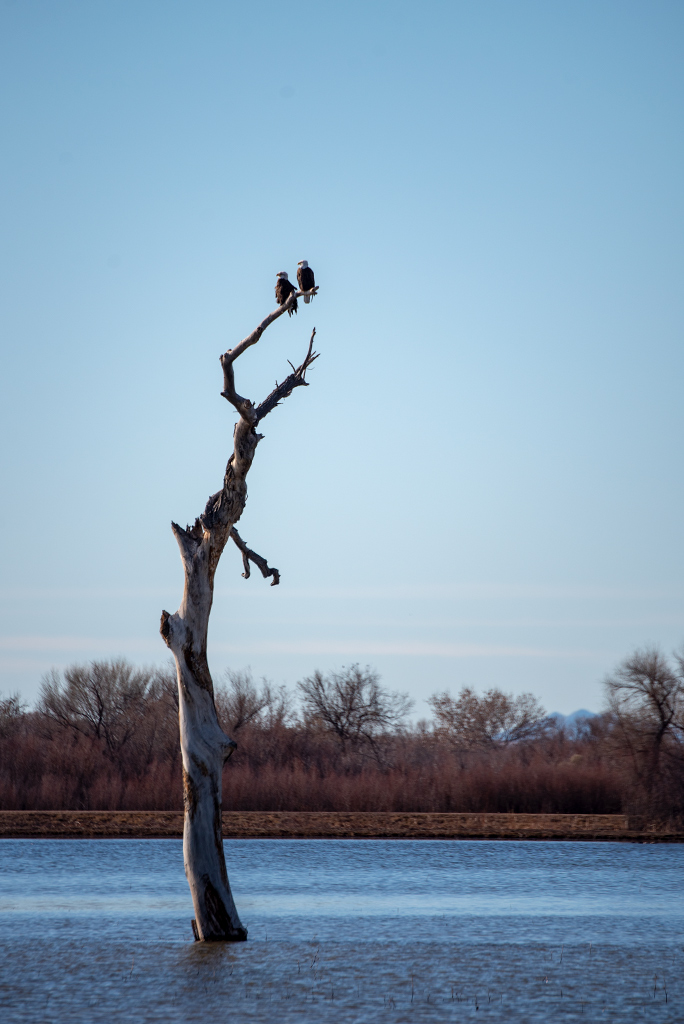
Even during the quiet hours between sunrise and sunset, you’ll find great opportunities:
- cranes feeding in cornfields
- geese resting in small ponds
- hawks perched in cottonwoods
- coyotes hunting in open fields
We often packed snacks and stayed out all day, driving the loop slowly and stopping wherever we saw activity.

Don’t Leave Early—Sunset Is Spectacular
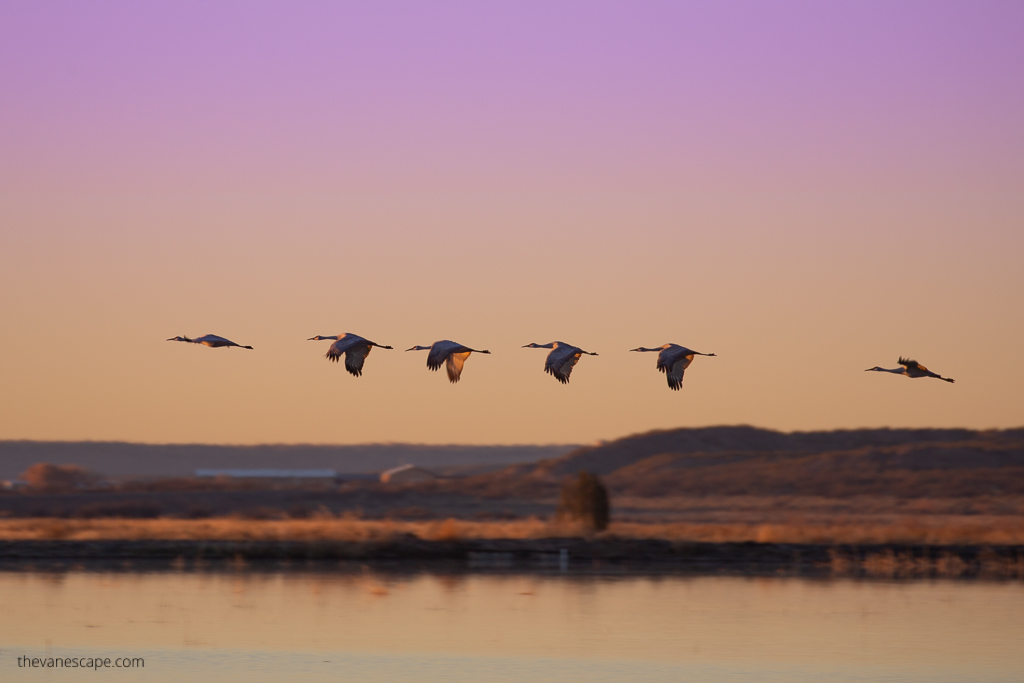
As the sun drops, cranes lift off from the fields and glide back to their favorite ponds. The light is warm and soft, and reflections in the water can be beautiful. Sunset is calmer than sunrise and just as rewarding.
Final Thoughts
Bosque del Apache is one of those places that stays with you long after you leave. Watching thousands of cranes and geese rise into the morning sky is a moment that feels both powerful and peaceful. Every sunrise and sunset brings a different rhythm, a different light, and a new chance to slow down and appreciate nature.
Whether you come for the Festival of the Cranes or visit later in the winter when the refuge is quieter, you’ll find incredible wildlife viewing and endless photography opportunities. It’s an easy stop on a New Mexico road trip, and one of the most memorable wildlife experiences in the Southwest.
Do You Like It? Pin It For Later!