
Colorado National Monument Guide: Best Things to Do, Scenic Drives, and Hikes
Rising above the Grand Valley of western Colorado, this stunning stretch of red rock canyons and sandstone monoliths feels like a secret slice of the Southwest. Colorado National Monument is a place of dizzying overlooks, winding cliffside roads, and quiet desert trails where bighorn sheep roam and sunsets paint the cliffs in gold. This detailed guide covers everything you need to plan your visit — the best things to do, the most scenic overlooks on Rim Rock Drive, top hiking trails for every level, and practical tips for when to go, how long to stay, and where to spend the night. Whether you’re exploring on a Colorado road trip or looking for an off-the-beaten-path national park alternative, this is your complete guide to discovering one of the state’s most underrated natural wonders.
This article may contain affiliate / compensated links. For full information, please see our disclaimer here.
Why Colorado National Monument Deserves a Spot on Your Colorado Road Trip
Colorado National Monument often flies under the radar, yet it rivals the red-rock beauty of Utah’s most famous parks. Located just minutes from Grand Junction and Fruita, it’s an easy detour that delivers towering sandstone cliffs, dramatic canyons, and sweeping desert views — without the crowds.
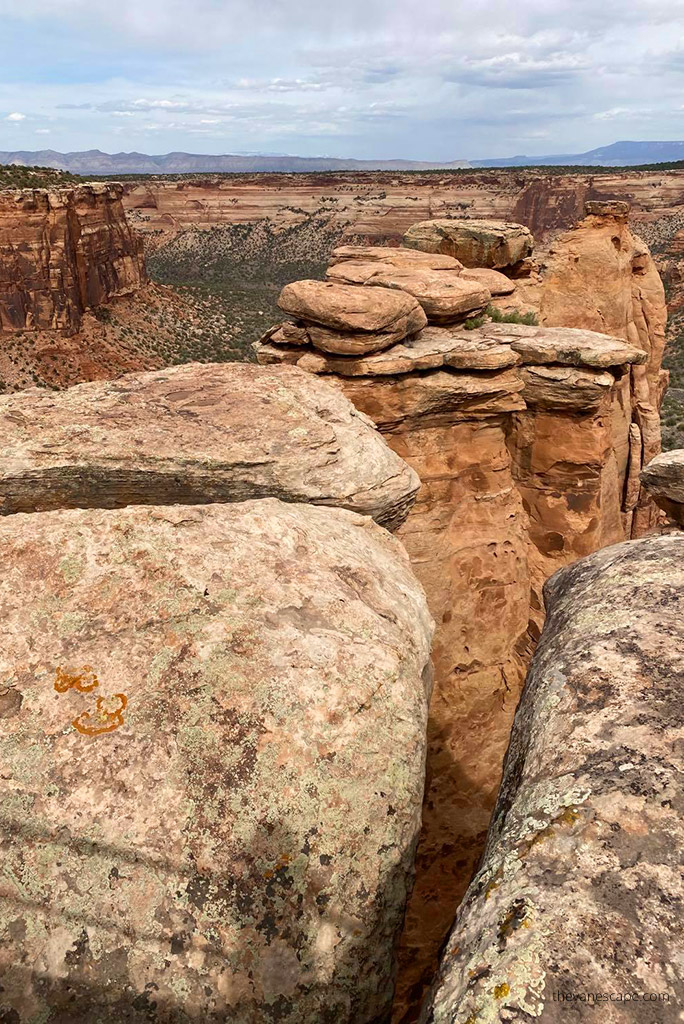
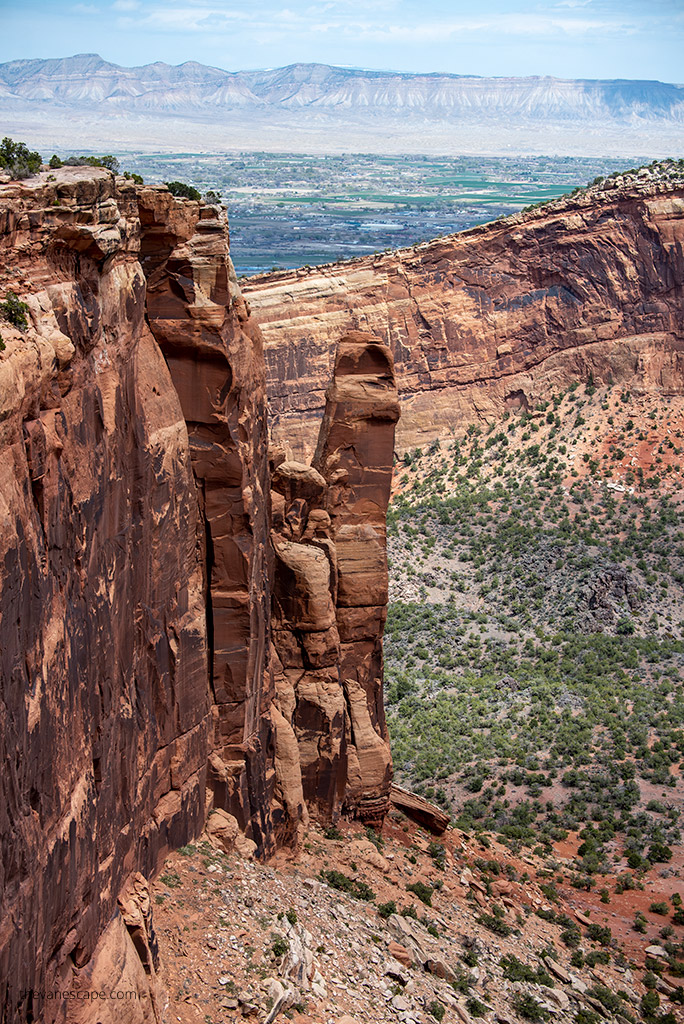
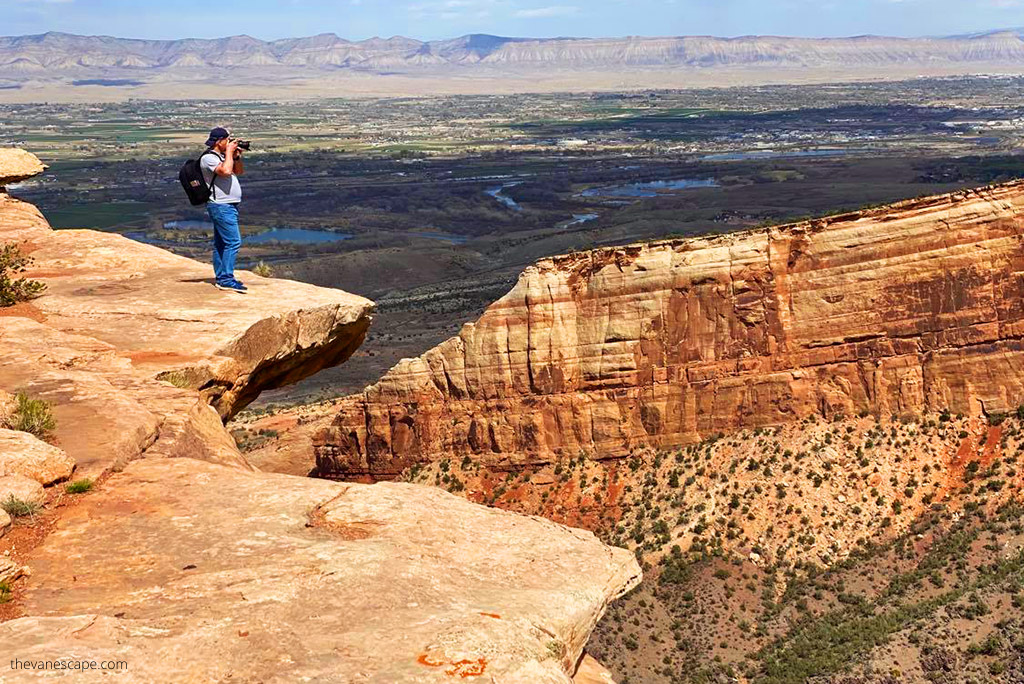
Here, you can drive one of the most scenic roads in the West, Rim Rock Drive, stopping at overlooks that drop hundreds of feet into glowing red canyons. Hike among stone spires that catch the morning light. Watch for desert bighorn sheep balancing on impossible ledges. And at sunset, see the cliffs ignite in shades of orange and gold.
During our 2-week Colorado road trip, Chris and I spent several days exploring this dramatic landscape of towering monoliths, winding scenic roads, and quiet desert trails.

Where Is Colorado National Monument and How to Get There
Colorado National Monument sits in western Colorado, between the towns of Grand Junction and Fruita, about 30 miles east of the Utah border. It marks the eastern gateway to the Colorado Plateau, a vast region of colorful mesas, cliffs, and canyons stretching across the Four Corners states.
The Colorado Plateau Connection
The Colorado Plateau holds the highest concentration of national park units in the United States. Within its borders lie nine national parks — including the Grand Canyon, Utah’s Mighty Five, and Mesa Verde — plus 18 national monuments, one of which is Colorado National Monument itself.
It’s the perfect introduction to this landscape of domes, spires, and deep red canyons that define the American Southwest.
Getting There by Car
Most travelers arrive via Interstate 70, which runs right past the monument.
- From Denver, it’s roughly 250 miles west (about 4½ hours) via I-70.
- From Moab, Utah, it’s 110 miles (2 hours) east on I-70.
- From Arches or Canyonlands National Parks, the drive is just over 2 hours, making it a perfect next stop on a Southwest loop.
Entrances
The park has two main entrances, connected by the 23-mile Rim Rock Drive:
- West Entrance (Fruita): Best choice for first-time visitors. It’s close to the Saddlehorn Visitor Center and the most impressive rock formations.
- East Entrance (Grand Junction): A convenient option if you’re staying in town or continuing east toward Denver.
If you’re short on time, start from the Fruita side — the most scenic stretch unfolds right after the gate, and many of the best overlooks are within a few miles.

How Much Time Do You Need
You can experience the highlights of Colorado National Monument in just a few hours, but spending a full day (or even two) makes a huge difference.
If You Have 3–4 Hours
Drive the Rim Rock Drive from Fruita to Grand Junction (or the reverse). Stop at the main overlooks like Grand View, Independence Monument View, and Coke Ovens Overlook. Even with short stops, this 23-mile scenic drive easily takes half a day.
If You Have One Full Day
Combine the drive with a few short hikes such as Window Rock Trail, Canyon Rim Trail, or Otto’s Trail. You’ll have time for photos, a picnic, and a relaxed pace without rushing between viewpoints.
If You Have Two Days
Spend the first day exploring Rim Rock Drive and the short trails, then dedicate your second day to one of the longer routes — like Liberty Cap Trail or Ute Canyon Trail. You can also camp overnight at Saddlehorn Campground for a peaceful evening under the stars.
If you’re planning a 2-week Colorado road trip, it’s easy to pair your visit with nearby attractions like Rattlesnake Canyon Arches — one of the hidden gems of the Colorado Plateau and just a short drive away.
Entrance Fees, Passes, and Visitor Center Info
Colorado National Monument is open year-round, 24 hours a day, and easy to explore by car, bike, or foot. All visitors must have entrance pass.
Entrance Fees
- Private vehicle: $25 (valid for 7 days)
- Motorcycle: $20
- Individual (hiker, bicyclist): $15
If you plan to visit several parks, buy the America the Beautiful Pass. It covers entrance fees to all U.S. national parks and over 2,000 federal recreation sites. One pass covers the driver and all passengers in a private vehicle, or up to four adults at per-person fee areas (children under 15 enter free).
Visitor Center Information
The Saddlehorn Visitor Center, near the Fruita entrance, is the best place to start your visit. Here you can:
- Pick up maps and brochures
- Ask rangers about current trail conditions
- Learn about geology and local wildlife
- Shop for souvenirs or refill your water bottle
Typical hours vary by season:
- Summer: 8:00 a.m. – 6:00 p.m.
- Spring and Fall: 9:00 a.m. – 5:00 p.m.
- Winter: 9:00 a.m. – 4:30 p.m.
Pet Rules
Pets are not allowed on hiking trails or in the backcountry, but they are permitted in campgrounds and along paved roads if kept on a leash no longer than six feet.
Agnes’ Advice: if you’re visiting with pets, plan scenic stops along Rim Rock Drive and enjoy short roadside walks instead of hiking trails.


When to Visit – Weather, Seasons, and Photography Tips
You can visit Colorado National Monument any time of year, but the experience changes dramatically with the seasons. The climate here is semi-arid, ranging from 4,000 to nearly 7,000 feet in elevation, so temperatures vary widely between the canyon floor and the high mesa tops.
Best Seasons
Spring (March–May) and Fall (September–October) are ideal. Days are warm, nights are cool, and the light is perfect for photography. Wildflowers bloom in spring, while autumn brings crisp air and long shadows that enhance the red rock colors.
Summer (June–August) can be scorching, with average highs around 90°F (32°C). Start early in the morning or visit in late afternoon for cooler temperatures and softer light. Always carry plenty of water and wear sun protection.
Winter (November–February) is quiet and beautiful, especially after a dusting of snow on the cliffs. Expect daytime highs near 40–50°F (4–10°C) and chilly nights that can dip below freezing. Roads remain open, though brief closures may occur after storms.
Photography Tips
- Morning light highlights the canyons from the Fruita side, ideal for viewpoints like Grand View and Independence Monument.
- Late afternoon is best near the Grand Junction side, when cliffs glow in deep gold and orange tones.
- For sunset shots, stay near Coke Ovens Overlook or Cold Shivers Point.
Bring a tripod if you’re staying for golden hour — the changing light across the sandstone is spectacular.

Top 10 Things to Do in Colorado National Monument
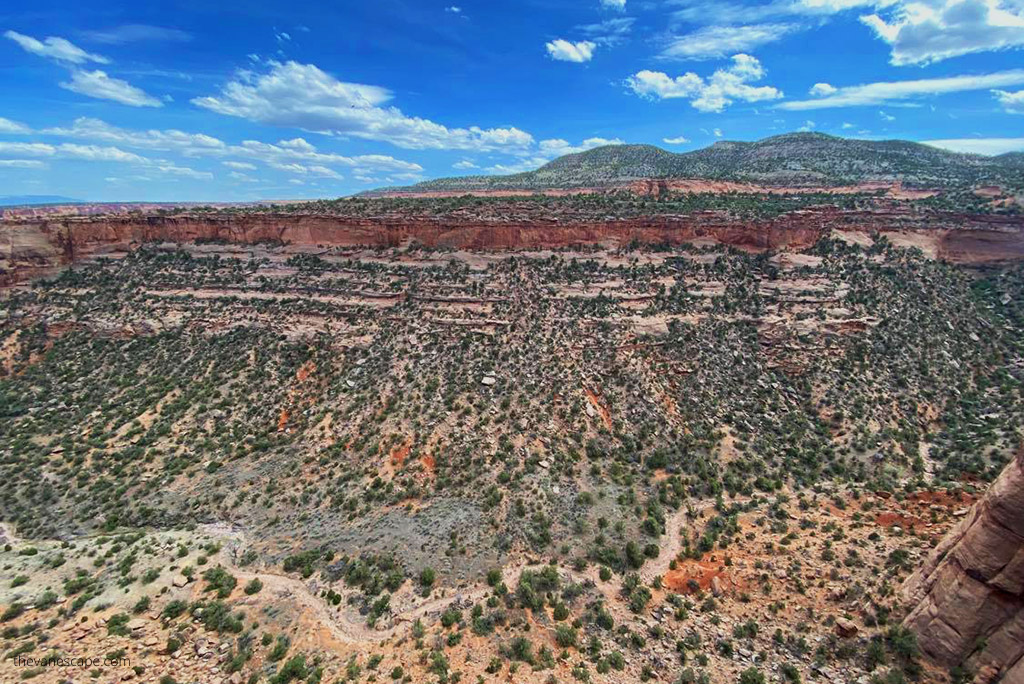
From scenic drives to short hikes and desert wildlife spotting, Colorado National Monument packs a lot into a compact area. Here are the ten best things to do — all easy to fit into a one- or two-day visit.
1. Drive the Scenic Rim Rock Drive
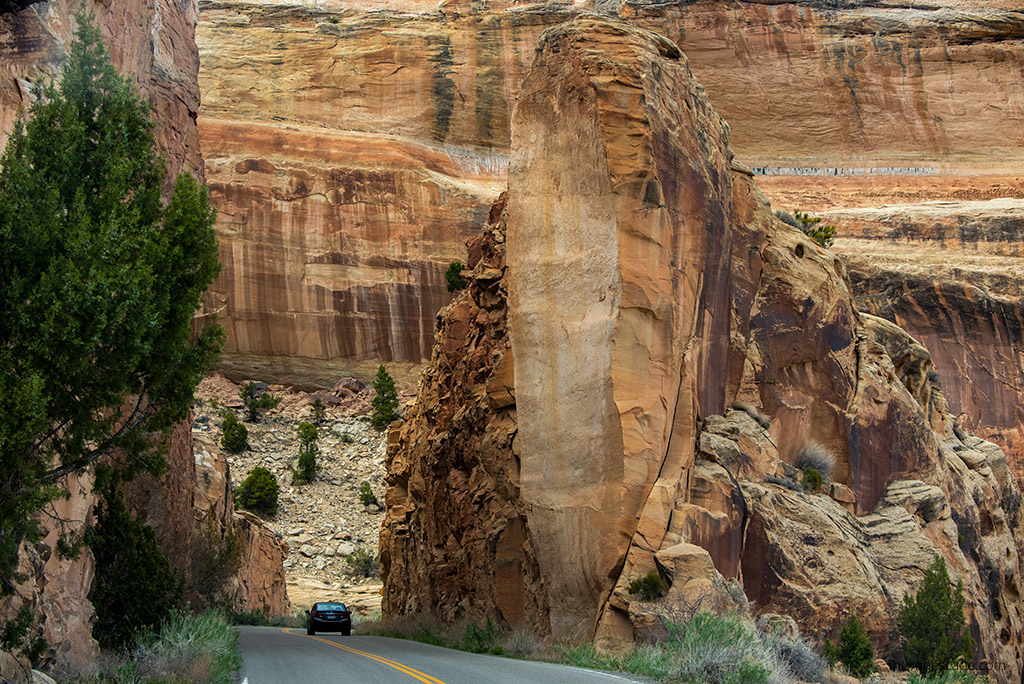
Stretching 23 miles between Fruita and Grand Junction, Rim Rock Drive is one of the most beautiful roads in the American West. Built by hand during the 1930s, it climbs from the valley floor to the top of the monument, hugging the edge of towering red cliffs.
You’ll pass through three tunnels, wind along dramatic switchbacks, and see endless canyon views. Allow at least two to three hours to enjoy the drive with photo stops. The road is paved and suitable for any vehicle, but drive slowly — the maximum speed is 25 mph, and sharp drop-offs mean attention is key.
Agnes’ Advice: Start from the Fruita (west) entrance for the most impressive sequence of overlooks right from the start.
2. Stop at the Best Viewpoints
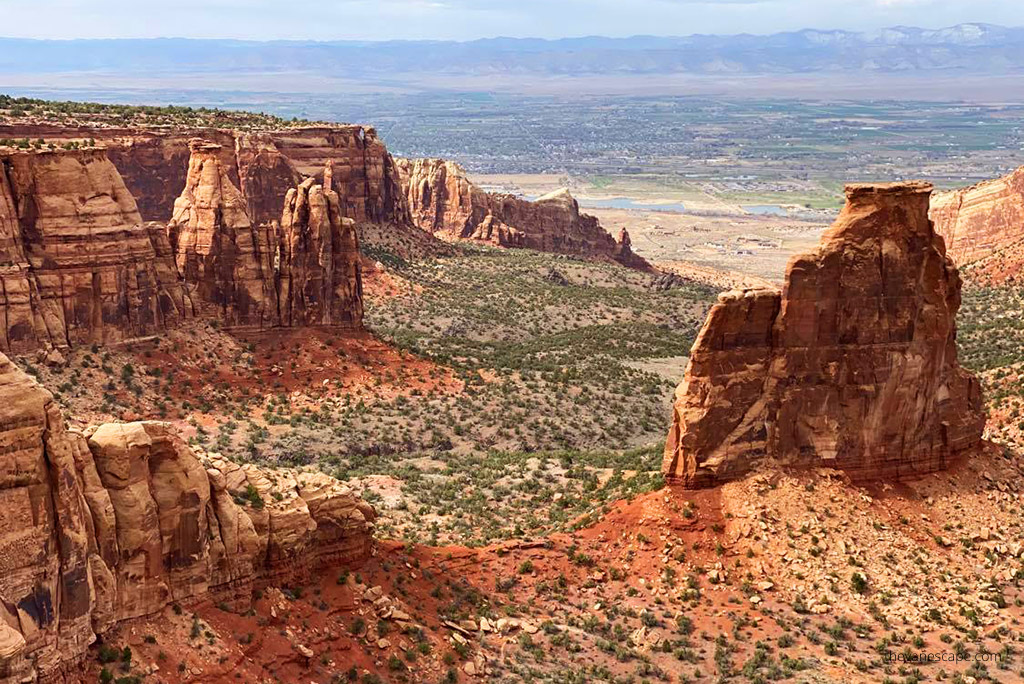
There are 19 overlooks along Rim Rock Drive, but a few truly stand out:
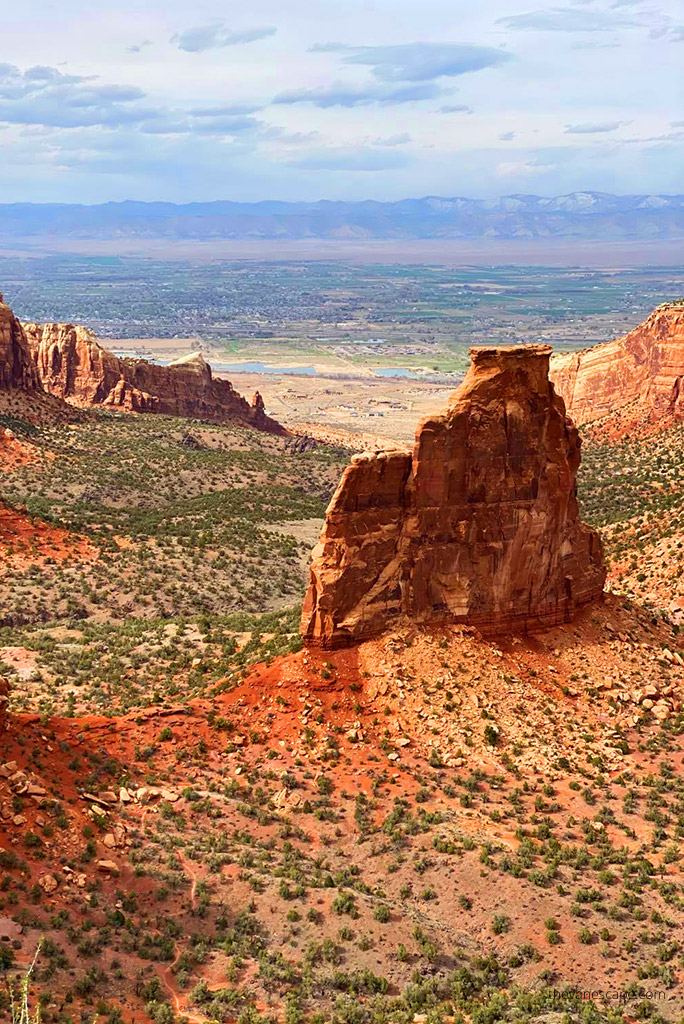
- Grand View: The most iconic panorama in the park. You’ll see Monument Canyon and the massive Independence Monument below.
- Independence Monument View: Perfect in late afternoon light.
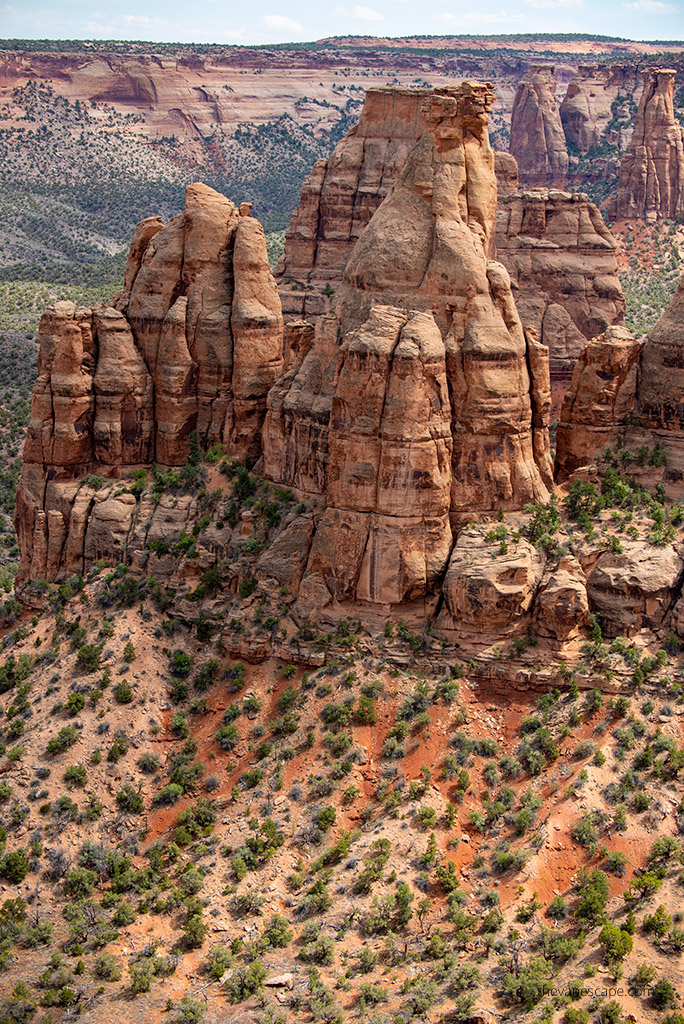
- Coke Ovens Overlook: Named for the rounded rock domes that look like giant ovens.
- Cold Shivers Point: A heart-stopping perch 300 feet above Columbus Canyon — ideal for sunset.
- Book Cliff View: Near the campground and visitor center, great for quick photos.
Morning and late-afternoon light create the best color contrasts for photography.

3. Watch for Wildlife
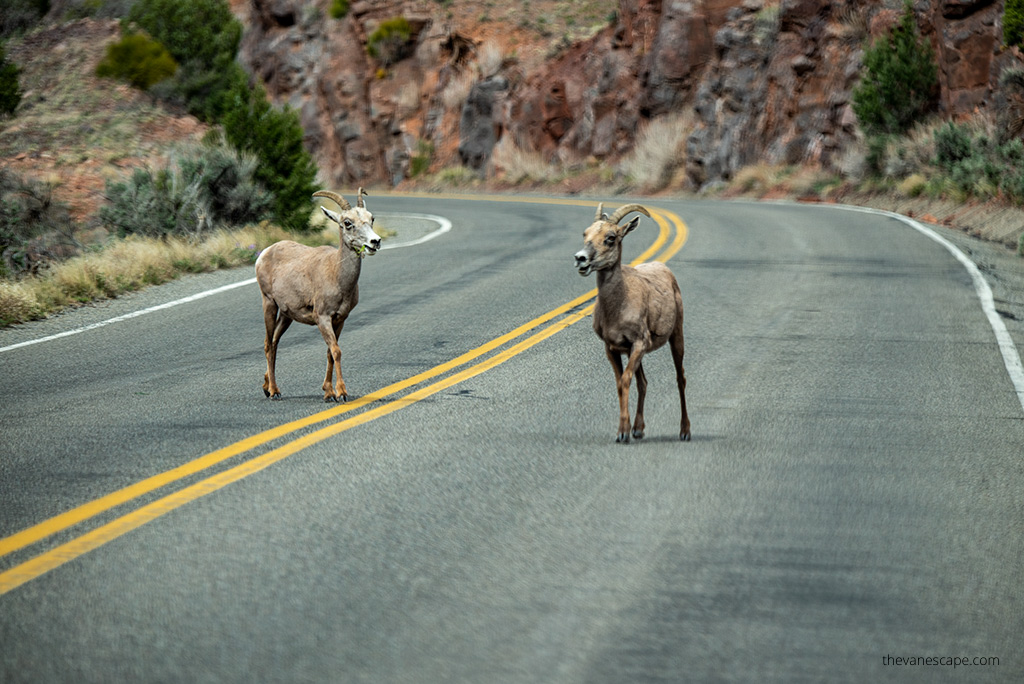
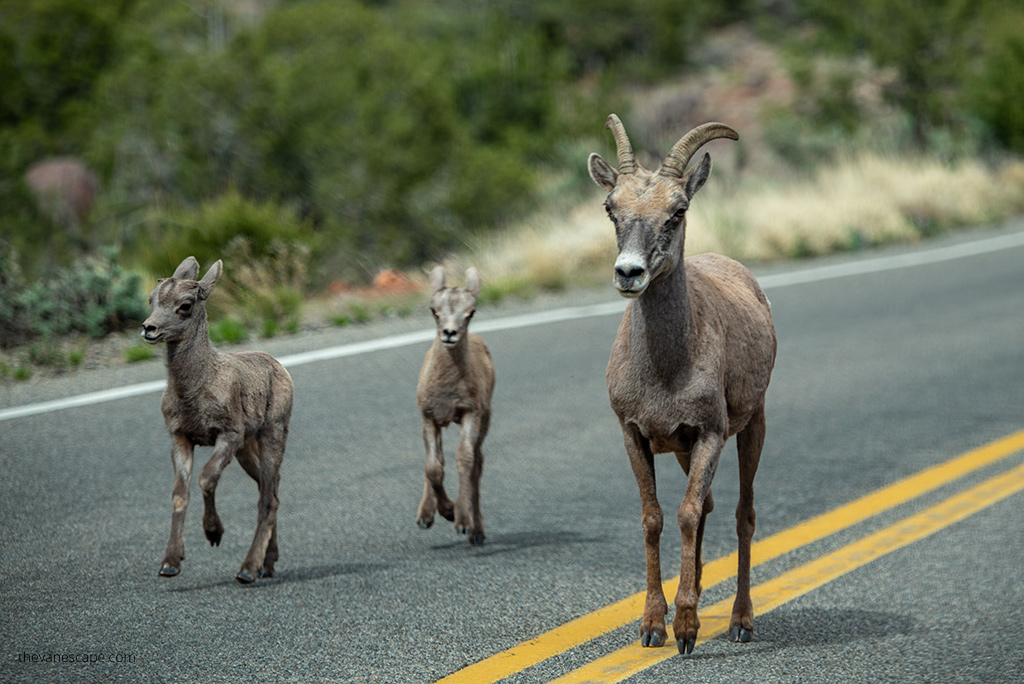
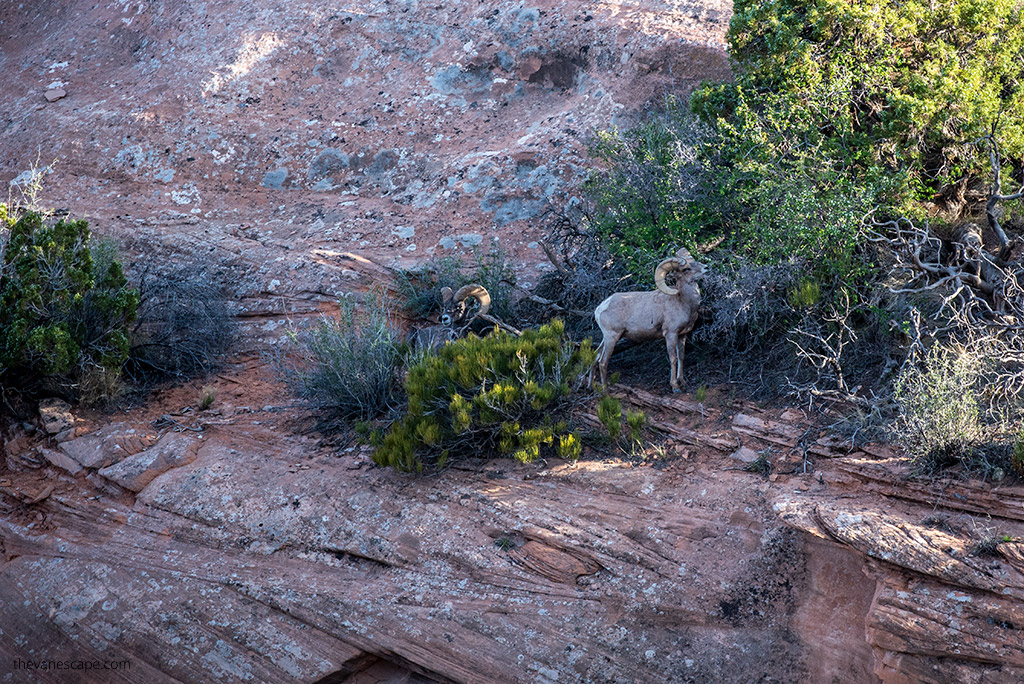
Keep your eyes peeled for desert bighorn sheep, often seen near Fruita Canyon or along the road. You might also spot mule deer, coyotes, collared lizards, and red-tailed hawks soaring overhead. Early morning and evening are the best times for wildlife sightings.

4. Try the Best Easy Hikes
Even with just half a day, you can stretch your legs on a few short, easy trails:
- Window Rock Trail (0.25 miles one way): Quick walk to a natural window framing Monument Canyon.
- Canyon Rim Trail (0.5 miles one way): Follows the rim above colorful cliffs — amazing views with little effort.
- Otto’s Trail (0.5 miles one way): Leads to views of Sentinel Spire, Pipe Organ, and Independence Monument.
- Alcove Nature Trail (0.5 miles one way): Family-friendly interpretive trail starting right across from the Visitor Center.
- Coke Ovens Trail (0.5 miles one way): Short path to the top of the rounded domes seen from the overlook.
All are accessible directly from Rim Rock Drive.

5. Hike a Moderate or Historic Trail
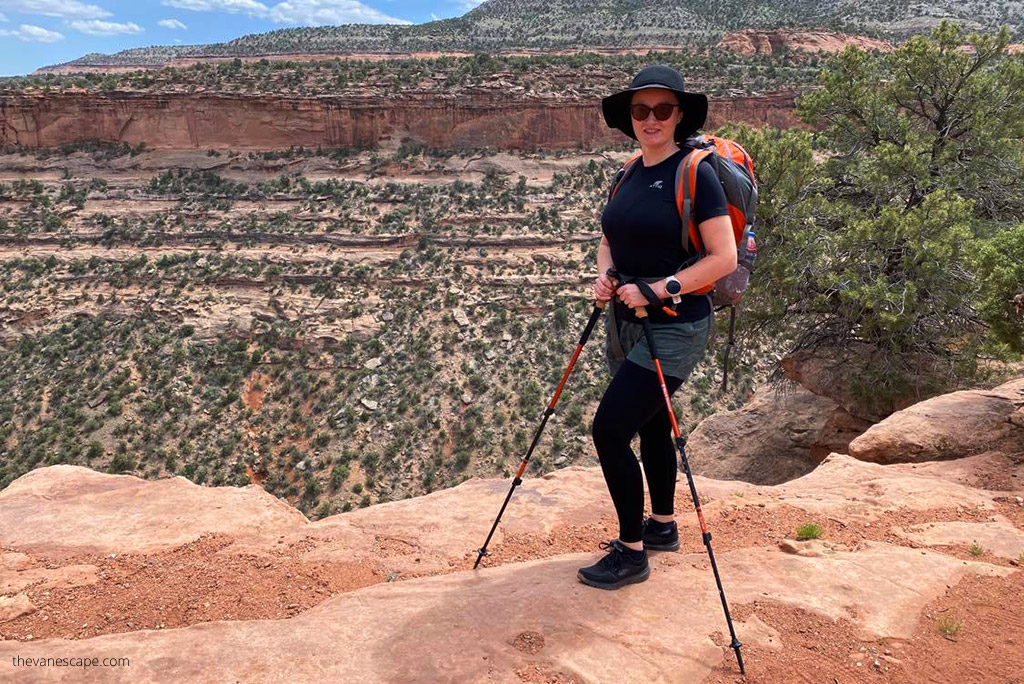
If you have more time, step into the canyons:
- Serpents Trail (1.75 miles one way): Once known as “the Crookedest Road in the World,” it climbs through 16 switchbacks and great geology.
- Devils Kitchen Trail (0.75 miles one way): Leads to a rock amphitheater surrounded by tall walls near the east entrance.
- CCC Trail (0.75 miles one way): Short but scenic route that connects to longer trails and offers fine views.
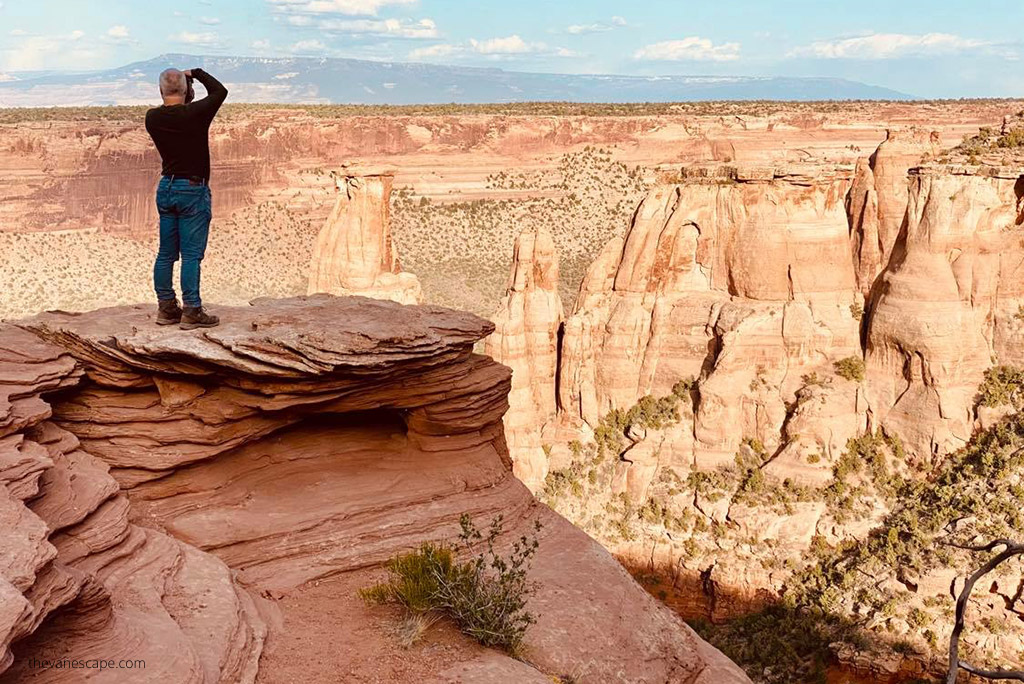
6. Explore a Backcountry Trail
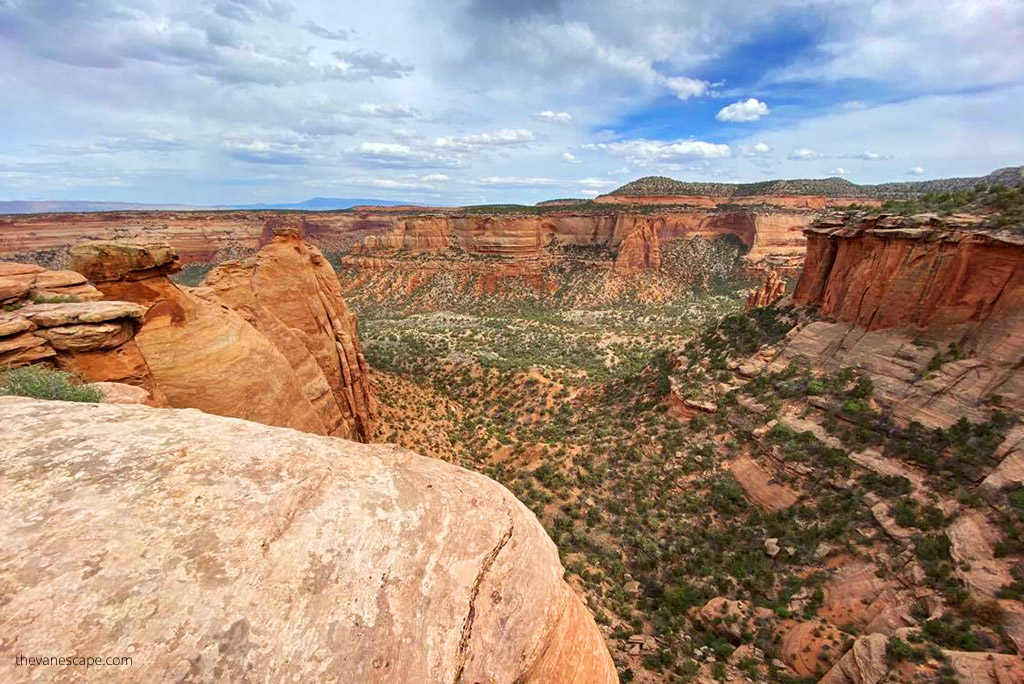
For solitude and big views, the backcountry delivers:
- Liberty Cap Trail (7 miles round trip): Steep, strenuous climb to a 1,500-foot viewpoint.
- Ute Canyon Trail (9 miles round trip): Descends into a deep canyon with towering walls and desert vegetation.
- Monument Canyon Trail (12 miles round trip): The park’s signature route, winding past giant monoliths including Independence Monument.
Bring plenty of water, snacks, sun protection, and a detailed map — these hikes can be hot and remote.

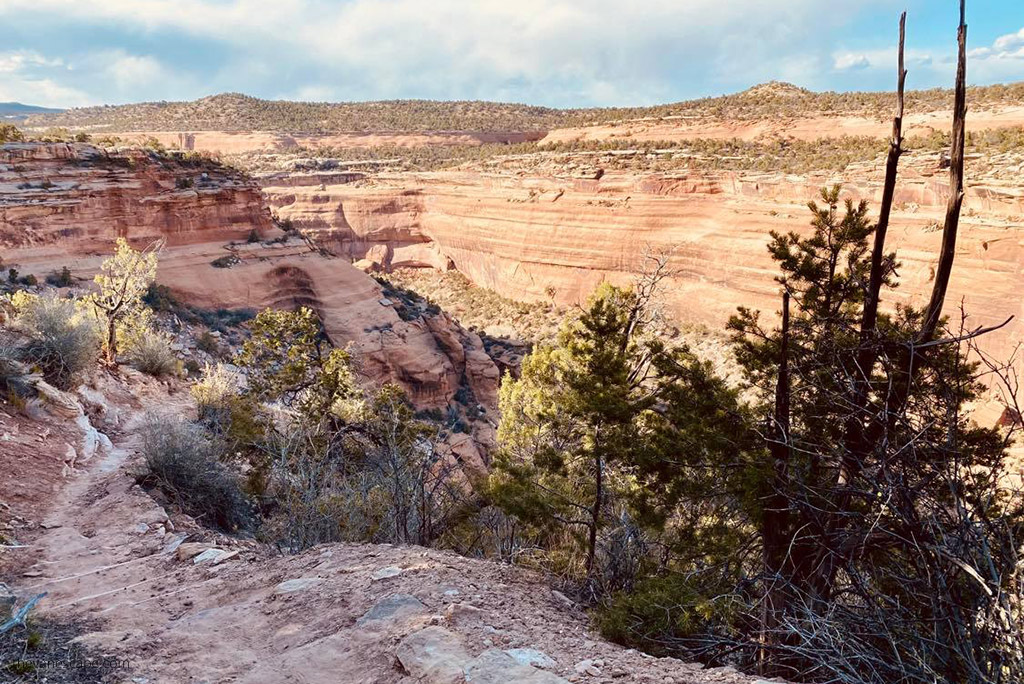
7. Camp Under the Stars
Spend the night at Saddlehorn Campground, the park’s only developed site, just four miles from the Fruita entrance. Campsites have picnic tables, grills, and restrooms with running water, but no showers or hookups. Reservations are available year-round through Recreation.gov.
Backcountry camping is also allowed with a free permit from the visitor center.

8. Go Rock Climbing
Colorado National Monument is a favorite among traditional climbers. Its sandstone cliffs and freestanding spires — like Independence Monument — offer challenging routes with big exposure. Permanent hardware is prohibited, so climbers must use removable protection. Always check current climbing regulations before your trip.

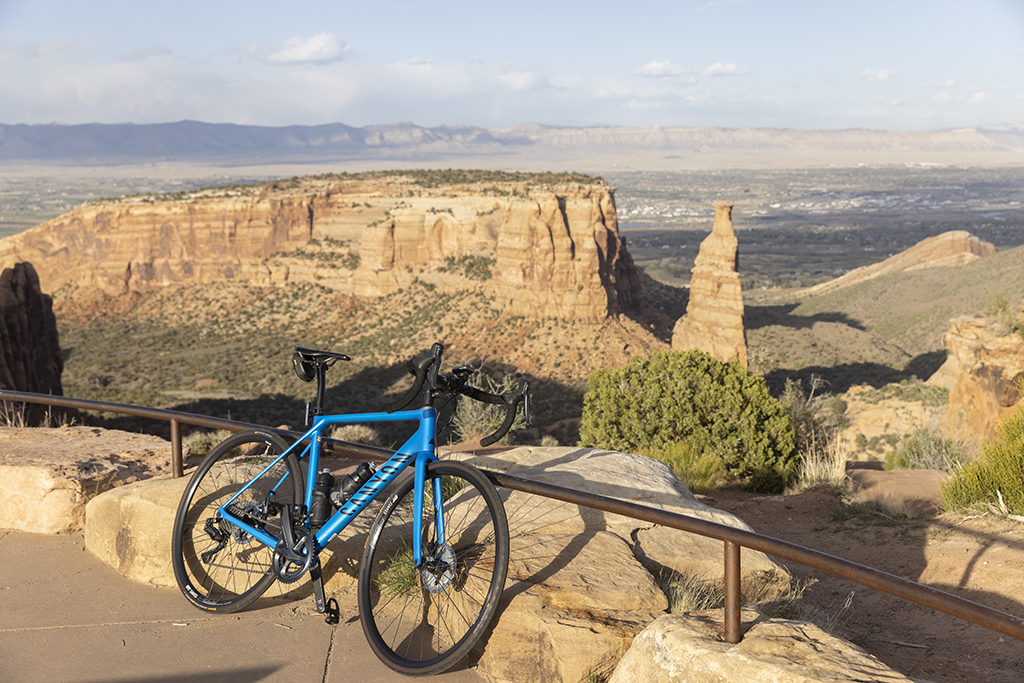
9. Cycle the Rim Rock Drive
Cyclists love the challenge of this scenic road. The route gains about 2,300 feet in elevation and rewards riders with breathtaking views. Traffic is light, but expect long climbs, tunnels, and sharp turns. Early morning rides offer cooler temperatures and quieter conditions. Mountain biking is not allowed inside the monument, but nearby Fruita has excellent off-road trails.
10. Enjoy a Picnic with a View
Pack a lunch and stop at one of two picnic areas:
- Devils Kitchen Picnic Area (east side): Shaded tables, restrooms, and grills.
- Saddlehorn Picnic Area (near the visitor center): Great for families and close to short trails.
Nothing beats a sandwich overlooking red cliffs glowing in the afternoon sun.
Where to Stay Near Colorado National Monument
You can easily visit Colorado National Monument on a day trip, but staying nearby lets you experience sunrise and sunset — the most magical times in the park. You’ll find options for every budget in Fruita, Grand Junction, and right inside the monument.
Saddlehorn Campground (Inside the Park)
If you love camping, this is the best place to stay. Saddlehorn Campground sits just above the Fruita entrance, near the visitor center, with wide views of the canyons below.
- 80 campsites open year-round
- Flush toilets, water, picnic tables, and charcoal grills
- No showers or hookups
- RVs up to 40 feet allowed
Reserve early through Recreation.gov, especially in spring and fall.
Camping in Fruita and Grand Junction
If Saddlehorn is full, both towns have excellent campgrounds and RV parks:
- Monument RV Resort (Fruita): Closest full-service option to the park, with hookups, tent sites, and cabins.
- Junction West RV Park (Grand Junction): Family-friendly park with clean facilities and shaded sites.
These towns also have grocery stores and gear shops if you need to restock during your road trip.
Hotels in Fruita
Fruita is only minutes from the west entrance and offers comfortable mid-range hotels. Good choices include:
- La Quinta by Wyndham Fruita – Spacious rooms, breakfast included.
- Super 8 by Wyndham Fruita – Budget-friendly and right off I-70.
Fruita’s small downtown is worth a short stroll, with cafes, murals, and bike shops catering to outdoor travelers.


Hotels in Grand Junction
Grand Junction, just 20 minutes from the east entrance, offers more variety and lower prices.
- Days Inn by Wyndham Grand Junction – Reliable, affordable, and close to dining.
- Hotel Maverick – Boutique-style with modern rooms and rooftop views.
- SpringHill Suites by Marriott – Comfortable choice for families or longer stays.
If you prefer city amenities, Grand Junction is your best base — you’ll find plenty of restaurants, breweries, and galleries, plus access to the Grand Mesa and Book Cliffs.
Final Thoughts
Colorado National Monument is one of those places that surprises even seasoned travelers. It’s compact, easy to reach, and filled with the kind of scenery people drive hundreds of miles to find in Utah or Arizona. Yet here, you can enjoy it without crowds or long park lines.
The winding Rim Rock Drive, the fiery sandstone cliffs, and the quiet desert trails all combine into one unforgettable stop on any Colorado road trip. Whether you come for a few hours or stay overnight, it’s a destination that captures the wild beauty of the American Southwest — right in Colorado’s backyard.
Add it to your itinerary, bring your camera, and prepare to be amazed by this red-rock wonderland.
If you’re planning your trip, take a look at our Colorado travel guide for a full overview of the best places and experiences.
Do You Like It? Pin It For Later!

