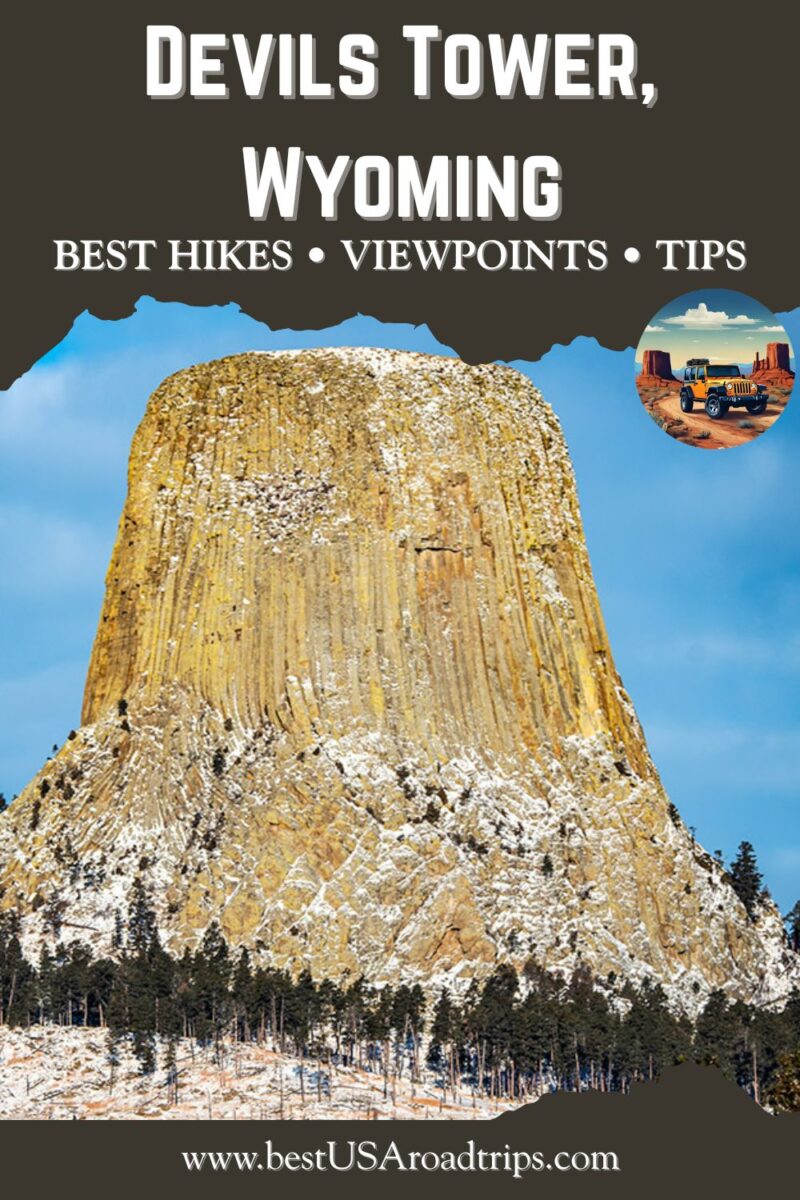
Devils Tower National Monument Guide: Best Things to Do, Hikes, and Travel Tips
Rising abruptly from the rolling prairies of northeastern Wyoming, Devils Tower National Monument looks otherworldly — a massive stone pillar towering above forests, rivers, and open grasslands. Sacred to Native American tribes and famous from Close Encounters of the Third Kind, this natural wonder is both a geological mystery and a spiritual landmark. In this guide, you’ll find everything you need to plan your visit — from how to get there and when to go, to the best hikes, viewpoints, and practical tips for making the most of your stop. Whether you’re road-tripping through Wyoming, exploring the Black Hills, or driving toward Yellowstone, Devils Tower is one stop that’s impossible to forget.
This article may contain affiliate / compensated links. For full information, please see our disclaimer here.
Why Devils Tower Deserves a Spot on Your Road Trip
Few places in the American West feel as mysterious as Devils Tower National Monument. Rising 867 feet from its base, this giant column of volcanic rock stands like a fortress above the Wyoming prairie — silent, sacred, and unforgettable.
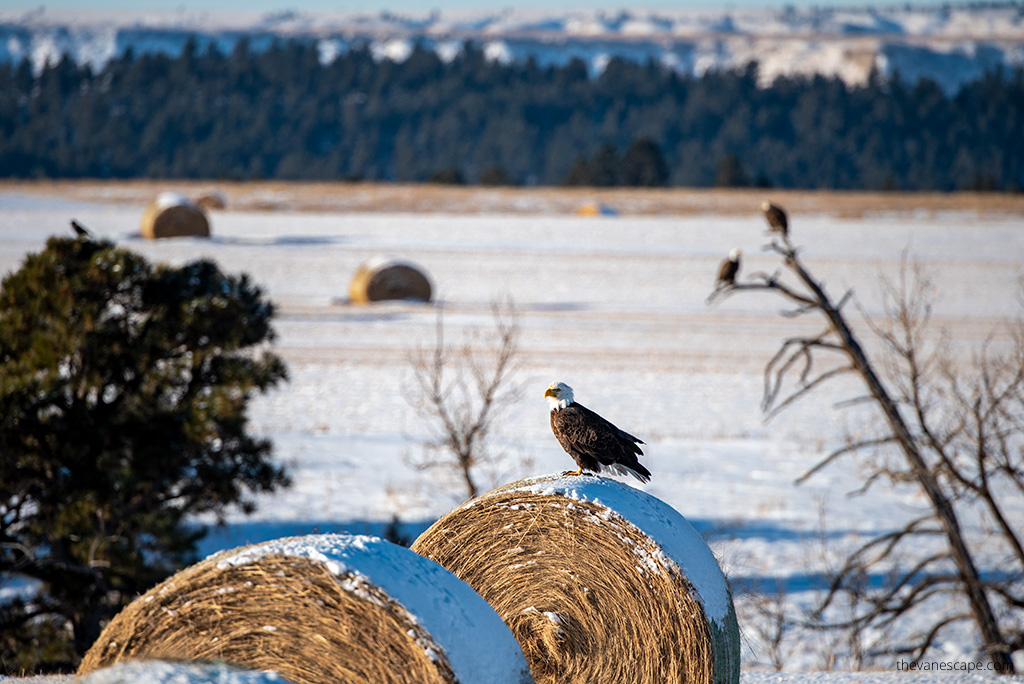
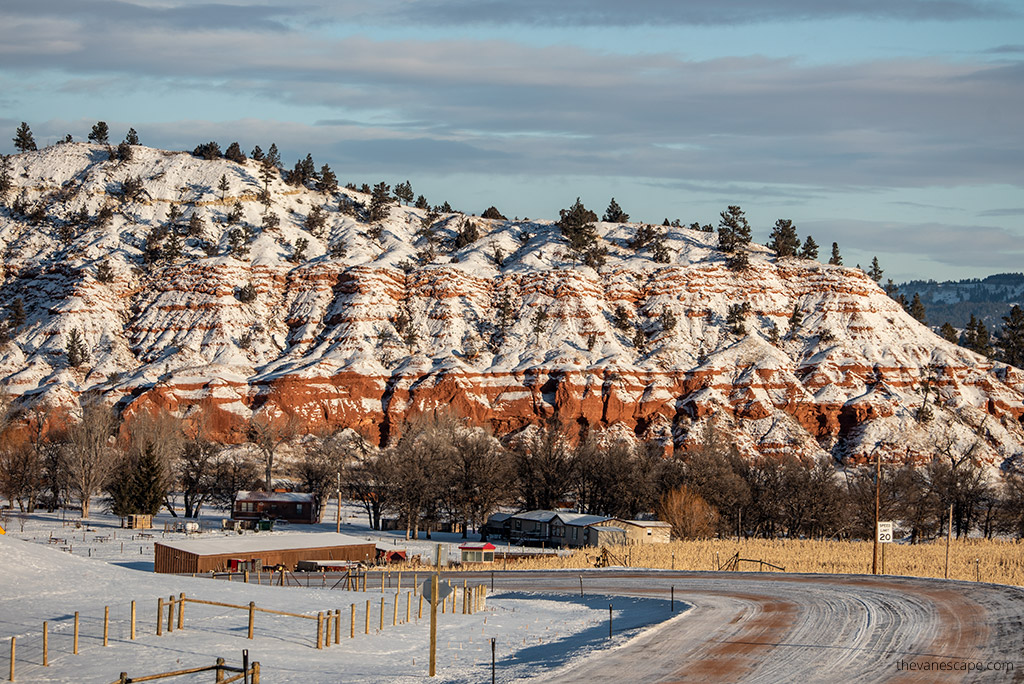
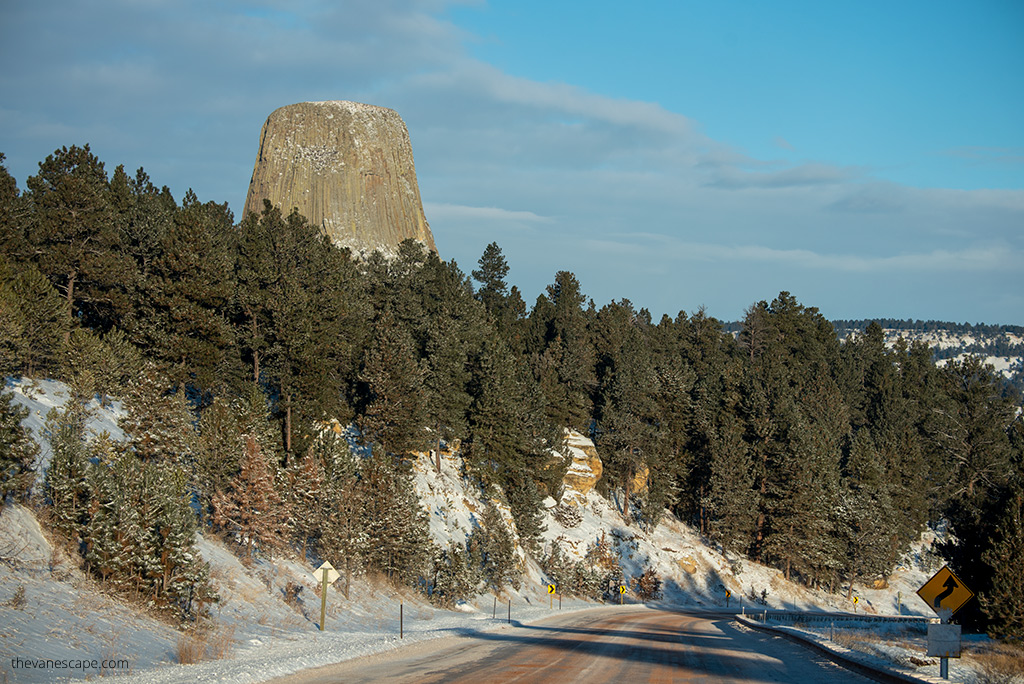
Chris and I first visited Devils Tower during our winter road trip from Badlands National Park to Yellowstone. Snow covered the red cliffs, mule deer grazed at the base, and steam rose from the Belle Fourche River. Even with icy trails and quiet campgrounds, the monument felt alive — timeless, powerful, and unlike anywhere else we’d seen.
It’s a perfect stop on any Wyoming or South Dakota road trip, easily combined with the Black Hills, Mount Rushmore, or Badlands National Park. You can hike beneath its towering columns, watch climbers scale its sheer faces, or simply sit and listen to the wind moving through the pines.
Whether you come for photography, hiking, or Native American heritage, Devils Tower captures the spirit of the West — wild, sacred, and endlessly photogenic.
What Is Devils Tower National Monument?
Standing tall over the Wyoming plains, Devils Tower is one of the most striking natural landmarks in the United States. It rises dramatically above the rolling grasslands and pine forests of the Bear Lodge Ranger District in the Black Hills, reaching a summit elevation of 5,112 feet (1,559 meters) above sea level.
Scientists describe it as an igneous rock formation, possibly the remains of a volcanic intrusion that hardened underground millions of years ago and was later exposed by erosion. Its vertical columns — some more than 600 feet tall — create a unique pattern that draws both geologists and photographers from around the world.
Yet Devils Tower is far more than a geological wonder. For many Native American tribes, including the Lakota, Cheyenne, Crow, and Kiowa, it is a sacred place known by traditional names such as Bear Lodge, Bear’s House, and Tree Rock. Prayer cloths tied to nearby trees remind visitors of this deep cultural connection — something every traveler should respect and honor.
Designated by President Theodore Roosevelt in 1906, Devils Tower became the first national monument in the United States. Today, it protects 1,347 acres (545 hectares) of dramatic cliffs, meadows, and wildlife habitat, visited by more than 400,000 people each year.
The Tower also shares cultural and geological kinship with other sacred formations across the West — including Shiprock in New Mexico, another towering volcanic monolith revered by Native peoples.
This site’s name — Devils Tower without the apostrophe — came from an early misinterpretation of a Native phrase meaning “Bad God’s Tower.” Despite the error, the name stuck, and the monument has since become a symbol of the American frontier, adventure, and mystery.

The Ongoing Discussion About the Name “Devils Tower”
The name “Devils Tower” has long been controversial. More than twenty Native American Tribes consider this site sacred and view the word “Devils” as disrespectful. In 2014, Tribal leaders submitted formal proposals to rename the monument and the nearby town to “Bear Lodge,” a name reflecting its traditional Lakota significance.
In 2024, a federal advisory committee recommended moving forward with the name change, but it still awaits final approval. For now, “Devils Tower” remains the official name, while the conversation about restoring “Bear Lodge” continues.
Where Is Devils Tower and How to Get There
Devils Tower National Monument rises above the Belle Fourche River in northeastern Wyoming, about 30 miles from the South Dakota border. It’s perfectly positioned for anyone road-tripping through the Black Hills, the Badlands, or on their way to Yellowstone National Park.
The Tower stands alone in a wide, open landscape — you’ll see it from miles away, especially as you approach from the east. Whether you’re coming from South Dakota, Yellowstone, or nearby Wyoming towns, the drive is incredibly scenic.
Driving Directions
- From Gillette, Wyoming: 64 miles / about 1 hour 10 minutes via I-90 East and US-14 East.
- From Newcastle, Wyoming: 76 miles / about 1 hour 25 minutes via WY-585 North and US-14 West.
- From Mount Rushmore, South Dakota: 134 miles / about 2 hours 20 minutes via I-90 West.
- From Crazy Horse Memorial, South Dakota: 117 miles / about 2 hours 15 minutes via US-16 West.
- From Badlands National Park: 165 miles / about 2 hours 45 minutes via I-90 West through Rapid City.
- From Yellowstone National Park: 400 miles / about 8 hours via US-14/16/20 East.
We visited Devils Tower as a scenic stop during our winter drive from Badlands to Yellowstone, and it made for one of the most memorable segments of our trip — snowy roads, grazing deer, and that unmistakable silhouette rising ahead of us.
Closest Towns
- Hulett (9 miles away): The nearest small town with restaurants, gas, and lodging.
- Sundance (30 miles): A charming option with motels and RV parks.
- Gillette (65 miles): The largest nearby city with full services and hotel chains.
If you’re planning a Black Hills–to–Yellowstone itinerary, Devils Tower makes the perfect midway stop — remote enough to feel wild, but easy to reach on well-maintained roads.

Entrance Fees and Visitor Information
Devils Tower National Monument is open year-round, 24 hours a day, and can be visited in any season — though access and hours at the Visitor Center vary depending on weather.
Entrance Fees
- Private vehicle: $25 (valid for 7 days)
- Motorcycle: $20
- Individual (hiker, bicyclist): $15
If you have the America the Beautiful Annual Pass , entry is free.
Visitor Center Information
The Visitor Center, located near the main parking area, is open seasonally:
- Summer (May–October): 9:00 a.m. – 5:00 p.m.
- Winter: Hours vary or may close during storms.
Inside, you’ll find exhibits about the tower’s geology, Native American heritage, and climbing history, plus maps, restrooms, and a small bookstore.
Pet Policy
Pets are welcome in parking areas and campgrounds but not on hiking trails or inside buildings. Keep them leashed at all times. For walks, try the paved road near the campground with great views of the Tower.
Agnes’ Advice: if you’re traveling with pets, early morning and late evening are the quietest times for walks and photos near the base.


How Much Time Do You Need at Devils Tower?
You can experience the magic of Devils Tower National Monument in as little as an hour — but to truly appreciate its scale and spirit, plan to spend half a day.
If You Have 1–2 Hours
Drive up to the Visitor Center, walk the short Tower Trail, and stop for photos at several viewpoints along the park road. Even a quick visit gives you incredible close-up views of the Tower and its sheer volcanic columns.
If You Have Half a Day
Combine the Tower Trail with the Red Beds Trail or Joyner Ridge Trail for broader perspectives of the monument and the surrounding Belle Fourche River Valley. Visit the Visitor Center, enjoy a picnic near the prairie dog town, and stay for sunset when the cliffs glow deep orange and red.
If You Have a Full Day
Start with a morning hike, then join a ranger-led program or watch climbers tackle the Tower’s vertical cracks. Spend the evening stargazing — the dark skies here make it one of the best places in Wyoming for night photography.
Chris and I spent an afternoon exploring in winter, when the trails were quiet and snow softened the red cliffs. We couldn’t hike them all due to seasonal closures, but even a short visit felt unforgettable. We can’t wait to return in summer to see it under a clear sky full of stars.
Best Things to Do in Devils Tower National Monument
Whether you’re here for a quick stop or a full day of exploring, Devils Tower National Monument offers scenic hiking trails, wildlife encounters, and fascinating cultural experiences. Below are the best things to do, from short hikes to evening stargazing.
1. Hike the Tower Trail
Distance: 1.3-mile loop (2 km)
Difficulty: Easy
Time: 45 minutes – 1 hour
The Tower Trail is the most popular hike — and the best way to see Devils Tower up close. The paved path circles the base, weaving through ponderosa pines and giant boulders. You’ll get incredible views from every angle.
Along the way, you may notice prayer cloths tied to branches. These are sacred offerings from Native American tribes; please don’t touch or photograph them. They’re an important reminder of the Tower’s deep cultural significance.
Start early in summer to avoid crowds and secure parking near the Visitor Center.
2. Walk the Red Beds Trail
Distance: 2.8-mile loop (4.5 km)
Difficulty: Moderate
Time: 2–3 hours
If you want wider views of the Tower and surrounding landscape, the Red Beds Trail is your best choice. This loop combines sweeping overlooks, quiet forests, and panoramic views of the Belle Fourche River Valley. The trail can be steep and exposed — wear hiking boots and bring plenty of water.
3. Explore the Amphitheater Circuit
Distance: 1.5-mile counterclockwise loop (2.4 km)
Difficulty: Easy to moderate
Time: 1–1.5 hours
This loop links parts of the Valley View, Red Beds, and South Side Trails, offering variety and great views with less elevation gain. Perfect if you want something longer than Tower Trail but shorter than the full Red Beds loop.
4. Try the Joyner Ridge Trail
Distance: 1.5-mile loop (2.4 km)
Difficulty: Moderate
Time: 1–1.5 hours
A quiet favorite for sunrise or sunset, Joyner Ridge Trail offers one of the best panoramic views of Devils Tower. The trail climbs a ridgeline with a noticeable elevation change but rewards hikers with solitude and spectacular light.
5. Stroll the South Side and Valley View Trails
Distance: 0.6 miles each (1 km)
Difficulty: Easy
Time: 30 minutes per trail
These two short, family-friendly trails begin near the picnic area and pass through open prairie dog towns. Watch for the lively chatter of prairie dogs as they pop up from their burrows — a highlight for kids and photographers alike.

6. Join a Ranger Program
From May through September, park rangers lead free talks, walks, and evening programs that share insights about the monument’s geology, Native American history, and wildlife. Schedules are posted at the visitor center and online.
7. Stay After Dark for Stargazing
The open skies and lack of light pollution make Devils Tower one of Wyoming’s best stargazing locations. Joyner Ridge Trail and the nearby parking lot are top spots to watch the Milky Way rise above the Tower.
We’ve seen photos of the night sky here that are absolutely breathtaking — one reason we plan to return in summer for a full night under the stars.
Climbing Devils Tower – Rules, Ethics, and Safety
For climbers, Devils Tower National Monument is a world-class challenge and a spiritual experience all at once. Its vertical cracks and towering columns attract thousands of climbers each year — about 4,000 attempts annually, though only a small percentage of the park’s visitors ever set foot on the rock.
A Brief History of Climbing
The first known ascent took place on July 4, 1893, when local ranchers William Rogers and Willard Ripley reached the summit using a wooden stake ladder — parts of which are still visible today. Since then, climbing techniques have evolved, and Devils Tower has become a landmark destination for traditional crack climbing.
The most popular route, the Durrance Route (5.7), follows a series of cracks and chimneys up the southeast face. For skilled climbers, it takes around 4–6 hours to ascend and another 1–2 hours to rappel down.
Climbing Regulations
Before and after every climb, all climbers must register with a park ranger. This ensures safety, helps monitor conditions, and protects the monument’s fragile environment.
- No overnight camping is allowed on the summit.
- Climbing is permitted year-round except during the June voluntary closure, when many Native American tribes hold ceremonies around the Tower.
- Always check for current closures and weather conditions on the official NPS website before climbing.

Cultural Respect
Devils Tower is sacred to several tribes, including the Lakota, Cheyenne, Arapaho, and Kiowa. Some Native leaders view climbing during ceremonial periods as a form of desecration. Respecting the voluntary June closure and being mindful of cultural traditions helps preserve the monument’s spiritual importance.
Like Shiprock in New Mexico, another sacred volcanic formation, Devils Tower reminds visitors that not every summit exists just to be conquered. Here, adventure and reverence can — and should — coexist.
Safety Notes
Climbing Devils Tower requires skill, preparation, and traditional protection techniques.
- Most routes are long and exposed; weather can change rapidly.
- Loose rock, heat, or afternoon storms can create dangerous conditions.
- Since 1937, six climbers have died on the Tower, three of them while rappelling.
Even if you don’t plan to climb, watching climbers make their slow, precise moves up the sheer rock face is mesmerizing — one of the most unique sights in any U.S. national monument.
Where to Stay Near Devils Tower
Whether you’re camping under the stars or looking for a comfortable bed after a long drive, there are plenty of options near Devils Tower National Monument. The monument itself offers one scenic campground, and several nearby towns provide motels, cabins, and RV parks.
Belle Fourche River Campground (Inside the Monument)
If you want to wake up with a view of the Tower, this is the place to stay. The Belle Fourche River Campground sits just below the monument and is open seasonally from May 15 to October 15.
- 46 sites, including 4 accessible and 3 tent-only group sites
- No hookups, but potable water, picnic tables, and restrooms are available
- RVs up to 35 feet can fit in pull-through sites
- Operates on a first-come, first-served basis — no reservations
The campground is quiet, scenic, and perfect for stargazing.
Keyhole State Park
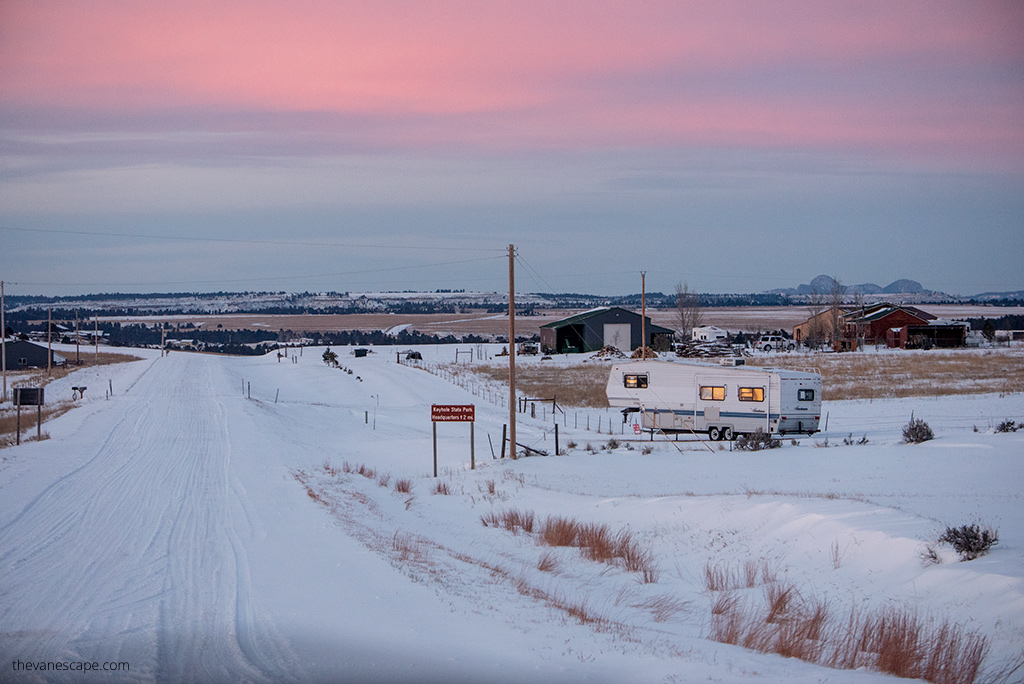
When we visited in winter, the campground inside the monument was closed, so we stayed at Keyhole State Park, about 20 miles east of Devils Tower via McKean Road and WY-24.
The park surrounds a large reservoir, offering peaceful lake views and year-round camping. It’s a great alternative if you prefer more facilities or plan to travel in the off-season.
Nearby Towns and Lodging
- Hulett (9 miles): The closest town to Devils Tower, with small motels, cabins, and restaurants. Great for early-morning access to the park.
- Sundance (30 miles): A charming stop with budget motels and RV parks.
- Gillette (65 miles): The largest nearby city, with full services, grocery stores, and chain hotels — ideal if you’re continuing toward Yellowstone or Bighorn Canyon.
If you’re road-tripping across Wyoming or South Dakota, Devils Tower makes an easy overnight stop between Badlands National Park, the Black Hills, and Yellowstone.
Agnes’ Advice – Combine It with Nearby Stops
Devils Tower National Monument fits beautifully into a classic Wyoming and South Dakota road trip. Its location makes it easy to connect with several of the region’s most iconic landscapes and historic sites.
If you’re driving from the Black Hills, plan a route that includes Mount Rushmore, Crazy Horse Memorial, and Badlands National Park — all within a few hours of each other. The drive between these destinations and Devils Tower winds through open prairies, forested hills, and small Western towns that feel frozen in time.
For longer adventures, continue west toward Bighorn Canyon National Recreation Area, Cody, or Yellowstone National Park. The transition from grasslands to mountain passes makes this part of Wyoming one of the most rewarding stretches of highway in the country.
Final Thoughts
Devils Tower National Monument is one of those places that lingers in your memory long after the trip ends. It’s powerful yet peaceful, mysterious yet grounding — a landmark that feels both ancient and alive.
Whether you walk the Tower Trail, watch the light shift across its columns, or simply stand in silence at its base, it’s impossible not to feel a sense of awe. For Native peoples, this place has been sacred for centuries. For travelers, it’s a reminder of just how wild and spiritual the American West can be.
Chris and I visited in winter, and even under snow, the Tower’s presence was overwhelming. We can only imagine how spectacular it must look in summer under a sky full of stars. If your road trip takes you anywhere near northeastern Wyoming, make time for this stop — even a short visit is worth every mile.
Do You Like It? Pin It For Later!