
Badlands National Park in Winter: Things to Do, Scenic Drive, and Tips for Visiting
Is Badlands National Park open in winter? Absolutely — and it’s one of the most magical times to visit. Between December and February, snow dusts the rugged buttes and jagged cliffs, transforming South Dakota’s desert landscape into a quiet, white wilderness. Wildlife roams close to the road, crowds disappear, and every overlook feels like your own private world. In this guide, we’ll share how to visit Badlands National Park in winter, including what to expect, how to prepare for road and weather conditions, and the best things to do — from driving the scenic loop to hiking and wildlife watching. Whether you’re planning a quick winter road trip or crossing South Dakota on your way to Yellowstone, the Badlands in winter are hauntingly beautiful and absolutely worth the stop.
This article may contain affiliate / compensated links. For full information, please see our disclaimer here.
Why Visit Badlands National Park in Winter
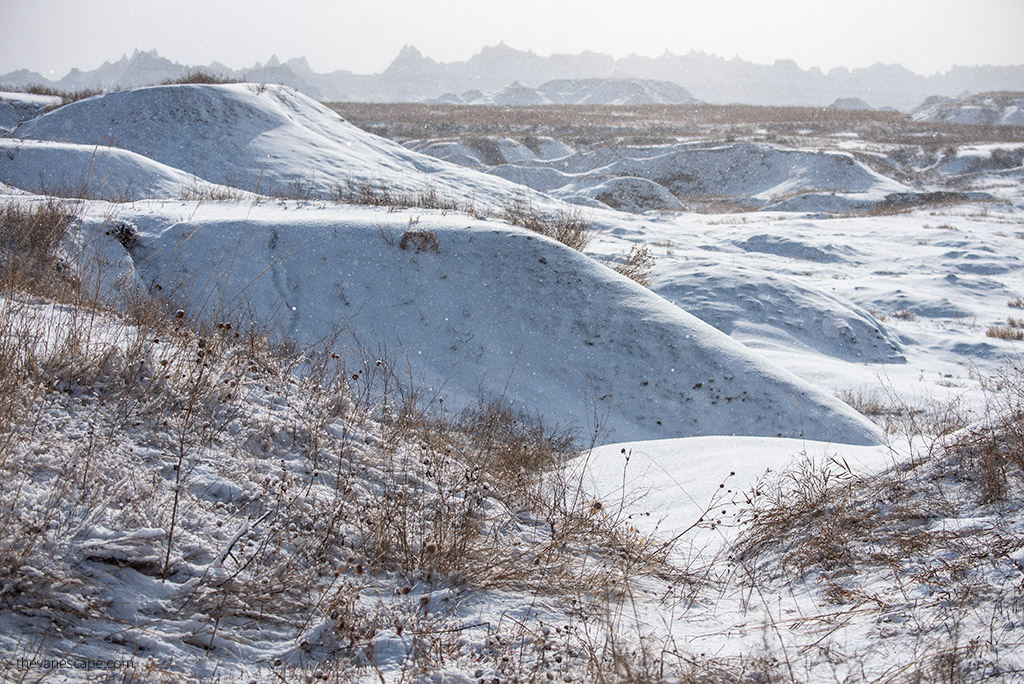
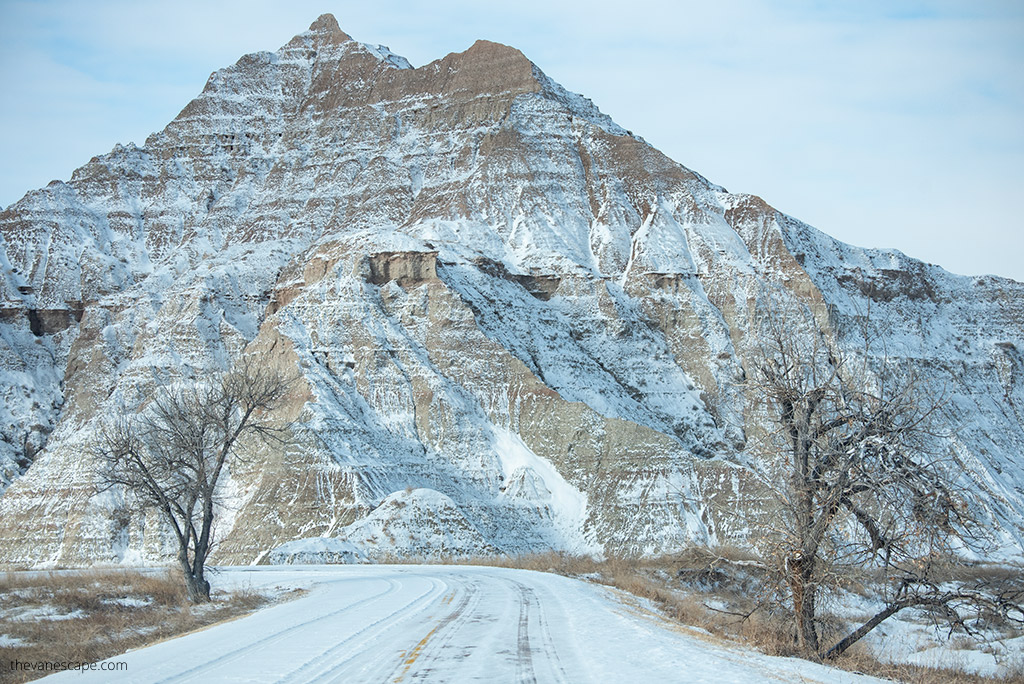
There’s something extraordinary about seeing Badlands National Park under a blanket of snow. The same sharp ridges and layered formations that glow red and gold in summer turn pale and silent in winter — like a desert caught in a dream.
The contrast between the white snow and the park’s deep canyon shadows makes it one of the most photogenic landscapes in South Dakota.
Chris and I visited the Badlands during our nine-month USA road trip, right after exploring Yellowstone in the middle of winter, where temperatures dropped to –22°F. After days of steam, snow, and geysers, the Badlands felt like another planet — windswept, empty, and hauntingly still. We barely met another car all day, and the only sounds were crunching snow and distant howls of coyotes.
Winter in the Badlands isn’t for everyone, but that’s exactly what makes it special. You’ll find:
- Fewer visitors and open views — no tour buses, no crowds, just silence and space.
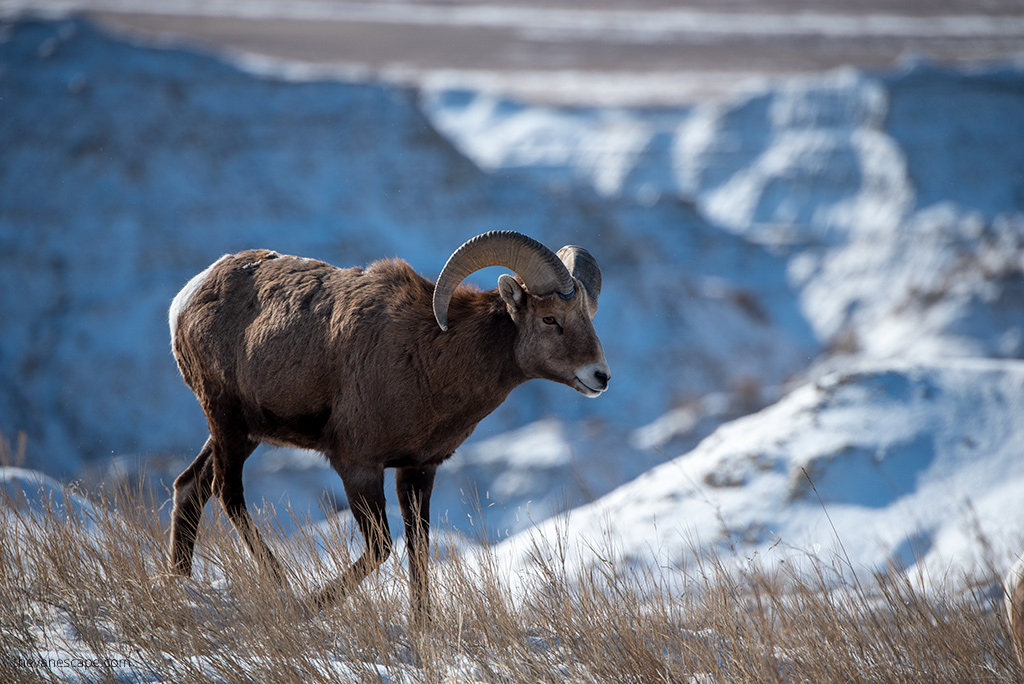
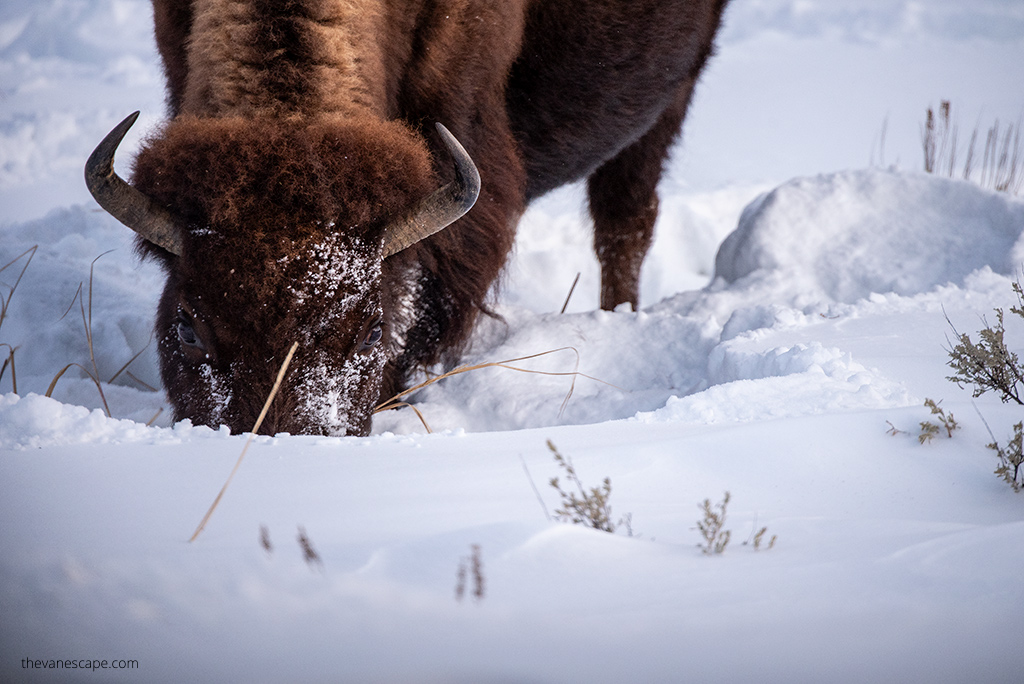
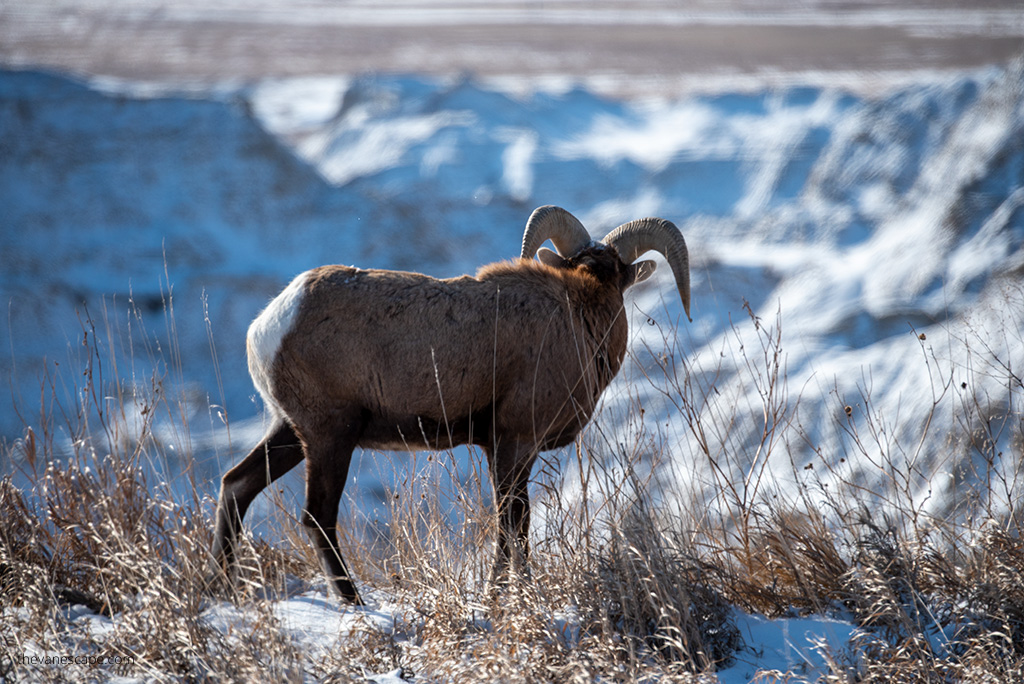
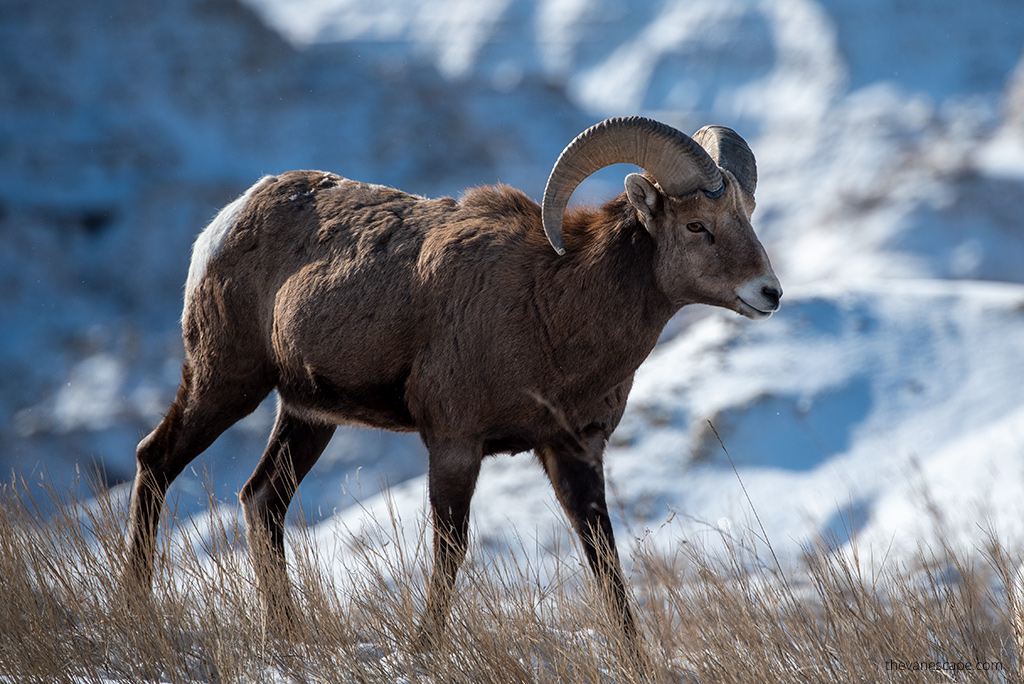
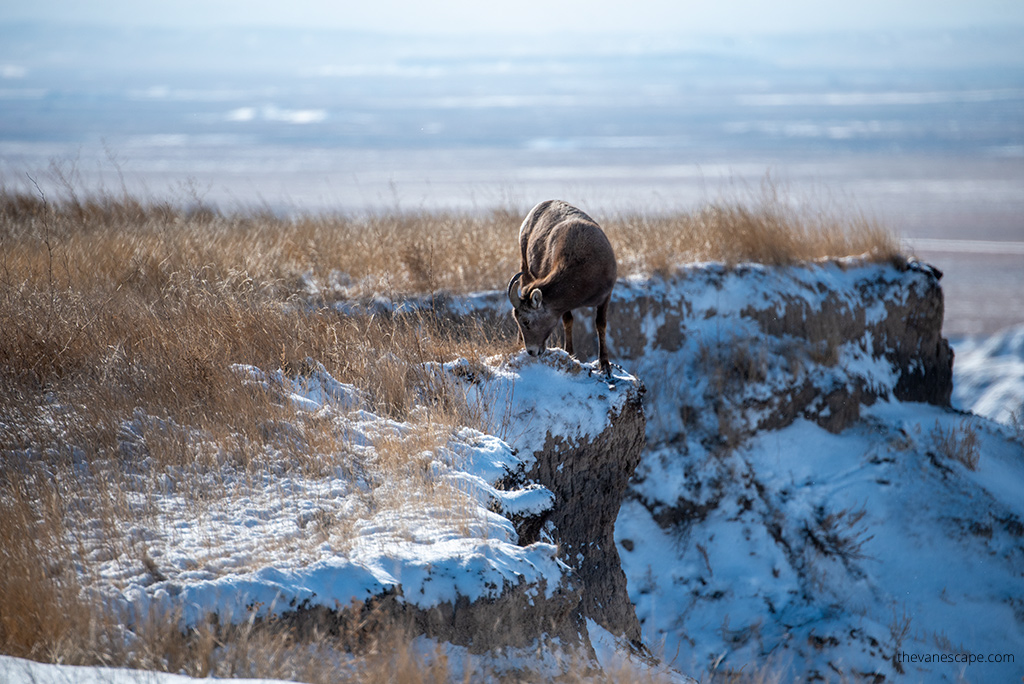
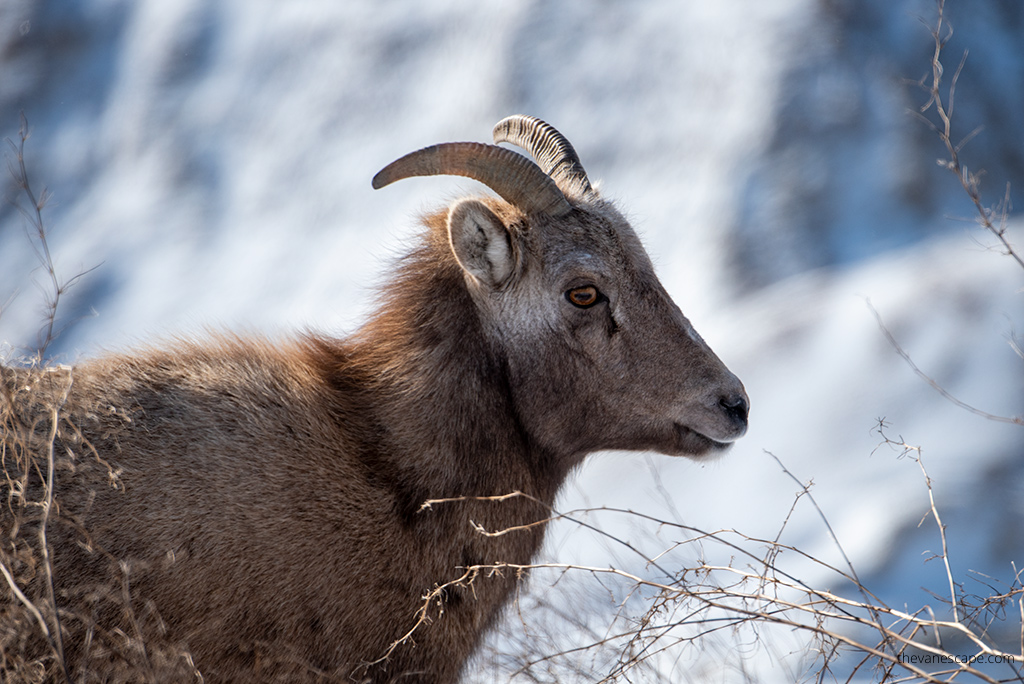
- Active wildlife — bighorn sheep, bison, coyotes, and prairie dogs are easier to spot when snow covers the grasslands.
- Crisp air and surreal light — sunrise and sunset paint the cliffs in soft pinks and blues.
For travelers who love solitude and wild beauty, the Badlands in winter offer one of the most unforgettable road trip experiences in the American West.
Is Badlands National Park Open in Winter?
Yes — Badlands National Park is open year-round, 24 hours a day, even in the heart of winter. While snow and wind can occasionally close short sections of the loop road or certain trails, the park remains accessible and absolutely worth visiting.
The Ben Reifel Visitor Center stays open throughout the winter months (closed only on Thanksgiving, Christmas Day, and New Year’s Day). It’s your go-to stop for checking weather updates, road conditions, and any temporary closures. Rangers can also provide wildlife viewing tips and recommend safe winter hikes based on the latest conditions.
If you’re visiting between November and March, expect reduced services — there are no ranger-led programs, and the White River Visitor Center is closed for the season. Still, winter visitors can explore much of the park freely, especially along the Badlands Loop Road (Highway 240).
Entrance Fees
- Private vehicle: $30 (valid for seven consecutive days)
- Motorcycle: $25
- Individual (on foot, bike, etc.): $15
- America the Beautiful Annual Pass: (covers over 2,000 federal recreation sites, including all U.S. national parks; valid for 12 months)
Even in winter, park gates remain unstaffed only during severe weather events. If conditions look uncertain, call ahead or check the official NPS Badlands page for live updates.

Winter Weather and Road Conditions in Badlands National Park
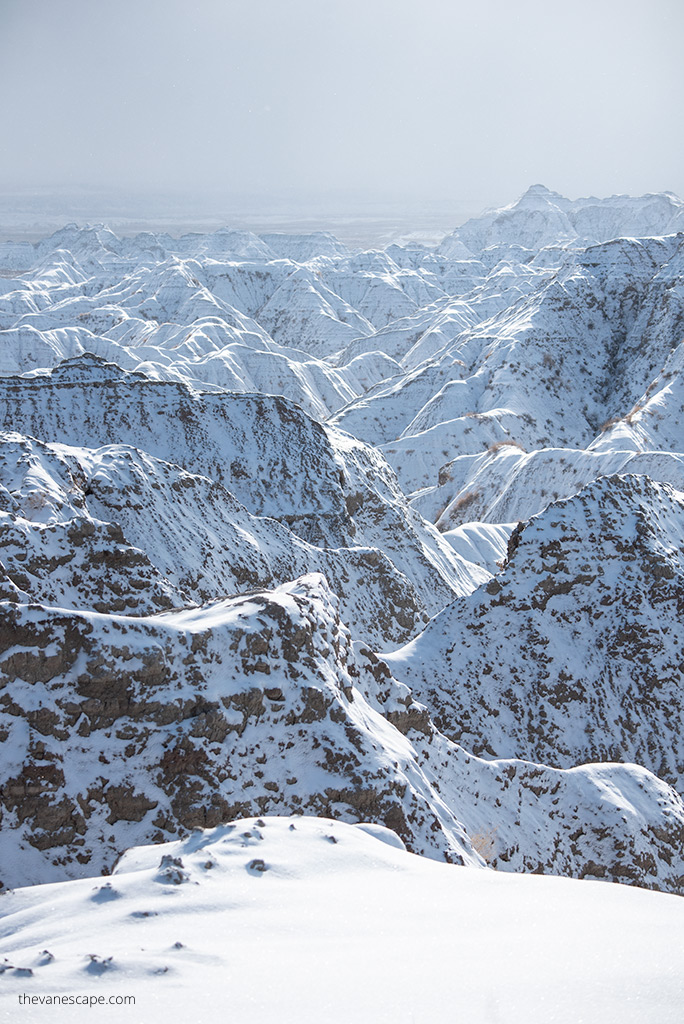
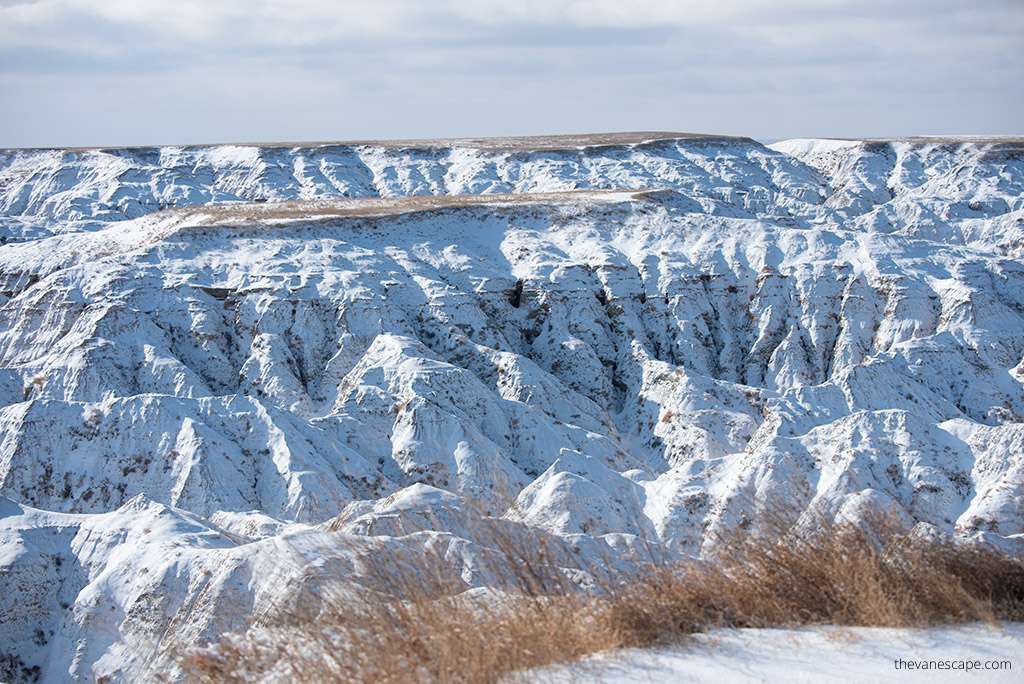
Winters in Badlands National Park are cold, windy, and unpredictable — but that’s part of their beauty. Snow highlights the sharp ridges and eroded formations, giving the landscape an entirely new personality.
Average daytime highs in January hover around 30°F (-1°C), while nighttime lows often dip below 10°F (-12°C). The park usually receives 12 to 24 inches of snow each winter, though strong winds can create icy patches and deep drifts along exposed stretches of road.
Because the Badlands sit in open prairie country, wind chill can make temperatures feel much colder. Always check the forecast before your visit and be ready for quick weather changes — it’s not unusual to see snow flurries, sunshine, and fog all in the same day.
Driving Tips
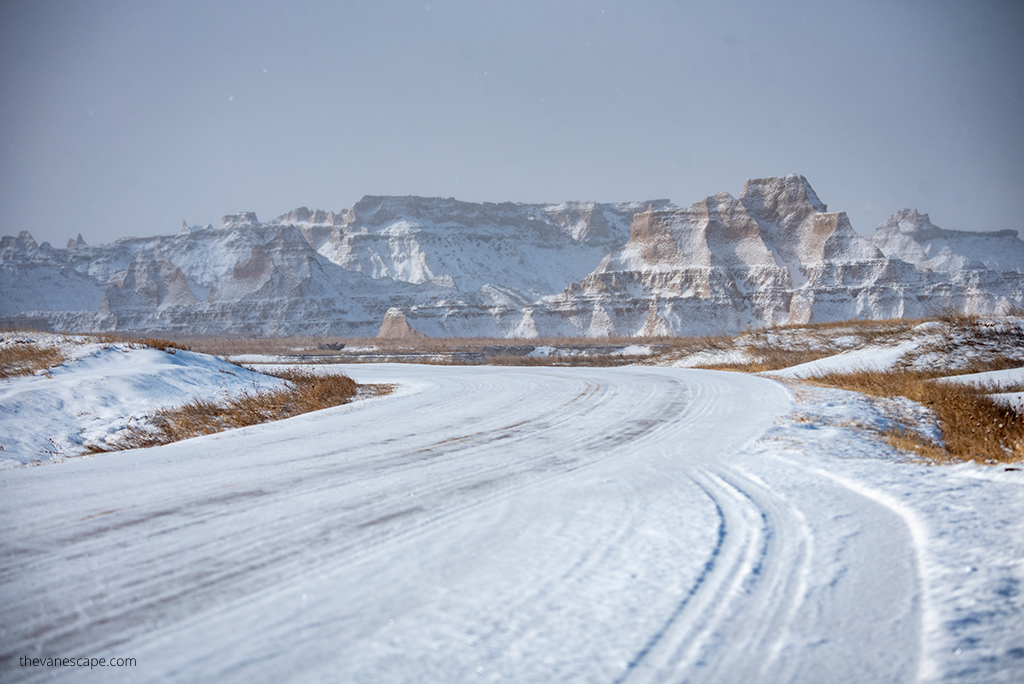
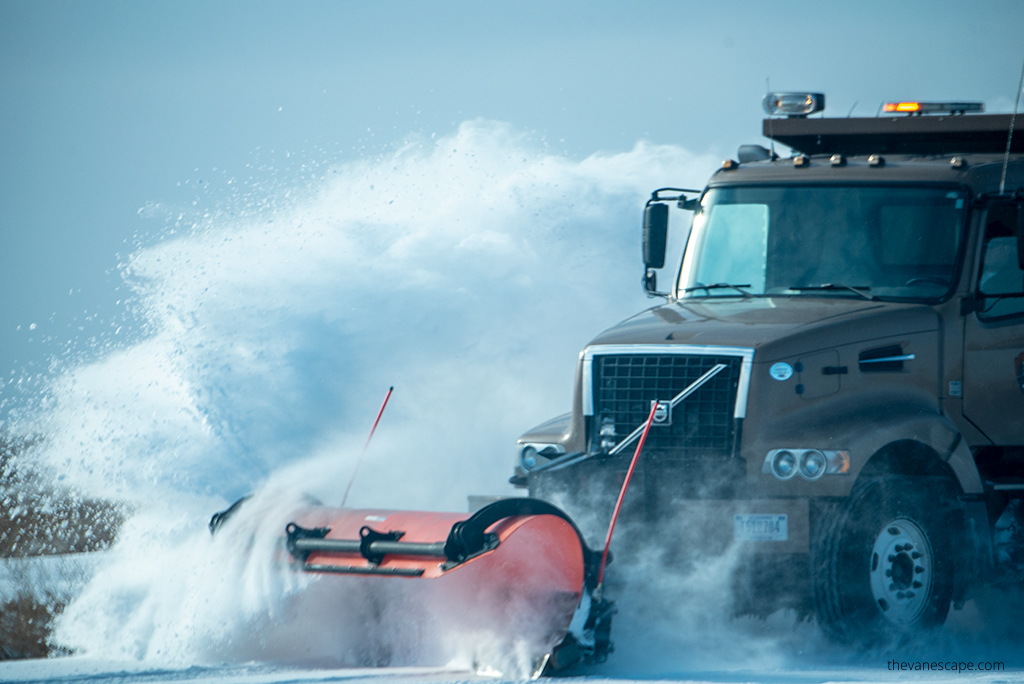
- The Badlands Loop Road (Highway 240) is typically plowed and open, but short sections can close temporarily after heavy snowfall.
- Bring a 4WD vehicle, tire chains, and an ice scraper. Drive slowly — roads can be slick even when they look dry.
- Keep a snow shovel, extra blanket, and emergency snacks in your car. Cell coverage is limited throughout most of the park.
- Stop at the Ben Reifel Visitor Center to confirm which overlooks and trails are open.
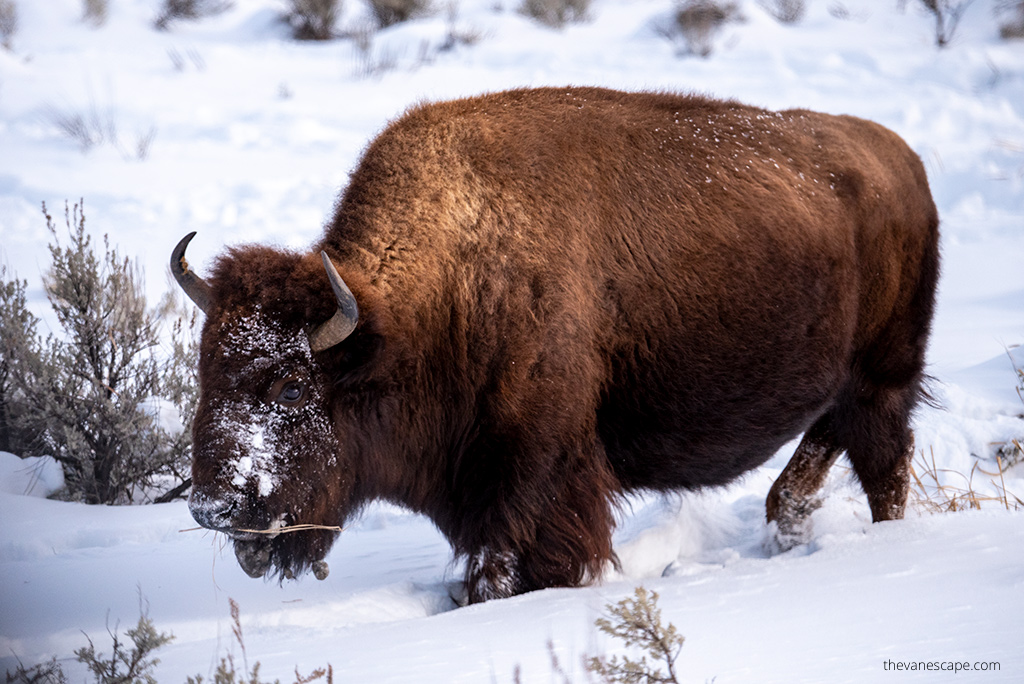
When the sun comes out, the snow sparkles against the layered cliffs, and bison tracks lead across the frozen prairie. It’s one of the most surreal winter scenes you’ll ever see in the U.S.
Directions and Getting There
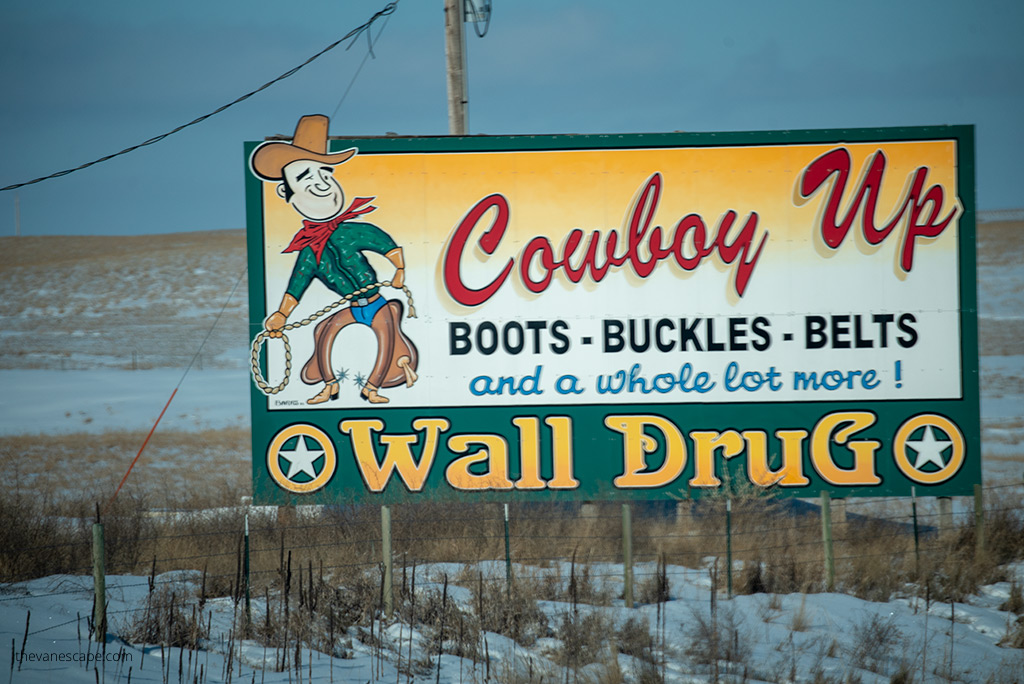
Badlands National Park sits in southwestern South Dakota, about 75 miles (120 km) east of Rapid City and just 8 miles south of Wall, the small western town famous for its quirky roadside signs and the historic Wall Drug Store.
The park is easy to reach from Interstate 90 (I-90), which runs directly north of the park and connects it to major regional attractions like Mount Rushmore, Crazy Horse Memorial, and Custer State Park.
Main Entrances
- Northeast Entrance (Interior, SD): Take I-90 Exit 131, then drive 3 miles south on SD-240. This is the most popular entry point, close to the Ben Reifel Visitor Center.
- Pinnacles Entrance (Wall, SD): Take I-90 Exit 110, then follow signs to SD-240 for 8 miles to reach the park’s western side.
- Interior Entrance: Connects from Highway 44 — ideal for travelers arriving from the south or from the Pine Ridge Indian Reservation.
Driving Distances
- Rapid City: 75 miles / 1 hour 15 minutes
- Wall: 8 miles / 10 minutes
- Mount Rushmore: 84 miles / 1 hour 30 minutes
- Crazy Horse Memorial: 95 miles / 1 hour 45 minutes
- Deadwood: 110 miles / 2 hours
- Devils Tower (Wyoming): 165 miles / 2 hours 45 minutes
Even in winter, Badlands is one of the easiest national parks to reach by car. Most of the main roads remain open and plowed after snowstorms, though you should always check conditions before setting out.
We drove from Rapid City in our camper truck during our winter road trip, and the transition from pine forest to open prairie — and then to the white, eroded cliffs of the Badlands — was unforgettable.
How Long You Need in the Badlands in Winter
You can experience the best of Badlands National Park in winter in just half a day, but plan a full day if you want to explore more viewpoints, stop for photos, or take short hikes.
If You Have 3–4 Hours
Drive the Badlands Loop Road (Highway 240), a 39-mile scenic route that winds through the park’s most dramatic formations. Even in winter, this road usually stays open and plowed. Stop at several overlooks — like Big Badlands, Panorama Point, and Pinnacles Overlook — for incredible snowy vistas.
If You Have a Full Day
Add short winter hikes such as the Door Trail, Window Trail, or Fossil Exhibit Trail, all near the Ben Reifel Visitor Center. You’ll likely see bison, bighorn sheep, or coyotes close to the road. The combination of snow, wildlife, and silence makes it an unforgettable day.
If You Have Two Days
Consider staying overnight in Wall or Rapid City and returning the next morning for sunrise. The soft pink light over the snow-covered ridges is breathtaking — and the park will still be almost empty.
Chris and I spent one long day in the Badlands before continuing west toward Yellowstone. Even with icy roads, it was one of the most peaceful and photogenic stops on our entire winter route.
Best Things to Do in Badlands National Park in Winter
Even when snow and wind sweep across the open prairie, Badlands National Park offers plenty to do. The park’s stillness makes every overlook, hike, and wildlife sighting feel more intimate.
Here are the top activities to enjoy during your winter visit to the Badlands.
1. Stop at the Ben Reifel Visitor Center
Start your day here to check road conditions, pick up a map, and learn about the park’s geology and wildlife. The short film Land of Stone and Light is worth watching before you head out — it gives great context for what you’ll see on the road.
2. Drive the Badlands Loop Road (Highway 240)
The 39-mile Badlands Scenic Loop is the park’s main attraction and stays open most of the winter. Allow at least 2–3 hours to drive it with photo stops — you’ll find 16 scenic overlooks along the way.
Some of the best viewpoints include:
- Big Badlands Overlook – for sunrise and wide panoramas
- Panorama Point – great for midday light
- Yellow Mounds Overlook – colorful layers even under snow
- Pinnacles Overlook – best at sunset
Drive slowly and stay alert for wildlife — bison and bighorn sheep often wander near the road.
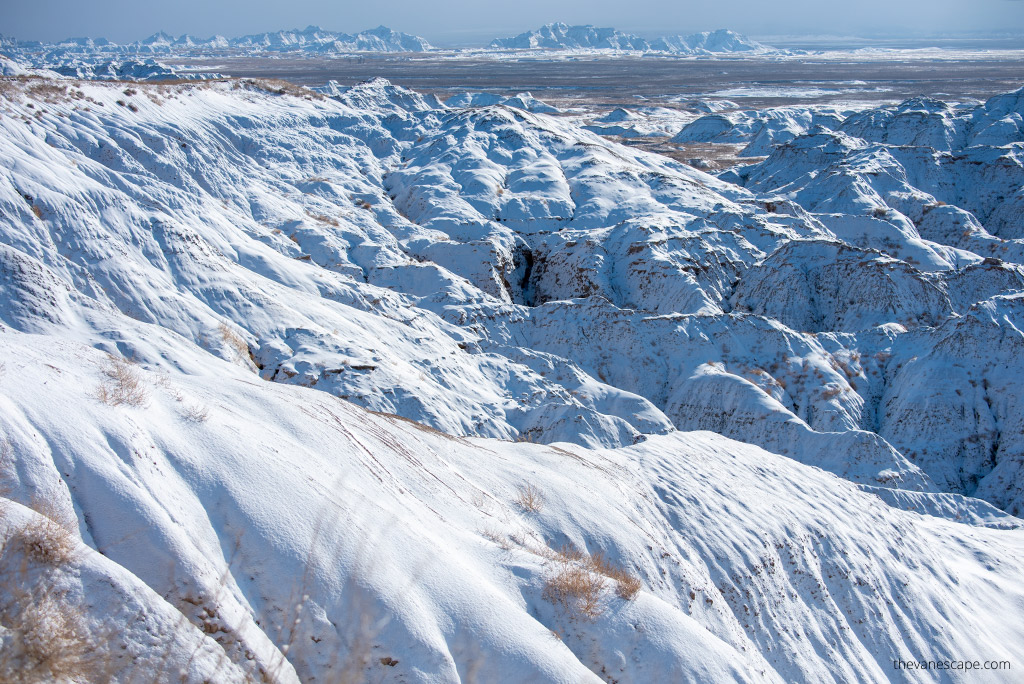
3. Watch Wildlife
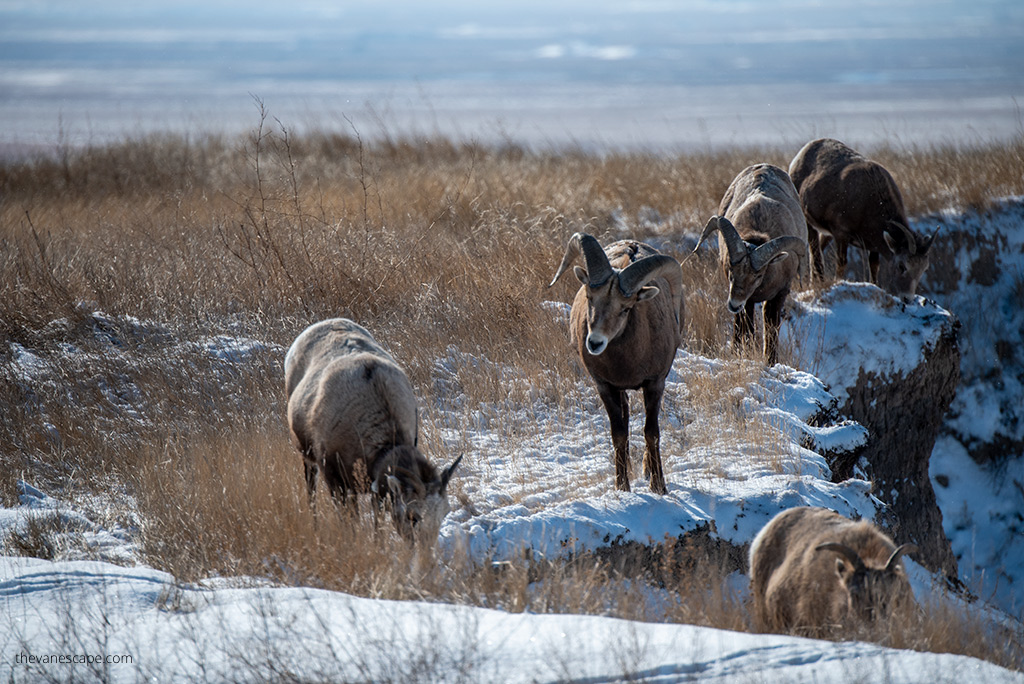
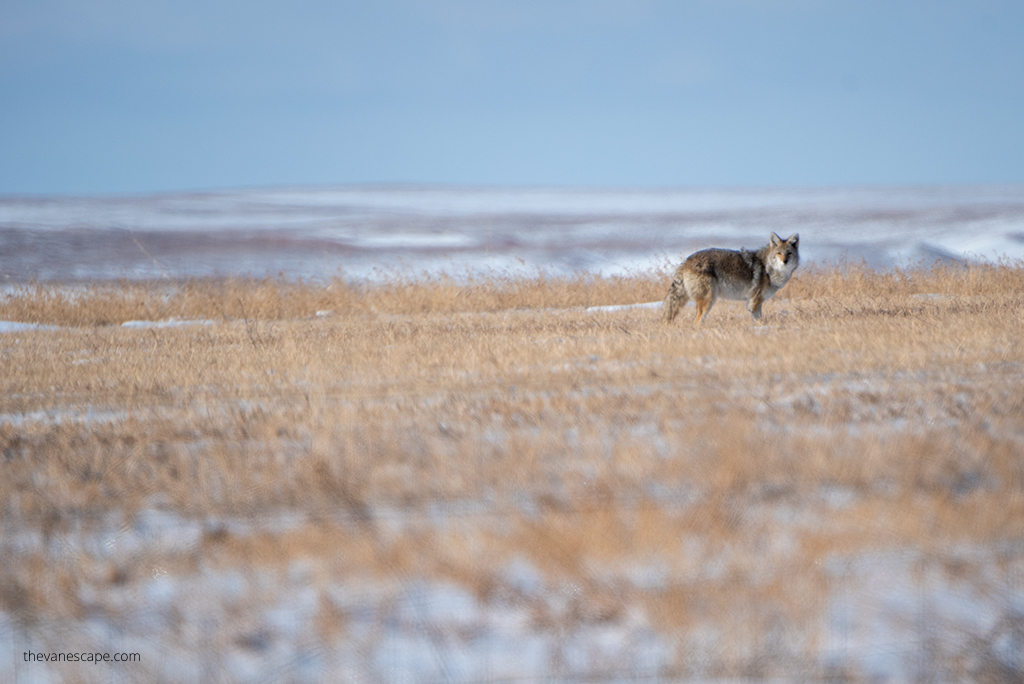
Winter is the best time to spot animals in the Badlands. With fewer visitors, wildlife often comes closer to the main roads.
You may see bison, pronghorn, bighorn sheep, coyotes, eagles, and large prairie dog colonies.
Keep your distance (at least 100 feet) and never feed the animals — even if they seem curious.
4. Take a Short Winter Hike
Many of the easiest trails remain open all winter. Dress in layers, wear traction boots, and bring trekking poles for icy sections.
- Door Trail: 0.75 miles (1.2 km) round trip — short walk through the Badlands “doorway” to stunning views.
- Window Trail: 0.25 miles (0.4 km) — quick and easy, perfect for icy days.
- Fossil Exhibit Trail: 0.25 miles (0.4 km) — an interpretive loop with fossil replicas and boardwalk paths.
- Cliff Shelf Nature Trail: 0.5 miles (0.8 km) — slightly steeper but great views of the White River Valley.
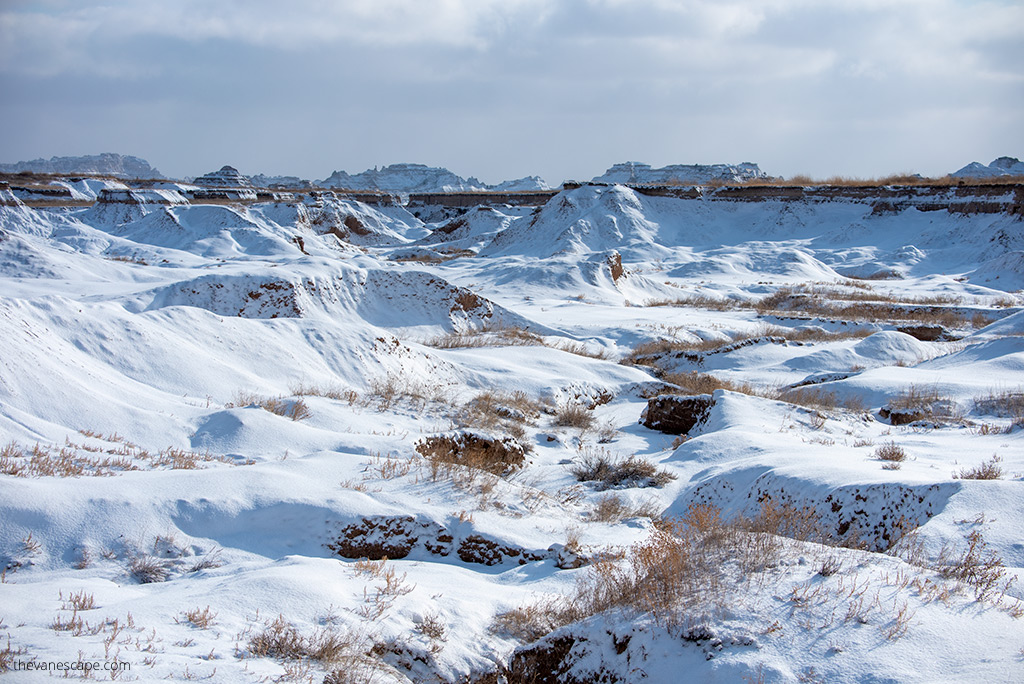
Snow adds a special beauty to these trails — it softens the sharp ridges and makes the landscape glow in the low winter light.
5. Try Snowshoeing or Winter Photography
If conditions allow, snowshoeing is a wonderful way to explore quiet corners of the park. The terrain is gentle, and even short distances give amazing views.
Photographers will love winter light in the Badlands — long shadows, soft pink skies, and snow patterns that highlight every ridge. Sunrise and sunset are especially dramatic after fresh snow.
6. Stay for Sunset
The late-afternoon glow over the buttes is unforgettable. Pinnacles Overlook and Big Badlands Overlook are the best spots for golden light fading into blue shadows — a perfect end to a winter day.
Where to Stay Near Badlands National Park in Winter
Winter nights in the Badlands are quiet and star-filled, and finding the right place to stay can make your trip even more memorable. Most park facilities close for the season, but you’ll find cozy, year-round lodging nearby in Wall or Rapid City.
Wall – Closest to the Park
The small town of Wall sits just eight miles from the park’s Pinnacles Entrance, making it the most convenient base for winter travelers.
Chris and I stayed here during our South Dakota winter road trip, and it was the perfect stop — quiet, affordable, and full of quirky small-town charm.
Wall Drug Store, famous for its free ice water and endless billboards along I-90, feels like stepping into an old Western movie. Even in winter, it’s worth visiting for coffee, souvenirs, and the nostalgic atmosphere.
We stayed at the Days Inn by Wyndham Wall, which offered clean rooms, good service, and great value for the price. Other solid options include:
- Best Western Plains Motel – warm rooms, indoor pool, and complimentary breakfast.
- America’s Best Value Inn Wall – budget-friendly with basic comfort.

Rapid City – More Options and Amenities
If you’re planning to explore more of South Dakota — Mount Rushmore, Crazy Horse Memorial, or Custer State Park — stay in Rapid City, about 75 miles (1 hour 15 minutes) from the Badlands.
It’s larger, with more hotels, open restaurants, and winter-friendly attractions.
Good options include:
- Hotel Alex Johnson Rapid City – historic downtown hotel with local charm.
- The Rushmore Hotel & Suites – modern, eco-conscious, and centrally located.
- Super 8 by Wyndham Rapid City – dependable and budget-friendly.
We stayed in Rapid City during part of our winter trip and loved the balance between city comfort and easy day trips to the Black Hills.
Winter Camping in Badlands National Park
If you’re well-prepared for freezing temperatures and crave solitude, camping in Badlands National Park during winter can be an unforgettable experience. The silence, starlight, and snow-covered cliffs make it feel like you have the entire park to yourself.
There are two established campgrounds inside the park and opportunities for backcountry camping, though winter conditions require extra caution and gear.
Cedar Pass Campground
- Open year-round, but only a limited number of sites remain accessible in winter.
- Managed by Cedar Pass Lodge (call 605-433-5460 for current info).
- Offers picnic tables, restrooms, and stunning views of the surrounding formations.
- No water hookups or showers in winter, and the lodge’s cabins are closed for the season.
Even with minimal amenities, it’s a beautiful and peaceful place to wake up surrounded by the park’s snow-covered cliffs.
Sage Creek Campground
- Free and open year-round, though the gravel access road often closes after snowstorms.
- Primitive camping only — no water, no electricity, no services.
- Bison frequently roam through the area, so keep a safe distance and store food securely.
Because of unpredictable weather, always check road conditions before heading to Sage Creek. A 4WD vehicle is recommended.
Backcountry Camping
For experienced campers, backcountry camping is permitted throughout much of the park. You must camp at least 0.5 miles from any road or trail and out of sight of the roadway.
This option offers complete solitude but demands serious preparation — proper winter gear, navigation tools, and awareness of changing conditions.
Agnes’ Advice
If you plan to camp in the Badlands in winter, be ready for extreme conditions — even when traveling in an RV. Temperatures can drop well below freezing, so protect your water lines, carry extra propane, and keep an emergency heater or generator on hand.
Parking overnight in Cedar Pass Campground is ideal for short stays, but always check weather forecasts before arriving — strong winds and drifting snow can make roads icy or impassable.
For tent campers, bring extra sleeping bags, thermal liners, and insulated ground pads. Keep your water bottles inside your sleeping bag to prevent freezing. Even experienced campers find the Badlands challenging in subzero temperatures, but with preparation — whether in a cozy camper van or a winter tent — the reward is total solitude and starlit silence over the white cliffs.

How to Prepare for a Winter Visit to Badlands National Park
A winter trip to Badlands National Park is magical — but it requires planning and preparation. This region’s remote setting, freezing temperatures, and limited cell service mean you should travel self-sufficiently. Whether you’re visiting for a few hours or camping overnight, here’s how to stay safe and comfortable.
1. Prepare Your Vehicle
- Use a 4WD vehicle or one with snow tires or chains, especially after a storm.
- Keep an ice scraper, snow shovel, and jumper cables in your car.
- Carry extra fuel, blankets, and emergency snacks in case you get stuck.
- Check road conditions daily at the Ben Reifel Visitor Center or on the NPS Badlands alerts page.
Chris and I traveled the park in our camper truck (4WD) and found that roads can look clear but still hide icy spots — especially near shaded curves and overlooks.
2. Dress in Warm, Layered Clothing
The winds in the Badlands can be biting, even on sunny days.
Wear:
- Wool or thermal base layers
- Insulated jacket and windproof outer shell
- Warm hat, gloves, and scarf
- Waterproof winter boots with traction (icy overlooks can be slick)
- Hand and foot warmers — small but lifesaving during long hikes or photography stops
3. Pack for Safety and Comfort
- Bring a paper map and GPS device — cell coverage is minimal.
- Keep a thermos with hot coffee or tea and snacks like protein bars or jerky.
- Pack extra water, even in cold weather — dehydration is easy to overlook in dry air.
- Always tell someone your route and expected return time.
4. Stay Informed
- Stop at the Ben Reifel Visitor Center before heading into the park. Rangers share weather forecasts, wildlife updates, and closure info.
- Avoid hiking in whiteout conditions or high winds. Trails can be hard to follow under snow.
- Follow Leave No Trace principles — even frozen ground is fragile.
5. Plan for Limited Services
Most restaurants, lodges, and gas stations near the park — especially in Wall — have reduced hours or close for the season. Fill up your gas tank and bring everything you need before entering the park.
Agnes’ Advice – Combine It with South Dakota’s Winter Icons
If you’re planning a winter road trip through South Dakota, make Badlands National Park just one stop on a bigger, unforgettable loop. The region is packed with historical landmarks, scenic drives, and national treasures that look just as beautiful — and far less crowded — in winter.
After exploring the snowy buttes of the Badlands, Chris and I continued west toward the Black Hills, where we visited Mount Rushmore, Crazy Horse Memorial, and the charming historic town of Deadwood. The contrast between the wide-open Badlands and the forested Black Hills felt like traveling between two different worlds.
Here’s how you can combine them:
- Mount Rushmore National Memorial – Only about 1.5 hours from the Badlands, this world-famous monument is open year-round. In winter, the crowds are gone, and the morning light on the granite faces is incredible.
- Crazy Horse Memorial – About 40 minutes from Mount Rushmore, this ongoing sculpture honors the Lakota warrior and offers deep cultural insight into Native American heritage.
- Custer State Park – A winter wonderland for wildlife lovers, with bison, pronghorn, and deer often grazing right along the road.
- Deadwood – A beautifully preserved Wild West town where you can warm up with good food, local brews, and a little history.
If you’re driving farther west, Devils Tower National Monument in Wyoming and Yellowstone National Park make excellent winter extensions. The drive between these parks showcases some of the most dramatic winter landscapes in the American West.
Final Thoughts
Visiting Badlands National Park in winter feels like stepping into another world — one of silence, sharp light, and unspoiled beauty. The snow softens the jagged formations, wildlife roams closer, and the cold air adds a peaceful clarity that’s hard to find in busier seasons.
Yes, winter travel here takes preparation — icy roads, limited services, and freezing temperatures can challenge even experienced road trippers. But the reward is complete solitude and the chance to see one of America’s most dramatic landscapes at its quietest and most mysterious.
When Chris and I drove through the park in January, we didn’t meet another car for hours. Just bison moving slowly through the snow, the wind shaping the ridges, and the soft pink light fading across the buttes. It was raw, powerful, and unforgettable.
If you love off-season adventures, photography, and peaceful winter drives, the Badlands belong on your list. With the right gear and spirit, you’ll discover that winter doesn’t just change the park — it transforms the experience.
Do You Like It? Pin It For Later!

