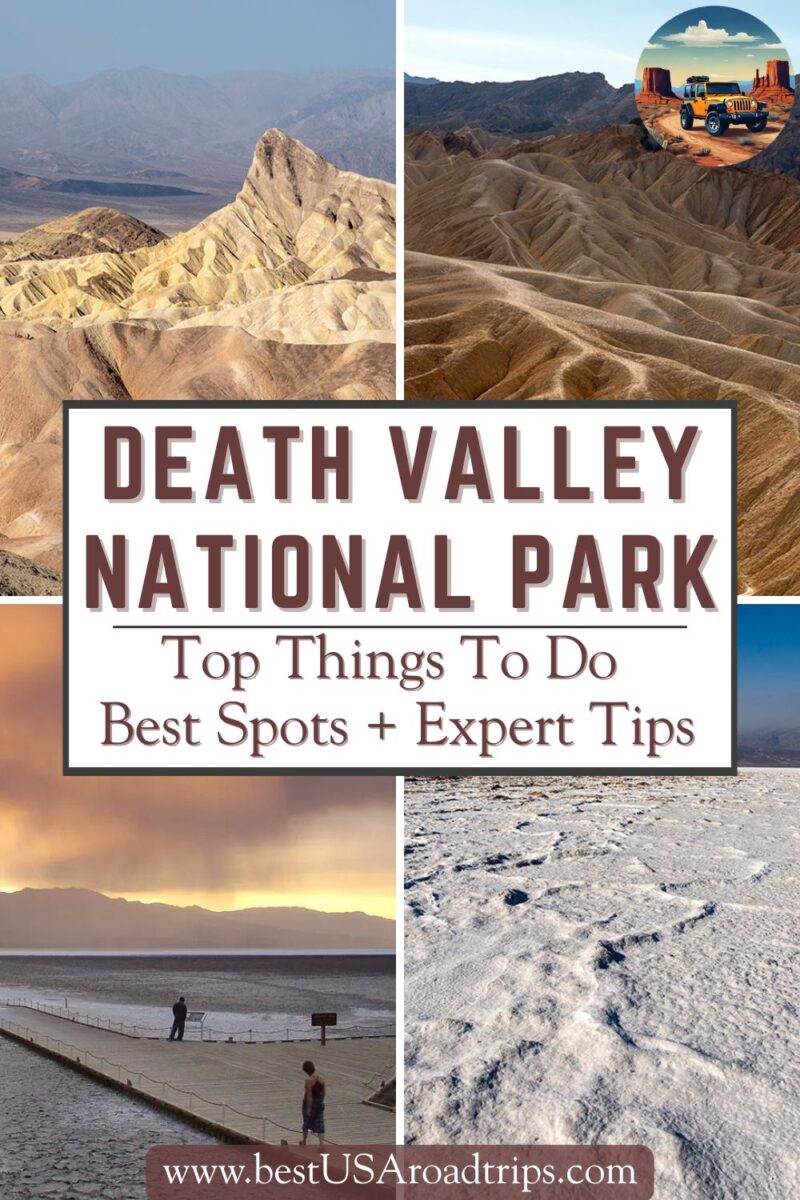
12 Best Things to Do in Death Valley National Park: Must-See Highlights + Expert Tips
Death Valley National Park is one of the most extreme and fascinating places in the United States. It’s the hottest, driest, and lowest national park, but it’s also full of color, mystery, and life. Towering mountains meet vast salt flats. Golden canyons glow at sunrise. Shifting dunes whisper under the wind. It’s a land that looks like another planet, yet it’s only a few hours from Las Vegas or Los Angeles. In this guide, you’ll find the 12 best things to do in Death Valley National Park, based on real experiences from many visits. You’ll learn how to plan your trip, when to go, what to pack, and which routes are worth your time. From famous spots like Badwater Basin and Zabriskie Point to remote areas like Racetrack Playa, this article will help you explore safely and see the most stunning views.
This article may contain affiliate / compensated links. For full information, please see our disclaimer here.
How to Plan Your Visit to Death Valley National Park
Death Valley National Park covers more than 3.4 million acres across California and Nevada. It’s the largest national park in the Lower 48 and one of the most remote. Planning ahead makes the difference between an amazing trip and a difficult one.
When to go
The best time to visit is from late October through April. Days are warm, nights are cool, and the light is perfect for photos. In summer, temperatures can reach 120–130°F (49–54°C), so avoid hiking or long drives during those months.
How to get there
The park is about two hours from Las Vegas or five hours from Los Angeles. The main entry points are from Furnace Creek, Stovepipe Wells, or Panamint Springs. Roads inside the park are long and isolated, so start your day early.
If you want to see how this fits into a bigger adventure, check out our California road trip travel guide.
What to bring
Carry at least one gallon of water per person per day, plus snacks, sunscreen, and a hat. Cell service is limited or nonexistent. Fill your gas tank before entering the park — fuel is available only at Furnace Creek and Stovepipe Wells, and it’s expensive.
How much time you need
If you have one day, focus on main viewpoints and easy stops. With two or three days, you can add hikes, sand dunes, and backcountry drives.
Quick safety tips
Avoid hiking after 10 a.m. on hot days. Always tell someone your route. Watch your car’s temperature gauge and stay on marked roads.
A little preparation goes a long way in Death Valley. Once you’re ready, it’s time to explore its incredible landscapes and otherworldly beauty.
The 12 Best Things to Do in Death Valley National Park
1. Walk on the Salt Flats at Badwater Basin
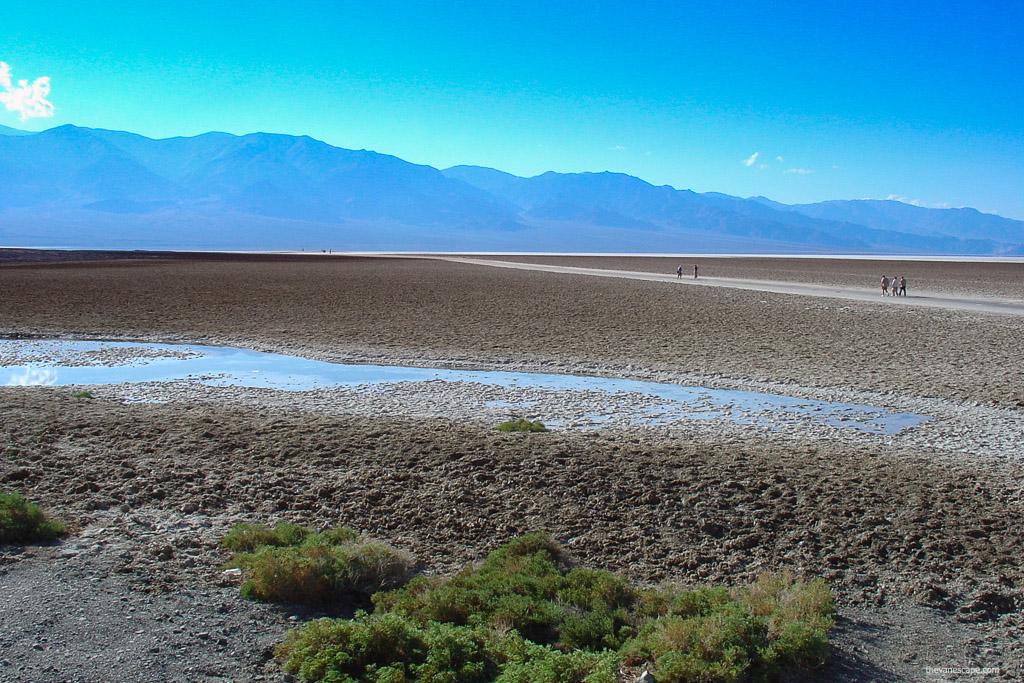
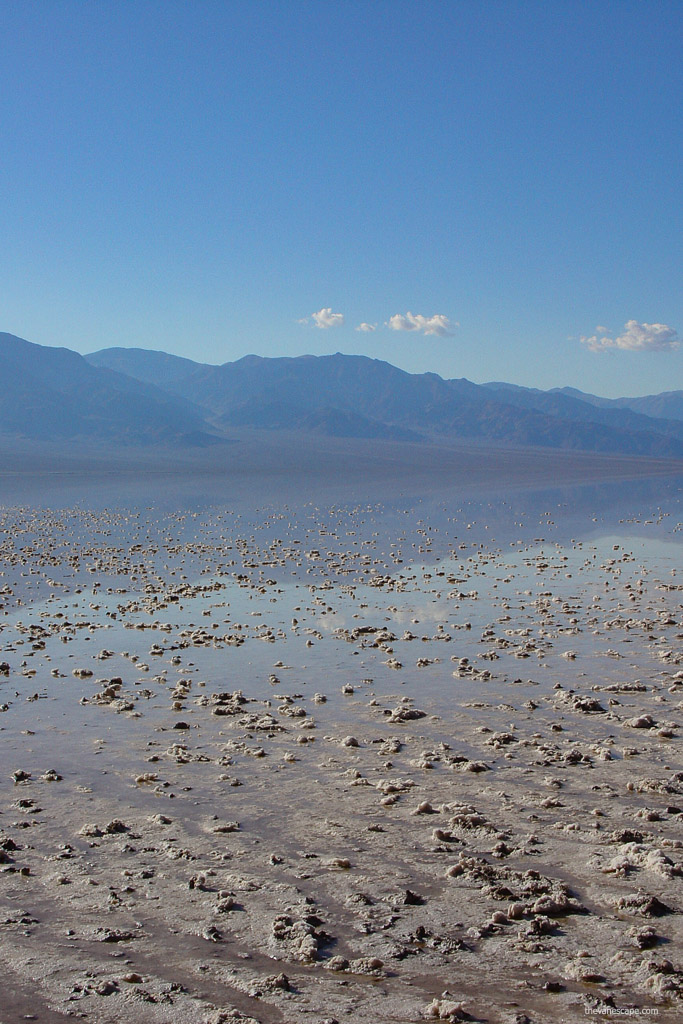
Badwater Basin is one of the most famous places in Death Valley National Park — and for good reason. It’s the lowest point in North America, sitting 282 feet (86 meters) below sea level.
Here, the earth is covered with strange, white hexagonal patterns of salt. They were formed as ancient lakes dried up thousands of years ago. The cracked, crystal surface looks like snow from a distance, but under the blazing sun, it’s pure salt.
A short, flat trail starts from the parking area and leads you deep into the basin. The farther you walk, the more surreal the view becomes — endless white stretching toward the dark mountains. It’s one of the best places for photography, especially early in the morning or before sunset when the light is soft.
- Agnes’ Tips:
- Visit early or late in the day to avoid extreme heat.
- Bring sunglasses; the salt reflects sunlight intensely.
- Carry water even for short walks.
- Don’t expect shade — there’s none.
Badwater Basin is a place of extremes — hot, dry, and silent. Standing there, surrounded by salt and sky, feels like being on another planet.

2. Take in the View from Dante’s View
Dante’s View offers one of the most breathtaking panoramas in Death Valley National Park. From this high ridge — 5,476 feet (1,669 meters) above sea level — you can see the vast salt flats of Badwater Basin spread out below and the Panamint Mountains rising across the valley. On clear days, you can even spot Mount Whitney, the highest peak in the contiguous United States.
It’s the perfect stop to understand how massive and varied Death Valley really is. The temperature here is usually 20–25°F cooler than on the valley floor, which makes it a great escape during warmer months.
A short path from the parking lot leads to several viewpoints where you can enjoy the sweeping views in all directions. Sunrise and sunset are magical, painting the salt flats below with shades of gold, pink, and violet.
- Agnes’ Tips:
- The access road is paved and suitable for all vehicles.
- Bring a jacket — it can be windy and chilly at the top.
- Arrive early for sunrise or stay for sunset for the best light.
- Bring water.
- There are no services.
Dante’s View gives you a true sense of scale — the contrast between the lowest and one of the highest points in the park all in one stunning vista.

3. Photograph the Badlands at Zabriskie Point
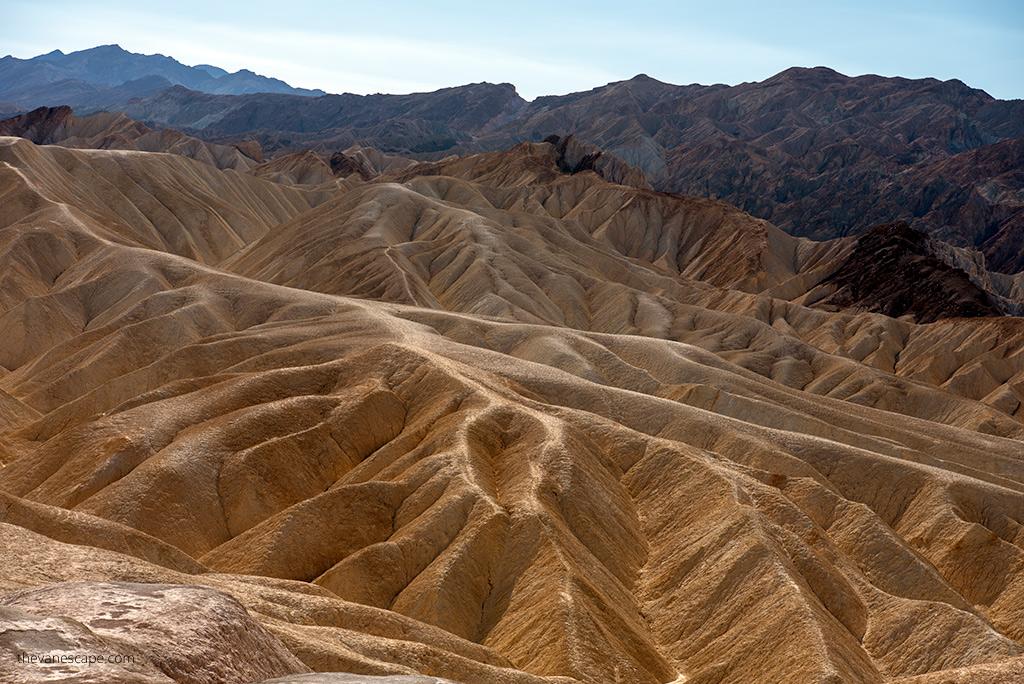
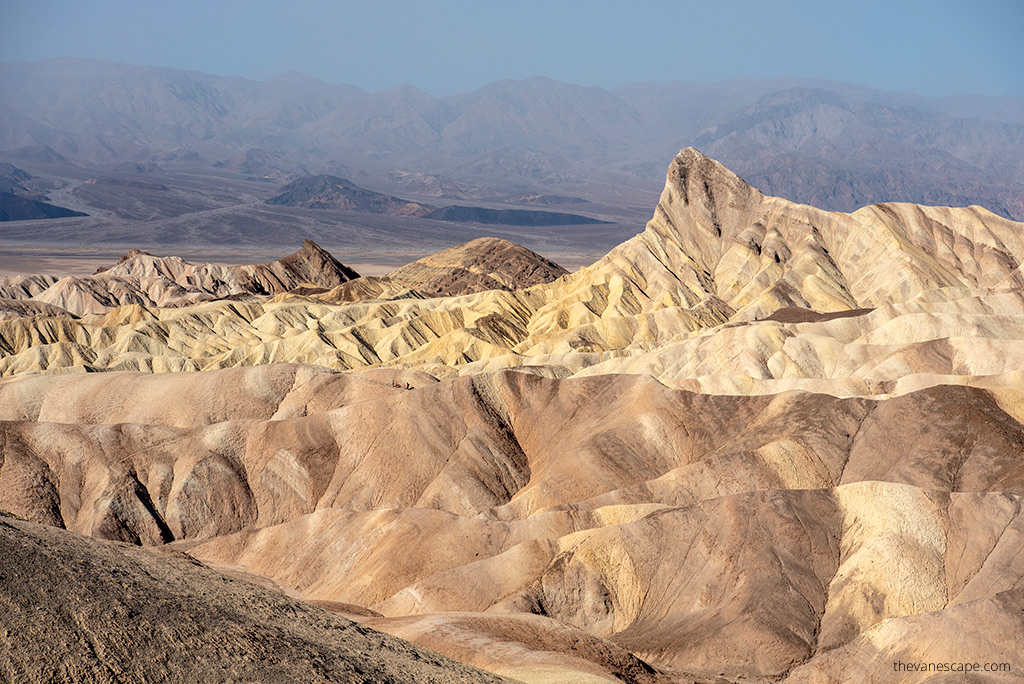
Zabriskie Point is one of the most iconic and photographed spots in Death Valley National Park. The view here is unlike anywhere else — a maze of golden and brown ridges carved by water and wind over millions of years. The rolling badlands glow in shades of gold, cream, and rust, especially at sunrise when the light touches every curve.
From the parking area, it’s an easy 0.25-mile paved walk to the overlook. The path climbs slightly, but the reward is instant — an unforgettable panoramic view of the Amargosa Range and the salt flats far below.
The lookout was named after Christian Brevoort Zabriskie, a manager for the Pacific Coast Borax Company, which once operated in this area. The spot also became famous after the 1970 film Zabriskie Point by Michelangelo Antonioni.
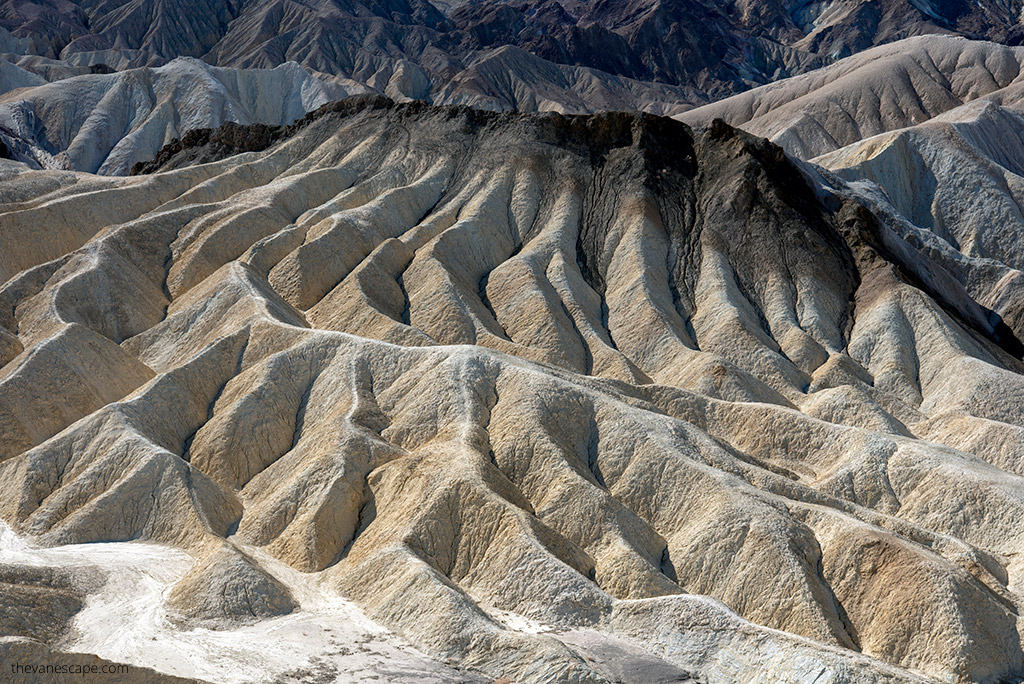
If you want a bit more adventure, short trails from the overlook lead down into the badlands toward Golden Canyon and Gower Gulch. These can be connected into a scenic loop hike if the weather is cool enough.
- Agnes’ Tips:
- Arrive about 30 minutes before sunrise for the best colors.
- Bring a tripod if you love photography.
- Avoid midday visits — the light flattens the landscape.
- There’s a small parking lot but no shade.
Standing at Zabriskie Point feels like looking at a painting — a natural masterpiece shaped by time and desert winds.
4. Drive the Scenic Artist’s Drive and Stop at Artist’s Palette
Artist’s Drive is one of the most beautiful roads in Death Valley. This 9-mile one-way scenic loop winds through colorful hills between Furnace Creek and Badwater Basin. The drive itself is a highlight — narrow canyons, rolling desert terrain, and vivid layers of color that seem to change with every turn.
The star of the route is Artist’s Palette, where minerals in the volcanic rock create shades of pink, green, purple, and yellow. These colors come from the oxidation of different metals, including iron and mica. Late afternoon light makes them glow even stronger — it’s one of the best photography spots in the park.
The road is paved but has some sharp curves and dips, so take it slow and enjoy the scenery. Several pullouts allow you to stop safely and take photos.
- Agnes’ Tips:
- The drive is one-way from south to north, so enter from Badwater Road about 10 miles south of Furnace Creek.
- Visit in the late afternoon for the most vibrant colors.
- Allow about 30–45 minutes for the full drive with short stops.
- There are no restrooms or water, so plan ahead.
Artist’s Drive feels like a trip through a giant painter’s studio — every hill brushed with a new shade, every curve revealing a new masterpiece.
5. Explore the Devil’s Golf Course
The Devil’s Golf Course is one of Death Valley’s strangest and most fascinating landscapes. It’s a huge field of jagged salt formations, shaped by wind, water, and time. The ground here is so rough and sharp that walking on it feels like stepping over coral made of salt and earth.
The name comes from a 1934 National Park Service guide that said, “Only the devil could play golf on such a surface.” And once you see it, you’ll understand why. The salt crystals form uneven mounds that stretch for miles across the valley floor.
You can reach this spot via a 1.3-mile dirt road off Badwater Road, just a few miles north of Badwater Basin. The road is usually fine for most cars, but drive slowly — it’s bumpy and narrow.
Standing among the twisted salt formations, you’ll hear small cracking sounds as the crystals expand and contract with temperature changes. It’s a quiet, eerie, and unforgettable place.
- Agnes’ Tips:
- Visit early morning or late afternoon for softer light and better photos.
- Don’t walk far — the surface is sharp and uneven.
- Wear closed shoes with thick soles.
- There’s no shade, so bring water and a hat.
The Devil’s Golf Course shows how powerful and creative nature can be — harsh, surreal, and absolutely unique to Death Valley.
6. See the Volcanic Ubehebe Crater
Ubehebe Crater is one of the most dramatic geological features in Death Valley National Park. This massive volcanic crater is 600 feet (183 meters) deep and nearly half a mile wide. It was formed by a powerful volcanic explosion about 2,000 years ago, when rising magma met underground water, creating a steam eruption that blasted rock and ash across the desert.
You’ll find it in the northern part of the park, near Scotty’s Castle Road. The drive there is scenic, with wide desert views and dark volcanic hills leading up to the crater rim.
From the parking area, you can walk to several viewpoints or hike around the rim — a 1.5-mile loop that gives you a full perspective of its size. You can also descend into the crater, but the slope is steep and loose, so climbing back up is a workout.
- Agnes’ Tips:
- The rim trail is exposed, so bring water and wear a hat.
- The best time to visit is morning or late afternoon when the light adds contrast to the crater walls.
- Be prepared for strong winds — it’s often breezy at the top.
- There are no restrooms or services nearby.
Standing at the edge of Ubehebe Crater feels like looking into the heart of the Earth — raw, powerful, and ancient.

7. Visit the Historic Harmony Borax Works
Harmony Borax Works is one of the most important historic sites in Death Valley. Long before it became a national park, this was the heart of the borax mining industry — the mineral once called “white gold.”
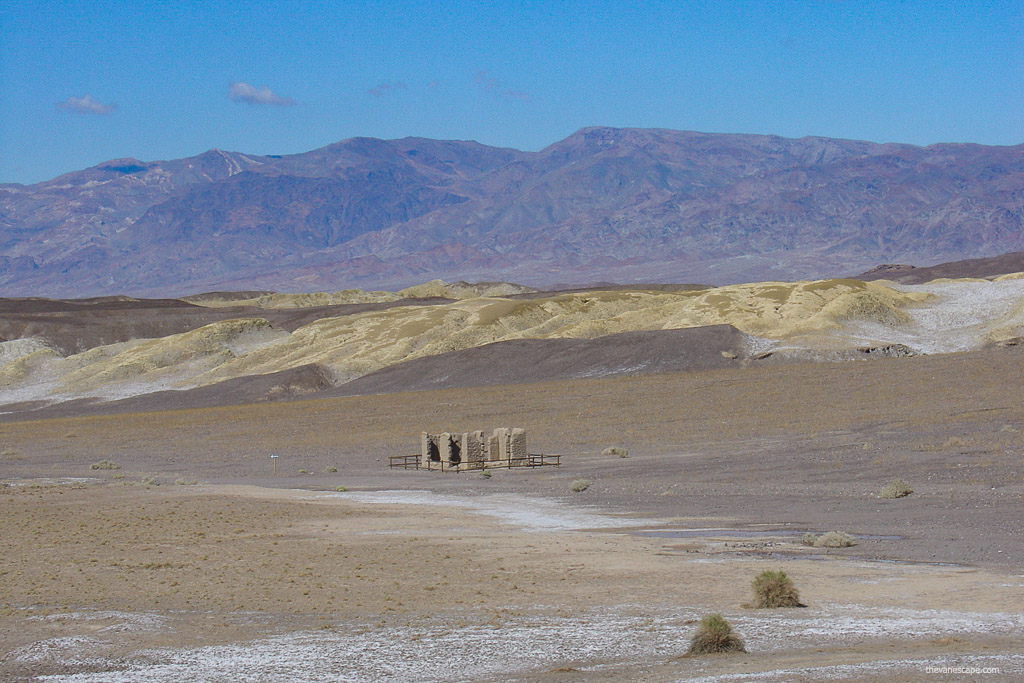
In the early 1880s, William T. Coleman built this plant to process borax discovered near Furnace Creek. About 40 men worked here, producing three tons of borax each day. The ore was hauled across the desert by the legendary 20-Mule Team wagons, which carried the heavy loads more than 160 miles to Mojave. Those wagons became a symbol of Death Valley and even appeared later on detergent boxes.
Today, you can walk a short, easy 0.4-mile interpretive trail that loops around the site. You’ll see adobe ruins, rusty equipment, and a reconstructed mule team wagon. Informational panels tell the story of life in the harsh desert and the men who helped open up the West’s mineral wealth.
- Agnes’ Tips:
- The trail is near Furnace Creek Visitor Center, just off Highway 190.
- Visit early or late in the day to avoid the heat.
- It’s a great quick stop if you love history or photography.
- Read the signs — they share fascinating facts about the 20-Mule Teams.
Harmony Borax Works brings Death Valley’s industrial past to life. It’s a short but meaningful stop that shows how tough and determined the people who lived here once were.

8. Experience the Moving Rocks at Racetrack Playa
Racetrack Playa is one of the most mysterious places on Earth. It’s a dry, flat lakebed famous for its “sailing stones” — large rocks that seem to move across the desert floor, leaving long tracks behind them. For decades, no one knew how it happened.
Scientists finally solved the mystery in 2013. During rare winter rains, a thin layer of water freezes overnight, forming floating sheets of ice. As the sun warms the ice and a light breeze blows, the rocks slowly slide over the slippery surface, leaving trails in the soft mud below. The movement is gentle but real — a quiet dance of wind, water, and ice in one of the driest places in the world.
Racetrack Playa sits deep in Death Valley’s backcountry, at 3,714 feet (1,132 meters) above sea level. The drive there is an adventure — about 27 miles of rough, rocky dirt road beyond Ubehebe Crater. A high-clearance 4WD vehicle is required. Regular cars risk flat tires or serious damage.
When you finally reach the playa, the view is otherworldly: a vast, flat expanse surrounded by dark mountains, silent and endless.
- Agnes’ Tips:
- Only visit with a reliable 4WD vehicle and spare tires.
- Bring plenty of water, food, and a satellite map — there’s no service.
- Do not touch or move the rocks; it’s illegal and damages the fragile surface.
- Sunrise and sunset are ideal for photos, when the light adds depth to the tracks.
Racetrack Playa is remote, wild, and unforgettable — a reminder that nature’s slowest movements can be its most powerful.
9. Climb or Photograph the Death Valley Sand Dunes
The sand dunes of Death Valley are some of the park’s most beautiful and ever-changing landscapes. There are several dune fields, but the most accessible and famous are the Mesquite Flat Sand Dunes, located near Stovepipe Wells.
These golden dunes rise up to 100 feet (30 meters) and stretch across miles of desert. They shift constantly with the wind, creating rippling patterns that glow at sunrise and sunset. Walking on them feels like stepping into an endless sea of sand.
If you want solitude, you can explore the lesser-known dunes:
– Eureka Dunes – the tallest in California, reaching about 680 feet (207 meters), located in the park’s remote northern area.
– Ibex Dunes – quiet and rarely visited, ideal for those seeking a peaceful, off-the-beaten-path spot.
There are no marked trails on the dunes, so you’re free to wander. But walking on sand is harder than it looks, especially in the heat — even short walks can feel long.
- Agnes’ Tips:
- Visit early morning or late evening for cooler temperatures and golden light.
- Avoid midday — the sand can burn your feet.
- Wear closed shoes and bring water, even for a short visit.
- For the best photos, capture the dunes before sunrise when the wind erases footprints.
The dunes are a photographer’s dream and one of Death Valley’s most peaceful places — where silence, light, and shifting sand create an unforgettable scene.

10. Go for a Hike in Death Valley
Hiking in Death Valley is an incredible way to experience the park’s raw beauty up close. From colorful canyons to hidden waterfalls, there’s much more than heat and sand here. The key is timing — hike only in the cooler months or early morning hours.
The park has trails for all levels. Some are short and easy, others remote and challenging. Here are a few favorites worth exploring:
- Golden Canyon and Gower Gulch Loop (4 miles round trip): A classic Death Valley hike with golden rock walls, narrow passages, and views of Zabriskie Point.
- Mosaic Canyon (2–4 miles round trip): Polished marble walls and colorful rock layers make this one a must-do near Stovepipe Wells.
- Darwin Falls (2 miles round trip): A surprising desert oasis with a small year-round waterfall near Panamint Springs.
- Desolation Canyon (3.6 miles round trip): Similar to Golden Canyon but less crowded and equally beautiful.
- Telescope Peak (14 miles round trip): A challenging hike to the park’s highest summit at 11,043 feet (3,366 meters), offering sweeping views on clear days.
Always check trail conditions at the visitor center before heading out. Many routes are unmarked and remote.
- Agnes’ Tips:
- Bring a printed map or GPS — there’s no cell signal.
- Carry plenty of water and salty snacks.
- Avoid hiking after 10 a.m. on warm days.
- Wear a wide-brim hat and light, long sleeves for sun protection.
Hiking reveals the park’s hidden side — quiet canyons, colorful rocks, and signs of life where you least expect them.

11. Explore the Backcountry Roads of Death Valley
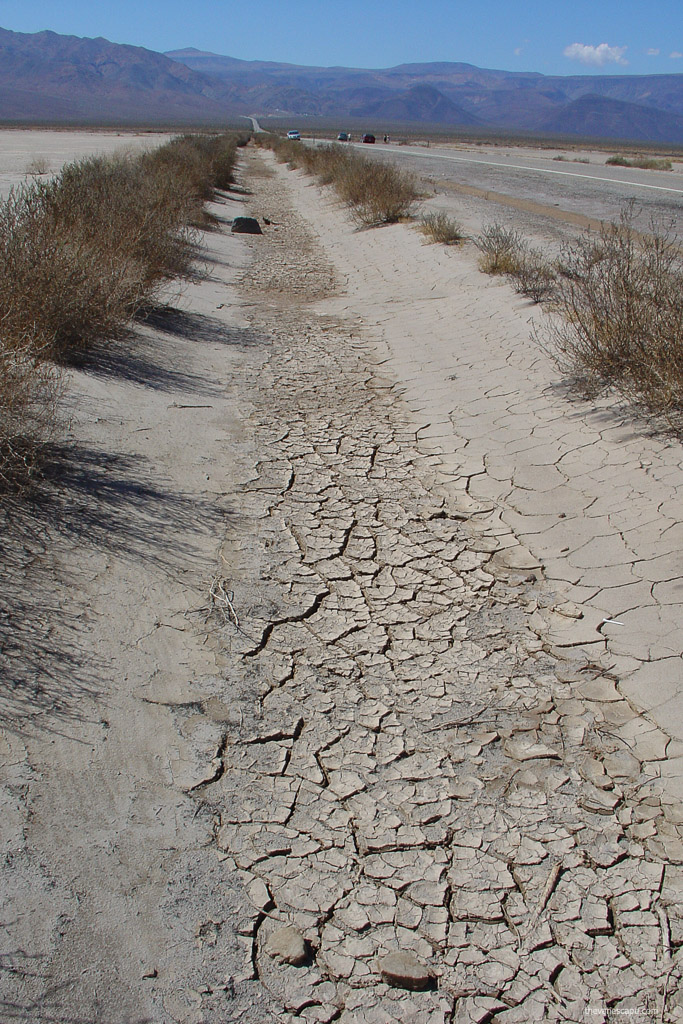
Death Valley isn’t just about scenic viewpoints — it’s also one of the best parks in the U.S. for backcountry adventures. The park has more than 1,000 miles of unpaved roads, many leading to remote canyons, ghost towns, and hidden natural wonders.
Driving these roads feels like traveling back in time. You’ll pass abandoned mines, colorful badlands, and empty desert plains that seem to stretch forever. Some routes are rough and require high-clearance 4WD, while others are fine for regular cars. Always check conditions before you go — roads can wash out after rain or close unexpectedly.
Popular backcountry routes include:
- Twenty Mule Team Canyon: A short, 2.7-mile one-way dirt road near Zabriskie Point. It winds through bright yellow badlands and feels like a natural rollercoaster. Suitable for most vehicles.
- Titus Canyon Road: A stunning 27-mile one-way drive (east to west) with tight canyon walls, petroglyphs, and a ghost town called Leadfield. High-clearance recommended.
- Echo Canyon: Offers rugged beauty, old mines, and great solitude. 4WD needed.
- Eureka Dunes Road: Leads to the park’s tallest dunes. Remote and best for experienced drivers with proper gear.
- Agnes’ Tips:
- Always carry extra water, food, and a spare tire.
- Tell someone your route and expected return time.
- Drive slowly — sharp rocks can easily puncture tires.
- Fill up your gas tank before leaving main roads.
Exploring Death Valley’s backcountry shows how vast and wild this park truly is. Out here, silence rules, and every mile feels like a step deeper into the desert’s heart.

12. Stargaze in Death Valley National Park
When the sun sets, Death Valley transforms into one of the darkest and most awe-inspiring skies in America. Far from city lights, this park is an International Dark Sky Park, one of the best places on Earth for stargazing.
On clear nights, you can see the Milky Way stretching from horizon to horizon. Shooting stars flash across the sky, and planets shine bright enough to cast shadows. It’s a sight that reminds you how vast and quiet the desert truly is.
Some of the best spots for stargazing are Mesquite Flat Sand Dunes, Harmony Borax Works, and Badwater Basin. These areas are easy to reach and have wide, open horizons. Higher points like Dante’s View also offer stunning night photography opportunities.
If you visit in winter, bring warm layers — desert nights can drop below freezing. In summer, it stays warm but the sky remains crystal clear.
- Agnes’ Tips:
- Check the moon phase before your visit — a new moon gives the darkest skies.
- Bring a headlamp with a red light setting to protect your night vision.
- Stay still for a few minutes — your eyes will adjust, and more stars will appear.
- If you enjoy photography, bring a tripod and wide-angle lens.
Stargazing in Death Valley is pure magic. It’s quiet, humbling, and unforgettable — the perfect ending to a day in this otherworldly landscape.
Final Thoughts on Visiting Death Valley National Park
Death Valley National Park is one of the most extreme yet unforgettable places in the United States. It’s hot, dry, and vast — but also full of color, mystery, and beauty. From salt flats and dunes to mountain peaks and canyons, every corner offers something unique.
This guide covered the best things to do in Death Valley National Park — the top attractions, scenic drives, and outdoor activities that make this desert so special. Pick from this list the places and experiences that fit your travel style, fitness level, and the season of your visit. Weather is crucial here — plan around the heat and avoid hiking in the middle of the day.
Also, check your rental car agreement before heading to remote areas. Some of the most famous routes, like Racetrack Playa or parts of the backcountry, require a high-clearance 4WD vehicle. Always travel prepared with water, fuel, and a clear plan.
Chris and I have visited Death Valley several times, and each trip shows us something new — a different color in the rocks, a new trail, or a quiet sunrise that feels like the edge of the world. With a bit of planning and respect for the desert, you’ll find that exploring Death Valley’s top attractions is one of the most rewarding adventures in the American Southwest
Do You Like It? Pin It For Later!