Paria Rimrocks Toadstool Hoodoos: Complete Guide to the Trail Near Kanab & Page
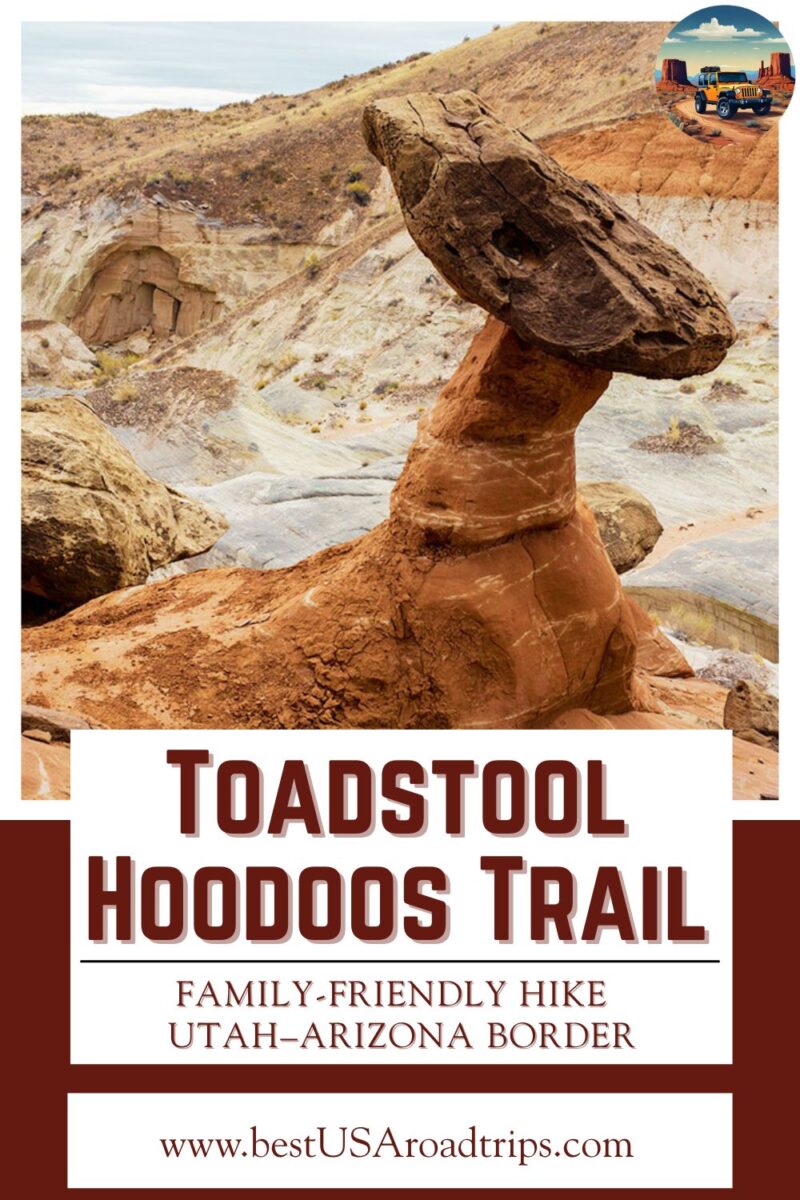
The Paria Rimrocks Toadstool Hoodoos are balanced rock formations resembling toadstools, with a darker cap and stem, grouped like mushrooms. They sit right off US-89 between Kanab and Page, yet many travelers pass them without knowing what they’re missing. This short hike leads to a small valley filled with strange, mushroom-shaped formations that look like they belong on another planet. It’s an easy stop, perfect for stretching your legs on a Southwest road trip, and one of the quickest ways to experience the unique geology of Grand Staircase–Escalante National Monument.
This article may contain affiliate / compensated links. For full information, please see our disclaimer here.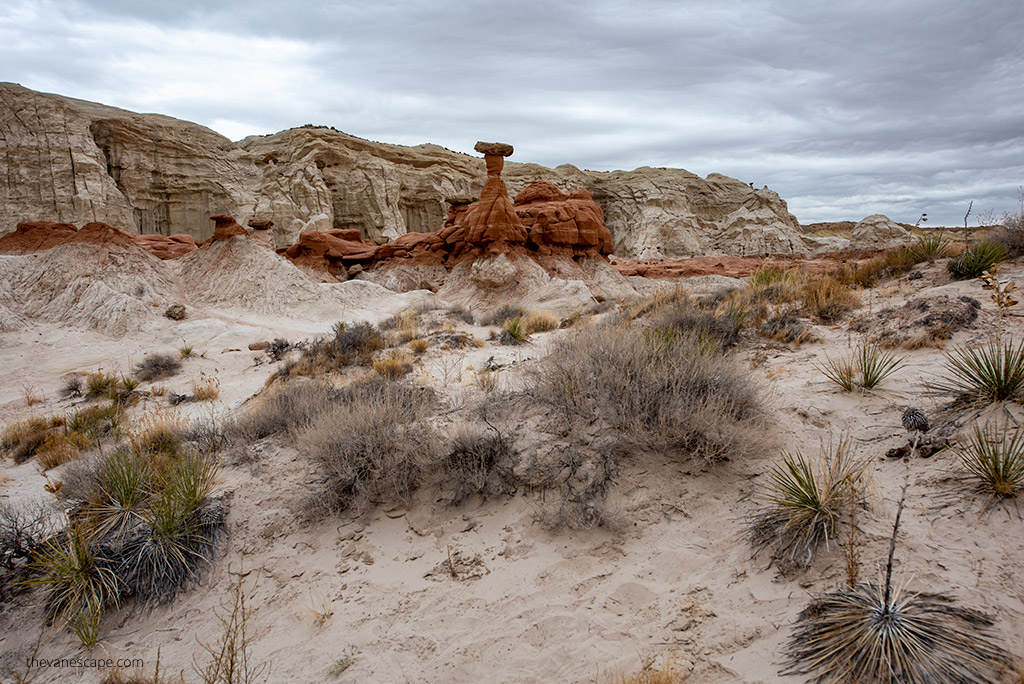
Our Experiences at the Toadstool Hoodoos
Chris and I have stopped at the Paria Rimrocks Toadstool Hoodoos twice during our Utah and Arizona road trips, usually while driving between Kanab and Page. It’s one of those places we return to because the hike is short, the formations are unusual, and the light changes the entire scene from one visit to the next.
We’ve explored the main cluster of hoodoos, wandered farther to find smaller hidden groups, and photographed the area at sunrise, sunset, and midday.
Each visit reminded us how easy, family-friendly, and rewarding this trail is—no permits, no tricky navigation, just a fun walk through open desert terrain with incredible rock shapes all around.
Quick Toadstool Hoodoos Facts & Visitor Basics
Before you start the short hike to the Toadstool Hoodoos, it’s helpful to know a few basics about the area. The trail sits on the northern edge of Grand Staircase–Escalante National Monument, right off US-89 between Kanab, Utah, and Page, Arizona. It’s one of the easiest geological sites to access in this part of the desert.
• Location: Trailhead is directly off US-89 at milepost 19.3 (between Big Water and Kanab).
• Driving Time: About 45 minutes from Kanab and 30 minutes from Page.
• Entrance Fee: Free. This hike does not require a permit.
• Distance: About 1.8 miles round trip; however, most visitors end up walking farther as they explore the surrounding formations.
• Elevation Gain: Around 140 feet.
• Difficulty: Easy.
• Dogs: Allowed, but they must stay on a leash at all times.
• Restrooms: Vault toilet at the trailhead.
• Best Time to Visit: Early morning or late afternoon for cooler temperatures and softer light.
• Land Management: The area is managed by the Bureau of Land Management (BLM).
Additionally, keep in mind that the trail crosses open desert with no shade. Because of this, bring plenty of water and avoid visiting during storms. This clay-based soil becomes slick and sticky after rain.


What Are the Paria Rimrocks Toadstool Hoodoos?
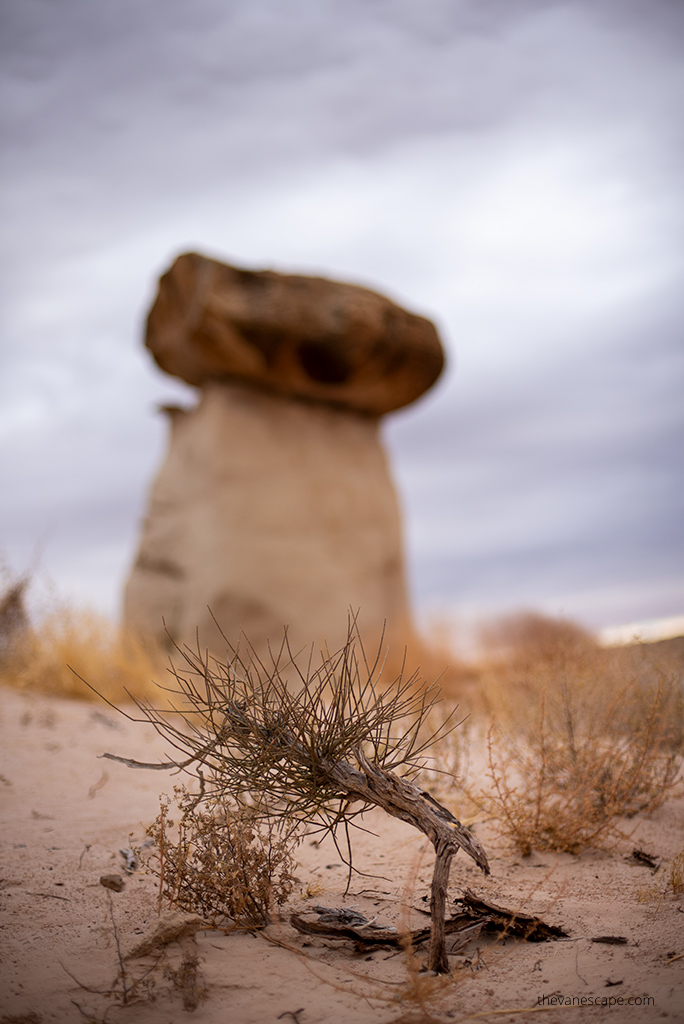
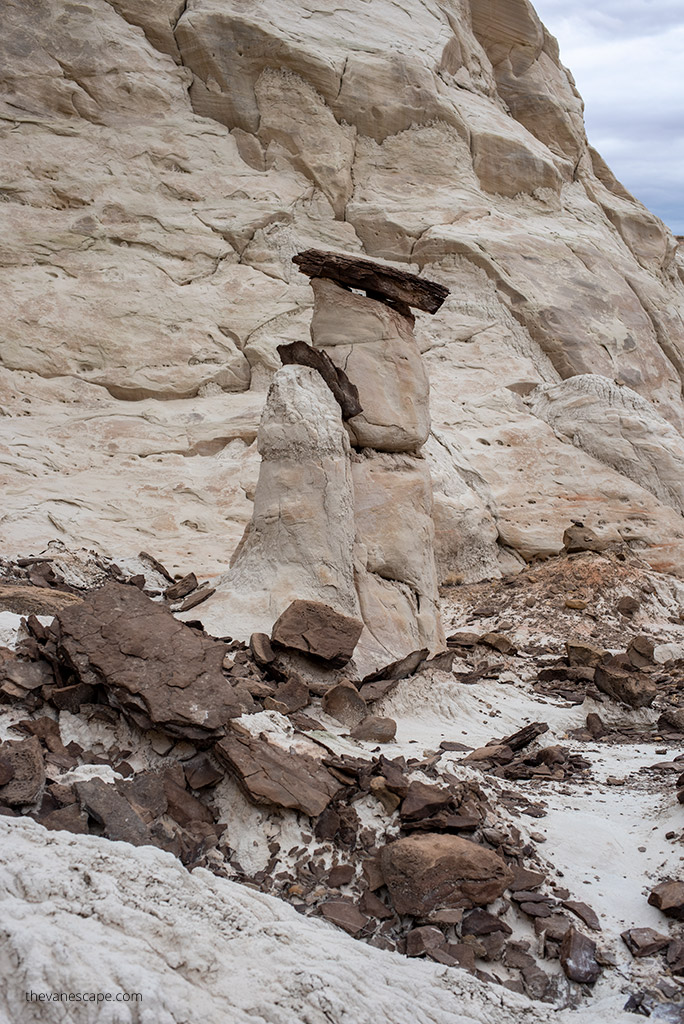
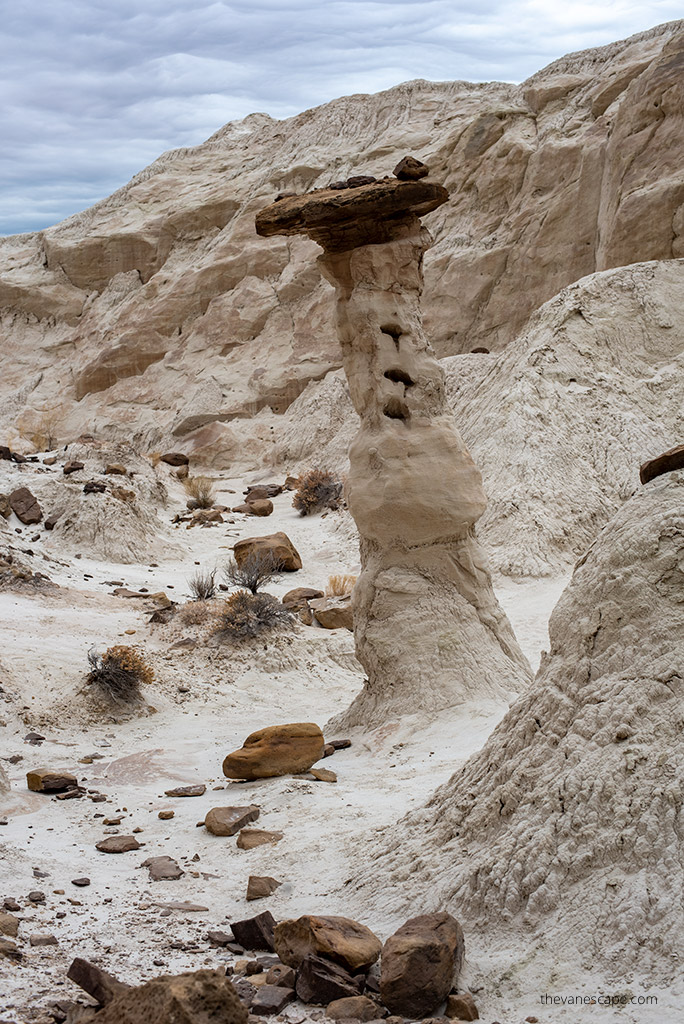
The Toadstool Hoodoos are mushroom-shaped rock formations created by two layers of sandstone eroding at different speeds. The harder caprock (Dakota Sandstone) sits on top of a softer layer (Entrada Sandstone), which wears away faster and leaves a tall, narrow “stem” supporting a wide, flat “cap.”
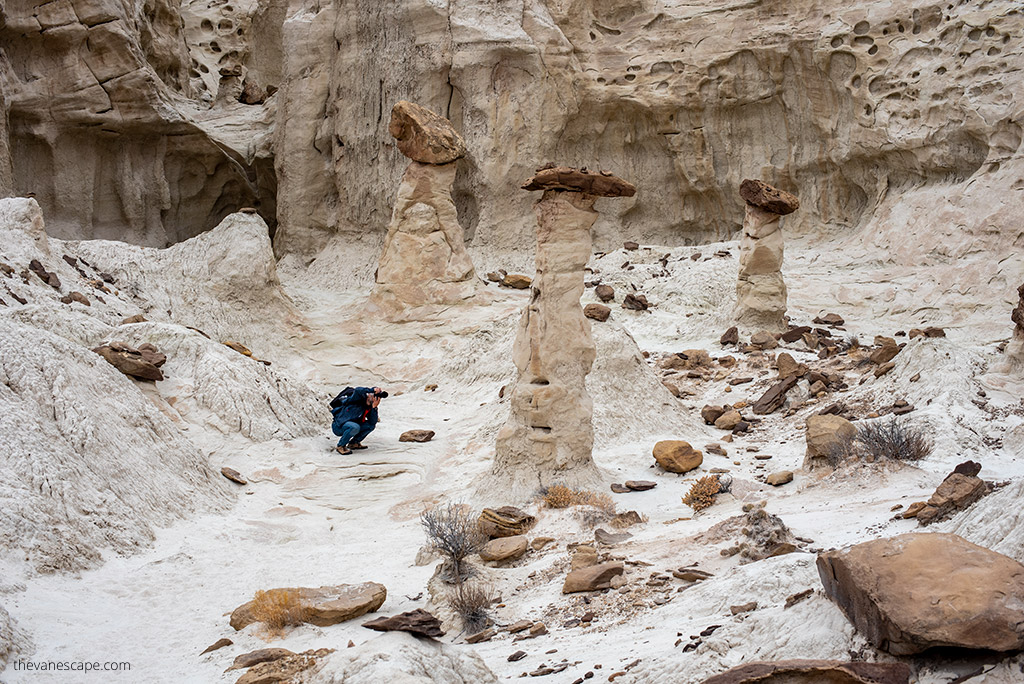
This area is part of Grand Staircase–Escalante National Monument, and the hoodoos are clustered in a small natural amphitheater only a short walk from the trailhead. Some are tall and dramatic, others small and delicate, and many are positioned close together—almost like a forest of stone mushrooms.
How to Get to the Paria Rimrocks Toadstool Hoodoos
The Toadstool Hoodoos trailhead sits directly along US-89, making it one of the easiest stops on the Kanab–Page route. You don’t need a 4×4 vehicle, and the parking lot is right off the highway.
Head east on US-89 for about 44 miles. Then watch for milepost 19.3. The small parking lot appears suddenly on the left side of the road. It’s easy to miss, so slow down as you get close.
Driving from Page, Arizona
Head west on US-89 for about 29 miles. After you pass Big Water, the trailhead parking area will be on your right. It’s a quick and simple turnoff.
Trailhead Coordinates:
37.101310, -111.873169
In addition, the turnoff is marked by a basic BLM sign. The lot usually has enough room for cars and small RVs. Since it sits directly along the highway, many travelers use it as a quick stop during their Southwest road trip.
You can combine this stop with others using our Utah road trip planning guide.
Paria Rimrocks Toadstool Hoodoos Trail Guide
This trail is one of the easiest and most enjoyable short hikes along US-89. The path begins at the parking area and follows a sandy wash toward the hoodoos. There’s no single “official” route—your goal is simply to follow the wash upstream until the formations come into view.
• Distance: About 1.8 miles round trip
• Elevation Gain: Around 140 feet
• Time Needed: 1–2 hours, depending on how much you explore
• Difficulty: Easy
• Trail Type: Out-and-back, with plenty of side paths
The route is straightforward, but expect patches of soft sand and short, gentle climbs. Because there are several branching paths, having an offline map—like AllTrails or Gaia GPS—can help you locate some of the hidden hoodoos that aren’t visible from the main wash.
Once you reach the main amphitheater, take your time wandering between the formations. Some of the most striking hoodoos sit above the main cluster, and others are tucked into side alcoves beyond the obvious viewpoint. This is truly a place where exploring off the main track pays off.
There is no shade on the entire route, so bring water and avoid hiking in the peak afternoon heat, especially in summer. The clay-rich soil can become slippery and sticky after rain, so check the weather before visiting.

What to Expect on the Trail
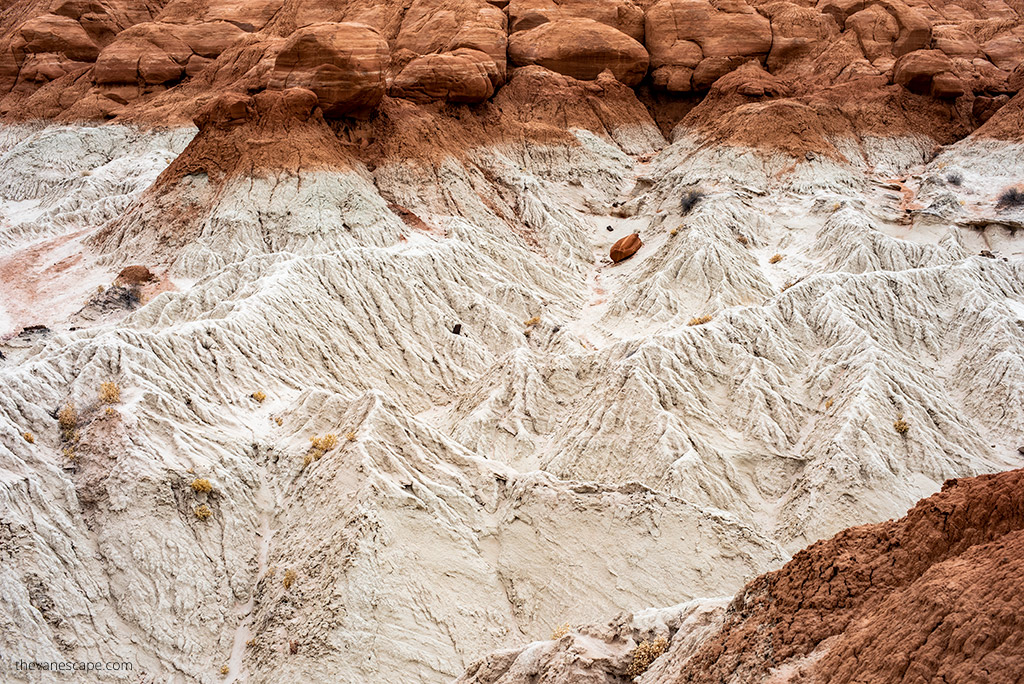
The hike begins in a wide, sandy wash that gently winds between low, cream-colored hills. Within a few minutes, the landscape opens into classic Grand Staircase desert terrain—soft sand underfoot, scattered junipers, and layered cliffs rising on both sides.
As you move farther in, you’ll notice the Entrada Sandstone walls getting taller and more sculpted. After about half a mile, the first hoodoos appear on the horizon. The main cluster sits inside a natural bowl framed by red and white rock layers, with the tallest toadstool standing right in the center.
Expect to wander more once you reach this area. Small social paths lead to:
• The main “mushroom” hoodoo — the largest and most photographed
• Smaller toadstools tucked behind hills and alcoves
• High viewpoints on the right side of the amphitheater
• A second group of hoodoos farther up the slope
There are no official signs, but exploring is simple and intuitive. Just give yourself time to walk around, climb small ridges for new angles, and enjoy how different the formations look as the light shifts.
The return follows the same wash back to the parking lot. It’s an easy and enjoyable walk, perfect for families, casual hikers, and anyone passing through the Kanab–Page area.
Hiking Tips for the Toadstool Hoodoos
This is an easy trail, but desert conditions can still surprise visitors. A few simple tips will make your hike safer and more enjoyable:
• Bring plenty of water. There is no shade on the entire route, and even short hikes feel hotter in exposed desert terrain.
• Avoid the mid-day heat. Early morning and late afternoon offer cooler temperatures and better light for photos.
• Check the weather. The soil here is clay-based and becomes slick, sticky, and sometimes impassable after rain.
• Wear sturdy shoes. The trail is sandy, but side paths involve short climbs on uneven sandstone.
• Keep dogs leashed. The area is open and delicate, and leashes are required under BLM rules.
• Watch for social trails. Many side paths lead to smaller hoodoos—explore them, but stay aware of your direction so you return to the main wash easily.
• Leave no trace. Hoodoos are fragile. Avoid climbing on the formations, and stay on durable surfaces whenever possible.
This trail is suitable for most ages and fitness levels, but the open desert environment makes preparation essential.
Where to Stay Near the Toadstool Hoodoos
Because the trail sits right between Kanab, Utah, and Page, Arizona, you have two excellent bases for exploring this part of the Southwest. Both towns offer plenty of lodging, restaurants, and access to other popular hikes and slot canyons.
Kanab, Utah
Kanab is a great hub for exploring the Paria River area, Grand Staircase–Escalante, Vermilion Cliffs, and countless nearby hikes. It’s also close to Buckskin Gulch, The Wave trailhead, and the Great Chamber.
• Wide range of hotels, motels, and vacation rentals
• Good local restaurants and grocery stores
• Our favorite stays here include the Best Western and Hitch-N-Post RV Park
Page, Arizona
Page sits closer to Antelope Canyon, Horseshoe Bend, Lake Powell, and several Wahweap viewpoints. If you’re planning to combine the Toadstool Hoodoos with slot canyon tours, Page is a convenient choice.
• Many chain hotels and easy booking options
• Central location for Upper Antelope Canyon, Lower Antelope Canyon, Canyon X, and boat tours
• We’ve stayed at the Best Western here and found it a reliable, comfortable option
Both towns make great bases for a multi-day Southwest road trip, and both are within an easy 30–45 minute drive of the trailhead.
Photography Tips for the Toadstool Hoodoos
The Paria Rimrocks Toadstool Hoodoos are a dream location for photographers. The soft Entrada Sandstone, wide open desert setting, and tall mushroom-shaped formations create endless opportunities for creative compositions.
• Best Light:
Early morning and late afternoon provide the most flattering light. Warm tones bring out the reds and creams in the sandstone, and long shadows add depth to the hoodoos. Midday light is harsh and flat—but still good for scouting.
• Explore different angles:
Move around the main hoodoo to find unique perspectives. Small ridges and side alcoves offer great elevated viewpoints, and many of the lesser-known toadstools sit just out of sight from the main path.
• After rain:
If the soil is dry enough to reach the area, the colors become richer and more dramatic. Clean, reflective surfaces look incredible on camera—but always check trail conditions, as mud can make the hike impassable.
• Night photography:
This area has very low light pollution. On clear nights, the Milky Way is often visible, and the hoodoos create powerful foreground shapes. Bring a tripod and a headlamp for navigating the wash safely.
• Play with depth of field:
Because the hoodoos rise straight from the desert floor, you can easily experiment with foreground elements—small stones, grasses, and textured sand—to build creative layered compositions.
With soft light, open space, and unusual shapes, this short hike offers some of the best photography opportunities along US-89.
Final Thoughts
The Paria Rimrocks Toadstool Hoodoos are one of the easiest and most rewarding stops along US-89. The hike is short, the scenery feels otherworldly, and the trail is accessible for almost every type of traveler. It’s the perfect break on a long drive, a fun family-friendly adventure, and a great spot for photographers looking for unique desert formations.
If you’re exploring southern Utah or northern Arizona, add this quick hike to your itinerary. It’s a small detour with big payoff—and a memorable glimpse into the incredible geology of the Grand Staircase region.
Do You Like It? Pin It For Later!