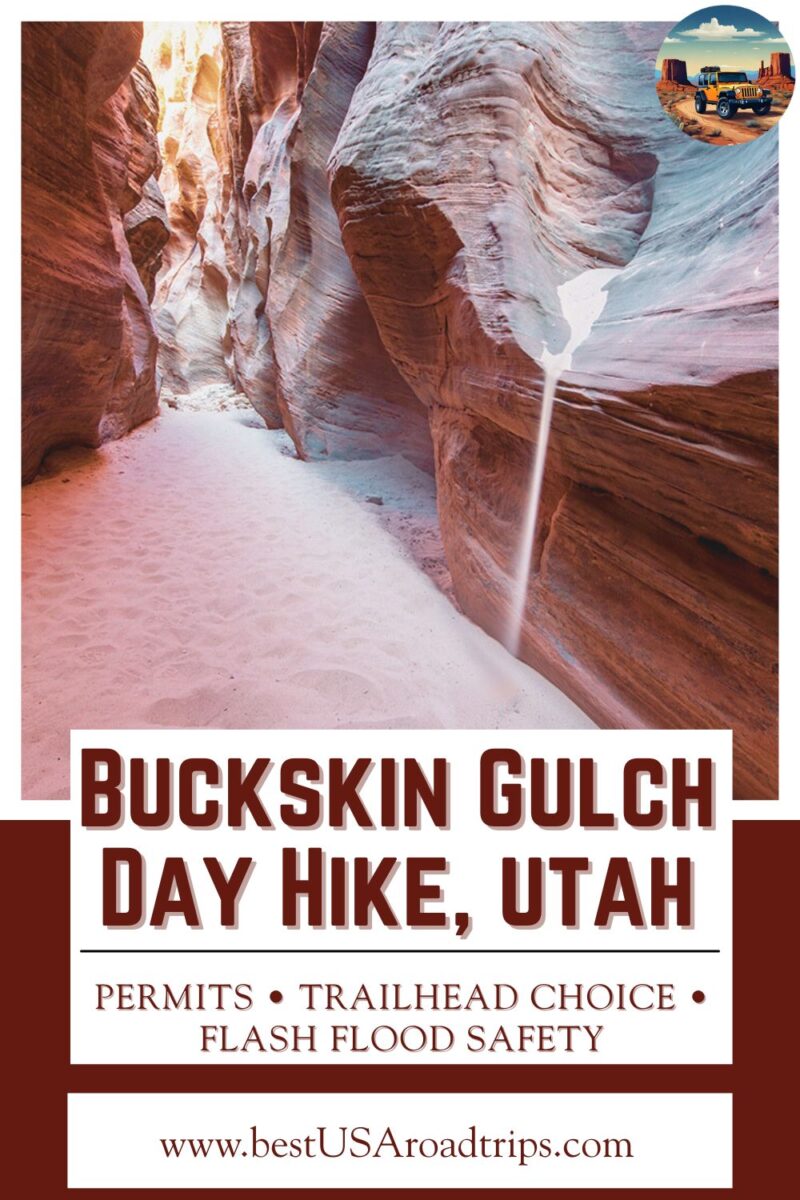
Buckskin Gulch Day Hike Guide: Trailhead, Permits, Safety Tips, and What to Expect
Buckskin Gulch in Utah is one of the most impressive slot canyons in the Southwest. The canyon runs for about 16 miles through twisting, narrow sandstone walls, and many hikers explore it as part of a multi-day backpacking trip. But you can also experience a beautiful section of it on a day hike, which is exactly what we focus on in this guide. A day hike offers a taste of the deep, glowing walls and quiet, sculpted passages without committing to the full route. It still requires planning, because flash floods are a real danger and conditions change after every storm. In this guide, we explain how to plan a safe Buckskin Gulch day hike, what permits you need, how to choose the right trailhead, and what to expect on the trail.
This article may contain affiliate / compensated links. For full information, please see our disclaimer here.
Buckskin Gulch Day Hike – Our Experiences
Chris and I hiked a section of Buckskin Gulch during one of our Utah road trips based in Kanab. We planned a simple out-and-back day hike because we wanted to see the narrowest part of the canyon without committing to a full multi-day trek.
We chose the Wire Pass Trailhead, which is the easiest and fastest way to reach the main slot. That choice let us spend more time inside the canyon and less time walking long stretches of open wash.
We started early to avoid hiking out in the dark. The morning light on the sandstone walls was beautiful, and the canyon felt quiet and remote as soon as we stepped inside. The first tight passages were some of the most dramatic we have seen in Utah.
We have explored many slot canyons over the years—Antelope (Lower and Upper), Peekaboo, Willis Creek, Zebra—but Buckskin Gulch still feels different. The walls rise higher, the light shifts more dramatically, and the scale is impressive.
We watched the weather closely before this hike. Flood risk is real in Buckskin Gulch, and you must be sure the forecast is clear across the entire region, not just at the trailhead. During our visit, conditions were perfect, and the canyon floor was mostly dry. We passed a few shallow pools, stepped across sand and rock, and turned around once the daylight window started to shrink.
Our day hike gave us enough time to enjoy the narrowest sections and take plenty of photos without rushing. For us, it was the perfect way to experience Buckskin Gulch on a single-day adventure from Kanab.
What Is Buckskin Gulch?
Buckskin Gulch is one of the longest continuous slot canyons in the world. It cuts through the Paria Canyon–Vermilion Cliffs Wilderness near the Utah–Arizona border, in a remote region between Kanab and Page.
The canyon stretches for about 16 miles and stays narrow for most of its length. High sandstone walls rise above the tight passages, creating a dramatic corridor of curves, textures, and shifting light.
Buckskin Gulch is a major tributary of the Paria River, which eventually flows into the Colorado River. Many backpackers explore the full canyon as part of a multi-day route that continues to Lee’s Ferry. Day hikers usually enter from the Wire Pass Trailhead or the Buckskin Gulch Trailhead to reach a shorter but very scenic section of the slot.
The canyon is beautiful, but it is also dangerous in wet weather. Flash floods can move quickly through the narrow walls, and there are very few places to climb out. That’s why checking the forecast and making safe choices is essential before any hike in Buckskin Gulch.
Buckskin Gulch is managed by the Bureau of Land Management (BLM) as part of the Paria Canyon–Vermilion Cliffs Wilderness.
If you’re planning a longer road trip, our Utah travel guide will help you organize your route step by step.
Is Buckskin Gulch Safe? Flood Danger Explained
Safety is the most important part of planning a Buckskin Gulch day hike. This canyon is beautiful, but it also has a real flood risk. The walls are tall and narrow, and there are almost no places to climb out in an emergency. Even a small storm many miles away can push water into the slot.
Always check the weather forecast for the entire region, not only the trailhead. Storms near Bryce Canyon, the Kaiparowits Plateau, or the higher country around Kanab can send water downstream. If there is any chance of rain, even a low chance, wait for a better day. The canyon fills quickly, and the current can be strong. Mud can also become deep and difficult to cross after storms.
Start early so you have enough daylight for the round-trip hike. Conditions can change fast, and it’s easier to spot water, mud, and unstable sections when the light is good. Before your trip, it’s smart to call the Paria Contact Station for current updates, especially after recent weather.
When the forecast is clear and the canyon floor is dry, Buckskin Gulch is a safe and rewarding day hike. Good planning makes all the difference.
Buckskin Gulch Day Hike: Best Time to Go
The best seasons for a Buckskin Gulch day hike are spring and fall. Conditions are usually most stable from April through June and again from September through November. These months offer cooler temperatures, fewer storms, and a lower risk of flash flooding. Light inside the canyon is also better during these periods, which makes the sandstone walls glow.
Summer is possible, but it requires extra caution. Afternoon storms are common, and the heat can be extreme along the approach to the slot. Always check flood warnings and weather alerts before committing to the hike. If the forecast mentions rain anywhere upriver, choose a different day.
The canyon floor changes after every storm. You may find dry sand, rock fields, or shallow pools. After wetter periods, mud can be deep and slow. Early mornings are the safest and most comfortable time to start.
If you want the most accurate conditions, call the Paria Contact Station at 435-644-1200. Rangers can tell you if the canyon is muddy, which sections hold water, and whether storms are expected. A quick call can save you from a difficult or dangerous hike.
Buckskin Gulch Permits: Day Use vs Overnight
You need a permit to enter Buckskin Gulch, even for a simple day hike. The process is straightforward, and the fee is low, but you must secure it before you start your trip. Overnight permits follow a different system and are much harder to get.
Day-Use Permits
Day-use permits are the easiest option. You can purchase them online through Recreation.gov for the Paria Canyon–Vermilion Cliffs Wilderness. There are no daily visitor limits for day hikers, but every person must have a permit before entering the canyon.
The cost is $6 per person per day. Dogs also need a permit, which is $6 per dog per day. Children 12 and under are free.
Once you pay the fee, keep a digital or printed copy with you. You no longer get permits from old self-pay stations, so plan ahead and purchase before you arrive.
Overnight Permits
Overnight trips require a separate permit that is issued through a lottery system. Only 20 people per day can start an overnight trip in Paria Canyon or Buckskin Gulch.
Permits open four months in advance, and competition is high. Fees apply per person and per night, and every member of the group must be listed on the permit.
If you plan to camp in the canyon, you must also carry out all human waste. The BLM provides instructions and approved waste bags.
Which Permit Do You Need for a Day Hike?
Most hikers only need the day-use permit. This guide focuses entirely on day hiking, so the process is simple: buy the permit online, bring it with you, and keep it accessible while you hike.

Buckskin Gulch Trailheads Explained
Buckskin Gulch has four main trailheads, and each one leads to a different experience. The most popular day hike begins at Wire Pass, because it brings you to the narrowest part of the canyon quickly. Other trailheads work well for longer routes or for backpackers who want to hike the entire canyon to Lee’s Ferry.
All trailheads sit along remote desert roads between Kanab, Utah, and Page, Arizona. House Rock Valley Road, which leads to Wire Pass and the Buckskin Gulch Trailhead, is a gravel road that can become rough, rutted, or muddy after rain. Always check conditions before driving it.
Below is a simple overview of each access point and what type of hike it works best for.
Wire Pass Trailhead (Best Day Hike Option)
Wire Pass is the easiest and fastest way to reach the main slot. From Kanab, drive east on US 89 for 38 miles. From Page, it’s 35.5 miles. Turn onto House Rock Valley Road and continue for 8.4 miles. The trailhead and parking area sit on opposite sides of the road.
This approach begins in a sandy wash, narrows into a short slot, and connects with Buckskin Gulch after about 1.7 miles. A well-known trap exists here: the wash leads directly to a drop-off that requires a rope. This is not the correct route. Just before reaching that drop, look for an unmarked bypass on the left. A short climb brings you to an easy path that links safely to the main slot.
We use Wire Pass because it saves time and energy. It lets you spend more of your day inside the most impressive part of the canyon.
Wire Pass Trailhead shares the same parking area used for the Wave permit holders, so you’ll often see hikers beginning their Coyote Buttes North route from the same wash.
Buckskin Gulch Trailhead
This trailhead sits on the same House Rock Valley Road but closer to US 89. The approach is longer and stays wider before reaching the narrow sections. It’s a good option for hikers who prefer a flat wash and want to avoid the Wire Pass bypass. Most day hikers skip this entry because it adds extra miles without adding new scenery.
White House Trailhead
White House sits near the Paria Contact Station, east of Kanab. The road is usually smoother than House Rock Valley Road. This trailhead works well for hikers who want to explore the confluence area or continue toward Paria Canyon. It’s a longer route to the narrowest parts of Buckskin Gulch, so day hikers rarely start here unless they prefer an easier drive.
Lee’s Ferry Trailhead
Lee’s Ferry is the endpoint for multi-day backpacking trips that travel through Buckskin Gulch and Paria Canyon. It’s not a practical access point for day hikers because the scenic slot stretches far upstream. This trailhead is best for groups finishing the full canyon after several nights.
How Far Can You Go in a Day?
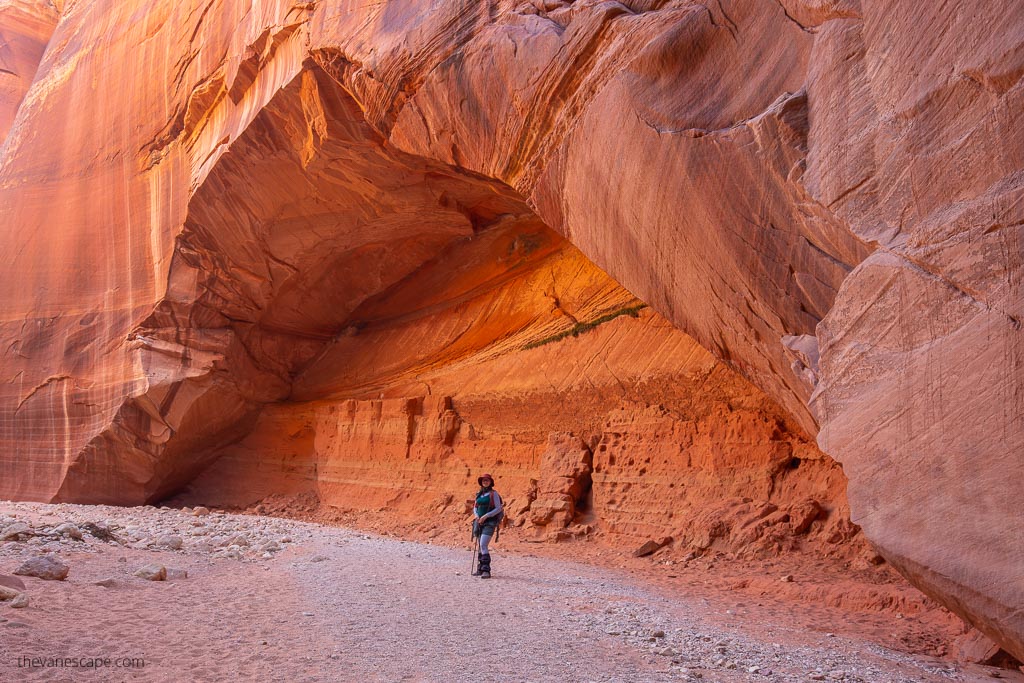
Most people hike Buckskin Gulch as an out-and-back route, starting at Wire Pass. This setup lets you decide how far to go based on daylight, conditions, and energy. The canyon is long, but a day hike still gives you enough time to explore several miles of the narrowest and most photogenic sections.
From the Wire Pass Trailhead, it’s about 1.7 miles to the confluence where the two canyons meet. Once you reach Buckskin Gulch, the canyon continues in both directions. For a day hike, most people turn right and follow the slot toward the long route that eventually leads to Lee’s Ferry.
Expect a mix of sand, rock fields, and shallow pools. Conditions change after every storm, so your pace will depend on the canyon floor. On dry years, the walk is smooth and simple. After wetter periods, mud can be deep and slow. Pools can be waist-deep, and you may need to wade.
Most day hikers explore about 4–5 miles beyond the confluence before turning around. This gives you a rewarding day without rushing. If you continue farther, remember that returning through the canyon can feel slower as fatigue sets in. Always turn back in time to exit before dark.
You likely will not reach the Buckskin Gulch Cesspool, which sits about 7.5 miles from Wire Pass. That challenging section usually requires a longer day, perfect conditions, and a faster pace.
For most hikers, exploring the first several miles is enough to experience the soaring walls, tight passages, and glowing sandstone Buckskin Gulch is famous for.
Essential Gear for a Buckskin Gulch Day Hike
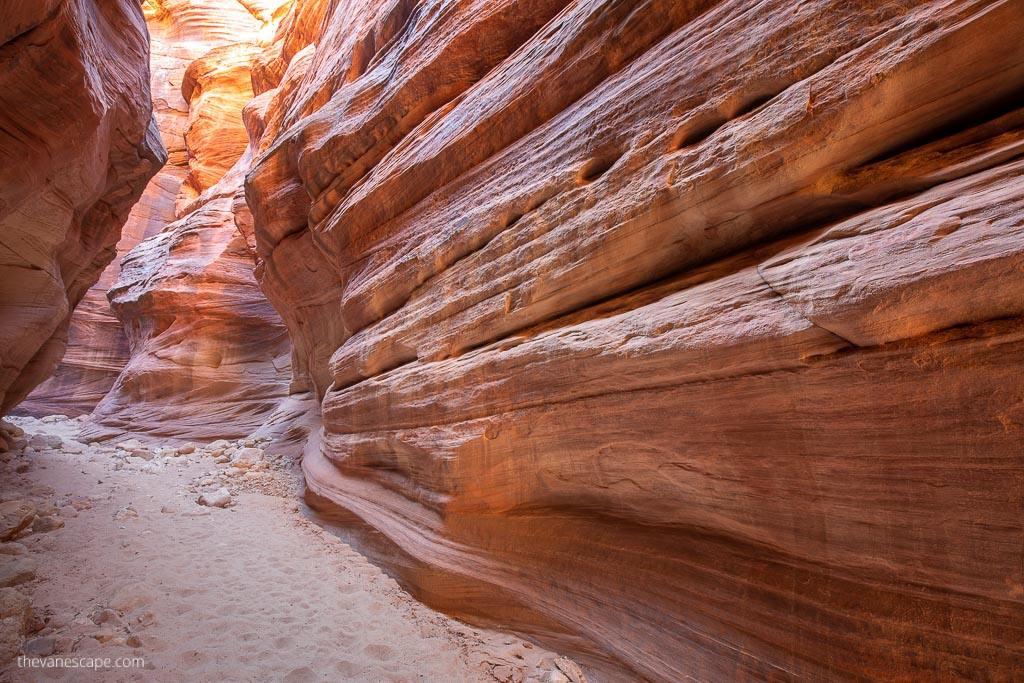
A Buckskin Gulch day hike feels simple at first, but conditions inside the canyon can be unpredictable. Carrying the right gear keeps you safe and comfortable. Even on a short out-and-back hike, you should pack as if the weather could change or the canyon floor could slow your pace.
Water
Water is the most important item. Plan to carry at least 1–1.5 gallons (4–6 liters) per person during warm weather. The canyon can trap heat, and you won’t find reliable water sources for day use. If you expect to filter water in Paria Canyon or near Big Spring, bring a proper filtration system.
Navigation
There is no marked trail inside Buckskin Gulch, but offline maps help you judge distance and daylight.
Good options include:
- downloaded AllTrails maps
- paper maps such as the National Geographic Trails Illustrated Paria Canyon map
Cell service is unreliable, so have both digital and printed options when possible.
Sun Protection
The approach to the canyon has open sections with little shade. Bring:
- sunscreen
- sunglasses
- a sun hat
- light layers
Footwear and Clothing
Wear sturdy hiking shoes with good traction. The canyon floor can be sandy, rocky, or muddy depending on recent storms. Lightweight layers work best because temperatures change as the canyon narrows.
Safety Gear
Even for a day hike, pack:
- a small first-aid kit with blister care
- headlamp or flashlight with spare batteries
- emergency blanket or emergency bivy
- a simple fire starter
- a whistle
These items are helpful if you get delayed or if another hiker needs help.
Waste and Leave No Trace
Buckskin Gulch is part of a delicate desert ecosystem. Day hikers should carry out all waste. Pack a waste bag such as the Restop system and leave nothing behind. Human waste rules are strict for backpackers, so everyone must follow the same principles to protect the canyon.
Trekking Poles
Optional but helpful. Poles can steady your balance in rocky areas or when stepping through shallow water.
Packing carefully makes the hike safer and more enjoyable. Buckskin Gulch is remote, and you must be self-sufficient the entire way.
Shuttle Options for One-Way Hikes
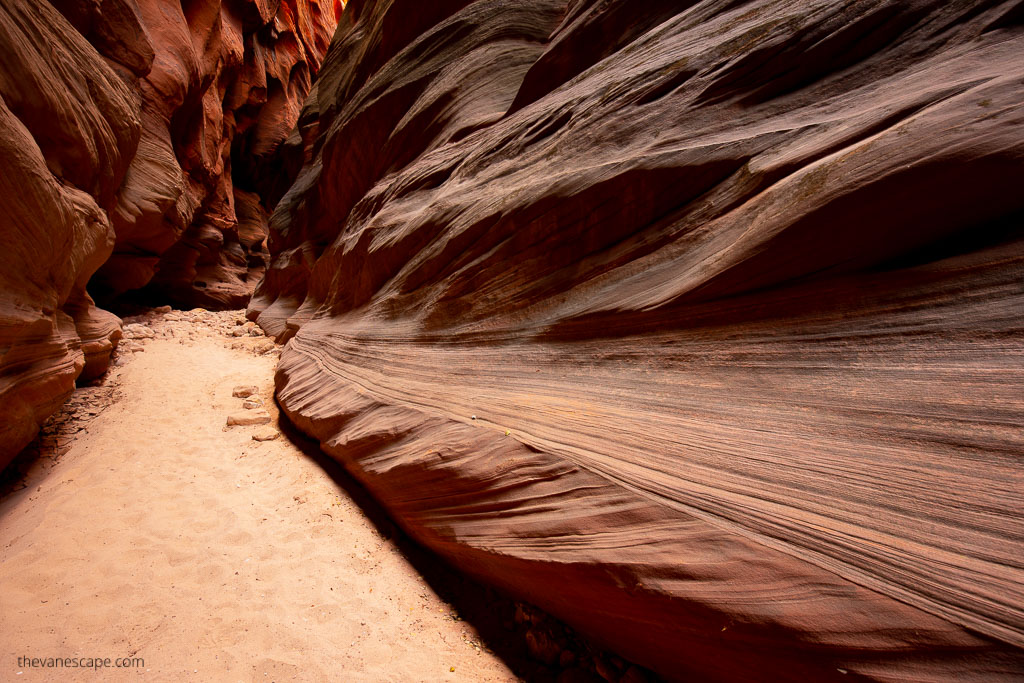
Most visitors explore Buckskin Gulch as an out-and-back day hike. But if you want to hike a longer section in a day and finish at a different trailhead, you can book a shuttle. This option is useful for groups who want to start at Wire Pass or Buckskin Gulch Trailhead and exit at White House or Lee’s Ferry.
A shuttle is not cheap, but it solves a major logistical challenge in this remote area. Distances between trailheads are long, and the desert roads make car shuttles slow and difficult. A commercial shuttle keeps your vehicle in one safe location and saves you several hours of driving.
Local outfitters based in Kanab and Page operate these services. One option is Grand Staircase Discovery Tours, which offers one-way shuttles for both day hikes and multi-day backpacking trips. You can also call the Paria Contact Station for the most current list of providers.
Even with a shuttle, you must carry the right gear, have a permit, and plan around weather. One-way hikes often take longer than expected because conditions inside the canyon change after every storm. Always start early and leave enough daylight for the far exit.
Photography Tips for Buckskin Gulch
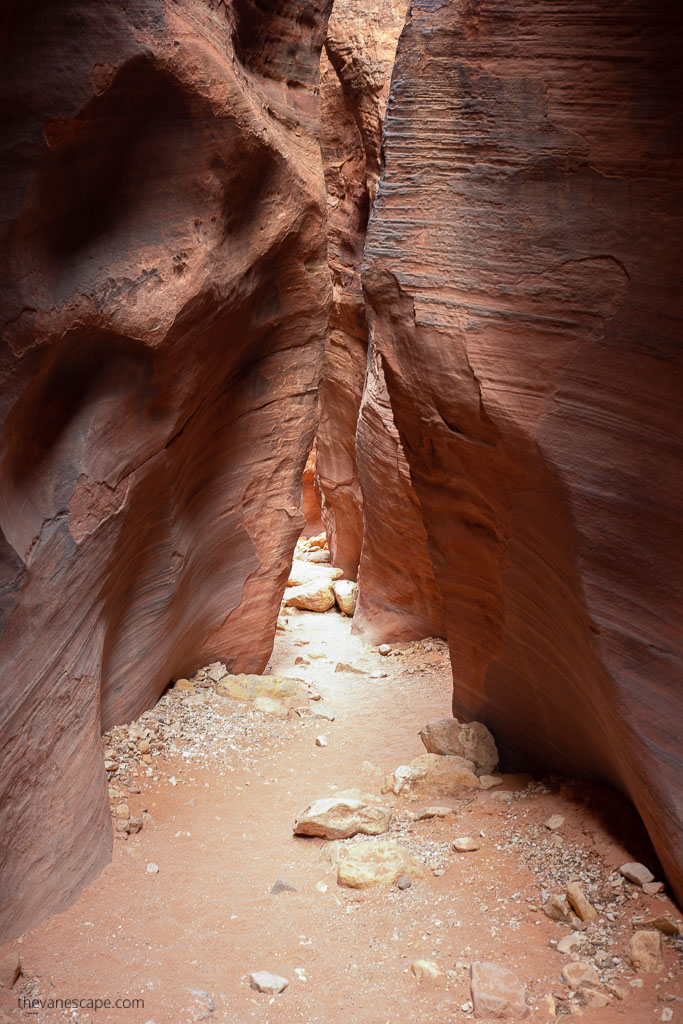
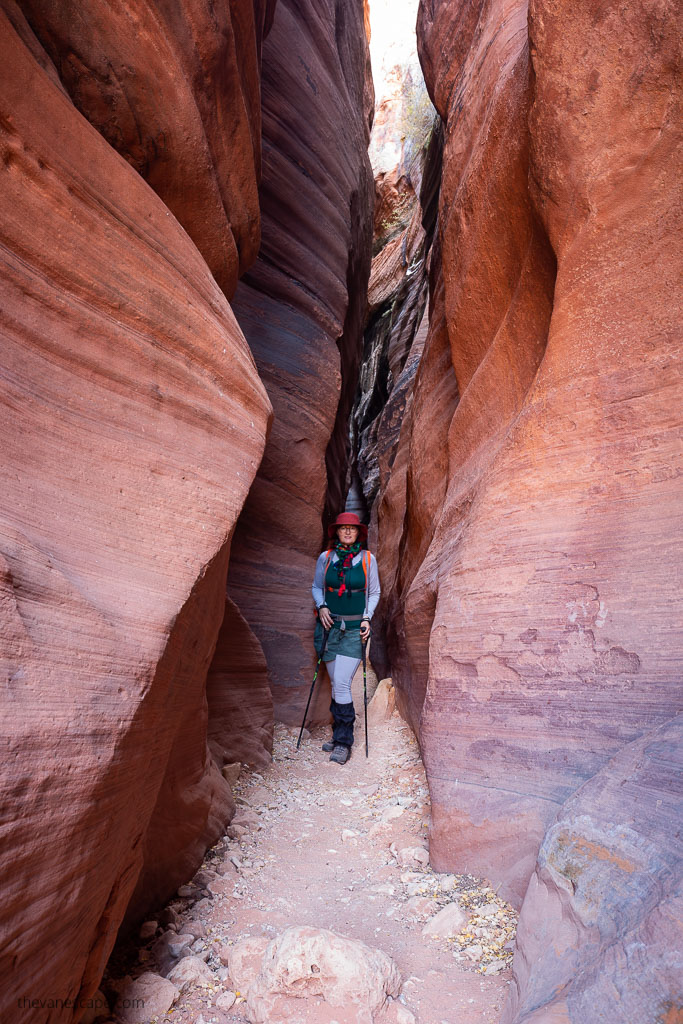
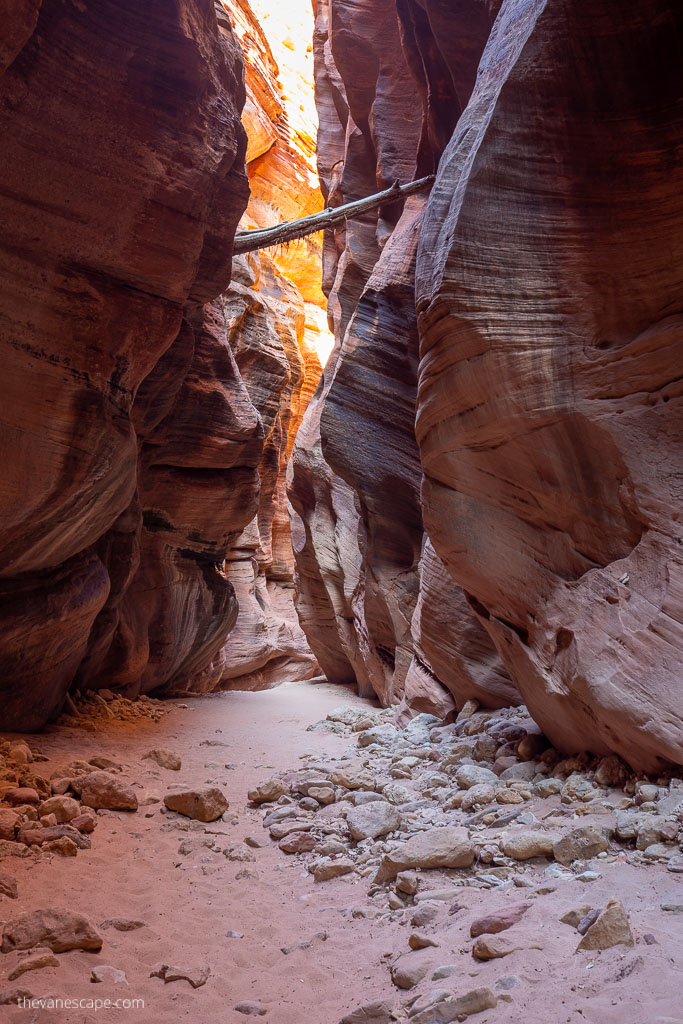
Buckskin Gulch is one of the most photogenic slot canyons in the Southwest. Light bounces off the high walls, curves create natural leading lines, and the narrow passages add drama to every frame. But the canyon is also dark, and conditions can change quickly. These simple tips help you capture better photos during your day hike.
Carry a Tripod
The canyon is dim, especially in the deeper sections. A tripod lets you shoot with slower shutter speeds for sharp and detailed images. Choose a lightweight model so it’s easier to carry through narrow passages.
Look for the Best Light
The walls glow when the sun is high and the light reflects down the canyon. Clear, sunny days create more color. Midday light often produces the richest tones inside the slot, even though it may feel harsh outside.
Use a Wide Lens
A wide-angle lens shows the scale of the canyon. Something in the 14–24mm or 16–35mm range works well. You don’t need a fast lens because you will typically shoot at f/8 or f/11 for depth of field.
Add People for Scale
Slot canyons can appear smaller in photos than they are in real life. Adding a person in the distance shows how tall and narrow the walls really are. This trick works especially well in the tightest sections.
Avoid Bright Hot Spots
Look for even light. If a beam of sunlight hits the canyon floor, the contrast becomes too high for most camera sensors. Step forward or back until the scene evens out.
Use HDR When Needed
In sections with bright ceilings and dark floors, bracket three exposures and blend them later. This technique helps control the dynamic range without losing detail.
Watch the Small Details
Reflections in shallow water, patterns in the sand, and curved lines in the walls can create strong compositions. Small elements often tell the story better than wide shots.
A little patience goes a long way. Spend time in each section, wait for the best light, and experiment with different angles. Buckskin Gulch rewards anyone who slows down.

Other Great Hikes and Attractions Nearby
The area between Kanab and Page is full of unique sandstone formations and short hikes that pair well with a Buckskin Gulch day trip.
- The Wave Hike (Coyote Buttes North). Famous and hard to access without winning the lottery. If you base in Kanab, you can join the daily lottery in town.
- Coyote Buttes South. A great alternative to the Wave. The scenery is similar, the area is less crowded, and permits are easier to get.
- Paria Rimrocks Toadstool Hoodoos. A short trail near US 89 that leads to unusual hoodoos. It’s easy, quick, and great for photography.
- The Nautilus. A small but beautiful sandstone formation near Page with a smooth, spiraling shape.
- Moqui Caverns. A short, fun hike near Kanab that leads to shallow caves carved into the cliffs.
- Horseshoe Bend. A quick stop near Page with one of the most iconic river bends in the Southwest.
Final Thoughts
A Buckskin Gulch day hike is one of the most memorable adventures you can add to a Southwest road trip. The canyon is long, remote, and dramatic, but you can still experience its tight walls and glowing light without committing to a multi-day trek. Careful planning makes the hike safe and enjoyable.
Watch the weather, carry enough water, and start early so you have plenty of daylight. Whether you explore a few miles or hike deeper into the slot, the scenery makes every step worthwhile. It’s a route we always recommend to travelers staying in Kanab or Page.
Do You Like It? Pin It For Later!