Yellowstone in Winter Guide: Roads, Tours, Lodging, Packing, and Top Things To Do
Have you ever wondered what Yellowstone feels like when the crowds disappear, the geysers steam through snow, and bison roam across a frozen valley? Winter transforms America’s first national park into a quiet, magical wilderness—wildlife stands out against the white, the air feels sharper, and every sound seems to echo. Chris and I spent a week exploring Yellowstone in January, and it became one of our favorite winter adventures in the U.S. In this guide, we’ll share exactly how to plan your own Yellowstone winter trip—from what roads stay open and where to stay, to the best tours, activities, and packing essentials. Whether you dream of spotting wolves in Lamar Valley or riding a snowcoach to Old Faithful, this article covers everything you need to know for a safe, unforgettable journey into Yellowstone’s snowy heart.
This article may contain affiliate / compensated links. For full information, please see our disclaimer here.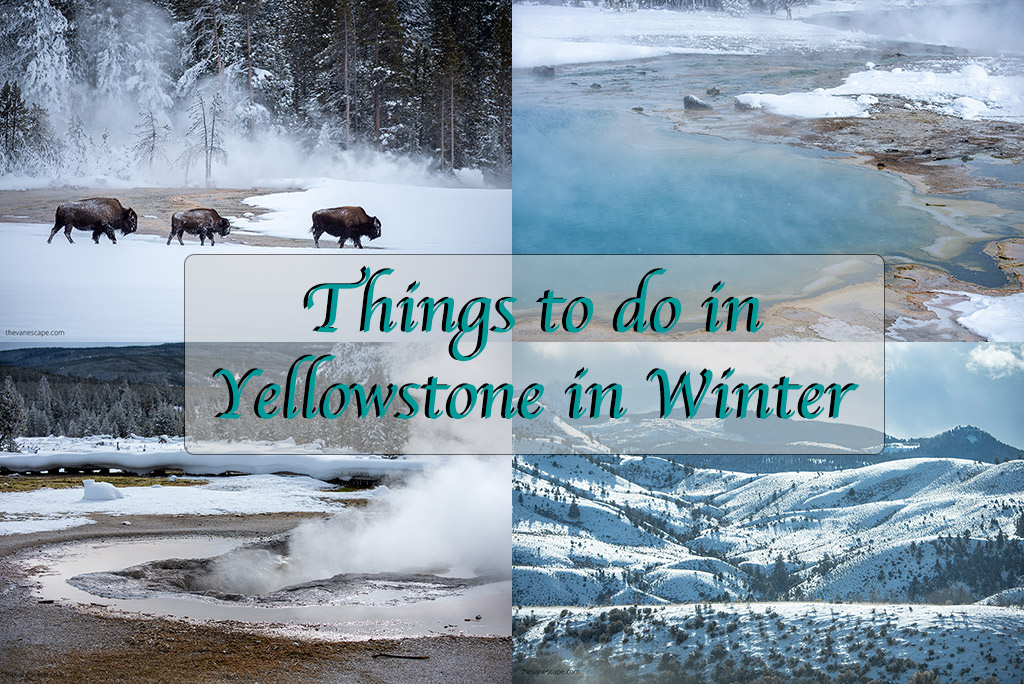
Why Visit Yellowstone in Winter? Our Experiences
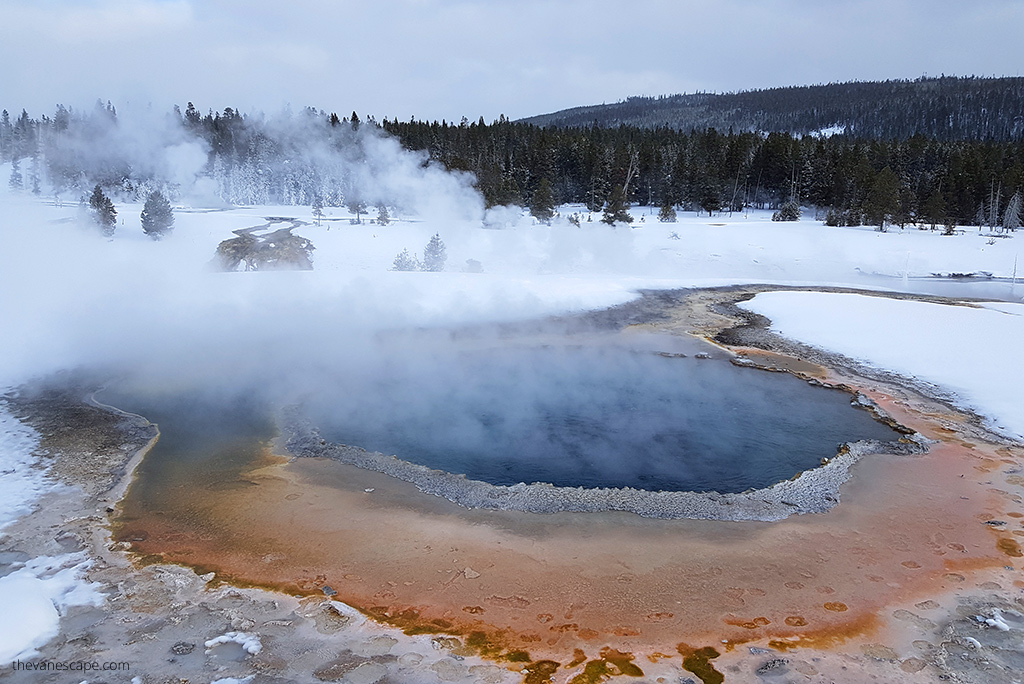
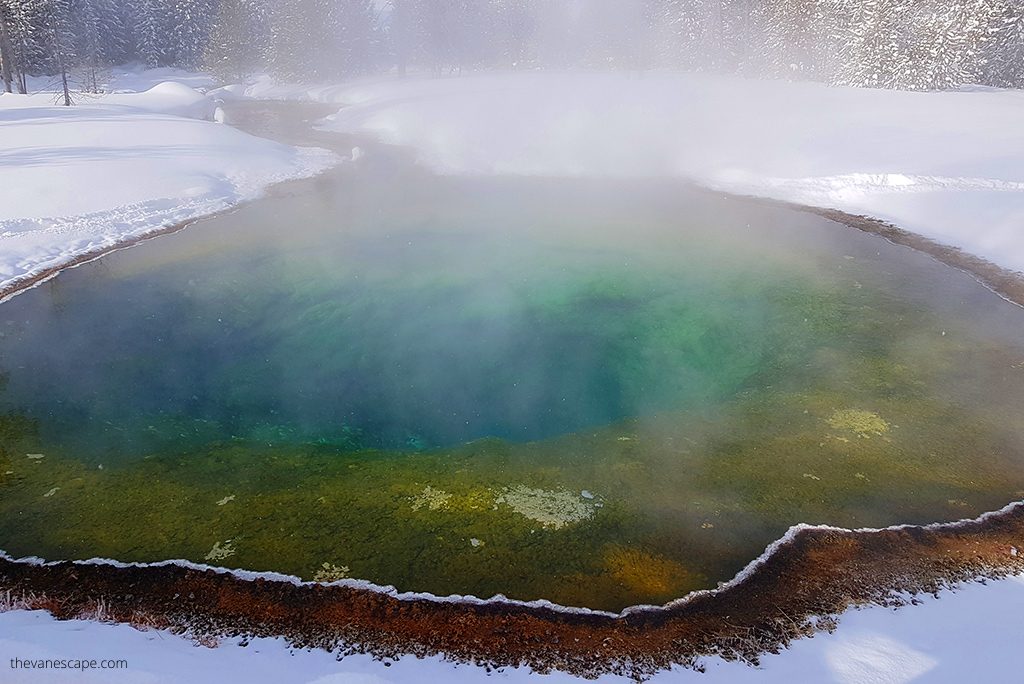
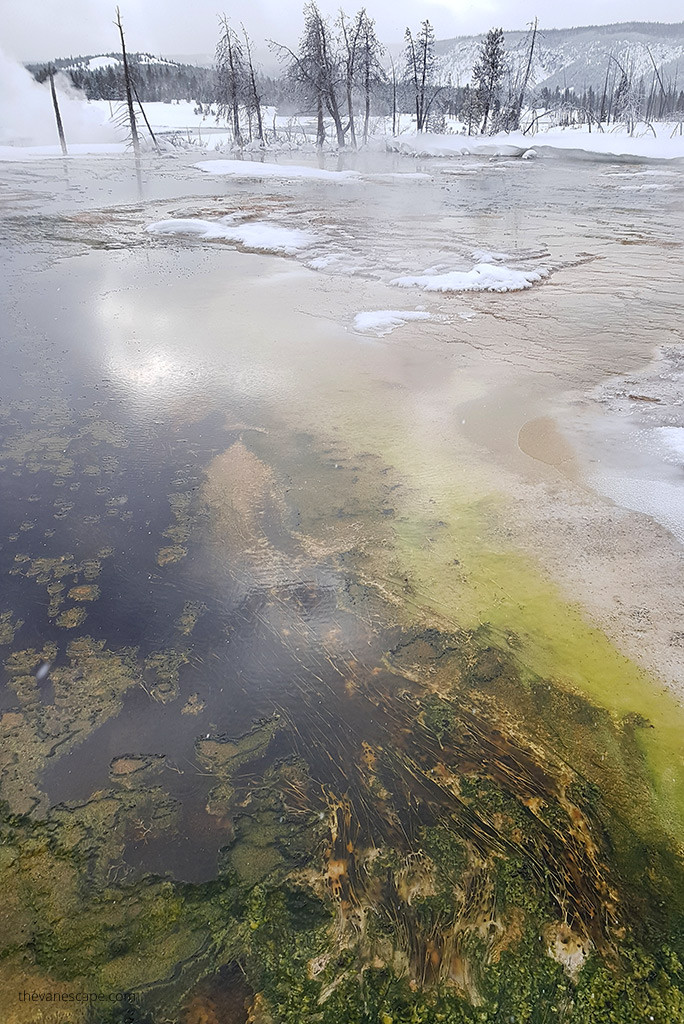
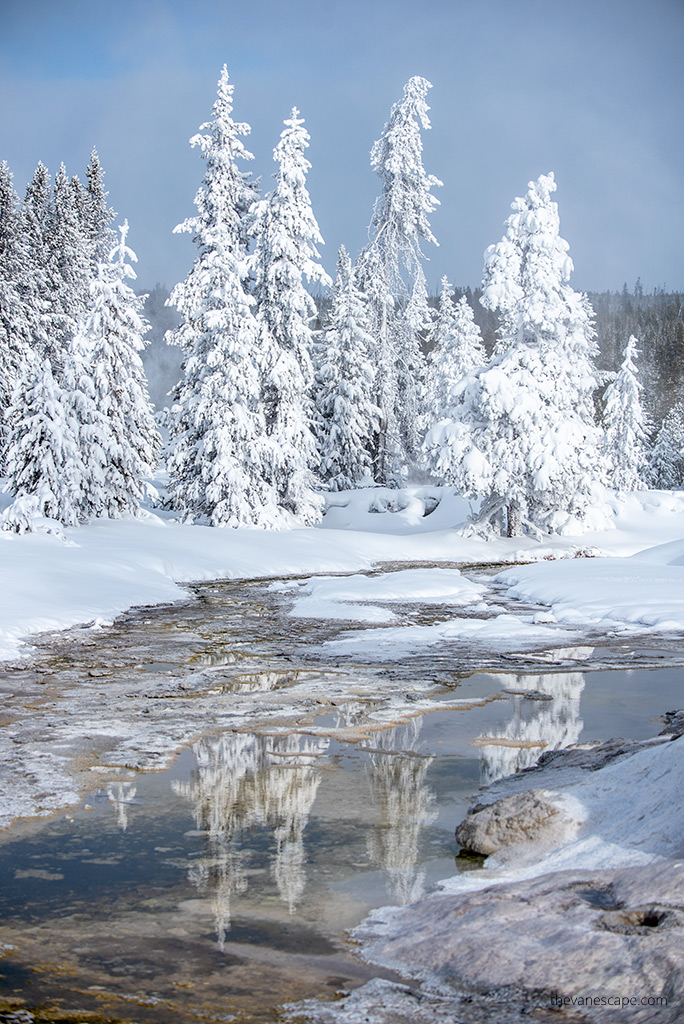
Yellowstone feels like a completely different park in winter. The busy trails and packed parking lots of summer turn into peaceful, snow-covered landscapes. Steam rises from the hot springs, geysers hiss in the cold air, and herds of bison move slowly across the white plains.
Chris and I spent over a week exploring Yellowstone in January, and it quickly became one of our most memorable U.S. winter road trips. On the same trip, we admired the Badlands covered in snow, Devils Tower National Monument, and explored Deadwood and Mount Rushmore National Memorial.
In Yellowstone, we drove through falling snow, watched wolves in Lamar Valley, and saw Old Faithful erupt into clouds of steam surrounded by frost. The silence and beauty were unlike anything we’d ever experienced here in summer.
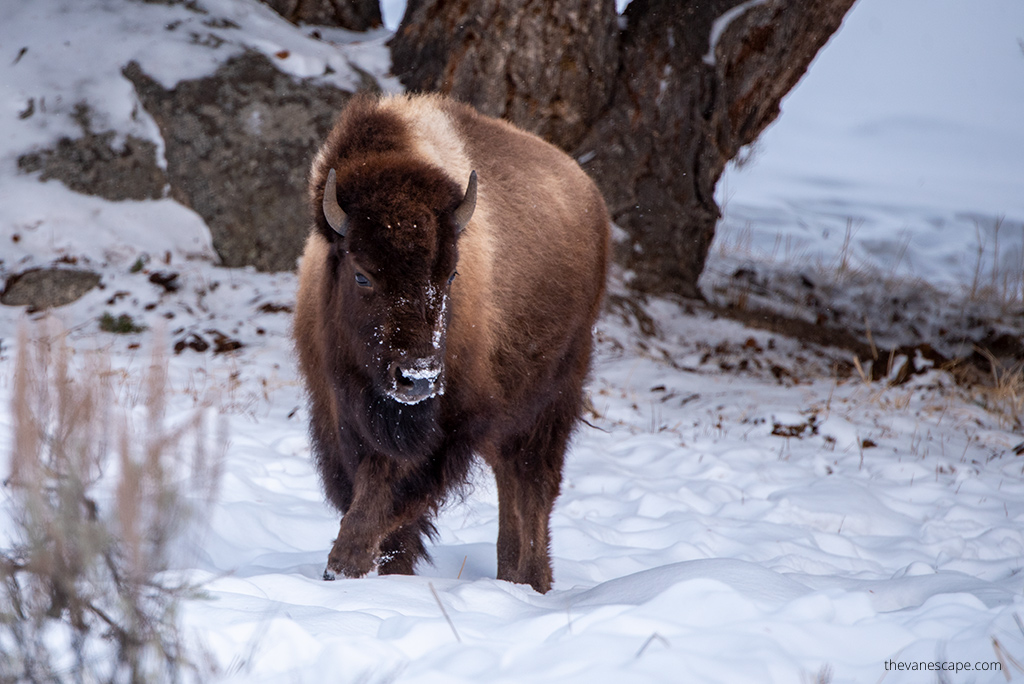
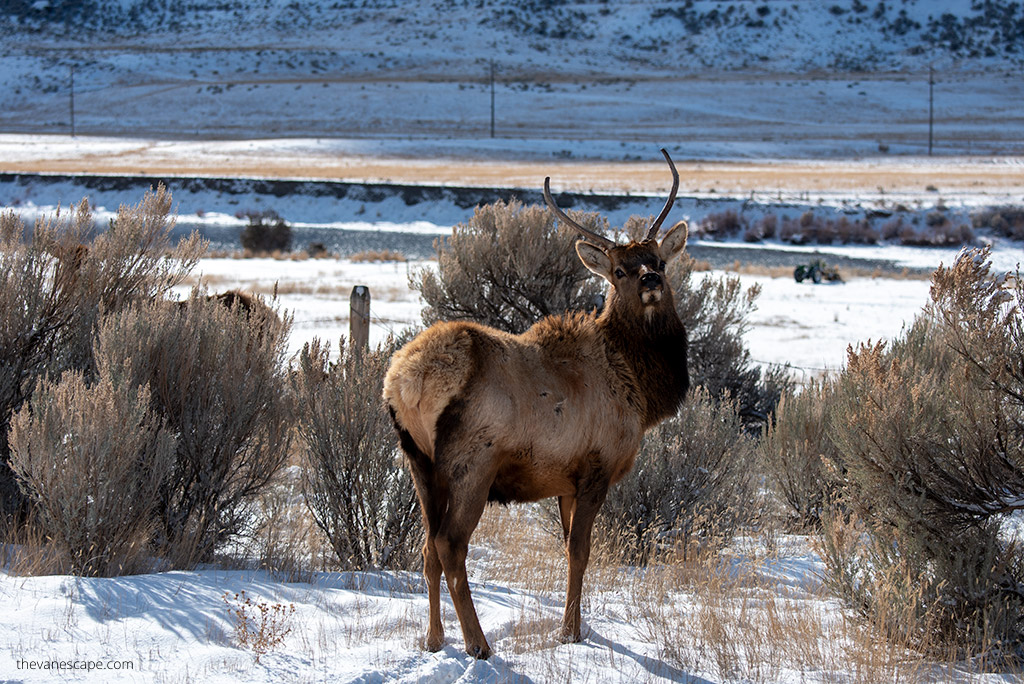
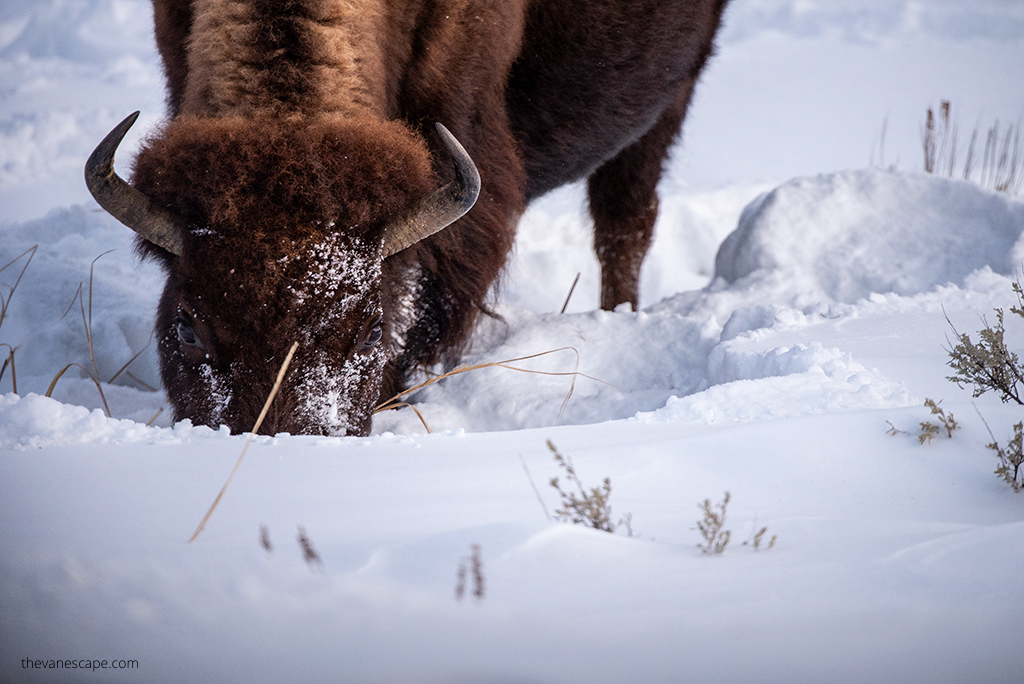
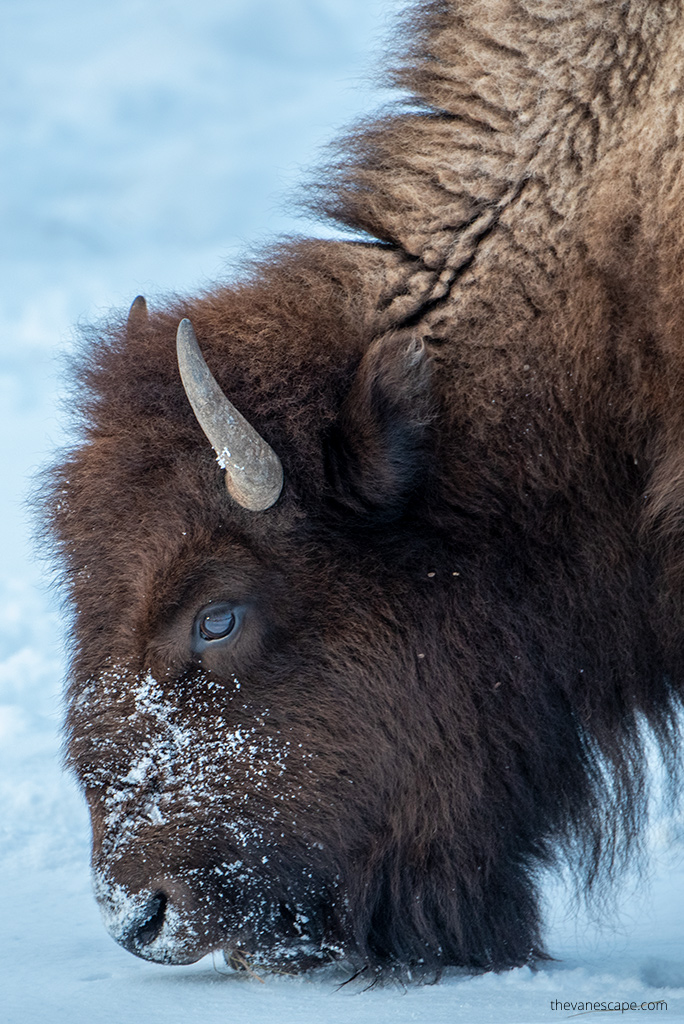
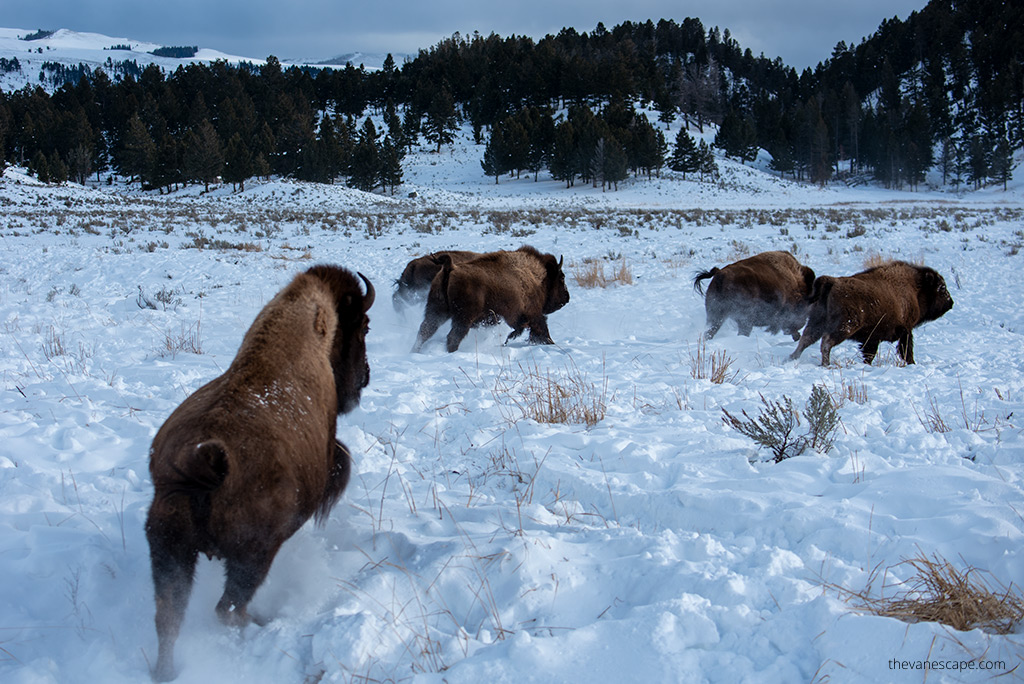
Winter is also the best time to experience Yellowstone without the crowds. Only a fraction of the park’s usual visitors come between December and March, which means quieter viewpoints and easier wildlife spotting. The animals are easier to see against the snow—especially bison, elk, foxes, and sometimes wolves.
But visiting Yellowstone in winter isn’t only about solitude. It’s also about adventure. From snowshoeing past steaming geysers to riding a snowcoach deep into the park’s interior, winter offers experiences you can’t have any other time of year.
If you love crisp air, open spaces, and a little challenge, this is the season to see Yellowstone at its most raw and beautiful.
Winter Access: What’s Open and How to Get Around
Winter travel in Yellowstone is unique—and that’s part of its charm. Most park roads close to regular traffic from early November until mid-April, leaving only one stretch open to private vehicles: the Northern Range.
This 57-mile corridor runs from Gardiner at the North Entrance through Mammoth Hot Springs to Cooke City near the Northeast Entrance.
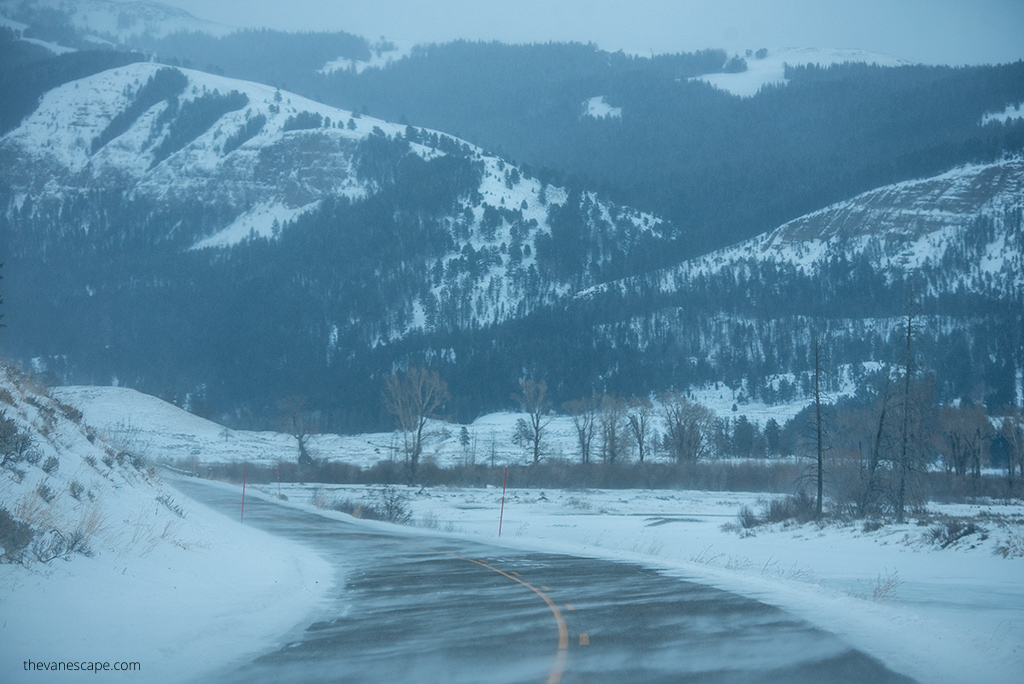
It’s the heart of Yellowstone’s winter experience and the best place to see wildlife, especially in Lamar Valley. The road is plowed daily, but snow and ice are common, so a 4WD vehicle or good winter tires are essential.
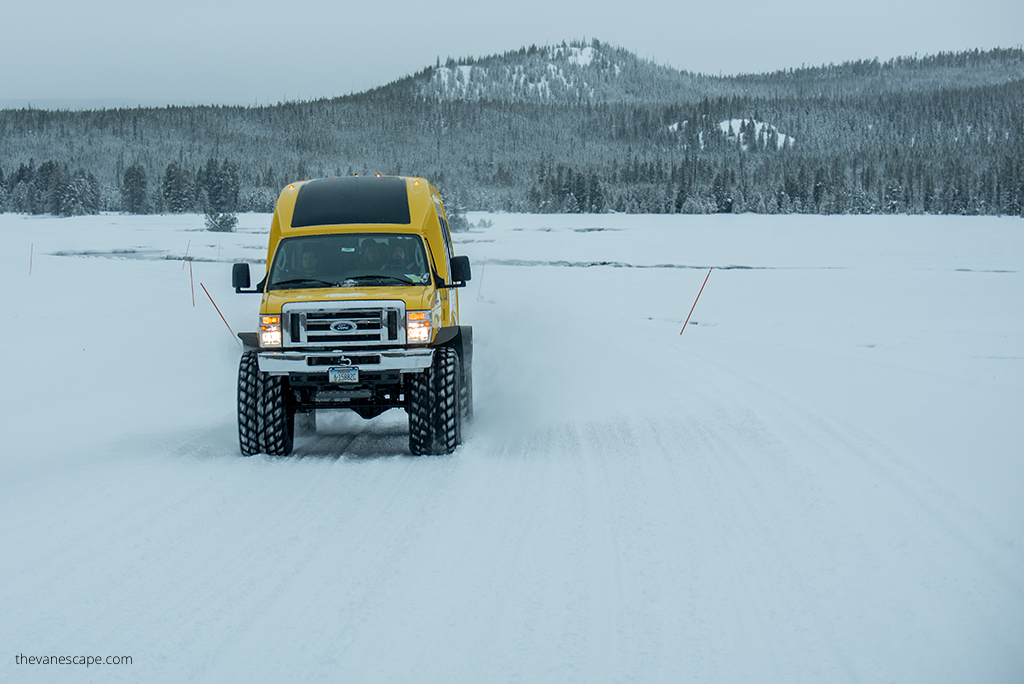
If you want to explore deeper into the park—toward Old Faithful, Grand Canyon of the Yellowstone, or Yellowstone Lake—you’ll need to join a guided snowcoach or snowmobile tour. These are the only ways to reach the interior once snow blankets the roads.
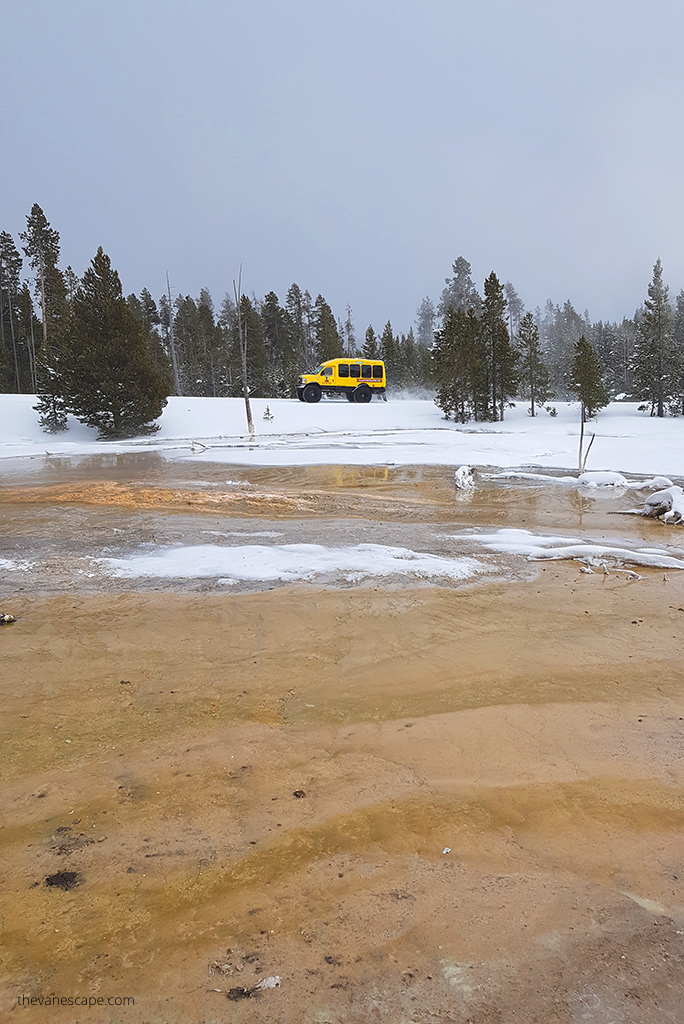
Chris and I explored every open winter road in Yellowstone with our 4×4 camper truck before joining a snowcoach trip to Old Faithful, where we stayed a few unforgettable nights at the cozy Snow Lodge. It turned out to be one of the true highlights of our entire U.S. winter road journey.
When driving your own car, always check the National Park Service (NPS) road alerts before setting out. Conditions can change quickly, and even the Northern Range can close temporarily during storms or wildlife crossings.
In short, you can drive yourself through Yellowstone’s north, but you’ll need a guided tour to see the famous spots in the park’s interior. Both options offer incredible winter scenery—just in very different ways.
Getting to Yellowstone in Winter
Reaching Yellowstone in winter takes a bit of planning, but it’s part of the adventure. Most visitors enter through Montana, where the roads stay open year-round to the North Entrance in Gardiner. This is your best and often only option for direct winter access to the park.
From Bozeman, Montana
The Bozeman Yellowstone International Airport (BZN) is the closest airport operating in winter. From there, it’s about 80 miles (130 km) to Gardiner and roughly a two-hour drive depending on weather. The route follows Highway 89 through Paradise Valley, one of the most beautiful drives in Montana—especially when the Absaroka Mountains glow white at sunrise.
We recommend renting a 4WD or AWD vehicle, as snow and ice are common along this stretch. Pack tire chains, an ice scraper, and a small shovel—just in case. During our trip, the temperature dropped quickly after sunset, and even parking lots turned slick overnight.
If you prefer not to drive in snowy conditions, consider a day tour from Bozeman or Gardiner. Many include transportation, guides, and spotting scopes for wildlife viewing.
From Jackson, Wyoming
Reaching Yellowstone from Jackson is possible, but keep in mind that the South Entrance is closed to cars in winter. You can drive to Jackson Hole or Grand Teton National Park, but from there, the only way to enter Yellowstone is by snowcoach or snowmobile tour.
The distance from Jackson to Gardiner—the closest open gate—is about 150 miles (240 km), roughly four hours on good roads. We once made this drive in early March, and it was gorgeous but slow due to icy conditions.
From West Yellowstone, Montana
West Yellowstone, located near the park’s West Entrance, is almost completely snowed in during winter. The gate is closed to private cars, but it serves as a base for guided oversnow tours into the park. You can reach West Yellowstone from Bozeman (about 120 miles / 190 km) if you want to join a snowcoach or snowmobile trip that begins there.
Whichever route you choose, always check current conditions on the NPS website before heading out. In Yellowstone, winter weather can change fast—and that unpredictability is part of what makes the trip unforgettable.
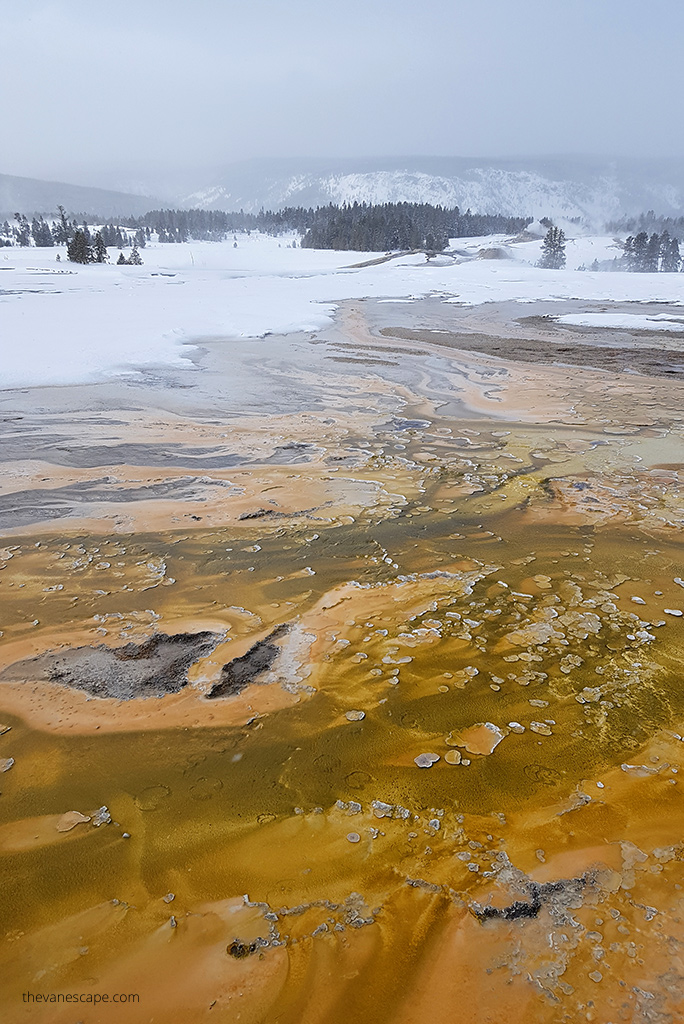
Exploring the Park’s Interior in Winter
Reaching Yellowstone’s interior in winter feels like entering another world. Once the main park roads close to regular vehicles, the only way in is by snowcoach or snowmobile—and both options turn travel into part of the adventure.
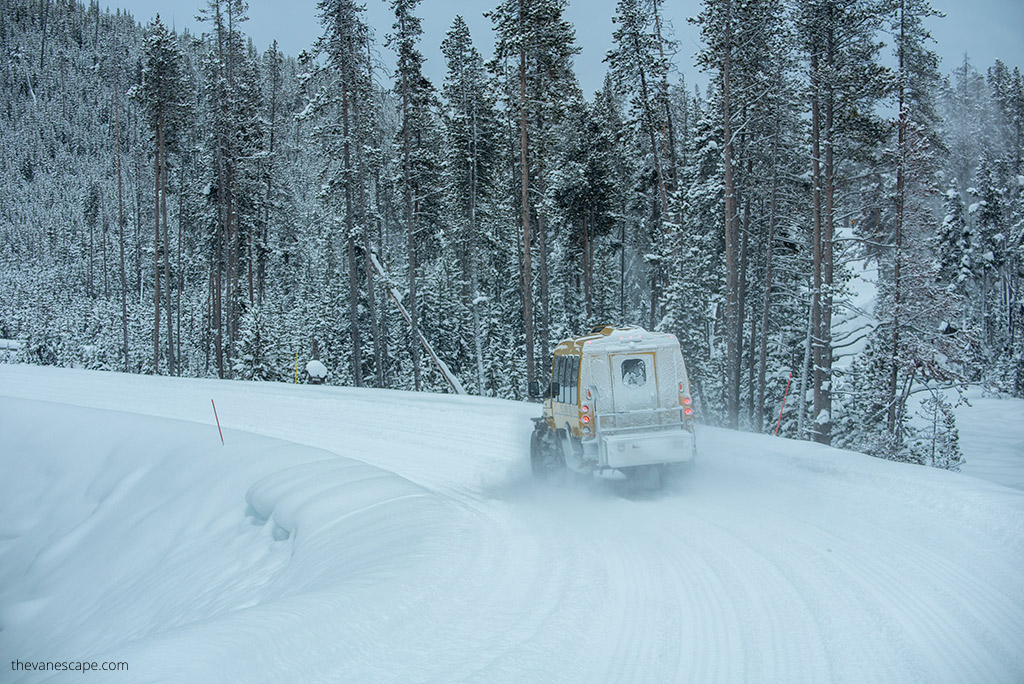
Chris and I chose a snowcoach trip to Old Faithful, and it became one of our most memorable winter experiences in the U.S. The coach glided over miles of groomed snow roads, steam drifted through the icy air, and bison stood motionless beside the trail. It felt silent, surreal, and absolutely magical.
If you’d rather go at your own pace, a guided snowmobile tour is another exciting way to explore the park’s interior. You’ll need warm gear and a sense of adventure, but the reward is freedom—endless snow-covered landscapes, geothermal steam rising into a blue sky, and the chance to reach landmarks like Old Faithful, Yellowstone Lake, and the Grand Canyon of the Yellowstone.
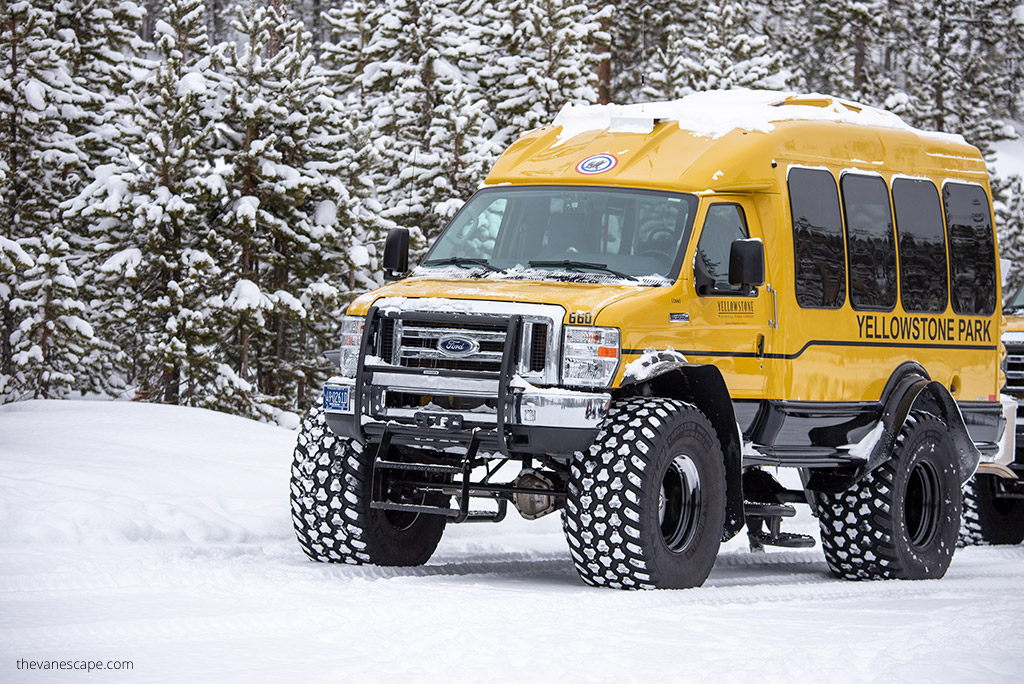

The interior season runs roughly mid-December through mid-March. Outside those dates, the park transitions between fall and spring, and no oversnow tours operate.
These trips sell out months in advance, so it’s smart to book early through one of the Authorized Snowcoach or Snowmobile Tour Companies listed on the NPS website.
If you love solitude, wildlife, and untouched winter scenery, exploring Yellowstone’s interior by snowcoach or snowmobile is worth every mile and every frozen breath.
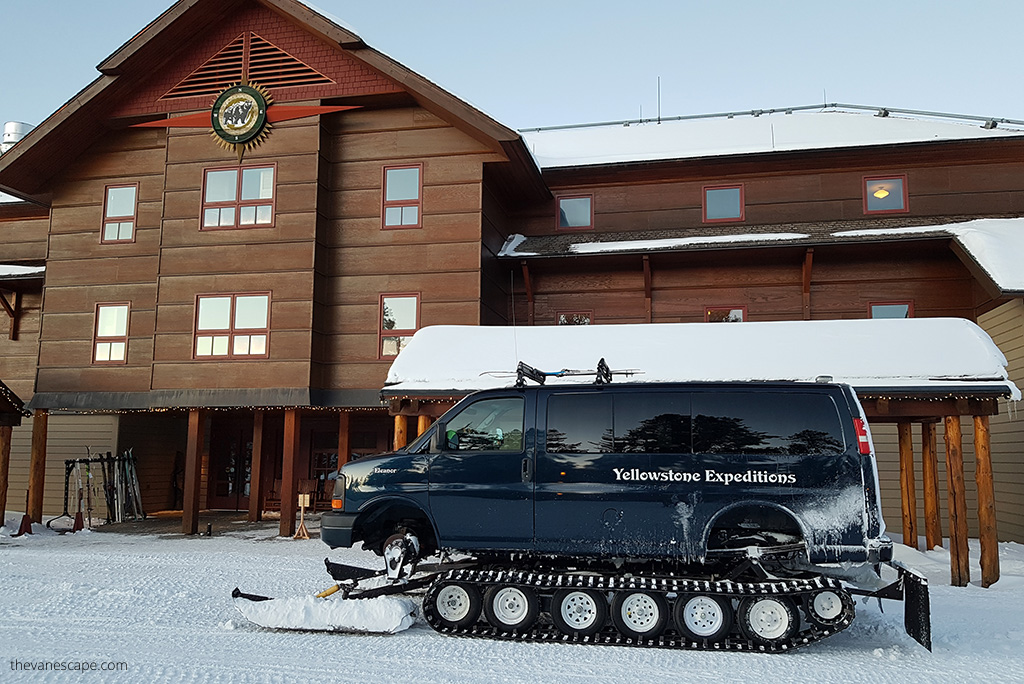
How Long to Stay in Yellowstone in Winter
Your perfect Yellowstone winter trip depends on how much time you have—and how deep into the park you want to go. Because driving is limited and weather can shift fast, you’ll need to plan around daylight and road conditions.
If your schedule is tight, two full days will let you see the highlights of the Northern Range—including Mammoth Hot Springs, Lamar Valley, and plenty of winter wildlife. Add a third or fourth day, and you can join a snowcoach or snowmobile tour to the park’s interior to see Old Faithful and other geothermal wonders.
Chris and I stayed a full week in January, and it was the perfect pace. We had time to explore at sunrise and sunset, take hundreds of photos, and still enjoy long evenings warming up by the fire. We also experienced everything from bluebird skies to a full blizzard, which showed us just how quickly Yellowstone can change in winter.
For most travelers, three to five days is ideal. That gives you flexibility for weather delays, a mix of guided and self-drive days, and time to truly feel the park’s peaceful rhythm. Even a short visit, though, will leave you with lasting memories of Yellowstone’s quiet, frozen beauty.

Yellowstone Winter Tours We Recommend
Taking a guided tour in winter is often the easiest—and safest—way to explore Yellowstone. Roads are snow-packed, temperatures drop fast, and distances can be long. A local guide knows where wildlife gathers and how to navigate the conditions, making the experience much more rewarding.
One-Day Snowcoach Tour to Old Faithful
This is the classic Yellowstone winter adventure. You travel deep into the park’s interior in a warm, enclosed snowcoach. The ride follows miles of groomed snow roads, with stops for wildlife spotting and photo breaks.
The highlight is watching Old Faithful erupt into the cold air, surrounded by sparkling snow and rising steam. Chris and I took this trip from Jackson, and it was absolutely unforgettable—comfortable, scenic, and full of great photo stops.
Wildlife & Wolf Tours from Gardiner
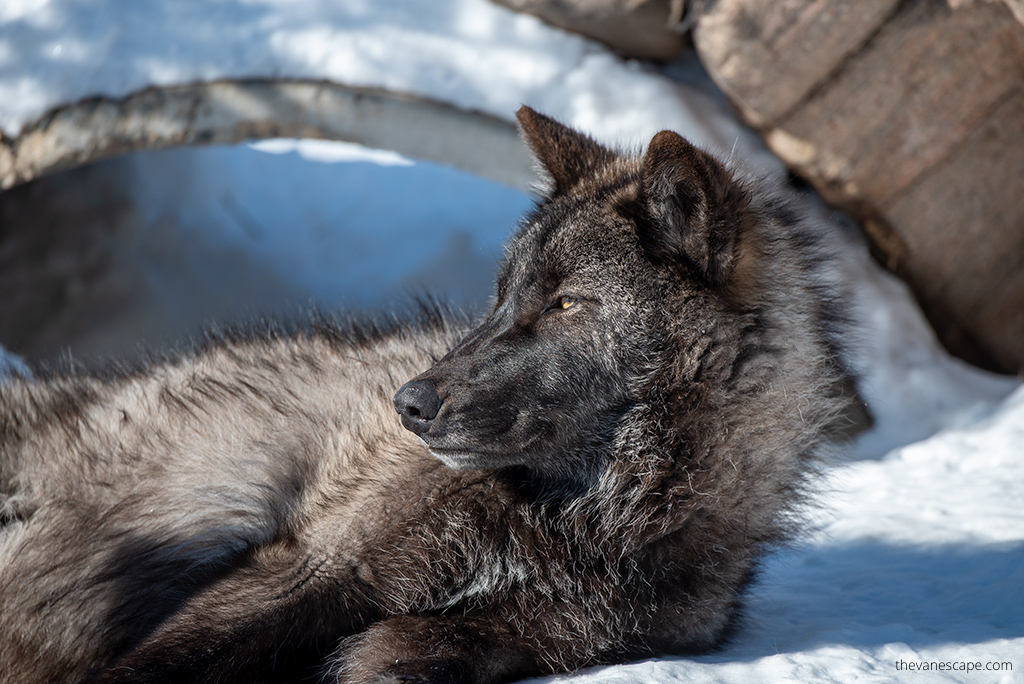
If you’d rather stay in the northern part of the park, a wildlife or wolf-watching tour from Gardiner is perfect. Local guides use spotting scopes and radios to track animals across Lamar Valley, one of the best places in the world to see wolves.
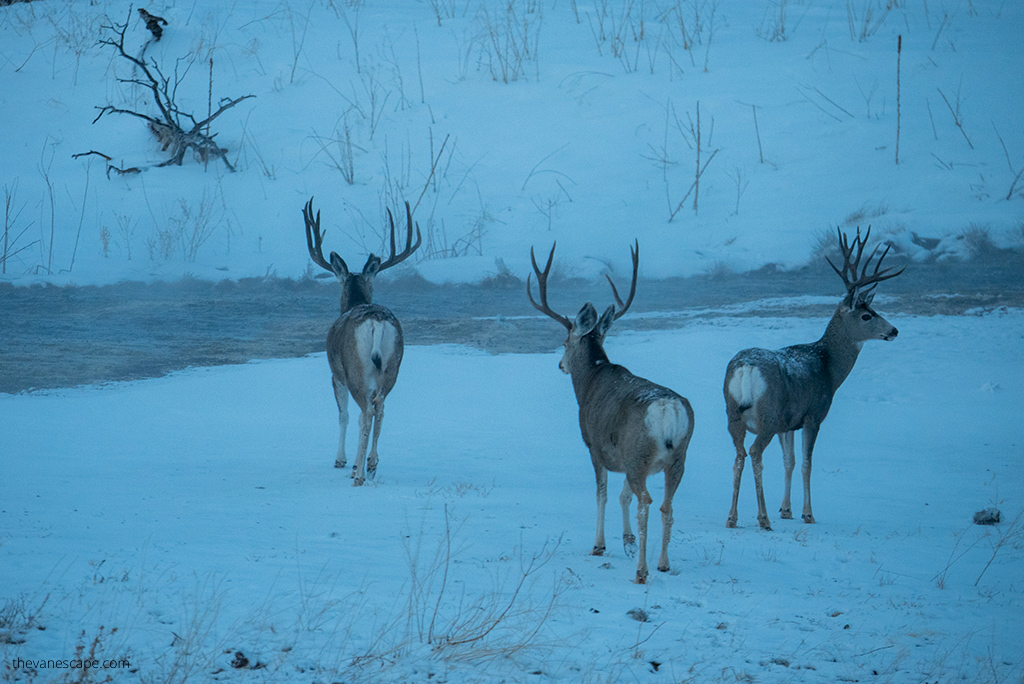
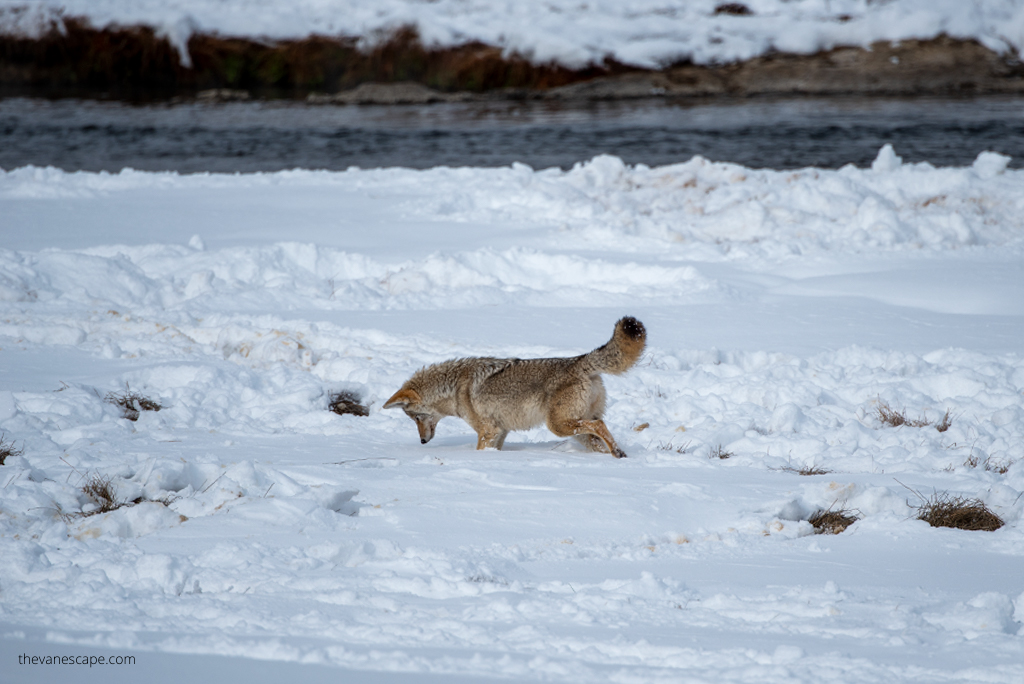
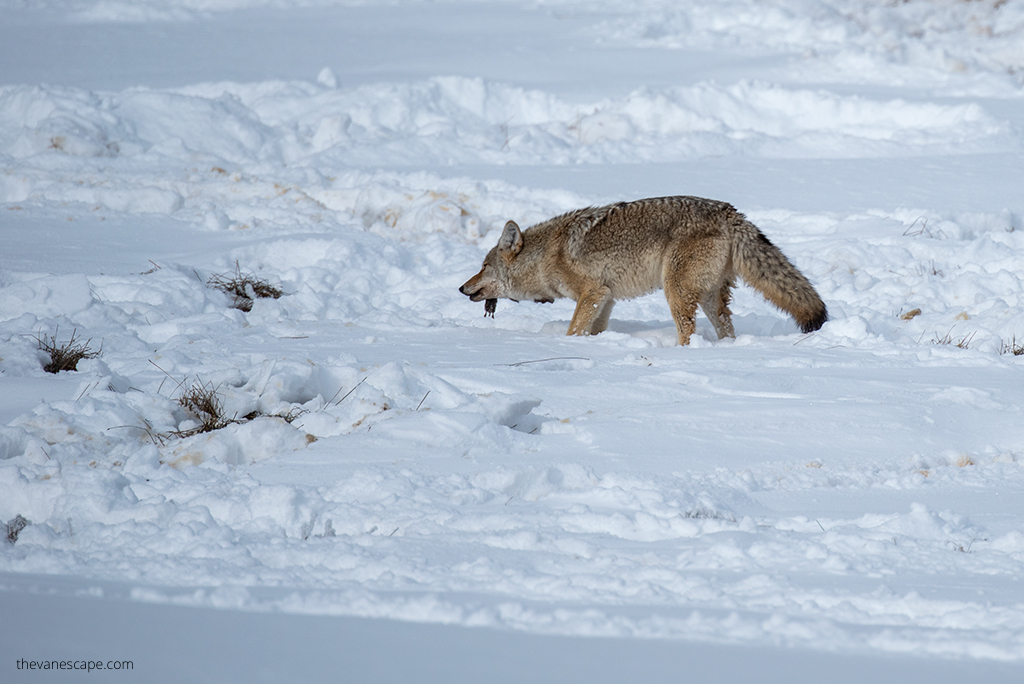
Even if you don’t spot them up close, you’ll likely see bison, elk, foxes, coyotes, and bald eagles. Winter makes these sightings easier because animals stand out against the snow.
Multi-Day Photography or Wolf Tours from Bozeman
For serious wildlife enthusiasts or photographers, multi-day tours from Bozeman or Gardiner focus entirely on Yellowstone’s winter wildlife. You’ll travel early in the morning and at dusk when wolves are most active.
The guides know each pack’s habits, increasing your chances of great sightings. When we visited, these tours were fully booked—but other photographers we met came back with incredible shots.
Yellowstone & Grand Teton Combo Tours from Jackson
Some longer guided trips combine Yellowstone and Grand Teton National Parks over four to five days. They include snowcoach travel, a horse-drawn sleigh ride through the National Elk Refuge, and time in both parks’ stunning winter landscapes.
If you want a full winter immersion without worrying about logistics, this option is hard to beat.
Each of these tours offers a different experience—whether you’re chasing geysers, wolves, or quiet snowy roads. For most travelers, one guided day and one self-drive day create the perfect balance of comfort, freedom, and adventure.
Where to Stay in Yellowstone in Winter
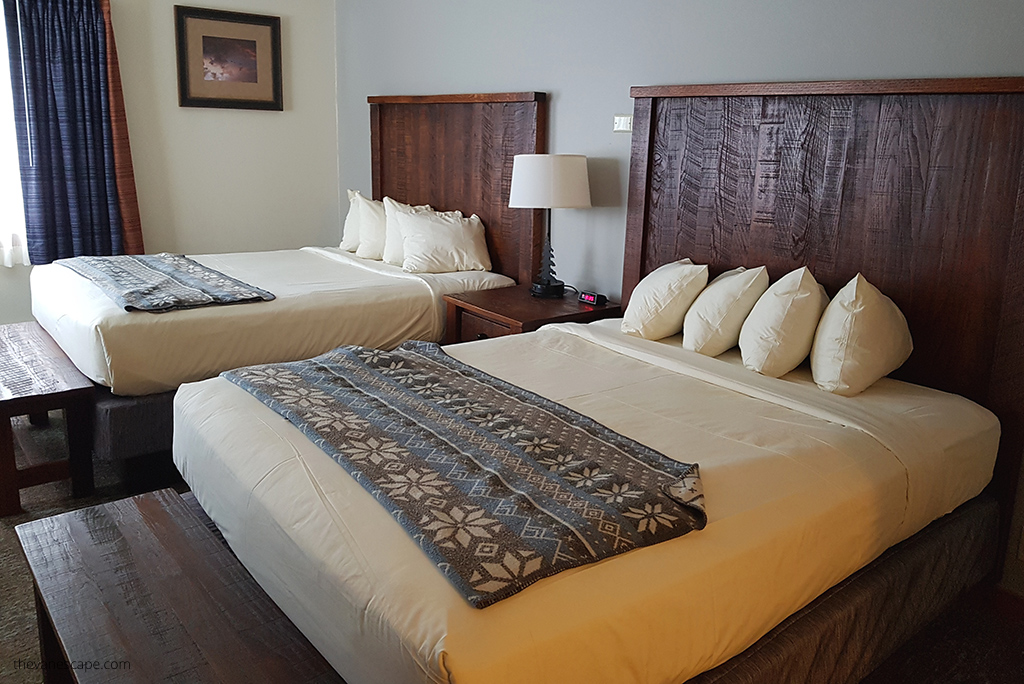
Finding a cozy base is part of what makes a Yellowstone winter trip so special. With most park lodges closed for the season, your choices narrow down—but they’re all memorable in their own way.
Lodging Inside Yellowstone National Park
Only two lodges stay open during winter:
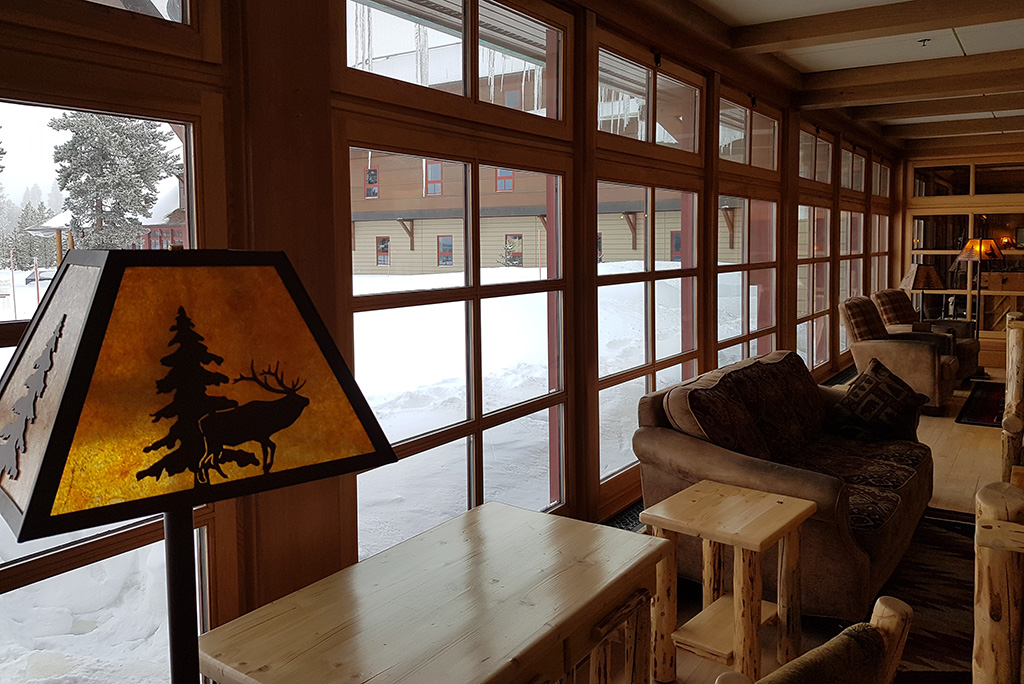
- Old Faithful Snow Lodge & Cabins – Deep inside the park, accessible only by snowcoach or snowmobile. We spent three nights here and loved every moment. The air smelled like pine and wood smoke, and every evening ended by the fireplace with a warm drink. It’s pricey but worth it for the experience of waking up to steaming geysers and untouched snow.
- Mammoth Hot Springs Hotel & Cabins – Located near the North Entrance, this lodge is easier to reach by car. It’s perfect if you plan to explore the Northern Range and Lamar Valley for wildlife watching.
Both options require advanced reservations through the official park concessioner, and they sell out months ahead—especially the Snow Lodge.

Campgrounds Open in Winter
If you’re traveling by RV, the only year-round campground inside the park is Mammoth Campground. It sits five miles south of Gardiner at 6,200 feet (1,890 m). Sites cost around $25 per night and include restrooms but no hookups.
We stayed one night in our RV there—and quickly learned how cold Yellowstone nights can get. At -4°F (-20°C), even our cooking oil froze solid.
Lodging Outside the Park
If you prefer more comfort (and lower prices), look just outside the park boundaries:
- Gardiner, Montana – The best base for winter trips. It’s right at the North Entrance and offers several hotels, lodges, and restaurants. We recommend The Ridgeline Hotel at Yellowstone and Absaroka Lodge—both convenient and cozy.
- Cooke City, Montana – A tiny, snowed-in town near the Northeast Entrance. It’s ideal for travelers wanting a quiet, remote feel and easy access to Lamar Valley.
- West Yellowstone, Montana – Works mainly as a base for guided oversnow tours, since the West Entrance road is closed to regular cars. It’s about a 3–4 hour winter drive from Gardiner.
Wherever you stay, book early and prepare for cold nights, limited dining options, and slower travel. The trade-off? Warm fires, quiet evenings, and the feeling that you have Yellowstone almost to yourself.
Temperatures, Weather, and Safety In Winter Yellowstone
Yellowstone in winter is stunning—but it’s also extreme. Be ready for deep snow, biting winds, and temperatures that can plunge far below zero.
During our week in January, daytime highs stayed around 10–20°F (-12 to -6°C), and nighttime lows often dropped below -10°F (-23°C). On the coldest night, our thermometer hit -27°C (-16°F).
Even inside the RV, cooking oil froze solid. Still, most days were bright and sunny, which made the cold feel manageable and the scenery incredible for photography.

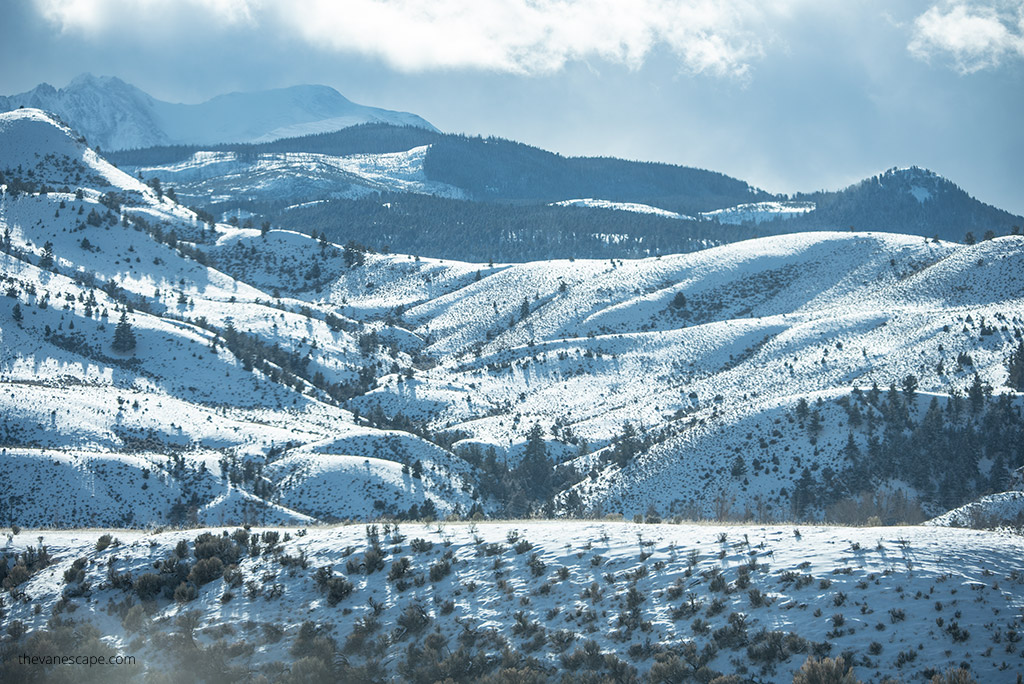
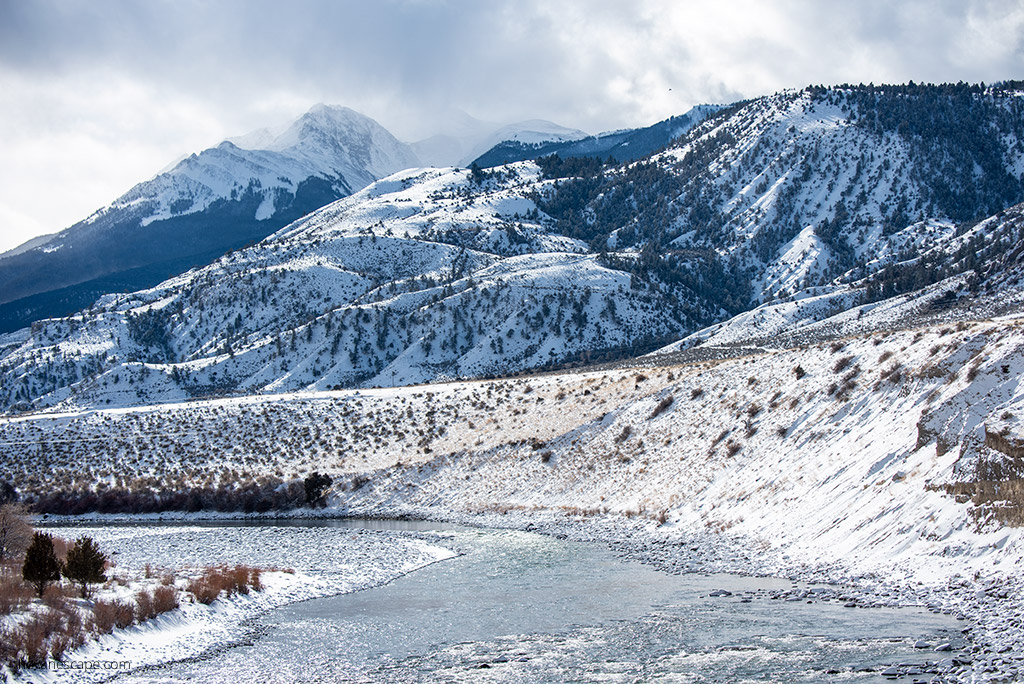
Snow is constant from December through March, and storms can roll in without warning. Roads turn slick fast, and visibility can vanish in a whiteout. Always check weather and road conditions on the NPS website before heading out each morning.
Wind chill can make temperatures feel much colder, especially on open plateaus or when riding a snowmobile. Dress in layers, cover your face and hands, and keep a spare set of dry gloves and socks in your bag.
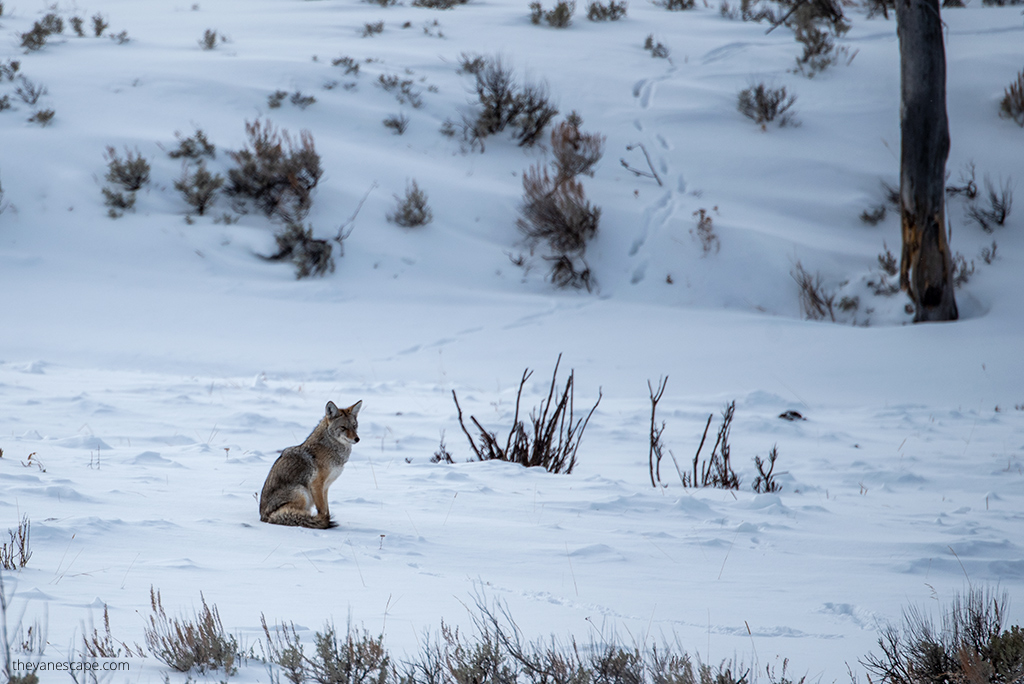

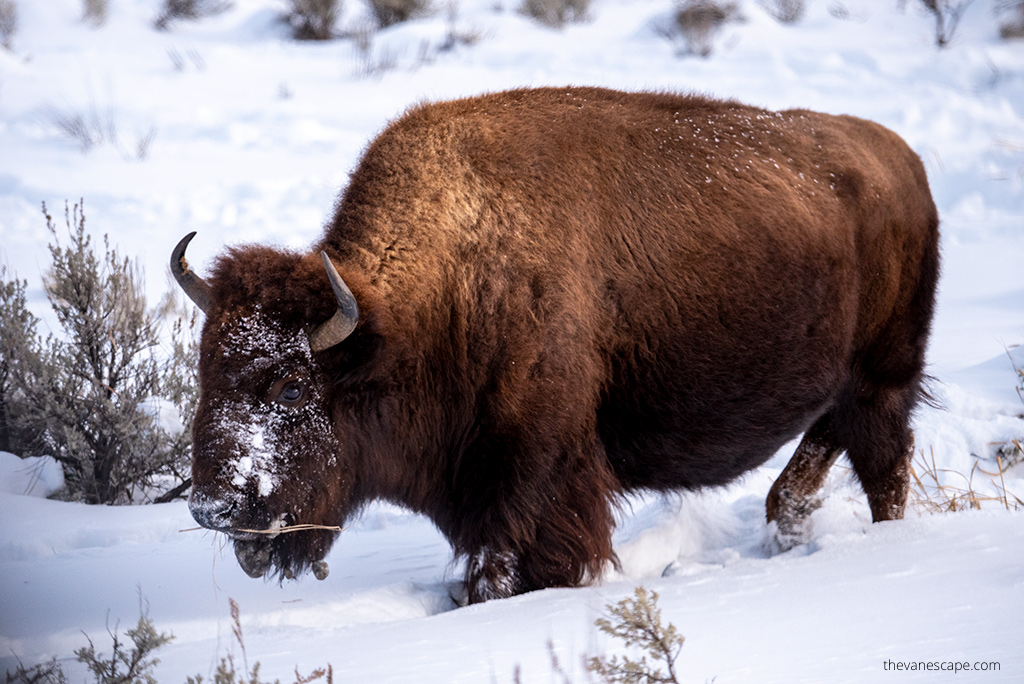
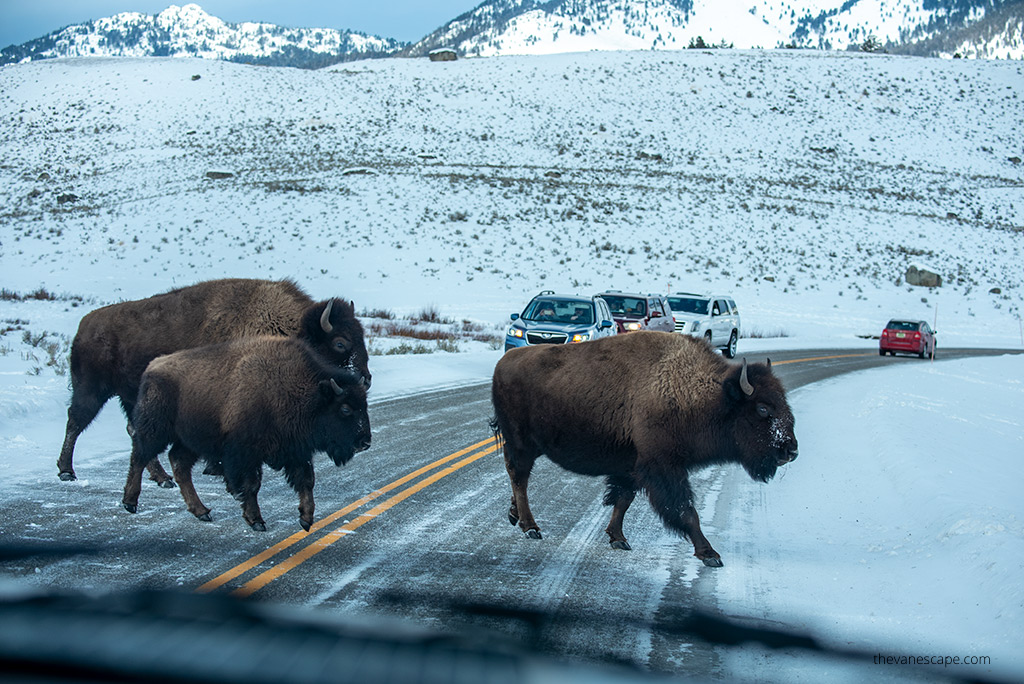
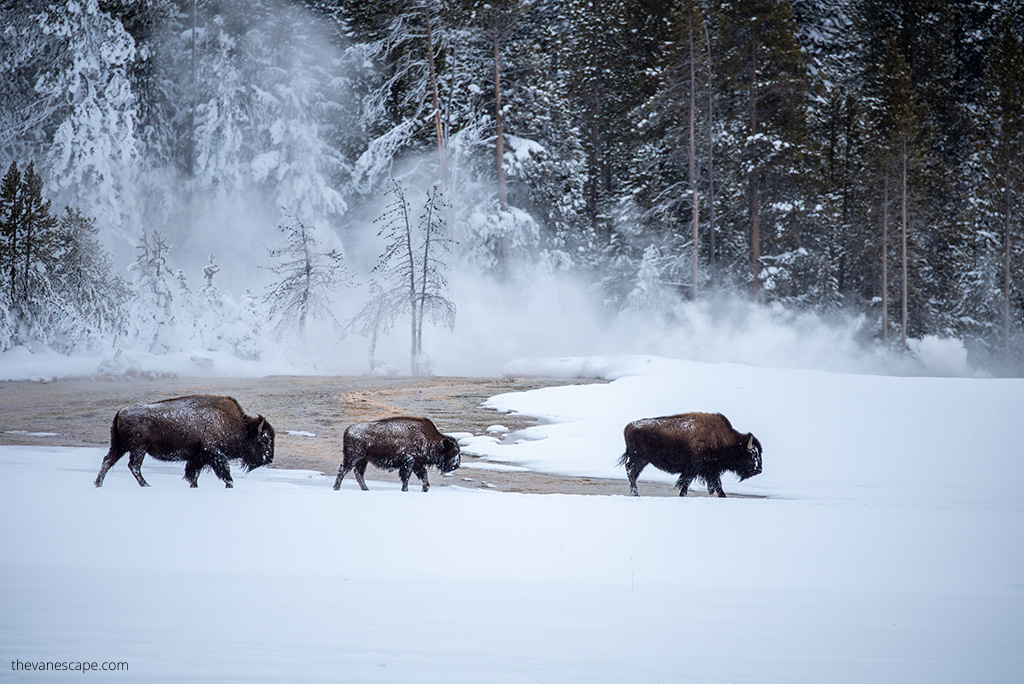
Wildlife adds another safety layer. Bison often walk along the roads because the snow is easier to navigate there. Stay inside your car if they approach and never block their path. Keep at least 25 yards (23 meters) from bison and elk, and 100 yards (91 meters) from wolves or bears—even in winter.
Despite the harshness, Yellowstone in winter feels peaceful and alive. With good gear, smart planning, and a bit of caution, you’ll find that the cold only adds to the magic.
What to Pack for Yellowstone in Winter
Packing smart makes all the difference in Yellowstone’s deep cold. Temperatures swing quickly, trails can be icy, and once you’re out exploring, warmth and safety depend on the gear you bring. After a week in the park, here’s what Chris and I consider essential.
Dress in Warm, Breathable Layers
The key is layering. Start with a thermal base layer, add a fleece or down mid-layer, and finish with a waterproof and windproof shell. This system traps heat but lets moisture escape while hiking or snowshoeing.
Insulated, Waterproof Boots
Warm, high-quality snow boots are a must. Pick a pair with strong traction and insulation rated for sub-zero temperatures. We often walked through deep snow or icy pullouts—ordinary hiking shoes wouldn’t have worked.
Gaiters and Snow Pants
Waterproof gaiters prevent snow from sneaking into your boots, especially when walking off-trail or in drifts. Pair them with insulated snow pants to stay dry during long outdoor hours.
Snowshoes or Crampons
Yellowstone’s snow can be knee-deep in places. Snowshoes make hiking possible and fun. You can rent them at Old Faithful Snow Lodge or Mammoth Hot Springs Hotel if you don’t own a pair. When the snow hardens into ice, light crampons or microspikes keep you steady.
Trekking Poles
Poles with snow baskets give balance and stability while hiking through uneven terrain or thick snow.
Hand and Foot Warmers
Simple but lifesaving on long days outdoors. We used hand warmers and toe warmers every morning before heading out. They fit inside gloves or boots and keep your circulation strong when the temperatures drop below zero.
Vehicle Emergency Kit
If you plan to drive yourself, always pack:
- Tire chains or traction mats
- Shovel and scraper
- Blanket and flashlight
- Extra water and snacks
Snacks and Hydration
The cold burns energy fast. Bring high-calorie snacks like protein bars, nuts, and jerky, and carry a thermos with hot tea or soup to stay hydrated.
Our Packing Tip
Even if you think you’re dressed warm enough—add one more layer. Yellowstone’s wind and altitude make it feel colder than the thermometer says. We learned that the hard way when our camera batteries and fingers froze during a sunrise shoot in Lamar Valley.
With the right gear, you can enjoy every frosty minute of Yellowstone’s winter wonderland.

The Best Things To Do in Yellowstone in Winter
Winter brings a completely different rhythm to Yellowstone. With fewer people and snow-covered landscapes, every experience feels wilder and more personal. These are our favorite things to do based on our own January visit.
Drive the Northern Range
This scenic route from Gardiner to Cooke City stays open year-round and offers the best self-drive experience in winter. The 57-mile stretch passes Mammoth Hot Springs, Lamar Valley, and countless pullouts for photography and wildlife viewing.
We drove it several times and spotted bison, elk, coyotes, and even wolves in the distance. It’s one of the most beautiful winter drives in the U.S.
Watch for Wolves in Lamar Valley
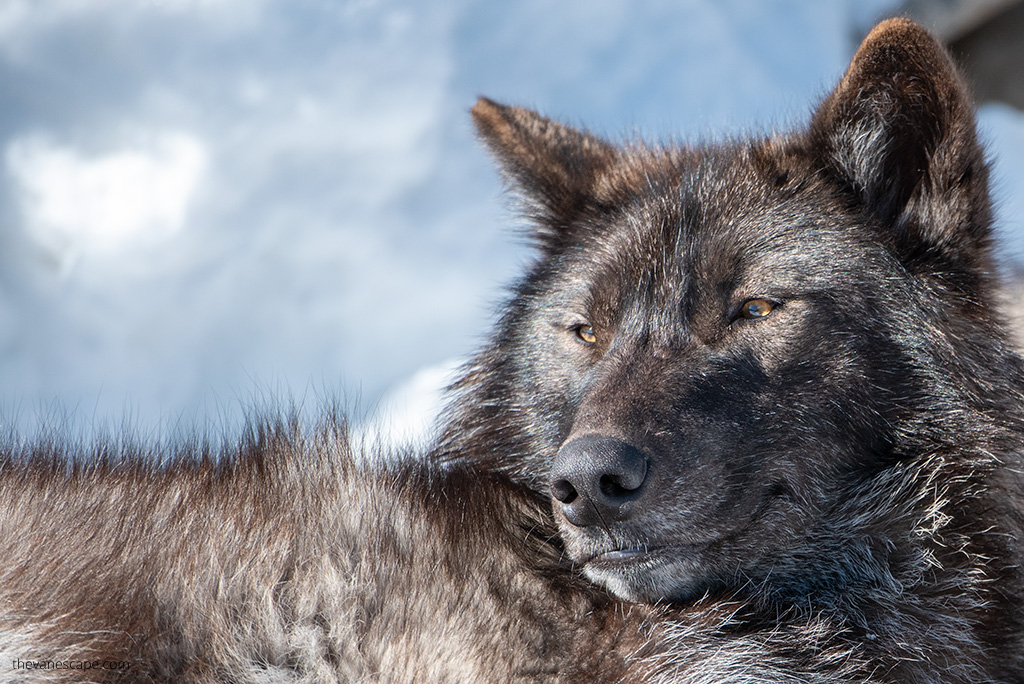
Lamar Valley is often called “America’s Serengeti,” and in winter, it truly earns the name. With snow on the ground, animals are easy to spot against the white backdrop. Bring binoculars or a spotting scope and visit at sunrise or sunset when wolves are most active.
Guided wolf-watching tours increase your chances even more—guides know the packs’ routines and use radios to share sightings.
Take a Snowcoach Trip to Old Faithful
A snowcoach tour is the only way to reach Old Faithful in winter unless you’re on a snowmobile. The journey itself is breathtaking—steam vents, frozen waterfalls, and wildlife along the route.
Watching Old Faithful erupt into the freezing air surrounded by snow was one of our most unforgettable travel moments.
Stay at Old Faithful Snow Lodge
If you can, spend at least two nights at the Old Faithful Snow Lodge & Cabins. It’s the only lodging open inside Yellowstone’s interior during winter. We loved relaxing by the fire after long, snowy hikes and waking up to the sound of geysers erupting in the cold dawn.

Go Snowshoeing or Winter Hiking
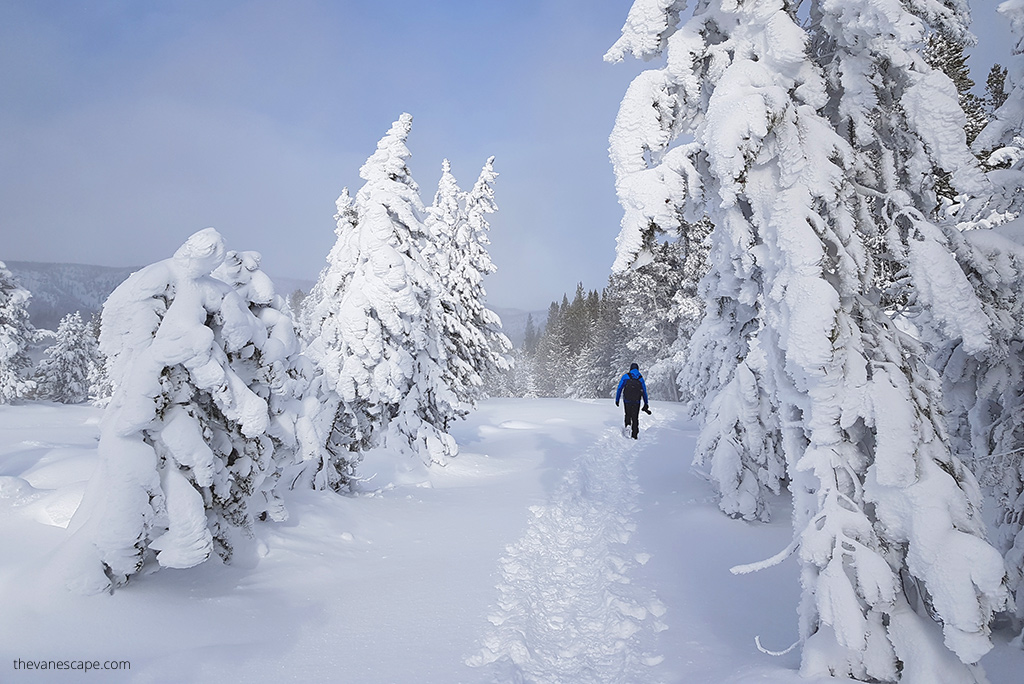
Snowshoeing is the best way to explore at your own pace. Trails near Mammoth Hot Springs, Tower Fall, and Old Faithful are open in winter, and rental gear is available inside the park. The fresh snow muffles every sound—it’s peaceful, quiet, and surreal.
Try Cross-Country Skiing
If you like skiing, Yellowstone is heaven in winter. Popular trails include the Biscuit Basin Trail near Old Faithful and the Blacktail Plateau Trail between Mammoth and Tower Junction. Both offer classic Yellowstone views and a good workout.
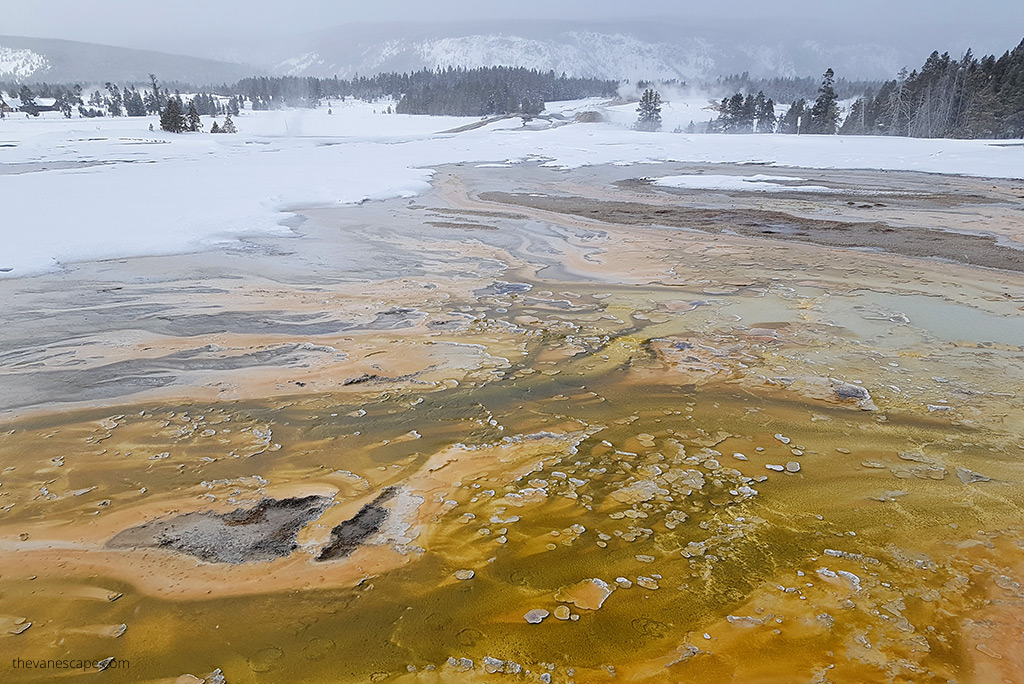
Photograph the Geysers in Snow
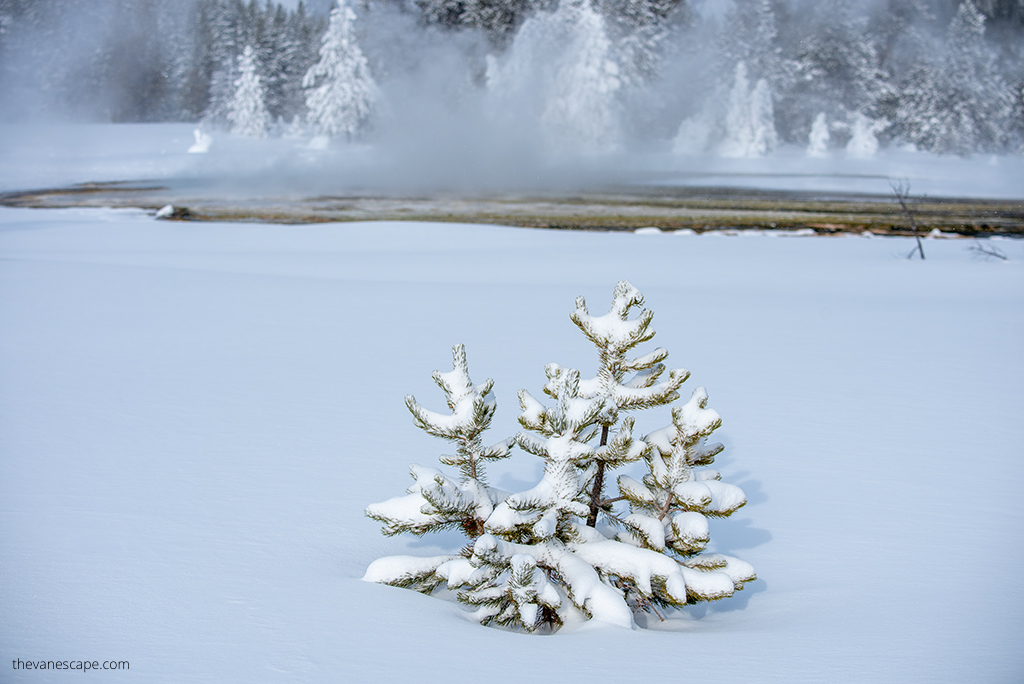
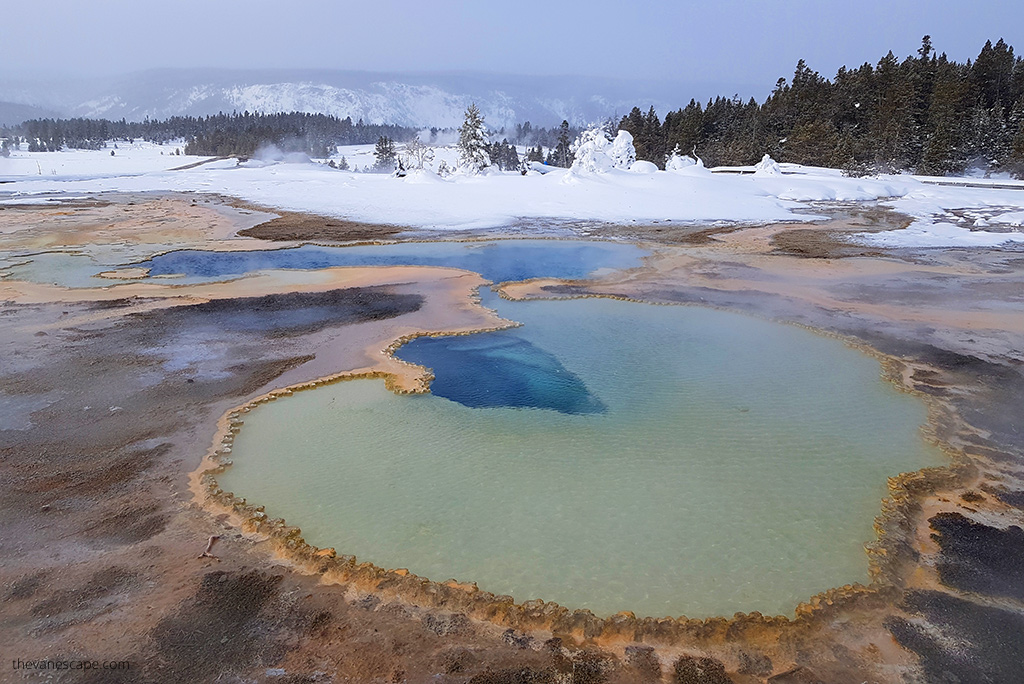
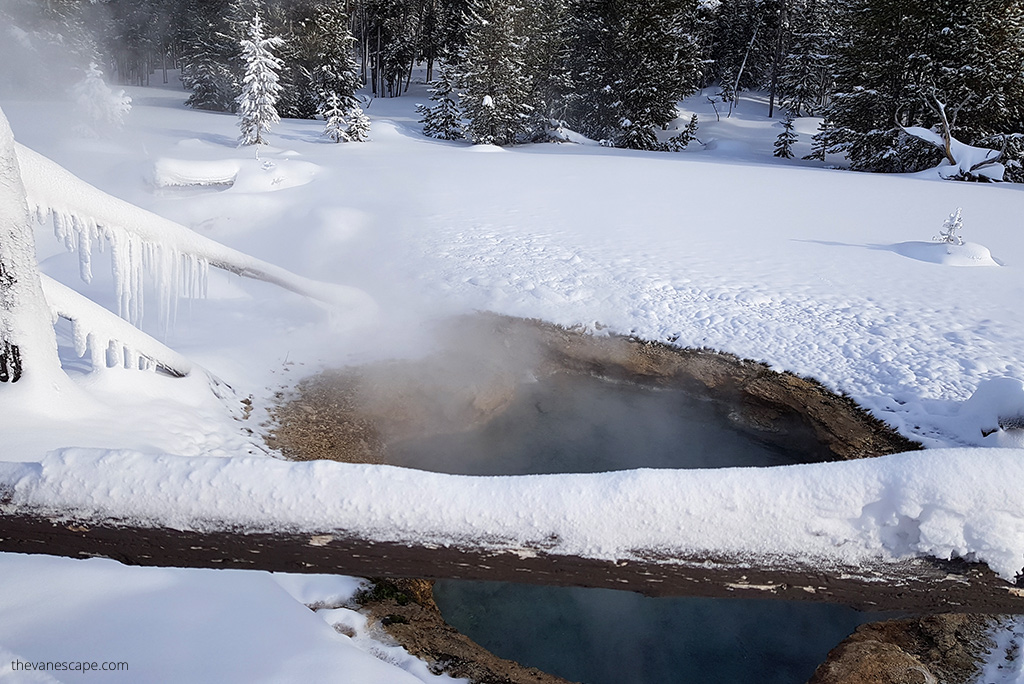
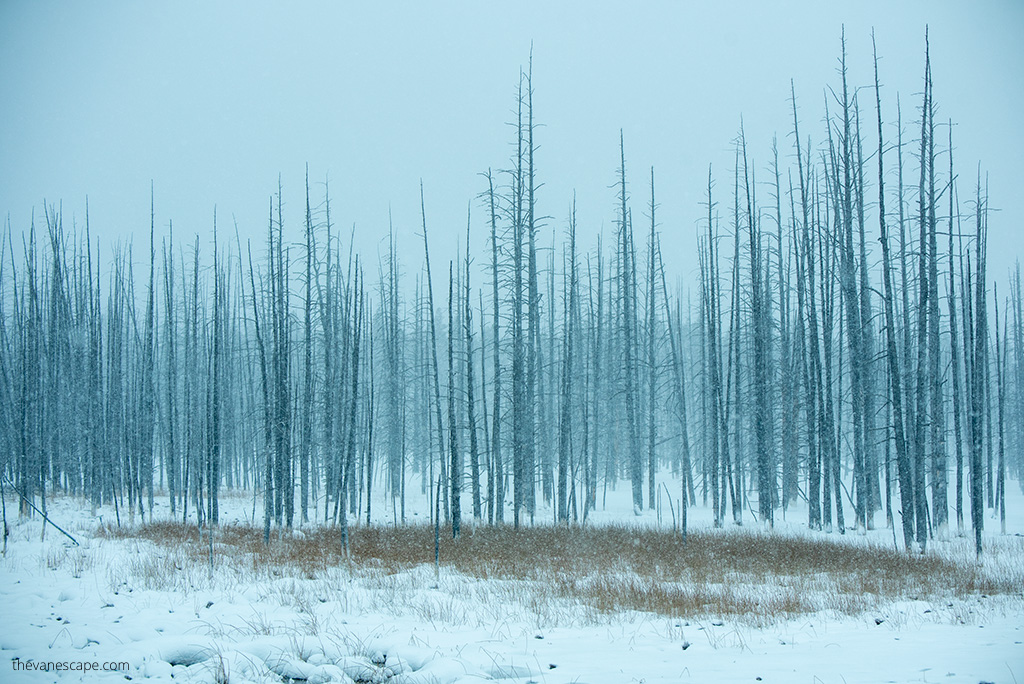
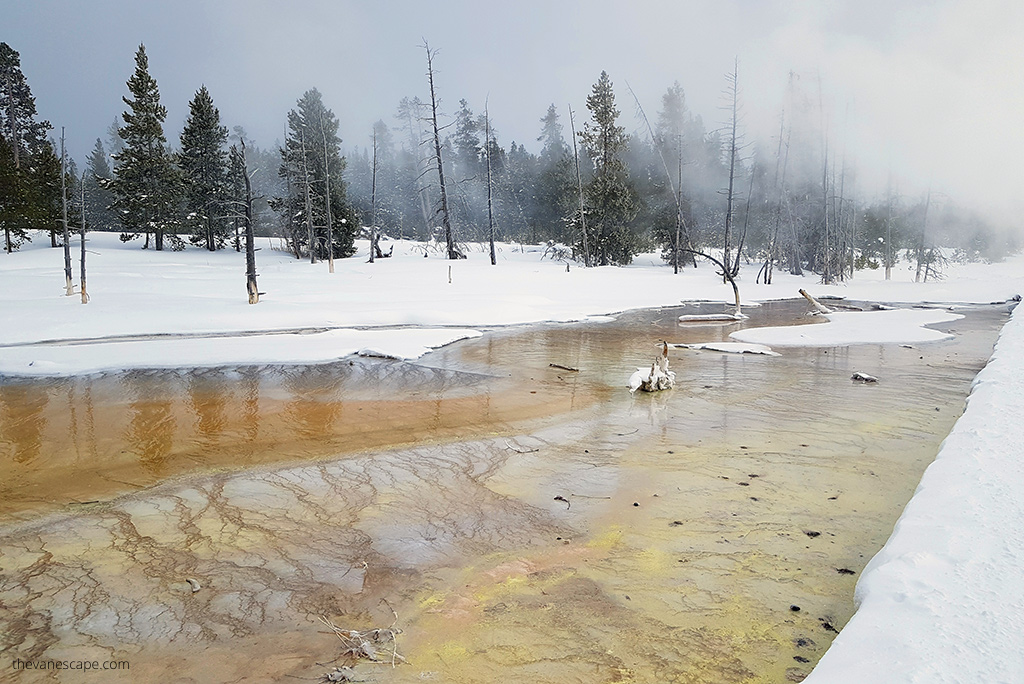
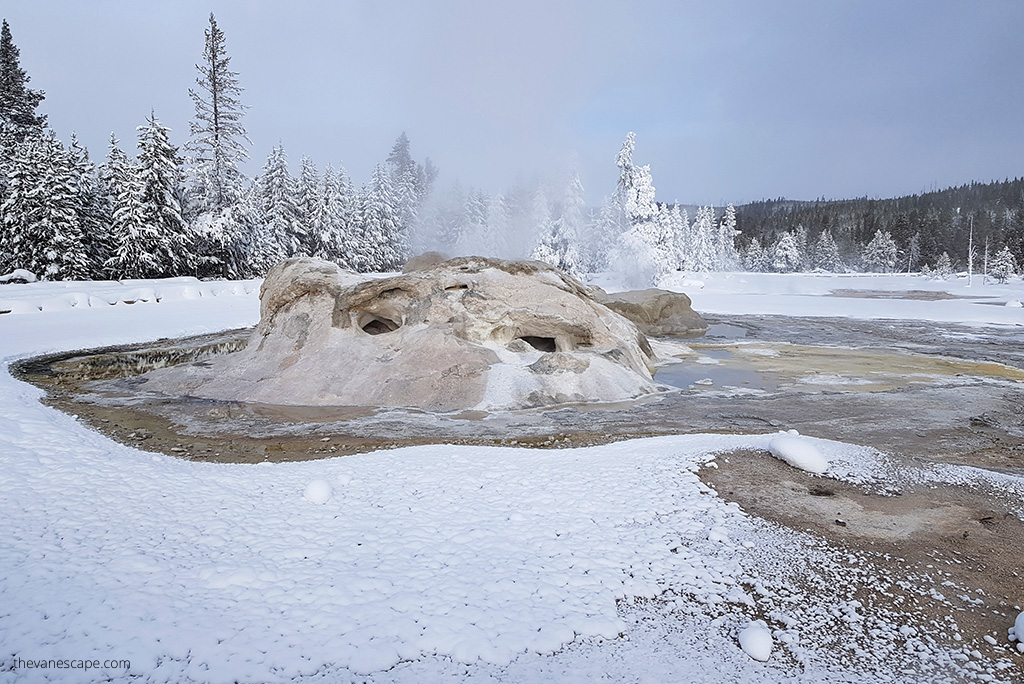
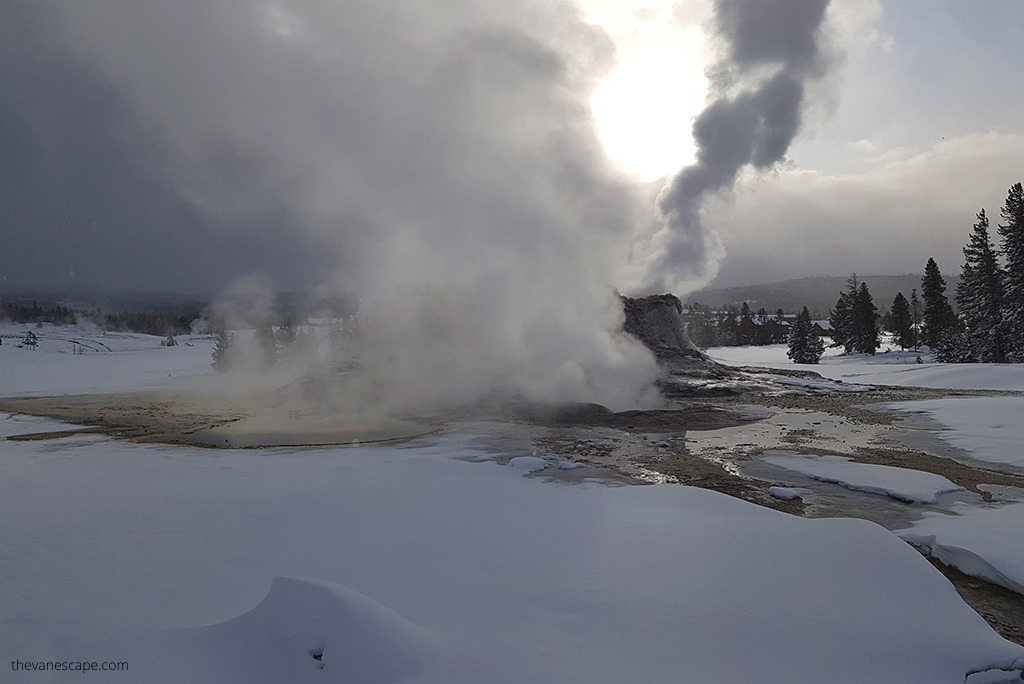
Nothing compares to seeing geysers explode against pure white snow. The contrast of colors and rising steam creates some of the most dramatic scenes in the park. Winter also brings fewer visitors, so you can take your time setting up shots or just enjoying the stillness.
Visit West Yellowstone and the Grizzly & Wolf Discovery Center
If you have extra time, make a quick stop in West Yellowstone. The Grizzly & Wolf Discovery Center is open year-round and offers a close look at rescued animals, perfect for families or when weather limits park access.
Every winter experience in Yellowstone feels raw and personal. Whether you spend two days or a week, this season reveals the park’s wildest, quietest side—and it’s worth every frozen moment.
Sample 2–4 Day Yellowstone Winter Itinerary
Planning your days ahead helps make the most of Yellowstone’s short winter daylight and limited road access. Here’s how we’d structure a trip depending on how much time you have.
2-Day Yellowstone Winter Itinerary
Day 1 – Gardiner & Mammoth Hot Springs
- Enter the park through the North Entrance at Gardiner.
- Stop for photos at the Roosevelt Arch.
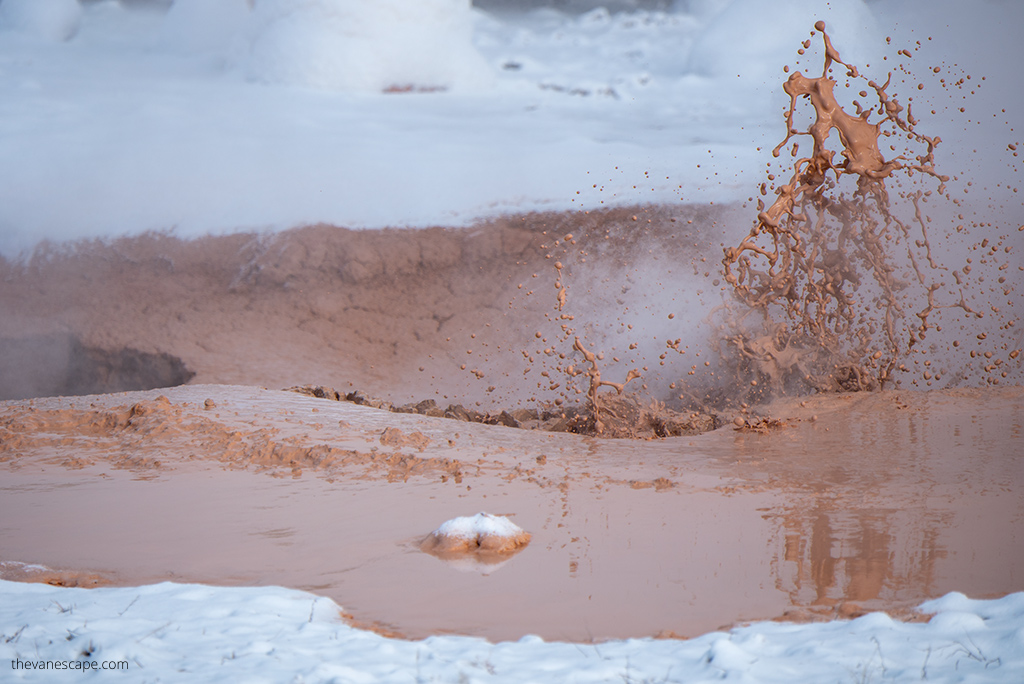
- Explore the steaming terraces at Mammoth Hot Springs—they look especially surreal against the snow.
- Watch for elk grazing near the Mammoth area.
- Overnight in Gardiner or at Mammoth Hot Springs Hotel.
Day 2 – Lamar Valley Wildlife Watching
- Leave before sunrise for Lamar Valley, the best time to spot wolves.
- Bring binoculars and hot coffee—you’ll likely see bison, foxes, or coyotes too.
- Continue toward Cooke City for more scenic stops.
- Return to Gardiner before dark; winter daylight fades early.
3-Day Yellowstone Winter Itinerary
Follow the first two days above, then add:
Day 3 – Snowcoach Adventure
- Join a snowcoach tour from Mammoth or West Yellowstone to Old Faithful.
- Watch the geyser erupt and photograph the frozen landscape.
- Have lunch at the Old Faithful Snow Lodge, then return in the afternoon.
- Overnight in Gardiner or back in Bozeman if you’re flying out.
4-Day Yellowstone Winter Itinerary
Add one more day for a relaxed pace or a deeper dive:
Day 4 – Extra Adventure
- Try snowshoeing around Mammoth or Tower Fall.
- Visit Yellowstone Hot Springs, located just outside Gardiner, for a well-earned soak.
- Enjoy your final evening with dinner and local craft beer in town.
We’ve done this loop several times, and four days feels just right—enough time to slow down, enjoy quiet mornings, and soak in the rare peace of Yellowstone in winter.
Costs, Passes, and Reservations
Even in winter, Yellowstone isn’t a spur-of-the-moment destination. Limited access, few lodging options, and short daylight hours mean you’ll want to plan well in advance—and budget wisely.
Entrance Fees
The standard Yellowstone National Park entrance fee still applies in winter:
- $35 per vehicle (valid for seven days)
- $20 per person if entering on foot, bicycle, or skis
If you plan to visit more national parks within a year, it’s smarter to buy the America the Beautiful Pass for $80. It covers entry to all U.S. national parks and public lands. We use it constantly and save money every season.
Even when booking a winter tour, remember that the entrance fee isn’t included in most packages. Having your pass ready also helps you skip payment lines at the gate.
Lodging and Tour Costs
- Old Faithful Snow Lodge & Cabins: around $250–$450 per night with meals available on-site.
- Mammoth Hot Springs Hotel: typically $250–$350 per night, depending on room type.
- Guided snowcoach or snowmobile tours: prices range from $250 to $450 per person per day, depending on the route and operator.
- Wildlife-watching tours from Gardiner or Bozeman: roughly $250–$500 per person for a full day.
Booking early—ideally by late summer—is essential. Both park lodges and oversnow tours fill up months in advance.
Dining and Extras
In winter, dining options are limited. Old Faithful Snow Lodge and Mammoth Hotel both serve hearty meals, but outside the park, towns like Gardiner or Cooke City offer only a few open restaurants. Groceries and snacks are more expensive in remote areas, so stock up before arriving.
Our Advice
Reserve everything—lodging, tours, and even snowshoe rentals—well ahead of time. And build a small buffer into your budget for unexpected weather delays or extra nights. In Yellowstone, a snowstorm can easily extend your stay, but honestly, you probably won’t mind.

Our Honest Take: Who Should Skip Winter in Yellowstone
As much as we love Yellowstone in winter, it’s not for everyone. This season demands patience, flexibility, and a real tolerance for cold. If you prefer easy logistics, warm weather, or spontaneous travel, you might want to visit in late spring or early fall instead.
Travel in winter can be unpredictable. Roads close suddenly due to snowstorms or wildlife crossings, and long drives can stretch into all-day journeys. Distances that take two hours in summer can double in winter. If you’re uncomfortable driving on icy mountain roads or dealing with below-zero temperatures, this trip may feel stressful rather than exciting.
Facilities are also limited. Only a few lodges, gas stations, and restaurants stay open. You’ll need to plan meals ahead and be ready for quiet evenings without much nightlife.
Still, for travelers who love solitude, wildlife, and dramatic landscapes, winter in Yellowstone is unforgettable. Chris and I have visited the park in every season, but nothing compares to its frozen silence and endless white vistas. If you enjoy adventure, don’t mind a little discomfort, and want to experience Yellowstone in its wildest form—this season will stay with you forever.
Yellowstone in Winter: FAQs
- Can I drive to Old Faithful in winter?
No, private vehicles can’t reach Old Faithful once snow covers the interior roads. The only way to visit is by guided snowcoach or snowmobile tour. Both run from mid-December to mid-March and must be booked in advance.
- When do snowcoach and snowmobile tours operate?
The oversnow season typically runs from mid-December through mid-March, depending on snow conditions. The park closes for preparation in early November and again from late March to mid-April, when no public access to the interior is possible.
- Are 4WD or chains required for winter driving?
While not mandatory, 4WD or AWD vehicles are strongly recommended. Conditions on the Northern Range can change fast, and snow or ice is common even on clear days. Carry tire chains if your rental allows them.
- Is winter a good time for wildlife photography?
Absolutely. Snow makes animals easier to spot, and the low winter light is perfect for photos. Lamar Valley is your best chance to see wolves, while Mammoth Hot Springs and Gardiner are great for elk and bison. Bring a telephoto lens and patience—the best shots often come early in the morning.
- What should I do if a storm hits?
Stay put. Check for updates on the NPS road status page, and don’t try to outrun bad weather. Lodges and tour companies are used to delays, and most will help you adjust your plans safely.
- Is winter travel in Yellowstone worth it?
If you’re ready for cold mornings, limited services, and unpredictable weather—yes, it’s absolutely worth it. The peaceful silence, steaming geysers, and wildlife encounters make winter in Yellowstone one of the most unforgettable national park experiences in the U.S.
Final Thoughts
Yellowstone in winter feels like stepping into another world—a silent, frozen wilderness where steam drifts through the air and bison move slowly through deep snow. It’s not the easiest trip to plan, but it’s one of the most rewarding journeys we’ve ever taken in the U.S.
Chris and I still talk about our week there—the crackle of ice under our boots, the wolves howling in Lamar Valley, and the sight of Old Faithful erupting into a pale blue sky. Winter strips Yellowstone down to its raw, wild essence.
If you’re ready for adventure, dress warmly, plan carefully, and keep your days flexible. You’ll find beauty everywhere—from the smallest frost crystals on a railing to the wide-open valleys glowing under the winter sun.
For us, Yellowstone in winter wasn’t just another road trip—it was an unforgettable reminder of how quiet, powerful, and alive nature can be when the world slows down.
Do You Like It? Pin It For Later!