15 Best Things to Do in Canyonlands National Park: Viewpoints, Hikes, and Scenic Drives
Canyonlands National Park is one of the most dramatic landscapes in the American Southwest. Deep canyons, towering mesas, and endless desert views stretch across four very different districts shaped by the Colorado and Green Rivers. Each area feels like its own park, and even a short visit delivers some of the most unforgettable scenery in Utah. This guide focuses on the best things to do in Canyonlands—the top viewpoints, hikes, scenic drives, and unique experiences that help you see the park’s highlights fast. It’s not a full trip-planning guide, but rather a clear list of what’s truly worth your time. Canyonlands is remote and rugged, but absolutely worth the effort. Use this list to build your perfect visit and enjoy the best views in one of Utah’s most beautiful national parks.
This article may contain affiliate / compensated links. For full information, please see our disclaimer here.
Our Experiences
Chris and I have visited Canyonlands several times over the years, often pairing it with Arches during our Utah national parks road trips. Each visit reminded us how huge and varied this park is.
We’ve watched sunrise at Mesa Arch, stayed out for sunset at the Green River Overlook, hiked along canyon rims, and explored different corners of Island in the Sky and the Needles.
Because we love photography, we returned during different seasons to chase better light and clearer skies. Canyonlands rewards patience—sunrise and sunset feel different each time, and the shadows inside the canyons change by the minute. Some of our favorite images from Utah came from this park.
If you’re planning a first visit, start with Island in the Sky. It’s the most accessible district and delivers big views with very little effort. But if you have extra time, exploring the Needles or joining a guided 4WD trip into the backcountry shows a completely different side of Canyonlands.
The best option is to combine exploring Canyonlands with nearby Arches and use Moab as your base—one of the best outdoor towns in Utah.
The list below includes the experiences we found the most memorable and worth adding to any Canyonlands itinerary.
Quick Canyonlands Facts & Visitor Basics
Before diving into the best things to do, it helps to know a few key details about Canyonlands National Park. This rugged desert park covers a huge area in southeast Utah, about 35–40 minutes from Moab. The Colorado and Green Rivers divide the park into four districts—Island in the Sky, The Needles, The Maze, and The Rivers—each offering a different kind of adventure.
- Entrance Fees. $30 per private vehicle, valid for 7 days. Entry is included with the America the Beautiful Pass, which is the best value if you’re visiting several national parks.
- Hours. The park is open 24 hours a day, year-round. Visitor center hours vary by district and season, with Island in the Sky offering the most consistent schedule.
- Best Time to Visit. Spring (April–May) and fall (mid-September–October) offer the best hiking conditions with comfortable temperatures. Summer heat regularly climbs above 100°F, making mid-day hikes difficult. Winter brings cold days, icy trails, and occasional snow.
- Nearest Services. All food, gas, and lodging are located outside the park. Moab is the main base for Island in the Sky and the most convenient option for a first visit.
District Overview:
- Island in the Sky: Closest to Moab, with famous overlooks, short hikes, and great sunrises and sunsets.
- The Needles: Remote and rugged, full of long trails, colorful spires, and backcountry routes.
- The Maze: One of the most remote areas in the National Park System—requires true 4WD and backcountry skills.
- The Rivers: Calm stretches and rafting sections along the Colorado and Green Rivers, accessible only by guided trips or with boating permits.
Agnes’ Advice: We also have a detailed article on how to plan your Canyonlands trip, where we break down routes, timing, safety tips, lodging, camping options, weather by month, and more—perfect for building a complete itinerary.
15 Best Things to Do in Canyonlands National Park
Here’s our list of the best things to do in Canyonlands. Choose the overlooks, hikes, and adventures that match your travel style and the time you have—it’s easy to build a great visit from these highlights.
1. Watch Sunrise at Mesa Arch (Island in the Sky)
If you only do one thing in Canyonlands, make it sunrise at Mesa Arch. This short trail leads to a cliff-edge arch that glows bright orange as the rising sun lights up the canyon below. The scene is famous for a reason, and it’s one of the most iconic sunrise spots in the American Southwest.
The hike is easy and takes only a few minutes from the parking area, but plan to arrive early. Photographers line up well before sunrise, especially in spring and fall. Bring a headlamp for the walk, watch your step on the slickrock, and pack a tripod if you want sharp, low-light shots. Even outside the sunrise rush, Mesa Arch offers impressive views of the La Sal Mountains and the vast canyon landscape.
This is one of the most unforgettable moments you can experience in Canyonlands—simple, accessible, and breathtaking every time.
Agnes’ Advice: Canyonlands is big, wild, and exposed. Even for short hikes, pack more water than you think you’ll need, dress for sun and wind, and download offline maps before leaving Moab—cell service disappears quickly.

2. Drive the Island in the Sky Scenic Road and Stop at the Top Viewpoints
Island in the Sky is the most accessible district in Canyonlands and offers some of the best overlooks in Utah—all along a paved scenic road. You can see enormous canyons, mesas, buttes, and river-carved landscapes without long hikes, which makes this district perfect for first-time visitors.
The viewpoints are close to parking areas, so you can stop often and take your time exploring. Each overlook shows a different angle of the park’s dramatic terrain.
Here are the must-see stops:
- Visitor Center Viewpoint: A quick walk across the road gives you a classic first look at the Island in the Sky mesa.
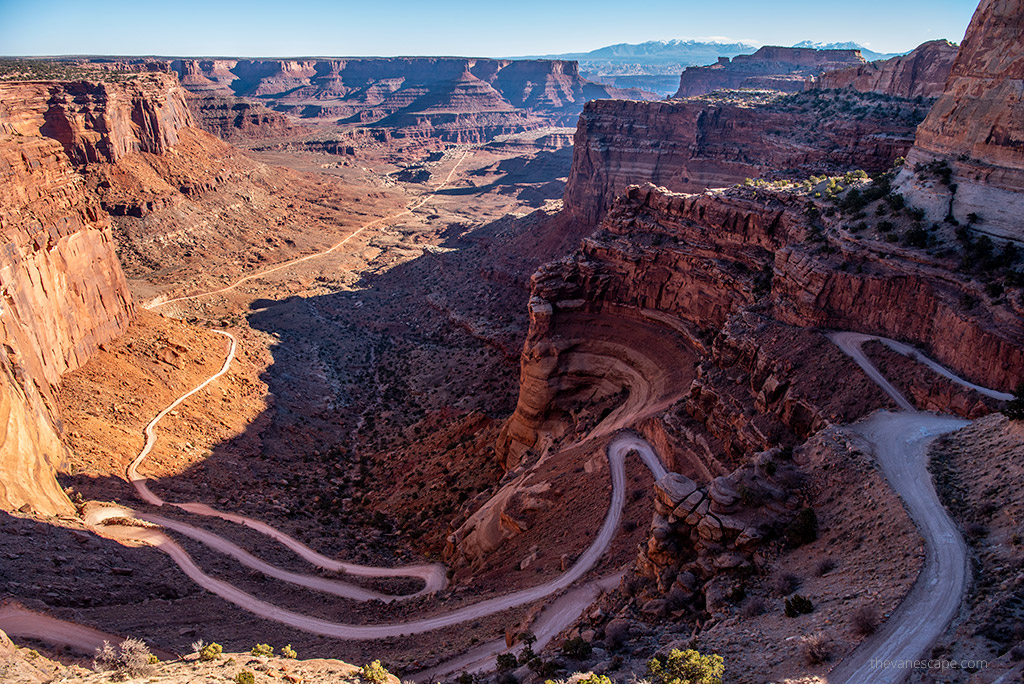
- Shafer Canyon Viewpoint: See the famous switchbacks dropping steeply toward the White Rim.
- Buck Canyon Overlook: A sweeping view of deep canyons shaped by the Colorado River.
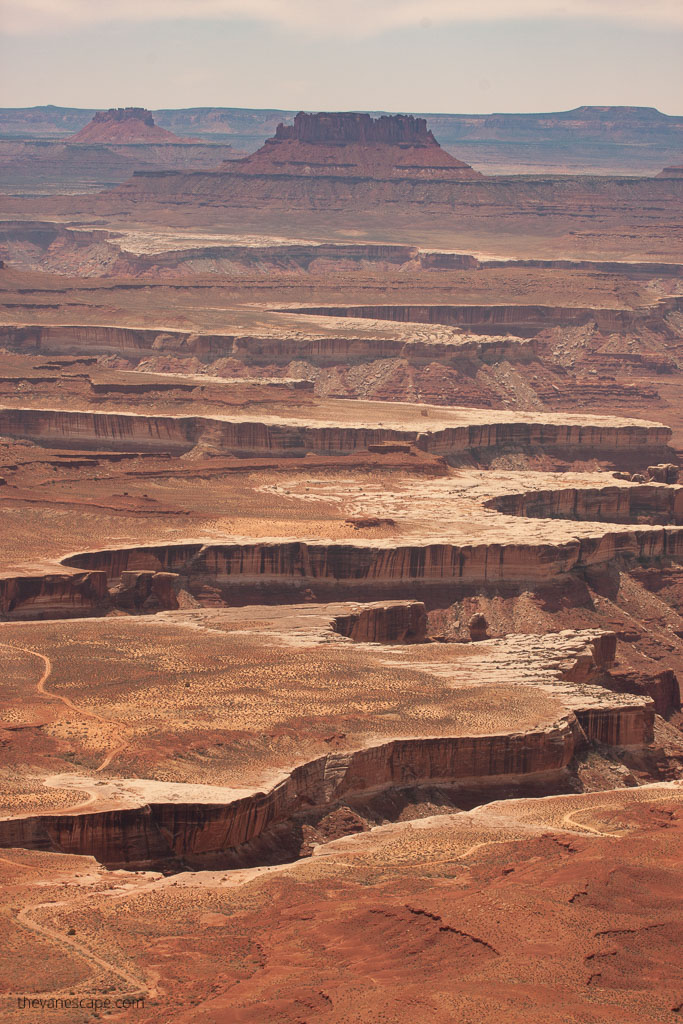
- Green River Overlook: One of the most impressive vistas in the park, especially at sunset.
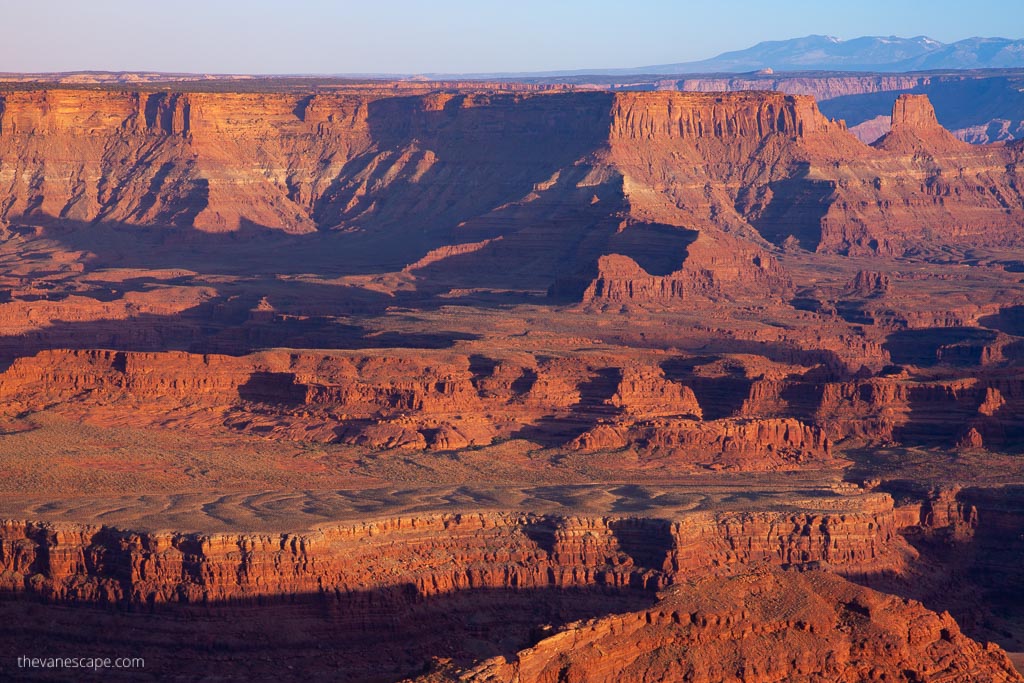
- Grand View Point: A wide, panoramic overlook at the end of the scenic road—don’t miss it.
Plan at least a couple of hours for the drive, longer if you enjoy photography. With very little effort, you’ll see some of the most dramatic landscapes in Canyonlands.
3. Hike the Grand View Point Trail (Island in the Sky)
The Grand View Point Trail is one of the most rewarding short hikes in Canyonlands. The path follows the edge of the mesa with constant views of deep canyons carved by the Colorado and Green Rivers. It’s an easy, mostly flat walk, but the scenery feels enormous from start to finish.
The trail leads from the main overlook to a broad viewpoint at the southern tip of Island in the Sky. From here, you can see layers of mesas, fins, and buttes stretching toward the horizon. The best light comes in the morning and late afternoon, when shadows add even more depth to the landscape.
Because the trail is exposed, start early or go late in the day for cooler temperatures and softer light. Bring water, sun protection, and a camera—this is one of the park’s most photogenic spots, and the views get better with every step.

4. Hike the White Rim Overlook Trail (Island in the Sky)
The White Rim Overlook Trail is one of the best short hikes in Canyonlands if you want big views with very little effort. The trail is easy, quiet, and often far less crowded than Mesa Arch or Grand View Point. It follows a narrow mesa edge and ends at a dramatic viewpoint high above Monument Basin.
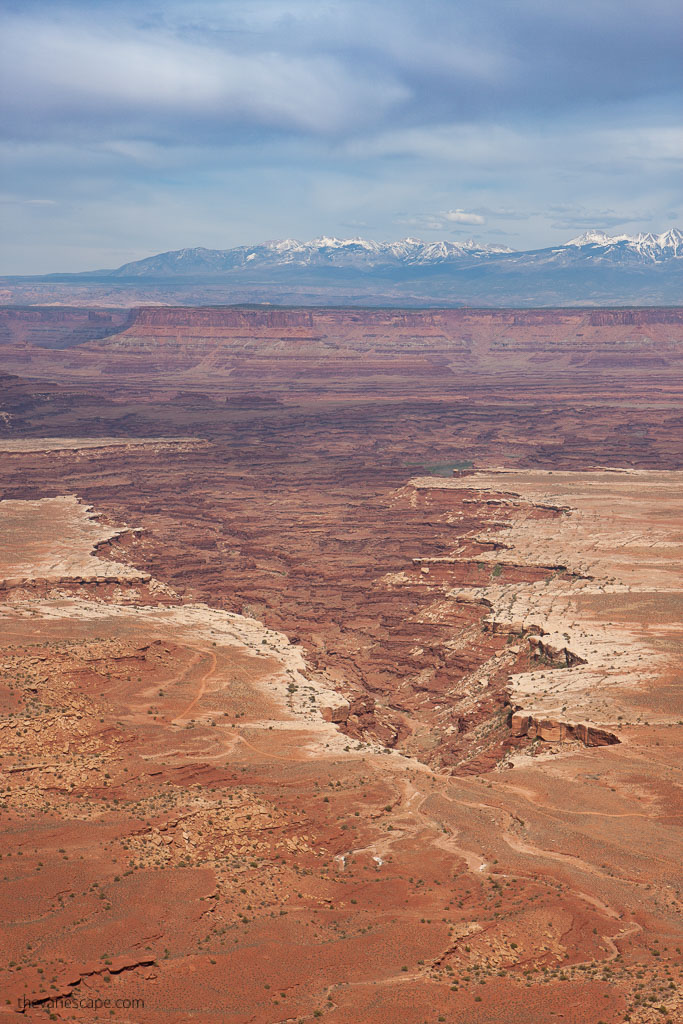
From the overlook, you’ll see the White Rim Road winding across the desert below, the Colorado River carving its deep canyons, and the La Sal Mountains rising in the distance. The perspective is incredible—you feel like you’re standing on the roof of Utah’s canyon country.
Aim for late-afternoon light if you enjoy photography. The sun lights up the buttes and spires to the west, creating warm colors and long shadows. Parking is limited at the trailhead, so arrive early or visit later in the day when the area is quieter.
This is one of the most underrated trails in Island in the Sky and absolutely worth adding to your list.
5. Explore the Upheaval Dome Overlooks (Island in the Sky)
Upheaval Dome is one of the most mysterious features in Canyonlands, and geologists still debate how it formed. Some believe it’s the remnant of a meteor impact. Others think it’s a collapsed salt dome. Either way, the landscape looks completely different from the rest of the park, which makes it a great stop on any visit.
A short, steep trail leads to the first overlook, where you can peer down into a massive circular crater surrounded by jagged walls. If you have extra time, continue to the second overlook, which adds another mile of hiking and even better views of the strange greenish center below.
The trail is exposed, and the slickrock can be hot in the middle of the day, so start early or go late in the afternoon. Wear sturdy shoes and watch
6. Walk Up Whale Rock (Island in the Sky)
Whale Rock is a fun, family-friendly hike that gives you classic Canyonlands views without much effort. The trail climbs a rounded sandstone dome shaped like a giant whale, and the walk feels like a natural playground—gentle slickrock, wide curves, and plenty of space to explore.
From the top, you’ll see sweeping views of Island in the Sky and the surrounding canyons. It’s a great spot for photos because the dome sits high above the landscape but doesn’t require a long or difficult approach. Kids usually love this hike, and adults enjoy the easy scramble over smooth rock.
The trail is short, but it’s exposed, so carry water and avoid the hottest part of the day. The slickrock can also be steep in places—wear sturdy shoes and watch your footing on the descent. If you want a simple hike with big rewards, Whale Rock is one of the best choices in the park.
7. Hike Aztec Butte and See Ancestral Puebloan Structures (Island in the Sky)
Aztec Butte is one of the few hikes in Canyonlands where you can see ancestral Puebloan structures up close. The trail begins in a sandy wash and then splits. One path climbs the main butte for wide mesa views, while the other leads to smaller alcoves that shelter ancient stone granaries.
The structures are fragile, so you must view them from a respectful distance—but even from the trail, you can appreciate the craftsmanship and the history of the people who once lived in this region.
Both routes require short, steep scrambles on slickrock, so good footwear is important. The main butte offers panoramic views of Island in the Sky, while the smaller butte provides access to the cultural sites. If you enjoy combining history with scenery, this trail is a must.
Aztec Butte feels quiet compared to other popular spots, and the hike gives you a deeper connection to the human story behind Canyonlands.
8. Drive Shafer Trail or the White Rim Road (Island in the Sky)

If you want a true Canyonlands adventure, drive the Shafer Trail or explore part of the White Rim Road. These routes drop below the mesa and take you deep into the park’s backcountry—far beyond what you can see from the overlooks.
Shafer Trail begins with a dramatic set of tight switchbacks carved into the canyon wall. It’s one of the most iconic 4WD roads in the Southwest. Once you reach the bottom, the road winds across the desert with towering cliffs on both sides. The views are incredible the entire way.
White Rim Road loops for about 100 miles below the Island in the Sky mesa. You don’t have to drive the entire route; even a short section gives you a taste of the desert solitude. A day-use permit is required for all vehicles, and an overnight permit is required for multi-day trips.
These roads demand:
- high-clearance 4WD
- confident off-road driving skills
- plenty of water and supplies
If you don’t have experience or don’t want to tackle the switchbacks yourself, join a guided 4×4 tour from Moab. Guides handle the technical driving while you enjoy the views and learn about the park’s geology.
This is one of the most exciting ways to see Canyonlands, and it gives you a much deeper sense of scale than the viewpoints alone.
9. Spend a Day Hiking in the Needles District
The Needles district feels completely different from Island in the Sky. Here, tall sandstone spires rise from the desert floor, creating a maze of narrow canyons, slickrock benches, and colorful domes. It’s remote, rugged, and perfect for hikers who want a full-day adventure far from crowds.
You’ll find everything from short scenic walks to long backcountry routes:
- Chesler Park and Joint Trail: One of the most iconic hikes in Canyonlands, with sweeping views of the Needles formations and a slot-like passage through the Joint Trail.
- Pothole Point: A short loop with views of the Needles and desert potholes that collect water after storms.
- Big Spring Canyon to Squaw Canyon Loop: A beautiful route with slickrock sections and great canyon scenery.
The Needles offers fewer easy trails than Island in the Sky, but even a short visit gives you a sense of its wild character. Because the area is remote, bring extra water, snacks, sun protection, and offline maps.
If you want to experience Canyonlands beyond the overlooks, the Needles district is the perfect place to spend a day on the trail.
10. Camp Under Dark Skies in the Needles
The Needles is one of the best places in Canyonlands for a true backcountry-feel camping experience. Far from towns and traffic, this district offers incredibly dark skies and quiet nights surrounded by sandstone towers. If you want to experience Canyonlands after sunset, this is the place to do it.
The Needles Campground has a small number of sites tucked among rock formations. Nights here feel peaceful and remote, with wide-open views of the stars. Sunrise and sunset are also beautiful—the surrounding spires change color as the light shifts.
Even if you’re not camping inside the park, staying nearby gives you a chance to enjoy the Needles during the early morning and late evening, when the light is soft and the crowds disappear. Just remember that services are limited in this district, so pack everything you need, including water, food, and extra layers.
For anyone who loves quiet landscapes, stargazing, and early-morning photography, the Needles is an amazing place to spend the night.
11. Experience the Maze (For Expert Backcountry Travelers Only)
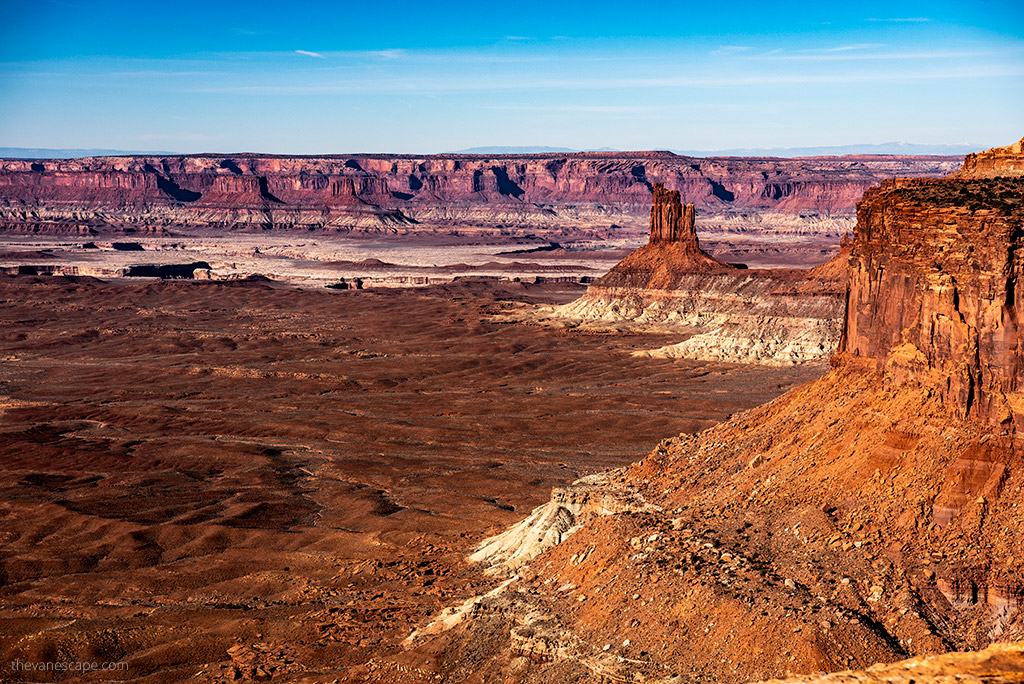
The Maze is the most remote district in Canyonlands and one of the most challenging backcountry areas in the entire National Park System. Only experienced travelers with solid navigation, self-rescue skills, and a high-clearance 4WD should attempt it. But for those prepared for the adventure, the Maze offers a level of solitude and wilderness that’s hard to find anywhere else.
Reaching the canyons usually takes several hours of rough driving from the Hans Flat Ranger Station. Once you drop into the Maze, the landscape becomes a labyrinth of steep slickrock, narrow canyons, and towering orange walls. Popular destinations—like the Chocolate Drops or the Harvest Scene pictograph panel—require long hikes with route-finding and exposed sections.
There are no services, no water, and no cell coverage. Travelers must bring everything, including extra fuel, recovery gear, paper maps, and detailed backcountry permits.
This district isn’t for casual visitors, but if you’re equipped and experienced, exploring the Maze is one of the most unforgettable wilderness adventures in the Southwest.
12. Take a Scenic Rafting Trip on the Colorado or Green River
The Colorado and Green Rivers carve the deep canyons that define Canyonlands, and seeing the park from the water gives you a completely different perspective. The rivers flow through quiet stretches of towering walls, sandy benches, and twisting bends. It’s one of the most peaceful and scenic ways to explore the park.
Most visitors join a guided trip because river access points are remote and logistics can be complicated. Outfitters offer everything from half-day calm-water floats near Moab to multi-day rafting trips through Cataract Canyon, where big rapids form when the rivers meet.
Some highlights of river trips include:
- drifting beneath huge canyon walls
- spotting bighorn sheep along the shore
- camping on remote sandbars
- photographing sunrise and sunset from the riverbanks
Whether you choose a gentle float or a multi-day expedition, exploring Canyonlands from the water lets you experience the scale and beauty of the park in a way you can’t get from the overlooks.
13. Fly Over Canyonlands on a Scenic Air Tour
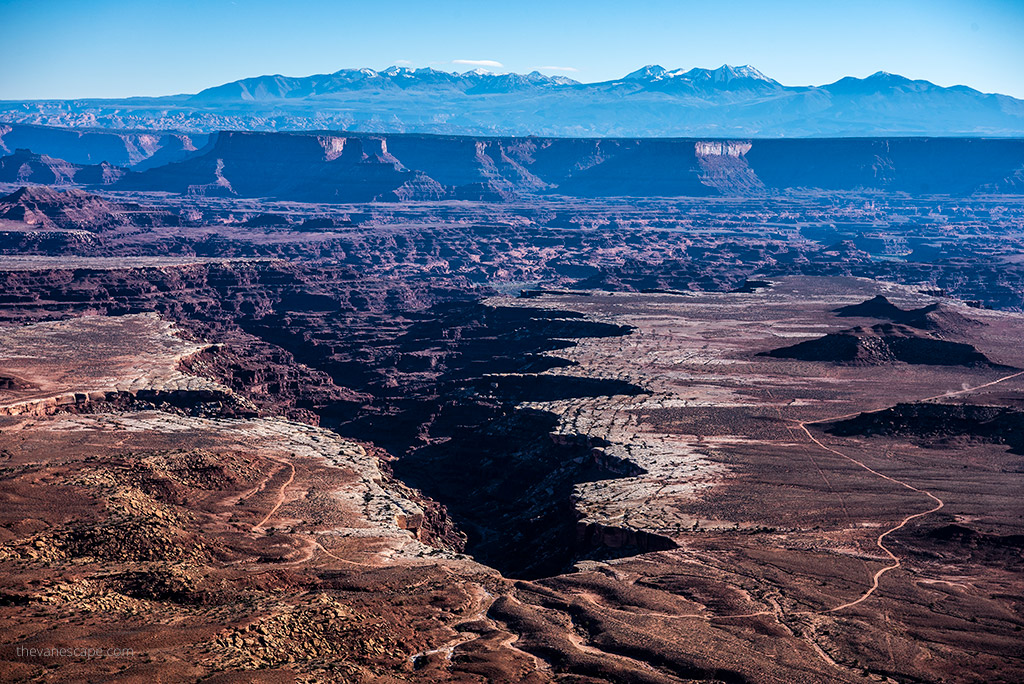
A scenic flight is one of the most impressive ways to see Canyonlands. From the air, the park’s vast mesas, winding canyons, spires, and sheer cliffs stretch out in every direction. You can trace the paths of the Colorado and Green Rivers, see the scale of the White Rim, and look directly down into remote areas like the Maze—places that are difficult or impossible to reach on foot.
Flights depart from Moab and cover both Canyonlands and neighboring Arches National Park. Clear mornings offer the best visibility, but late-afternoon flights bring warm light and dramatic shadows that highlight the shapes of the canyons.
This is a great option if:
- you want to see more of the park than a single-day visit allows
- you prefer minimal hiking
- you’re interested in photography
- you want a better visual understanding of how the landscape fits together
Even a short flight reveals why Canyonlands is so unique. It’s a breathtaking experience and a fantastic addition to any Moab itinerary.
14. Photograph Sunset at the Green River Overlook
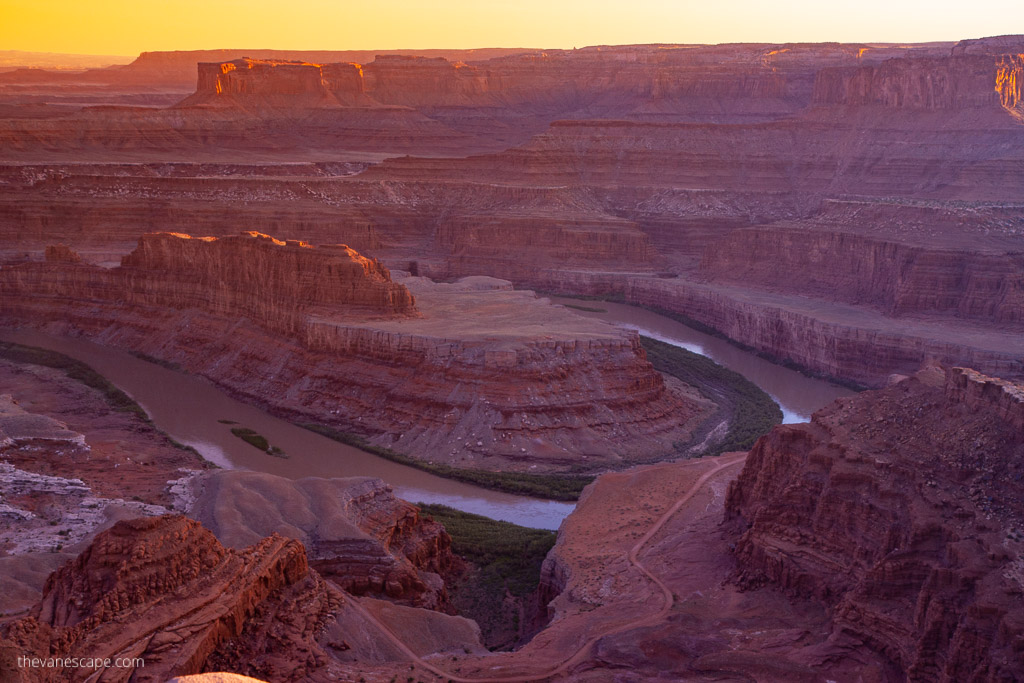
The Green River Overlook is one of the best sunset spots in the entire park. From this viewpoint, you look across layered mesas and deep canyons carved by the Green River. As the sun drops, the landscape glows with warm reds and golds, and long shadows stretch across the desert floor.
It’s an easy walk from the parking area, so you can arrive early to choose a good spot and watch the light change. The overlook faces west, which makes it perfect for late-afternoon and evening photography. Bring a wide lens for sweeping canyon shots, and a zoom lens if you want to capture details in the distant cliffs.
Even if you aren’t focused on photography, this is an incredible place to end your day. The colors, quiet atmosphere, and endless depth of the view make the Green River Overlook an unforgettable Canyonlands experience.

15. Visit Shafer Canyon Viewpoint for Classic Canyonlands Views
Shafer Canyon Viewpoint gives you one of the most dramatic and classic views in Canyonlands. From the rim, you can look straight down at the famous Shafer Trail—tight switchbacks carved into the cliffside that zigzag toward the desert floor. Seeing the road from above helps you understand the scale of this landscape, and it’s a favorite stop for photographers.
The viewpoint is only a short walk from the parking area, making it an easy addition to any Island in the Sky itinerary. Morning light works well here, but late afternoon also casts beautiful color on the canyon walls. Even if you’re not planning to drive the road yourself, watching vehicles navigate the steep switchbacks is a memorable part of the experience.
It’s a quick stop with huge payoff and one of the best ways to appreciate the depth and complexity of Canyonlands.
Final Thoughts
Canyonlands National Park is one of the most rewarding places we’ve explored in Utah. Each district offers something different—from wide, easy viewpoints on Island in the Sky to remote backcountry routes in The Needles and The Maze. Every visit reminded us how wild, quiet, and dramatic this landscape is.
This list is a great starting point as you plan your trip. Whether you have a few hours or several days, you can build an itinerary that fits your time and interests. Take your time at the overlooks, enjoy the short hikes, and bring plenty of water for longer adventures. Canyonlands may feel remote, but that’s exactly what makes it special.
We cover more destinations and planning tips in our Utah travel guide, which brings everything together in one place.
Do You Like It? Pin It For Later!