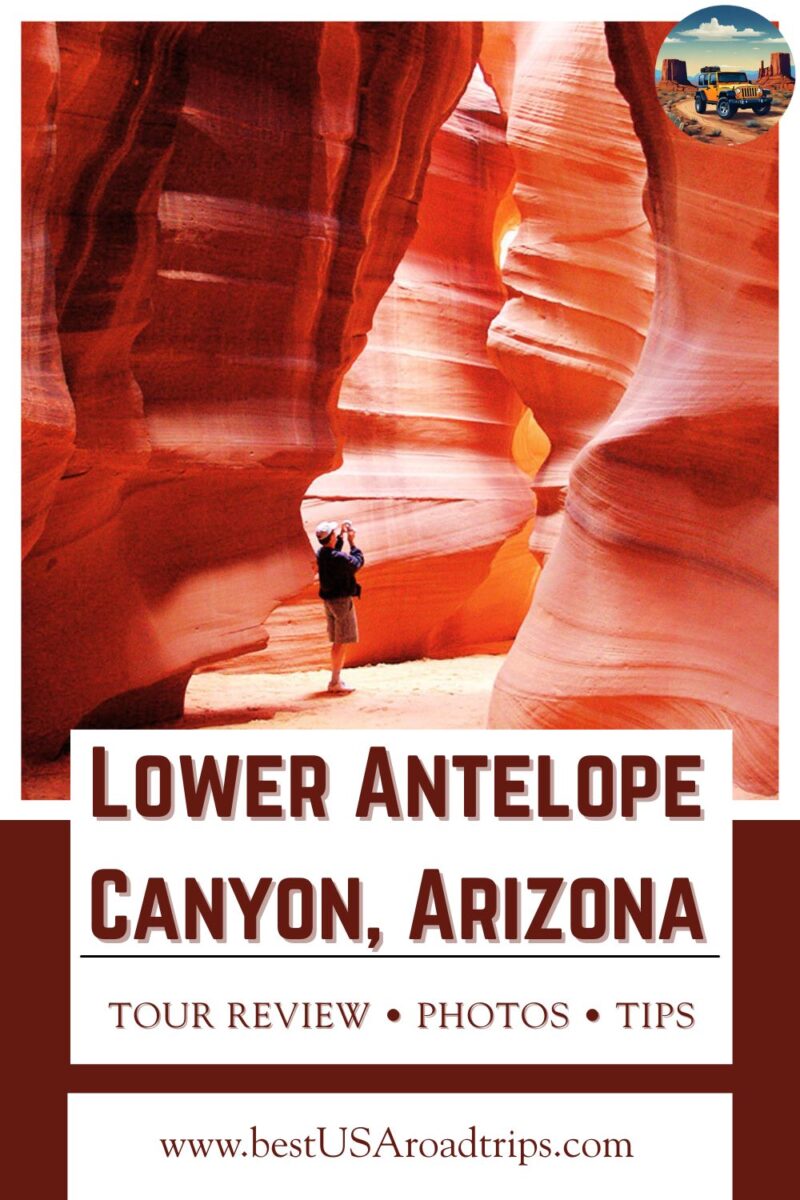
Lower Antelope Canyon Tour: Review, Photos & Tips Before You Go
Planning a visit to Lower Antelope Canyon? This world-famous slot canyon near Page, Arizona, is one of the most breathtaking natural wonders in the American Southwest. Over thousands of years, wind and water have carved the Navajo Sandstone into swirling, sculpted walls that look like a work of art. Inside the canyon, light beams, shadows, and glowing colors create an unforgettable scene that every traveler and photographer dreams of capturing. In this guide, we share our Lower Antelope Canyon tour review, along with photography tips and everything you should know before your visit.
This article may contain affiliate / compensated links. For full information, please see our disclaimer here.
Lower Antelope Canyon Tour – Our Experience
Lower Antelope Canyon is one of the most unforgettable stops you can make on an Arizona road trip. Chris and I have toured both Upper and Lower Antelope Canyon, as well as Canyon X, and in this guide we’ll share our honest review, practical tips, and photos from our visit.
This isn’t a sponsored post — we paid for our tour ourselves so we could give you the most helpful advice.
What is Lower Antelope Canyon?
Lower Antelope Canyon is a narrow sandstone slot canyon near Page, Arizona, and one of the most famous natural landmarks in the Southwest. The canyon stretches about 1,335 feet (407 m) long and 120 feet (37 m) deep.
It’s part of the Navajo Nation and is protected by Navajo Parks and Recreation. Because of this, entry is only possible with authorized Navajo guides and approved tour companies.
The Meaning of “Lower Antelope Canyon”
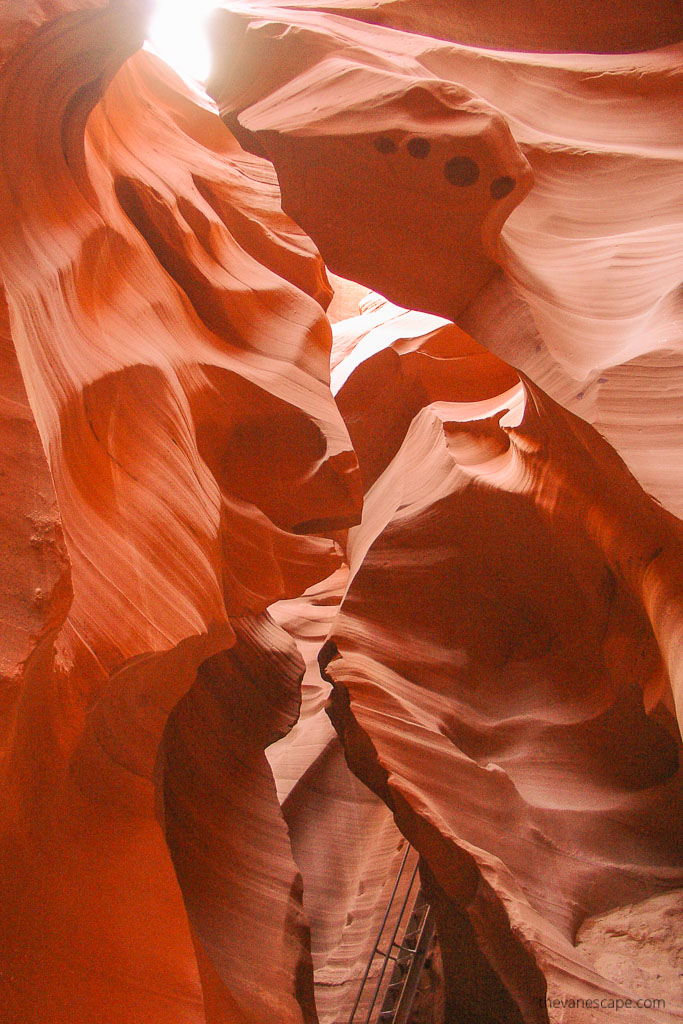
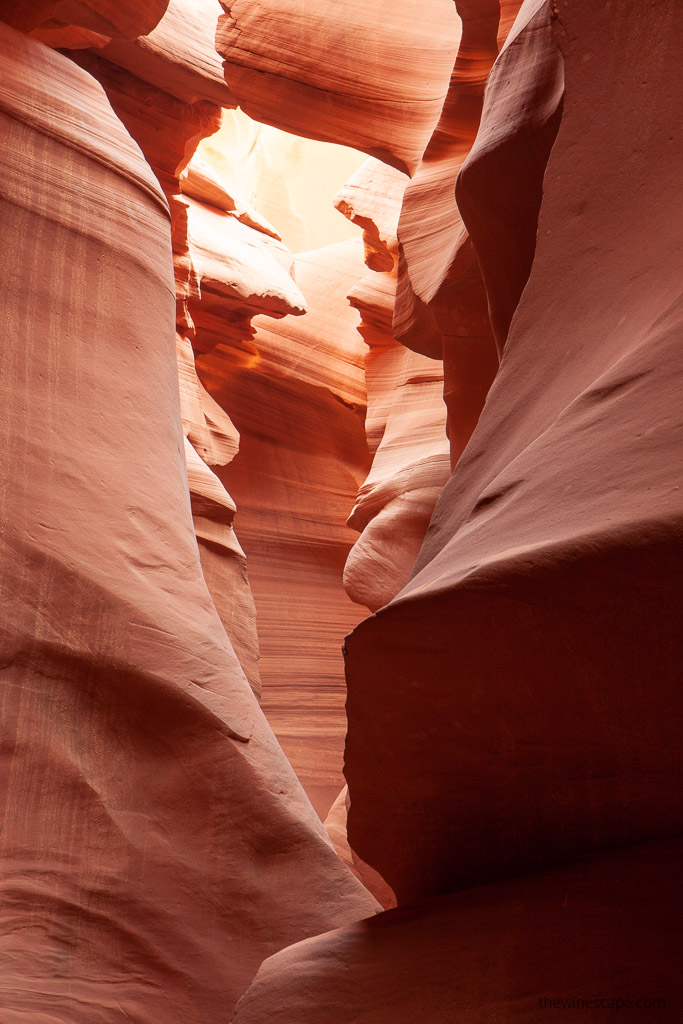
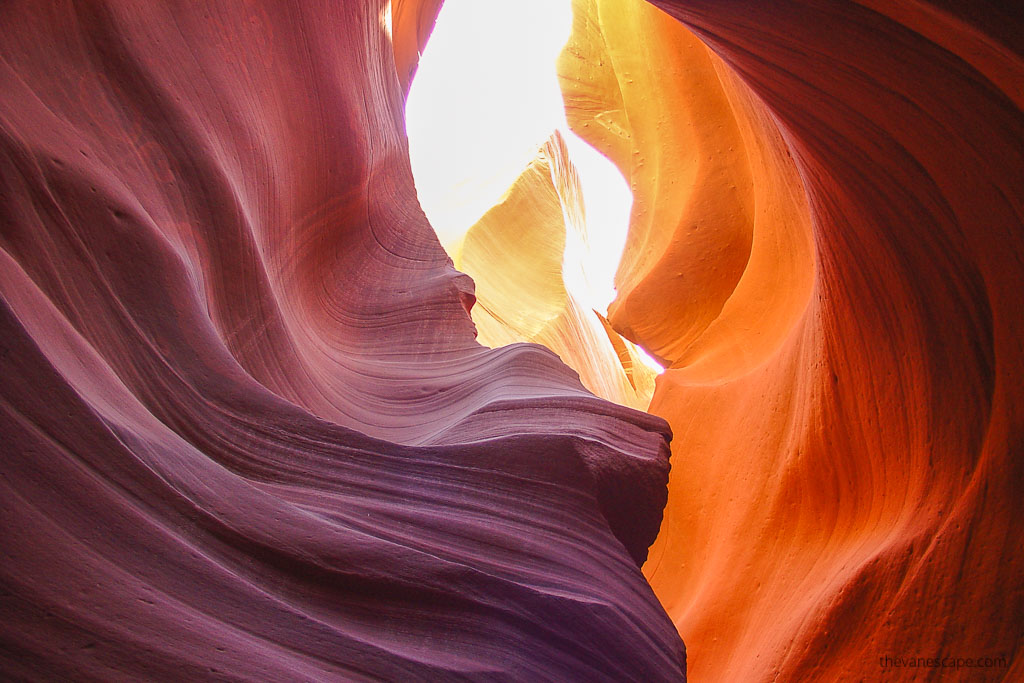
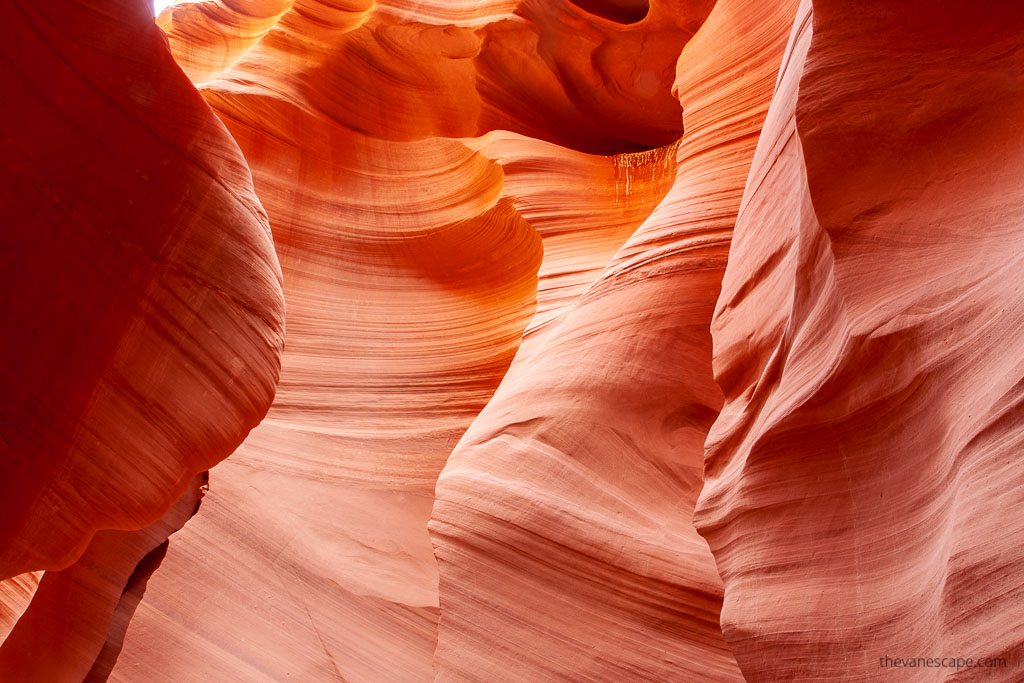
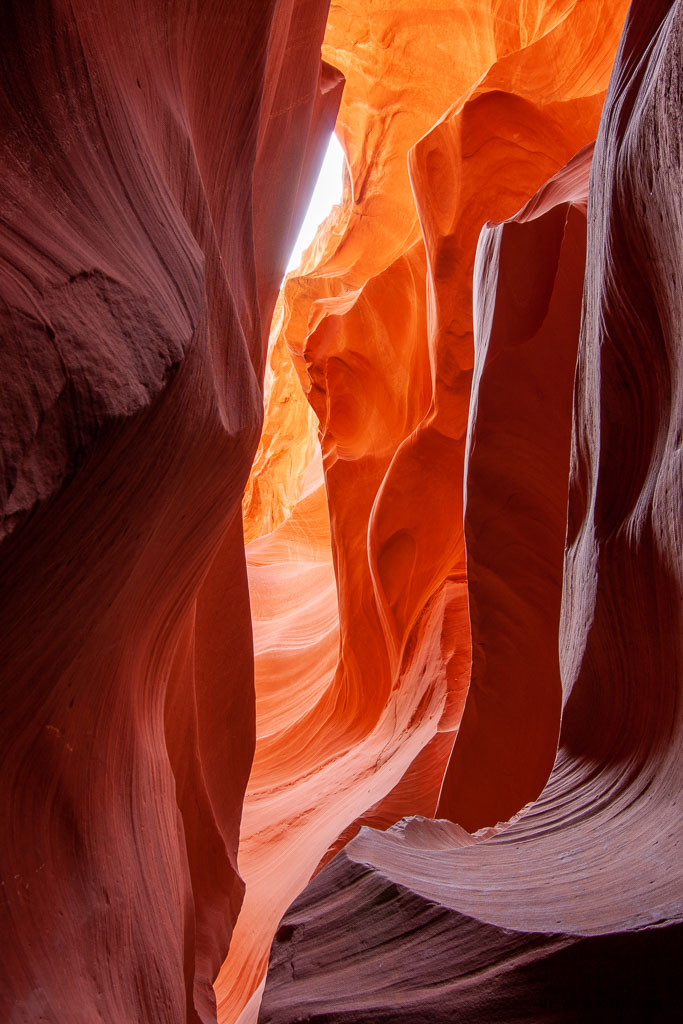
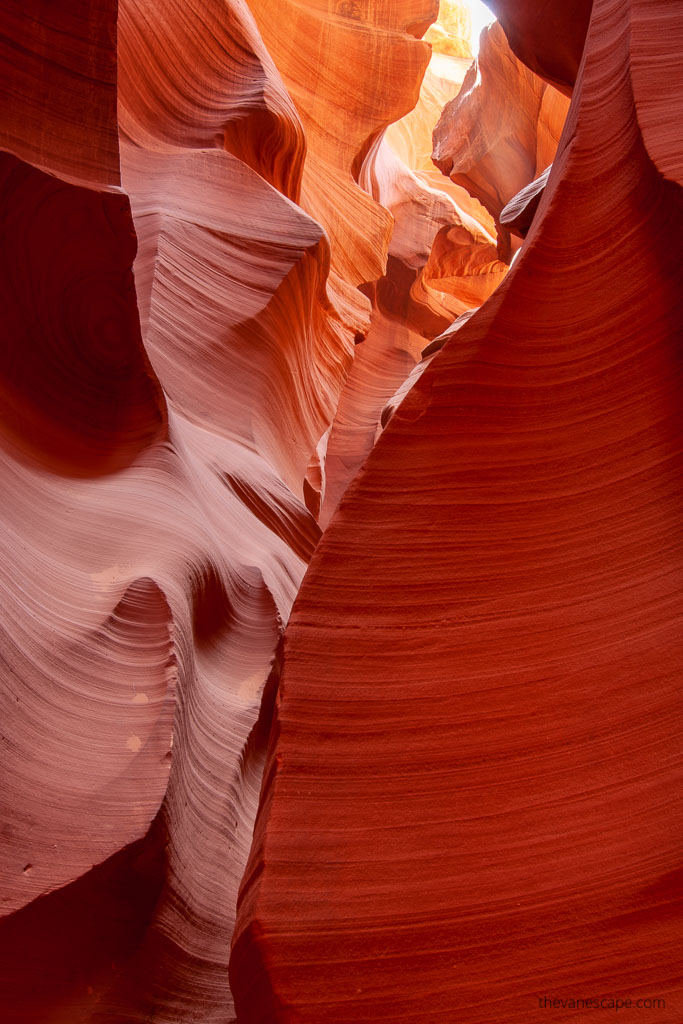
In Navajo, the canyon is called Hazdistazí, or “spiral rock arches.” That name fits perfectly. The smooth, curving walls glow with incredible colors — orange, red, violet, yellow, even shades of blue — depending on the angle of the light.
As sunlight filters through the narrow openings above, shadows dance across the rocks, creating the illusion that the stone itself is moving like waves on water. Walking through feels like stepping into a natural art gallery carved over thousands of years by wind and rain.
How to Get to Lower Antelope Canyon
Lower Antelope Canyon sits just outside Page, Arizona, near Lake Powell and the Arizona–Utah border.
- From Page, it’s a quick 10-minute drive via AZ-98 W and Coppermine Rd.
- From the Grand Canyon (South Rim/Tusayan), it’s about 125 miles / 2.5 hours via AZ-64 and US-89.
- From Las Vegas, the drive takes at least 4.5 hours / 275 miles via I-15 and US-89.
Some tours also depart from Page itself, so check your reservation details.
If you’re planning your trip, take a look at our Arizona travel guide for a full overview of the best places and experiences.

Can You Visit Lower Antelope Canyon Without a Tour?
No. You cannot enter Lower Antelope Canyon without a guided tour. Self-guided hikes are not allowed, and the Navajo Nation strictly enforces this rule to protect both visitors and the fragile sandstone walls.
Tours sell out quickly, especially from March through October, so it’s smart to reserve your spot well in advance.
Why Guided Tours Are Mandatory
There are two main reasons tours are required: protection and safety.
- Protection of the canyon: Sadly, past visitors left scratches and graffiti on the delicate sandstone. Requiring guided tours helps prevent damage to this fragile environment.
- Visitor safety: Slot canyons are prone to flash floods. Even if it hasn’t rained locally, storms dozens of miles away can send torrents of water rushing into the canyon within minutes. Antelope Canyon lies at the mouth of three periodic rivers, and during a downpour, water levels can rise high enough to engulf an adult with no chance of escape.
Because of this, only trained guides who know the terrain and watch the forecasts can safely lead visitors inside.
In the last section of this guide, we’ll also cover the history of flooding in Antelope Canyon, including the tragic event that shaped how tours operate today.

Which Lower Antelope Canyon Tour Is Best? (Our Review)
Several licensed operators run tours of Lower Antelope Canyon, and most offer a very similar experience in terms of route and timing. The main difference is the quality of the guides — and this can make or break your visit.
We chose Ken’s Tours, and we can honestly recommend them. Our guide was fantastic — knowledgeable, patient, and clearly passionate about Navajo culture and the canyon’s history. He explained how the slot canyon formed, pointed out shapes in the sandstone, and even shared the dramatic story of the 1997 flash flood that claimed several lives. Thanks to his pacing, we had plenty of time to admire the curves and colors, take photos, and truly enjoy the experience.
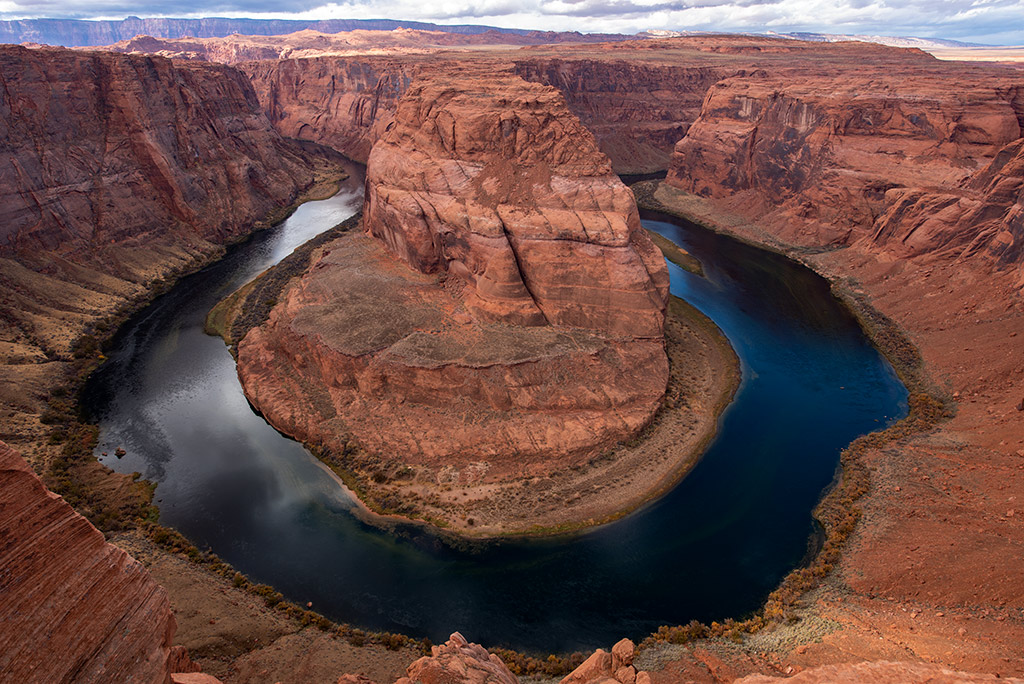
If you’re short on time in Page, consider a combo tour that includes both Lower Antelope Canyon and Horseshoe Bend in half a day. It’s one of the best ways to see two icons of the Southwest without rushing.
If you’re based in Las Vegas, full-day Antelope Canyon tours are also available. Many include not only Lower or Upper Antelope Canyon, but also Horseshoe Bend or even a side trip to the Grand Canyon. It makes for a long day, but it’s a great option if you only have one extra day to explore beyond Vegas.
Agnes’ Advice: Tours operate on Arizona Standard Time, which does not observe daylight savings. If you’re coming from Utah or Nevada, double-check your watch to avoid missing your slot!

What Time of Day Is Best for Lower Antelope Canyon Tours?
Lower Antelope Canyon is open year-round, but the light beams that many travelers dream of only occur from mid-March to mid-October, usually around midday (11 a.m.–1 p.m.). These shafts of light appear when the sun is directly overhead — and only if the skies are perfectly clear.
- June, July, and August are your best chances to see them, but tours also book out quickly in these months.
- Even in peak season, there are no guarantees. One cloud can block the effect.
- From November through March, there are no light beams at all. But don’t let that stop you — the canyon is far less crowded, and the softer morning light is excellent for photography.
We visited Lower Antelope without catching the beams, and it was still spectacular. In fact, we saw beams only in Upper Antelope Canyon — proof that Lower is beautiful on its own terms year-round.
How Long Is the Lower Antelope Canyon Tour?
Tours cover about 1.1 miles round trip and last 60–90 minutes. The walk isn’t long, but it involves narrow passageways, metal staircases, and some uneven footing. It’s manageable for most visitors, but wear sturdy shoes and be prepared for a few climbs and descents.

What Is the Lower Antelope Canyon Hike Like?
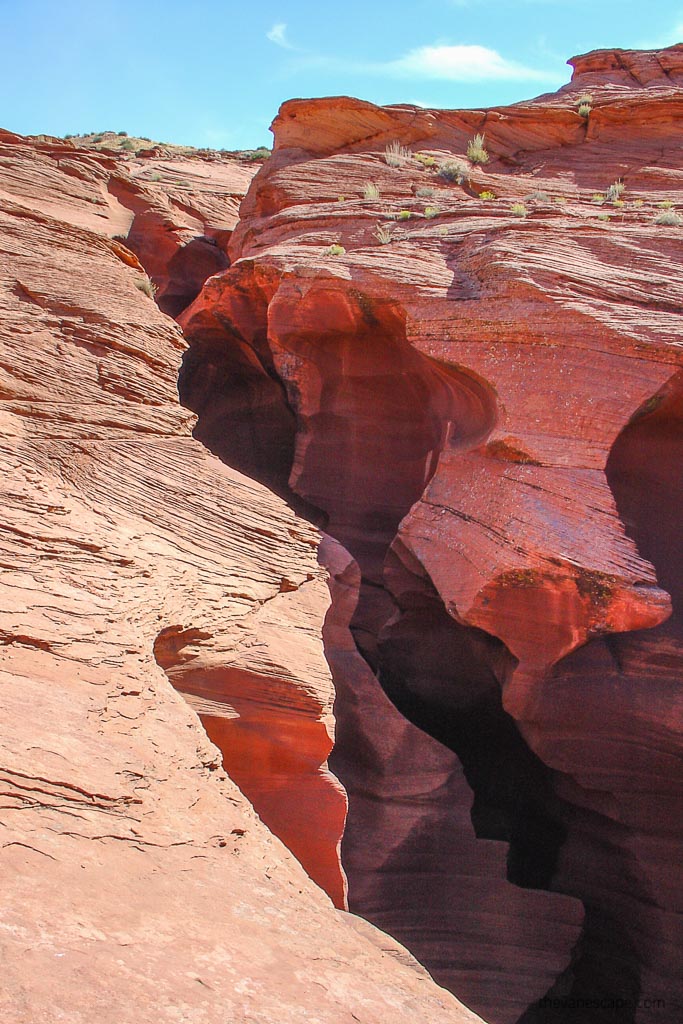
The hike through Lower Antelope Canyon is more challenging than Upper, but still manageable for most visitors. From the outside, the canyon looks almost hidden — just a narrow crack in the desert floor where a cool breeze escapes. Once inside, though, the adventure begins.
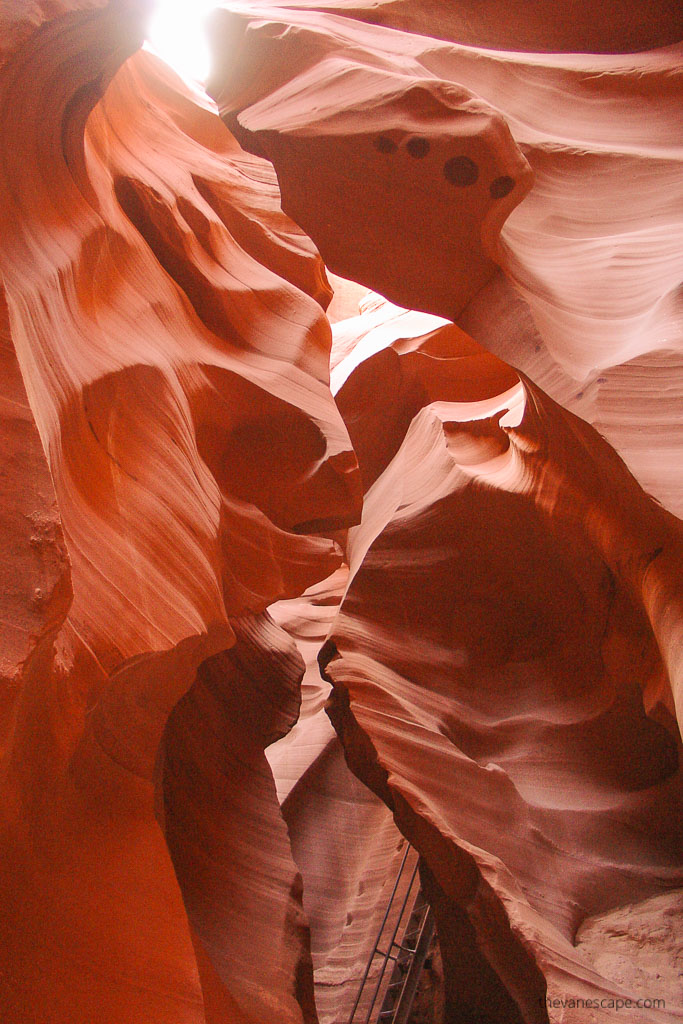
To enter the canyon, you descend a series of steep metal staircases. This is where you need to be cautious. The steps can be sandy and slippery, so wear closed-toe shoes with good traction. Flip-flops or heels are not safe here. Hiking shoes or sturdy sneakers work best.
From the main parking lot, it’s about a 10-minute flat walk to reach the entrance. After that, expect a mix of descents, narrow passageways, and climbs. In total, you’ll navigate about five staircases down and eight staircases back up during the tour. Some ladders feel quite steep, so take your time and use the handrails.
Overall, the hike is more strenuous than Upper Antelope Canyon, but it’s still very doable for most people. The extra effort is worth it — the shapes, colors, and textures inside Lower Antelope make it one of the most unforgettable slot canyon experiences in the Southwest.
What to Pack for Your Lower Antelope Canyon Tour
Pack light — really light. Lower Antelope Canyon is a narrow slot canyon, and strict rules apply to what you can bring. Here’s what you need to know:
- Bags are not allowed. No backpacks, fanny packs, hydration bags, or purses.
- No special equipment. Drones, GoPros, tripods, monopods, selfie sticks, and trekking poles are prohibited.
- Shoes matter. Wear closed-toe shoes with good grip. Avoid sandals, flip-flops, or anything with heels.
What you can bring:
- Photo gear: Only a handheld camera or phone. Don’t plan on swapping lenses — sand particles can easily damage your gear. A wide-angle lens is best.
- ID & reservation: Always bring a passport or government-issued ID and your tour confirmation.
- Water: A small bottle of water is allowed.
- Small items: Carry essentials in your pocket or in a clear plastic bag (colored bags are not permitted).
Extra tips
- If visiting in summer, bring sun protection (hat, sunscreen, sunglasses).
- Keep your load minimal so you can move comfortably through the narrow passages and staircases.
Photography Tips for Lower Antelope Canyon
Taking photos inside Lower Antelope Canyon is challenging but rewarding. The soft light, shifting shadows, and swirling walls make it a dream for photographers.
- Best time of day: Midday (around 11 am – 1 pm) is best for capturing stronger light beams, especially in summer (June–August). Mornings and late afternoons give warmer tones and fewer crowds.
- Camera settings:
- Use a wide-angle lens (16–35mm) to capture sweeping canyon walls.
- Shoot in RAW for better control of shadows and highlights.
- Start with ISO 400–800, aperture f/5.6–f/8, and adjust shutter speed depending on light.
- Tripods are not allowed, so hold your camera steady or use a higher ISO if needed.
- For phones: Switch on HDR mode, hold the phone steady, and avoid zooming (it reduces quality).
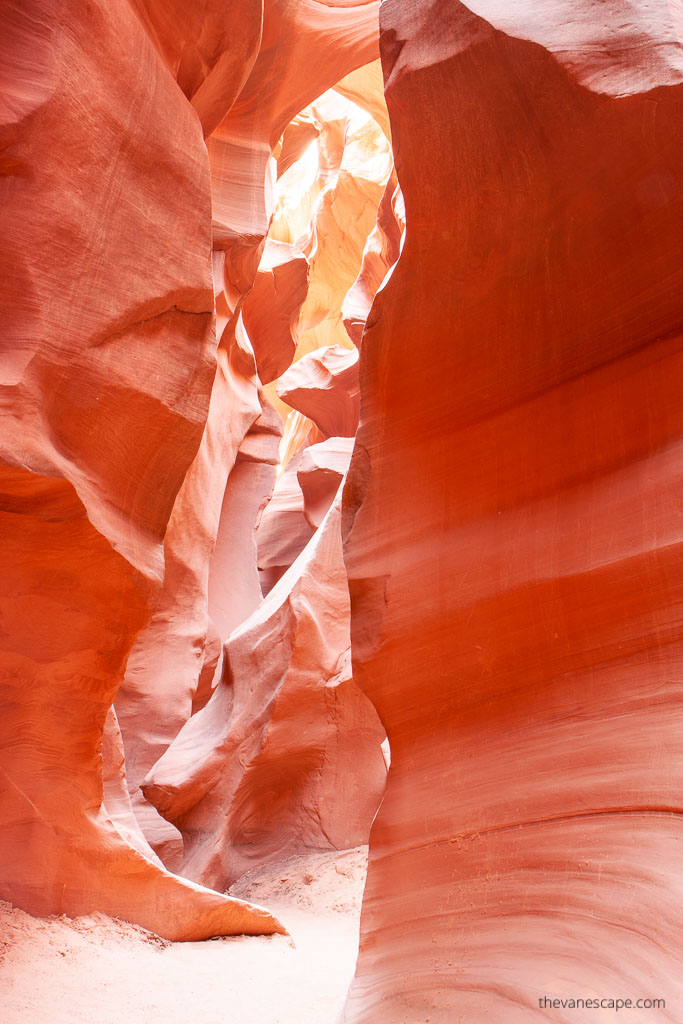
- Composition tip: Look for shapes — waves, arches, or even animal-like patterns. Tilt the camera slightly upward to capture the canyon’s curves and sky peeking through.
Even without light beams, the canyon looks magical all day. Focus on colors, textures, and unique rock formations.
Antelope Canyon Weather & Best Time to Visit
Always check the weather before your tour. Since entry is only allowed with a licensed Navajo guide, you can feel safe — warning systems are in place, and guides constantly monitor conditions. Still, weather plays a huge role in both safety and photography.
Summer (June – September)
- Expect extreme heat, often close to 100°F (38°C).
- At the bottom of the canyon, it feels pleasantly cooler, but sun protection is still essential — hat, sunscreen, sunglasses, and water.
- This is monsoon season in Arizona. Sudden storms can bring heavy rain, lightning, and wind. Even if Page itself is dry, rain miles away can cause dangerous flash floods in the slot canyon.
- Photography tip: Summer is the best chance to see the famous light beams (mid-March through mid-October, strongest in June–August around midday). But it’s also the busiest season, so book well in advance.
Fall & Spring (March – May, late September – October)
- Milder temperatures (60–80°F / 15–27°C).
- Fewer crowds compared to summer.
- Great for photos of soft colors and textures, even without light beams.
Winter (November – February)
- Quiet and peaceful — fewer tourists and lower prices.
- Highs range from 40–50°F (4–10°C). Snow is rare but mornings are chilly.
- There are no light beams, but the diffused light makes the canyon walls glow beautifully for photography. A warm jacket or fleece is a must.

Flash Flooding in Lower Antelope Canyon
Flash floods are the greatest risk in any slot canyon. Rain doesn’t need to fall directly above Antelope Canyon. A storm dozens of miles away can funnel water into the narrow canyon, raising water levels in minutes with no escape.
The most tragic event happened on August 12, 1997, when a flash flood swept through Lower Antelope Canyon. Eleven tourists (nine from Europe, two from the U.S.) lost their lives. That day, only light rain fell at the canyon itself. But a thunderstorm seven miles upstream funneled water into the canyon, creating a deadly surge.
Since then, Navajo Parks and Recreation have greatly improved safety systems, warning alerts, and guided protocols. Tours stop immediately if there’s any risk. Still, flash floods remain possible, and that’s why guided tours are mandatory.
Final Thoughts
A tour of Lower Antelope Canyon is one of the most unforgettable experiences you can have in Arizona. The swirling walls, glowing colors, and ever-changing light make it feel like walking through a natural cathedral carved by time. While the hike requires climbing stairs and navigating narrow passages, it is accessible for most visitors with a moderate fitness level.
Booking a guided tour not only ensures safety but also gives you insight into Navajo history, geology, and culture. Whether you choose Lower, Upper, or even Canyon X, each slot canyon offers a different perspective on the desert’s beauty.
If your schedule allows, we recommend visiting both Lower and Upper Antelope Canyons. But if you can only pick one, Lower Antelope Canyon is often less crowded, more adventurous, and just as photogenic.
Take your time, listen to your guide, and bring your camera ready — because Lower Antelope Canyon is truly a once-in-a-lifetime stop on any Southwest USA road trip.
Do You Like It? Pin It For Later!